Chip Bag Sizes
A Better Fit for Your Next Pack
From individual snack packs to sharing bags, choose packaging around your chips, fill weight, and filling process. Tell BN PACK what you’re packing to start a size and quotation discussion.
Select the Packaging Format for Potato Chips
The right format depends on how you fill, display, and sell. Start with an option below; we can discuss the details with your inquiry.
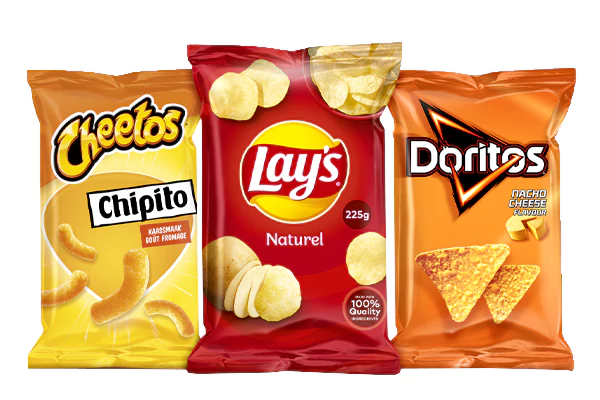
Pillow & Fin-seal Bags
The right format depends on how you fill, display, and sell. Start with an option below; we can discuss the details with your inquiry.

Stand-up Pouches
Consider shelf-standing presentation and an optional zipper. Check the base, opening, and usable space with a filled sample.
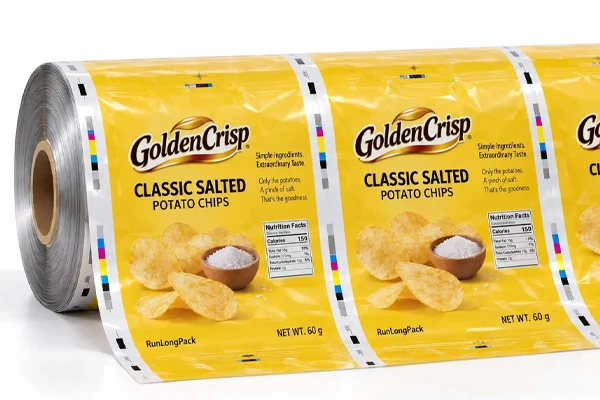
Printed Rollstock
For bags formed on your equipment. Share machine details, film width, repeat length, and fin- or lap-seal requirements.
Find Your Weight.
Then Find Your Fit.
“Regular,” “family,” and “party” are product descriptions—not dimension specifications. For example, PepsiCo lists Lay’s Classic in several weights, including 1 oz, 5 oz, 8 oz, and 13 oz.
100 g ≈ 3.53 oz
Weight conversion only. Finished bag capacity requires a fill test.
Calculated using 1 oz ≈ 28.3495 g; rounded to one decimal.Calculated using 1 oz ≈ 28.3495 g; rounded to one decimal.
Common Package Weights for Potato Chips
| Net weight in ounces | Equivalent weight in grams, rounded |
|---|---|
| 1 oz | 28.3 g |
| 1.5 oz | 42.5 g |
| 2 oz | 56.7 g |
| 2.25 oz | 63.8 g |
| 2.5 oz | 70.9 g |
| 2.75 oz | 78.0 g |
| 3 oz | 85.0 g |
| 3.5 oz | 99.2 g |
| 4 oz | 113.4 g |
| 5 oz | 141.7 g |
| 6 oz | 170.1 g |
| 7 oz | 198.4 g |
| 7.5 oz | 212.6 g |
| 8 oz | 226.8 g |
| 9 oz | 255.1 g |
| 9.25 oz | 262.2 g |
| 10 oz | 283.5 g |
| 12 oz | 340.2 g |
| 13 oz | 368.5 g |
| 16 oz | 453.6 g |
Same Weight Different Bag Size
Thin chips, ridged crisps, and puffed snacks occupy space differently. An existing bag is a useful reference, but the final size should be tested with your product.
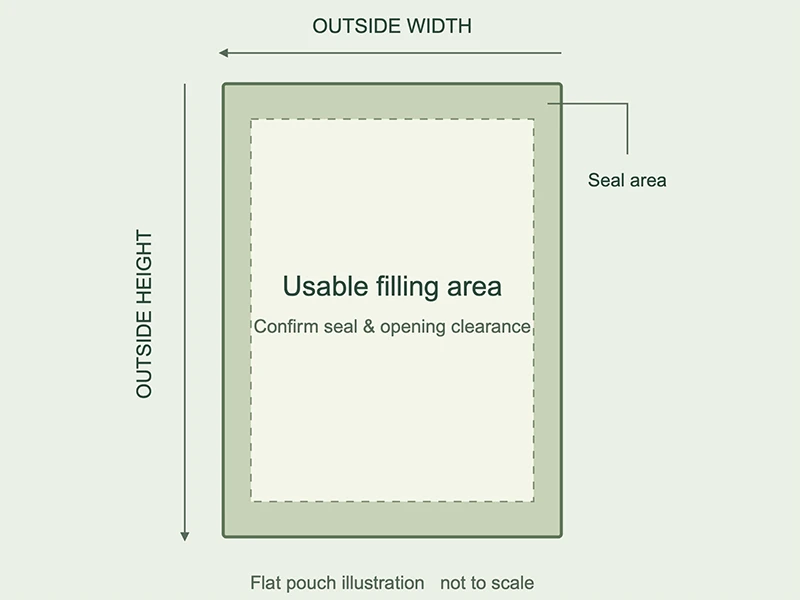
Measure the Empty Bag Laid Flat
Allow for Seals and Closures
Outer dimensions include areas that cannot hold product.
Confirm the Gusset on a Drawing
A Good Fit Leaves Room for the Right Protection
Size, barrier performance, and seal quality work together. Define the conditions your pack needs to handle before approving it.
Make the Space Functional
Nitrogen can help protect chips from oxygen, moisture, and crushing. The amount of headspace should suit your product and distribution conditions.
Specify Your Shelf-life Needs
Research identifies oxidation and moisture uptake as important causes of chip quality loss. Discuss barrier requirements and validate your finished pack.
Check the Filled Pack
Confirm filling access, seal clearance, pack shape, and breakage after representative handling. A size chart cannot replace this check.
Chip Bag Questions, Answered
What are the dimensions of a 1 oz chip bag?
There is no single width and height for a 1 oz fill weight. Chip shape, bag construction, seals, and filling conditions affect the size. Share your product and target weight so candidate dimensions can be discussed and tested.
What size bag do I need for 100 g or 200 g of chips?
Start with the volume occupied by that weight of your actual chips. Compare sample pouches, checking filling access, headspace, and seal clearance. A bag rated for the same weight of coffee or another food may not fit your chips.
Can you quote from my existing chip bag?
Include the outside width and height, pouch style, gusset details if applicable, target weight, and order quantity. Photos and a physical reference sample can help clarify the construction. Final specifications still need confirmation.
How many chips are in a 1 oz bag?
Count varies by product and breakage. Lay’s Classic SmartLabel gives one product-specific example of about 15 chips per 28 g serving. Use weight for packaging decisions rather than treating that figure as a universal chip count.
How much empty space should a chip bag have?
There is no universal percentage to apply to every product. Validate the space needed for protection, filling, and settling. For U.S. sales, 21 CFR 100.100 distinguishes functional space from misleading, nonfunctional slack-fill.
What are the minimum order quantity and lead time?
These need confirmation for your dimensions, material, printing method, and quantity. Include your intended launch date in the inquiry so the team can discuss the available options.
Can I check samples before placing a production order?
Ask about sample options for your proposed format. Use samples to check fit with your own chips. For machine-filled packs, arrange an appropriate line trial before final production approval.
Tell Us What You’re Packing
Start with the details you know. Ask about dimensions, material options, samples, MOQ, or pricing in one inquiry.
Have a Target Weight?
That is enough to start the conversation.