Three Side Seal Pouches Built Around Your Product
A flat pouch. Three sealed edges. One opening ready to fill. Explore custom dimensions, barrier structures, printing, and practical features for your next pack.

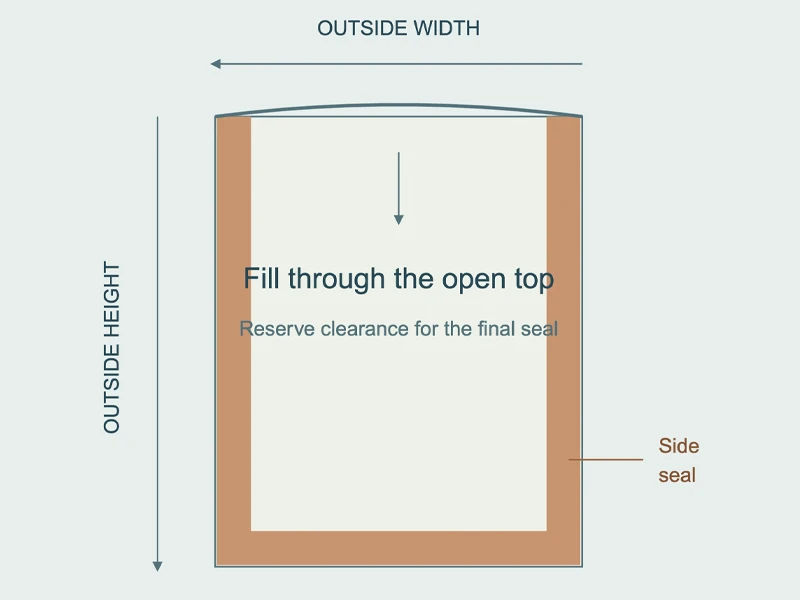
The Structure of Three Side Sealed Pouch
A premade three side seal pouch arrives with three edges sealed. Fill through the remaining opening, then apply the final seal on your filling operation.
Receive the Premade Pouch
Confirm opening position, dimensions, seal layout, and the construction agreed for your application.
Fill Without Contaminating the Seal
Check the opening against your product and dosing system. Keep powder, oil, and product pieces away from the final sealing area.
Apply and Verify the Final Seal
Establish settings for the actual material and equipment. Assess the filled pack before approving production.
Applications of Three Side Sealed Pouch
Three side sealed pouches are widely adopted across industries for their compact structure, excellent barrier performance, and ease of customization. Their flat design makes them perfect for both individual servings and sample formats, offering a practical solution for on-the-go consumption, promotional use, or secure retail packaging.
Snack Packaging
Retail Displays Packaging
Tester Samples
Frozen Foods Packaging
Pet Treats Bags
Health & Beauty Packaging
Small Details. A More Useful Package.
Choose features for the way the product is opened, displayed, and used. Confirm their placement on the dimension drawing.
Tear Notches
Hang Holes
Windows & Reclosures

Advantages of Three Side Sealed Pouch
- Simple and Cost-Effective Design
Three side sealed pouches feature a straightforward construction that minimizes material waste and manufacturing complexity, resulting in lower production costs—ideal for budget-conscious brands. - Strong Seal Integrity
Sealing on three sides ensures excellent protection against moisture, oxygen, and contamination, preserving product freshness and extending shelf life, especially for perishable and sensitive items. - Compact and Space-Saving
Their slim, flat profile reduces storage and shipping volume, enabling efficient packing and easy stacking, which translates to lower logistics costs. - Versatile Usage
Suitable for a wide range of products including powders, snacks, liquids, and small consumer goods. The pouch format adapts easily to manual or automated filling processes. - Customizable Features
Options such as tear notches, resealable zippers, hang holes, and clear windows can be added to enhance user convenience and product visibility. - Excellent Branding Opportunities
With uninterrupted front and back panels, these pouches provide ample printable surface area for vibrant graphics, product information, and promotional messaging to attract customers.
Technical Specifications of Three Side Sealed Pouch
Sizes
Available in sizes ranging from small sachets of 5g up to larger packs of 1kg, accommodating various product quantities from single-use samples to retail portions.
Materials
Manufactured using high-quality multi-layer laminates such as PET/PE, PET/AL/PE, BOPP/CPP, or mono-material PE/PP films. Eco-friendly and compostable material options are also available to meet sustainability requirements.
Pack Properties
Engineered with robust three-side seals that provide superior protection against moisture, oxygen, and contaminants. Suitable for both dry and semi-moist products, ensuring long-lasting freshness and durability.
Printing Process
Supports vibrant digital printing for small to medium production runs starting at 500 units, and cost-efficient flexographic or rotogravure printing for larger volumes from 5,000 units. Multiple finishes including matte, gloss, and metallic effects are available.
Bespoke Features
Customize your pouch with functional options such as tear notches for easy opening, resealable zippers for extended product use, Euro slots for retail hanging, transparent windows for product visibility, and various pouch shapes and sizes to suit your brand’s unique needs.
BN PACK Three Side Sealed Pouch:
FAQs of Three Side Sealed Pouch
What is a three side seal pouch?
A flat pouch with three edges sealed and one opening for filling. For a premade pouch, the final opening is sealed after your product has been added. Confirm the seal layout and opening position on the drawing.
Will it stand upright on a shelf?
A conventional flat three side seal pouch is not designed around a standing base. If upright display is essential, discuss a stand-up or flat-bottom format instead. Confirm the presentation with a filled sample.
What dimensions do I need for my product?
Use the intended fill and the actual product to select candidate sizes. Outside measurements include seal areas; reserve space for filling and the final seal. Trial samples before approving the dimensions.
Can I use the same pouch for dry food, liquids, and frozen products?
Do not assume the same construction suits all three. Contents, processing, storage, and sealing conditions affect material selection. State the intended application before reviewing a proposed specification.
Can you add a zipper, window, or hang hole?
Discuss these features with the proposed dimensions and product requirements. Check their placement against filling access, seal space, barrier needs, and the way the customer will use the pack.
Are recyclable or compostable options available?
Ask about structures for your application and destination market. Review supporting evidence for the complete package and the intended disposal route before making a claim. Any material change should also be checked for filling, sealing, and product protection.
What are your MOQ and production lead time?
Request confirmation for your dimensions, material, printing method, number of designs, and quantity. Include the date you need the packaging so the proposed timeline can be discussed.
Can I check samples before approving production?
Ask about available samples and whether they represent the proposed construction and features. For the final decision, check your product and sealing process and agree the scope of any required validation.