
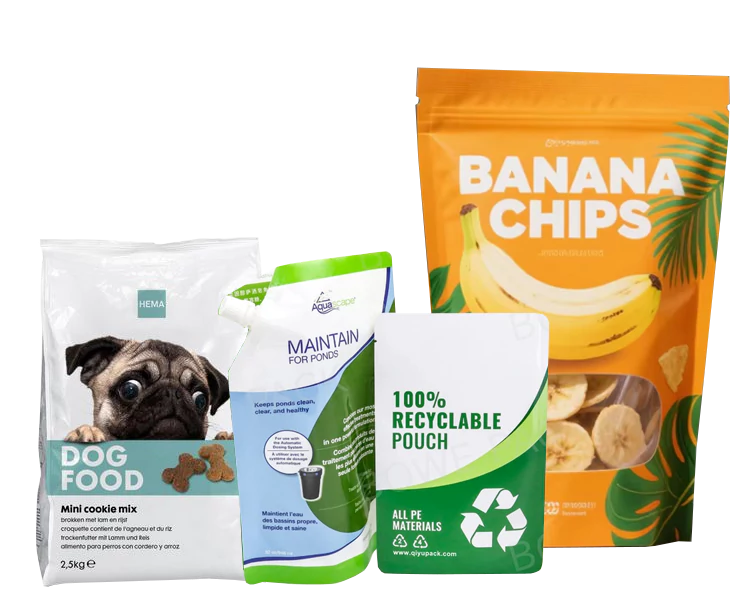
Bioplastic Packaging
As consumers increasingly choose products that align with their values, bioplastic packaging offers a powerful, forward-thinking alternative to traditional petroleum-based plastics.
Derived from renewable resources like cornstarch and sugarcane, these materials are engineered to reduce your carbon footprint and support a circular economy.
As a premier company among bioplastic packaging manufacturers, we specialize in transforming these advanced materials into high-performance, custom packaging solutions that protect your product and enhance your brand’s commitment to the planet.
Our Bioplastic Packaging Materials
Choosing the right sustainable material is critical to your product’s success. Our expertise in bioplastic packaging materials ensures you select the optimal solution for your specific needs, balancing barrier performance, product shelf life, and end-of-life impact.

PLA (Polylactic Acid) Packaging
Polylactic Acid (PLA) is one of the most popular and versatile bioplastics for packaging. Derived from renewable resources like cornstarch, this polymer is transparent, rigid, and certified for industrial composting. Its excellent clarity makes it a perfect sustainable replacement for traditional PET plastic, ideal for creating windows in boxes or for use as clear clamshells and containers.
PLA is a prime example of effective bioplastic packaging, widely used for fresh food containers, deli packaging, and rigid cosmetic jars where product visibility is key to attracting customers.
PHA (Polyhydroxyalkanoate) Flexible Packaging
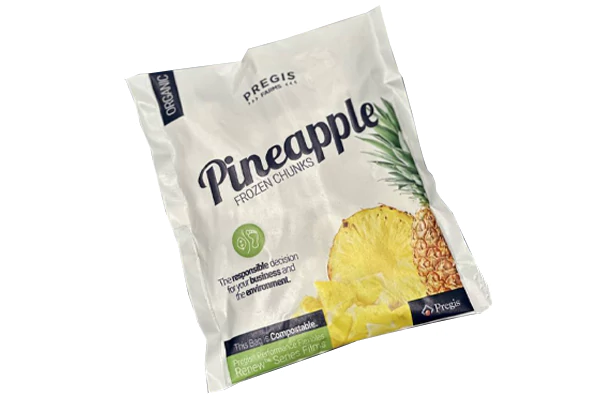
For applications requiring durability and flexibility, PHA stands out as a high-performance biopolymer. Produced through bacterial fermentation, PHA offers properties remarkably similar to conventional plastics, including strong resistance to moisture. This makes it an excellent material for bioplast flexible packaging, such as stand-up pouches for snacks or barrier films for coffee.
Unlike many other bioplastics, certain grades of PHA are biodegradable in soil and marine environments, offering a unique end-of-life advantage that elevates its environmental credentials for bags and flexible packaging solutions.
Starch-Based Bioplastics
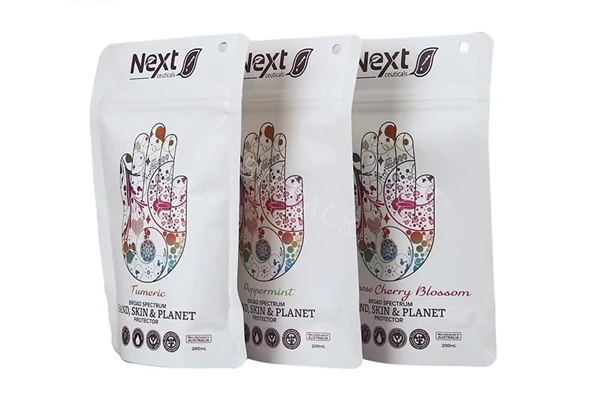
Starch-based bioplastics are a cost-effective and highly compostable packaging solution. Typically blended with other biopolymers like PLA or PBAT to enhance strength and flexibility, these materials are ideal for single-use applications.
You will often find starch-based polymers used to create softer bioplastic bags, such as retail carrier bags, produce bags, or mailers for e-commerce. As one of the original bioplast bags materials, their ability to break down quickly and completely in a commercial composting environment makes them an excellent choice for brands looking to minimize landfill waste.
Applications: Custom Bioplastics in Your Industry
The successful application of bioplastics for food packaging, cosmetics, and retail is growing every day as brands seek sustainable alternatives. We specialize in engineering custom bioplastic solutions that meet the specific functional and aesthetic requirements of your industry, ensuring your packaging performs flawlessly while aligning with your environmental goals.
Bioplastic Food Packaging
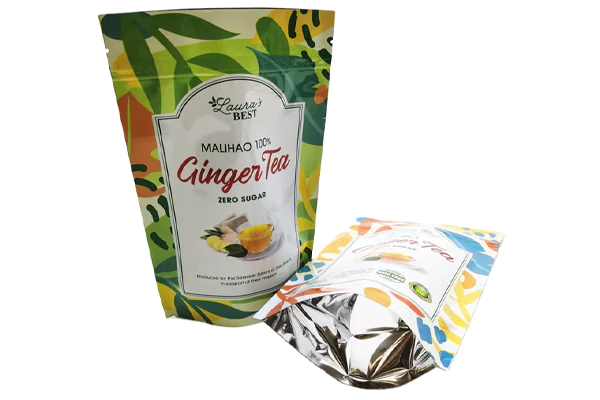
We are at the forefront of developing high-performance bioplastic food packaging. Our materials are certified food-grade and engineered to maintain the freshness and integrity of your products.
From breathable PLA containers that extend the shelf life of fresh produce to durable PHA pouches with high barrier properties for snacks and dry goods, we provide a full spectrum of solutions.
We understand that bioplastic for food packaging must be safe, functional, and attractive, and our solutions are designed to meet all three criteria.
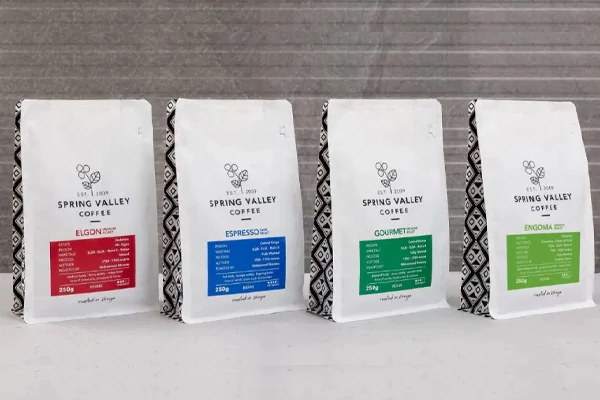
Bioplastic Coffee Packaging
Preserving the rich aroma and flavor of freshly roasted coffee requires packaging with a superior oxygen and moisture barrier. Our bioplastic coffee packaging solutions are designed to do just that.
We utilize high-barrier materials, such as metallized PLA films, to create flexible bags and pouches that lock in freshness.
We can also integrate essential features like one-way degassing valves to release CO2 without letting oxygen in, and resealable zippers for consumer convenience, offering a sustainable choice without compromising the quality of your premium coffee.
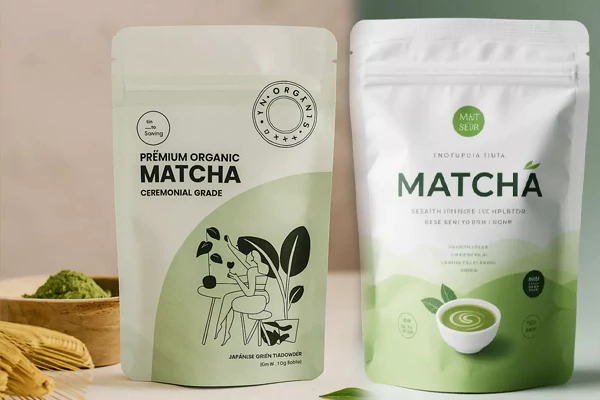
Bioplastic Matcha Packaging
Premium matcha powder is exceptionally delicate and highly susceptible to degradation from light, oxygen, and humidity. Our bioplastic matcha packaging provides the absolute protection required to preserve its vibrant color, delicate flavor, and nutritional value.
We engineer opaque, multi-layer bioplastic pouches and rigid containers that offer a complete barrier against UV light and environmental elements. An airtight, secure seal is non-negotiable, ensuring your high-quality matcha reaches the consumer in its perfect, pristine state, reflecting the purity of the product within.
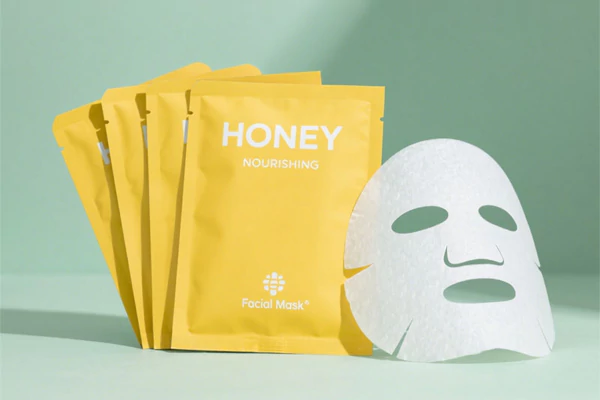
Bioplastic Cosmetic Packaging
For the beauty and personal care industry, packaging is a critical part of the brand experience. Our bioplastic cosmetic packaging helps you appeal to the eco-conscious consumer without sacrificing luxury or performance.
We can create elegant, rigid PLA jars for creams and powders or sugarcane-based bioplastic tubes for lotions and gels. This sustainable choice perfectly complements natural, organic, and vegan cosmetic lines, reinforcing your brand’s commitment to purity and environmental responsibility right on the shelf.
Your Partner Among Bioplastic Packaging Companies
Choosing the right material is only half the journey; choosing the right partner is critical to your success. Among the many bioplastic packaging companies, we distinguish ourselves by being more than just a supplier. BN Pack is expert bioplastic packaging manufacturers and dedicated consultants, committed to guiding you through every step of the transition to sustainable packaging, ensuring your final product is a perfect match for your brand and your goals.
Our Manufacturing Process
We provide complete transparency and expert oversight throughout the bioplastic packaging manufacturing cycle. Our process transforms raw biopolymers into precision-engineered packaging:
Consultation & Material Selection
We start by understanding your product, shelf-life requirements, and brand goals to select the ideal bioplastic.
Design & Prototyping
Our team helps finalize a design that is both functional and visually appealing before creating prototypes for approval.
Extrusion & Forming
The chosen bioplastic resin is processed into a film into a rigid container with state-of-the-art equipment.
Printing & Finishing
We use eco-friendly, food-safe inks to apply your branding with high-definition results.
Conversion & Quality Control
The material is converted into the final format—bags, pouches, or containers—and undergoes rigorous quality checks.



Commitment to Quality & Certification
Trust is the foundation of our business. We ensure that our materials and processes meet the highest international standards for safety and sustainability. Our products can be certified by leading third-party organizations, including the Biodegradable Products Institute (BPI) and TÜV AUSTRIA, for industrial or home compostability.
These certifications provide you and your customers with verifiable proof that our packaging performs as promised, reinforcing your brand’s commitment to authentic environmental responsibility.
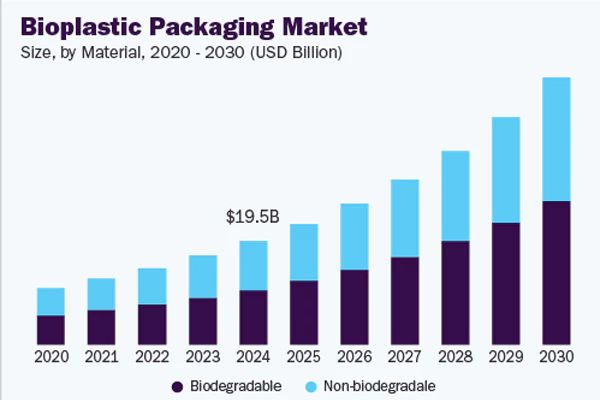
Analyzing the Bioplastic Packaging Market
Navigating the dynamic bioplastic packaging market requires a partner who understands current trends and future regulations. We constantly monitor rising consumer demand for sustainability, evolving government policies on single-use plastics, and innovations in material science.
This expertise allows us to provide strategic advice, helping you make informed decisions that not only meet today’s needs but also anticipate tomorrow’s challenges, ensuring your packaging remains a competitive advantage.
FAQs
What is the difference between biodegradable and compostable bioplastics?
While often used interchangeably, these terms have distinct meanings. “Biodegradable” means a material can be broken down by microorganisms over time, but it doesn’t specify the time frame or the resulting environment. “Compostable,” however, is a more specific, certified claim. It means a material will break down into non-toxic, natural elements in a controlled composting environment (industrial or home) within a specific time frame (e.g., 90-180 days), leaving no harmful residue behind.
What are some common bioplastic packaging examples?
You can see bioplastic packaging examples across many industries. Common examples include clear PLA clamshell containers for salads and berries, compostable starch-based shopping bags, flexible PHA pouches for snacks or coffee, and sugarcane-based bioplastic tubes for hand creams and lotions. Each is chosen for its specific properties to match the product it contains.
Is bioplastic packaging durable enough for my product?
Yes. Modern bioplastics are highly engineered polymers designed to meet the same performance standards as many conventional plastics. We select specific materials and may use multi-layer structures to achieve the required durability, puncture resistance, and barrier protection for your product, whether it’s a heavy bag of coffee or a delicate cosmetic item. We ensure the packaging is robust enough to handle the rigors of shipping and retail.
How does the cost of bioplastic packaging compare to traditional plastic?
Currently, bioplastic packaging materials are typically more expensive than their conventional petroleum-based counterparts due to raw material costs and scale of production. However, as the bioplastic packaging market grows and technology advances, prices are becoming more competitive. Many brands view the higher initial cost as a valuable investment in brand image, consumer loyalty, and long-term sustainability goals.