A black dog food bag can give your product a distinctive shelf appearance. But before approving the design, you need to answer a more practical question: will the finished bag protect your food, run through your filling process, and withstand distribution?
Color is only one part of that decision. The film structure, barrier performance, seals, closure, and bag dimensions determine how the package performs.
This guide explains what to specify when ordering custom black dog food bags, which evidence to request, and what to check before committing to production.
What Are the Benefits of Black Dog Food Packaging?

Black packaging offers design flexibility and can contribute to light protection when the finished construction is sufficiently opaque. These benefits should be assessed separately from oxygen and moisture protection.
| Potential benefit | What to specify or verify |
|---|---|
| A distinctive visual identity | Approve the black tone, artwork contrast, and print appearance on the actual material |
| Reduced light transmission | Check the opacity or light-transmission performance of the finished construction |
| Matte, glossy, or contrasting finishes | Review physical samples under representative lighting |
| Coordination across a product range | Establish print references for different recipes and pack sizes |
| Practical storage and dispensing | Select a suitable pouch format, opening, and reclosure system |
A black surface does not establish a high oxygen barrier, a moisture barrier, or a particular shelf life. Those properties need their own specifications and supporting evidence.
Start With the Food and Filling Process
Before choosing a film structure, define what the packaging needs to contain.
Dry kibble, oily treats, powders, and wet pet food present different packaging requirements. Do not select a black pouch simply because another product uses a similar-looking bag.
Prepare a brief covering:
- Product type and approximate particle size.
- Target fill weight.
- Fat or oil characteristics relevant to packaging.
- Intended shelf life and storage conditions.
- Filling and sealing equipment.
- Any gas-flushing or other preservation process.
- Distribution conditions and destination market.
- Whether the bag will be opened and closed repeatedly.
For wet pet food processed in the package, identify the processing conditions at the beginning of the project. A pouch developed for dry kibble should not be assumed suitable for retort processing.
Specify Barrier Performance Separately From Color
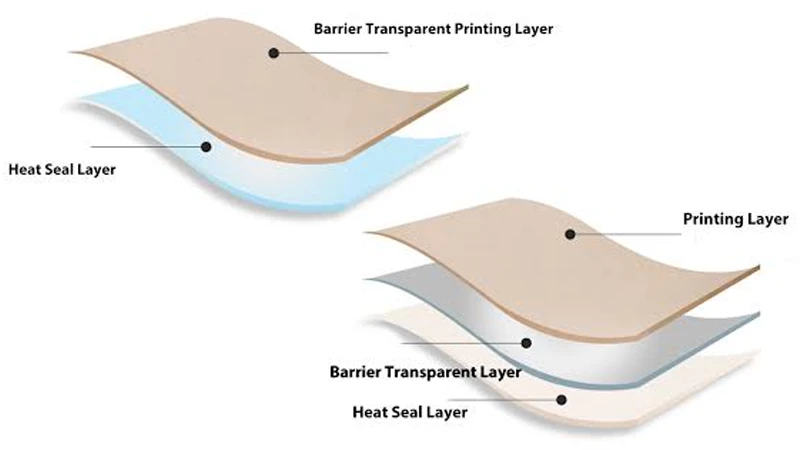
Oxygen Protection
Ask for the proposed material’s oxygen transmission rate, or OTR, with its units, test conditions, and method.
ASTM D3985 is a test method for measuring oxygen gas transmission through plastic film and sheeting. Its existence does not mean every material has been tested or meets your product’s needs. Request the relevant report for the proposed construction.
Avoid comparing two OTR figures without checking how they were obtained.
Hypothetical comparison:
If Film A has an OTR of 1 and Film B has an OTR of 10, using the same units and comparable test conditions, Film A has the lower measured oxygen transmission rate.
That does not establish that the food will last ten times longer. Finished-pack performance and the food’s stability still need evaluation.
Moisture Protection
Request the water vapor transmission rate, or WVTR, separately.
ASTM F1249 addresses water vapor transmission through plastic film and sheeting. A moisture-barrier result answers a different question from an oxygen-barrier result.
For both measurements, ask the supplier to identify:
- The material construction tested.
- Film thickness.
- Test method and units.
- Temperature and humidity conditions.
- Whether the result applies to film or a complete package.
Light Protection
If light sensitivity is part of your product brief, ask about light transmission through the finished material.
Consider the whole design, including transparent windows, unprinted areas, and construction changes between panels. A mostly black bag with a clear window does not provide the same light coverage across its entire surface.
Approve the window for its intended purpose rather than treating it as a purely decorative feature.
Why Shelf-Life Claims Need Product-Specific Evidence
Packaging requirements depend partly on the formulation being packed.
A 2026 study in the Journal of Animal Science examined extruded dog kibble coated with 10 different lipid sources, with and without an antioxidant blend. Samples were evaluated under ambient conditions of 22°C and 50% relative humidity for 15 months, alongside accelerated storage conditions.
Lipid source strongly influenced oxidative stability, with additional effects from the kibble matrix. The research did not compare black bags with other colors, so it cannot substantiate a claim that black packaging extends shelf life.
For packaging development, its practical relevance is that different formulations may need different preservation strategies.
Use your intended food, packaging, and storage conditions to validate the shelf-life claim. Do not transfer a result from another recipe or bag construction without assessing its relevance.
Which Bag Format Fits Your Product?

The format affects presentation, filling, handling, and use after opening.
| Bag format | When to consider it | What to check |
|---|---|---|
| Stand-up pouch | Products needing an upright shelf presentation | Base stability, filling opening, and closure clearance |
| Flat-bottom bag | Packs where a defined base and multiple display panels are useful | Base construction, filled shape, and compatibility with handling |
| Side-gusset bag | Products needing an expanding body | Gusset dimensions, seal layout, and filling access |
| Three-side-seal pouch | Smaller packs, samples, or selected treat applications | Opening size, final seal area, and product fit |
| Rollstock | Bags formed on the customer’s packaging equipment | Film width, repeat length, seal design, and machine compatibility |
A format photograph is a starting point. A filled sample is a better basis for approval.
Size the Bag With the Actual Product
A bag that holds a given weight of one kibble may not hold the same weight of another. Shape, size distribution, and settling affect occupied volume.
Provide a product sample where possible. Check:
- Whether the product passes through the opening cleanly.
- Whether crumbs or oil contaminate the final sealing area.
- Whether there is appropriate filling and seal clearance.
- How the pack sits or stands when filled.
- How it fits the shipping carton.
- Whether representative handling causes unacceptable damage.
Confirm whether quoted dimensions are external measurements and how any gusset depth is defined.
Choose Closures Around How the Bag Will Be Used
A zipper can make repeated access more convenient, but it should be evaluated with the food inside.
For kibble and treats, check whether crumbs collect in the closure and whether users can close it reliably. Also confirm that the filling operation leaves the required clearance.
Do not assume a zipper restores the original unopened barrier conditions.
For larger packs, discuss opening width, lifting, pouring, and grip. If handles are proposed, include them in filled-pack handling trials rather than approving them from appearance alone.
Approve Black Printing and Finishes on Physical Samples
Black artwork can look different on a screen, on a paper proof, and on the final pouch.
Before production approval, review:
- The agreed black color reference.
- Consistency across panels and pack sizes.
- Readability of small text and reversed-out lettering.
- Barcode readability on the intended background.
- Contrast and legibility of batch and date coding.
- Scuffing, rubbing, and handling marks.
- The appearance of matte, glossy, and metallic areas.
If you want a matte black body with glossy details, mark those areas clearly on the artwork and review a representative sample.
Keep the approved print reference with the project specifications so future orders have a clear comparison point.
What to Test Before a Production Order
The checks should match your product and distribution risks.
| Check | The practical question it answers |
|---|---|
| Filling trial | Can the bag be filled without recurring contamination or product damage? |
| Seal evaluation | Does the sealing process produce the required result consistently? |
| Leakage assessment | Does the finished package maintain its intended integrity? |
| Handling and transport trials | Does the filled pack withstand representative distribution? |
| Closure-use trial | Does the reclosure remain usable with the actual product? |
| Print and coding checks | Will branding, barcodes, and traceability information remain readable? |
| Shelf-life validation | Does the packed food meet the agreed quality criteria over the intended period? |
Film barrier data and finished-pack checks complement each other. Neither should be treated as a complete substitute for the other.
What About Recyclable Black Dog Food Bags?
Black color alone does not establish recyclability.
When considering a recycling claim, ask about the complete construction—including barrier layers, closures, labels, and other components—and the collection and recycling arrangements in the sales market.
Request evidence relevant to that construction and market before approving a claim on the artwork. Treat a change to a recyclable structure as a packaging-development project: reassess protection, sealing, and shelf life rather than changing the appearance alone.
Frequently Asked Questions
Are black dog food bags better than white bags?
Color alone cannot establish which package performs better. Compare the constructions, barrier measurements, seal performance, and suitability for the food.
Does a matte black finish improve freshness?
A matte finish describes surface appearance. Freshness protection requires evidence about the material and finished package.
Can a black dog food bag have a transparent window?
Yes, a window can be included in a proposed design, but assess its effect on light exposure and the package’s overall performance before approval.
Is there one recommended material for every dog food?
No single specification can be selected from the product category alone. Define the food, processing conditions, shelf-life target, and distribution needs first.
Can I order based on a competitor’s bag?
Use it as a reference for format and appearance. Its construction and suitability for your food still need confirmation.
What information is needed for a quotation?
Provide the product type, fill weight, preferred format, dimensions if available, estimated quantity, printing requirements, filling method, and destination market.
Discuss Your Custom Black Dog Food Bags With BN PACK
A useful packaging quotation starts with more than a color and a weight.
When contacting BN PACK, share your product requirements and any reference bags or artwork. Ask about proposed dimensions, material options, supporting documentation, sample availability, and production requirements.
Confirm the construction and sample performance before approving the final order. This gives your black dog food bag a clear role: presenting your brand while meeting the protection and handling requirements of your product.