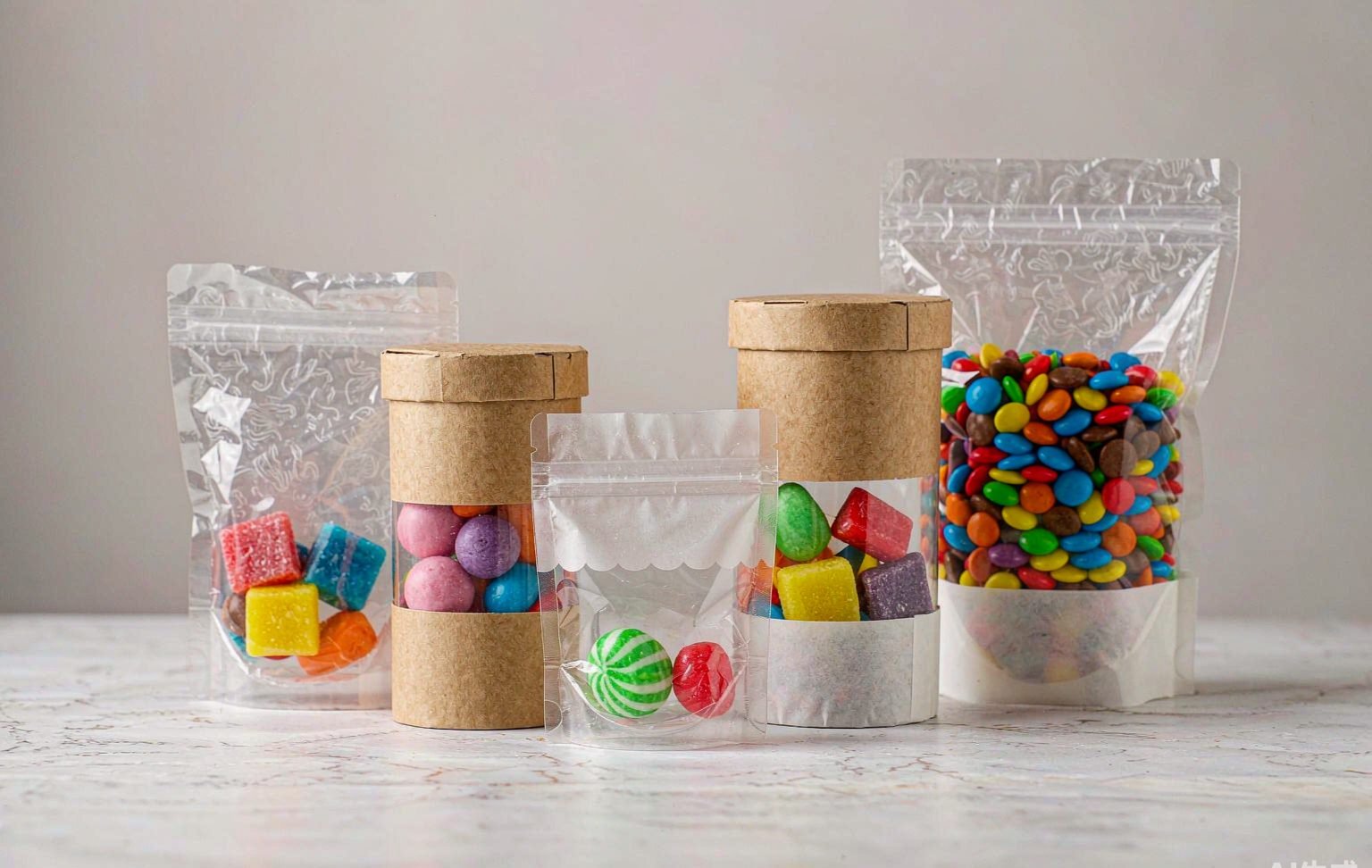
Quick Answer: What Candy Bag Sizes Are There?
Candy bag sizes range from 1 × 2 inch pillow wrappers for single chocolates up to 12 × 16 inch gusseted pouches for family share packs. The five sizes you will actually use are 2 × 3 inch samples, 3 × 5 inch fun-size portions (30–60 g), 4 × 6 inch standard favors, 6 × 9 inch 200–300 g share bags, and 8 × 12 inch 500 g family packs. Choosing among candy bag sizes follows the same logic used for chip bag sizes: match the bag to fill weight, then add 30–40% headspace for sealing and nitrogen flushing. The chart below maps every common size to real candy counts so you can order once and order right.

| Bag Size (W × H) | Filled Weight | Typical Candy Count | Headspace Needed | Best Use |
|---|---|---|---|---|
| 2 × 3 in | 5–15 g | 1–3 mini candies | 10 mm | Samples, wedding favors |
| 3 × 5 in | 30–60 g | 5–8 fun-size pieces | 15 mm | Party favors, Halloween minis |
| 4 × 6 in | 80–120 g | 10–15 wrapped pieces | 20 mm | Standard favor, counter sales |
| 6 × 9 in | 200–300 g | 25–40 pieces | 25 mm | Share bags, movie-night packs |
| 8 × 12 in | 450–550 g | 60–80 pieces | 30 mm | Family size, bulk pantry |
| 12 × 16 in (gusset) | 900–1,200 g | 120–180 pieces | 40 mm | Club store, holiday tins refill |
In this guide:
- How candy bag sizes are measured
- Matching bag size to candy type
- Party favors vs retail shelves
- Material and barrier by size
- Buying tips before you order
- FAQ
How Candy Bag Sizes Are Measured
Manufacturers state candy bag sizes as flat width × height, measured empty and unstretched. The stated height includes the seal area, usually 15–30 mm at the top, so the usable fill height is shorter than the number on the spec sheet. Gusseted bags add a third dimension: a 6 × 9 × 3 inch gusseted pouch stands upright and holds roughly 40% more loose candy than a flat 6 × 9 inch sleeve, because the bottom expands when filled. When two suppliers quote nearly identical candy bag sizes, compare gusset depth and seal-zone height, because those hidden numbers decide whether your 300 g fill actually fits with room to seal.
Headspace is the other half of the measurement. A bag filled edge-to-edge cannot be sealed cleanly, and a nitrogen-flushed bag needs empty volume for the gas to displace oxygen. The industry rule of thumb is 30–40% empty space by volume; our walkthrough of how to choose chips bag sizes explains why that same cushion protects fragile snacks, and it applies equally to puffed candy and chocolate-coated nuts.
Matching Candy Bag Sizes to Candy Type
Candy density varies more than most people expect, and density decides how many pieces fit a given size. Hard candies and gummies stack densely; marshmallows and puffed treats fill a bag with air. The table below shows tested fill counts for common sizes at retail portion weights.
| Candy type | 3 × 5 in holds | 4 × 6 in holds | 6 × 9 in holds |
|---|---|---|---|
| Hard candies (wrapped) | 8–10 pcs / 45 g | 15–20 pcs / 90 g | 40–50 pcs / 250 g |
| Gummy bears | 12–15 pcs / 40 g | 25–30 pcs / 85 g | 60–75 pcs / 220 g |
| Chocolate buttons | 10–12 pcs / 35 g | 20–24 pcs / 75 g | 50–60 pcs / 190 g |
| Individually wrapped chews | 6–8 pcs / 50 g | 12–15 pcs / 100 g | 30–38 pcs / 260 g |
| Mini marshmallows | 15 g | 35 g | 100 g |
Chocolate adds one more constraint: temperature. Any bag destined for chocolate should have a foil or metallized barrier layer to block light and slow fat migration, not just a moisture barrier. Our deep-dive on candy packaging for heat-sensitive products covers the melt-risk details by candy type.
Candy Bag Sizes for Party Favors vs Retail Shelves
Party favors and retail packs use the same candy bag sizes for completely different reasons. For weddings and birthday parties, the 3 × 5 and 4 × 6 inch flat bags dominate because guests consume them in one sitting and the bag becomes a keepsake; ribbon or tin-tie tops finish the look, and 20–50 g portions keep the per-favor budget friendly.
Retail shelves invert the logic. A shelf-facing bag needs a wide, printable front panel and a stable base, which is why 6 × 9 inch gusseted or stand-up formats carry most retail candy volume. Plan-o-gram slots commonly allow 90–120 mm of width, so a 4-inch (100 mm) bag fits standard pegs while anything wider needs a shelf. If your brand will scale from market stalls into stores, our stand up pouch sizes chart shows which heights survive the shelf-to-basket trip, and our gallery of custom chip bags demonstrates the same printed formats adapted for candy brands.

Material and Barrier by Bag Size
Size and material decisions are linked more tightly than most buyers expect. Small favor bags under 4 × 6 inches are usually single-layer cellophane or PLA, where a 1–2 week freshness window is acceptable and compostability sells. Mid candy bag sizes from 4 × 6 to 6 × 9 inches move to two- or three-layer laminates (PET/PE or PET/AL/PE) because share bags sit on shelves for months.
Family sizes at 8 × 12 inches and above justify full foil barriers plus nitrogen flushing; the incremental film cost is pennies but the shelf-life gain is 3–6 months. For the full closure decision tree, our guide to zipper types and closures explains which resealable options pair with each barrier level, since a 500 g bag without a zipper almost always disappoints.
Buying Tips Before You Order Candy Bags
- Order a size ladder for testing. Buy 3 × 5, 4 × 6, and 6 × 9 first; real sales data settles the question faster than any spec sheet.
- Confirm the seal zone. Demand at least 20 mm of plain film above the fill line; printing that runs into the seal area looks amateur once sealed.
- Match the zipper to the size. Zippers make sense from 6 × 9 inches upward; below that, tin-ties or simple heat seals cost less and work better.
- Check food-contact compliance. Ask for FDA food-contact documentation for any film touching candy, especially imported stock.
- Plan headspace into the artwork. Print your front panel below the seal zone so the design stays centered after closing, the same trick used in potato chip bag sizing for parties.

FAQ: Candy Bag Sizes
What size bag holds 100 g of candy?
A 4 × 6 inch flat bag holds 80–120 g of most candies, which makes it the standard 100 g portion size. If the candy is bulky like marshmallows, step up to a 6 × 9 inch gusseted bag.
Which candy bag size is best for wedding favors?
The 3 × 5 inch bag is the wedding standard: it holds 6–10 wrapped candies, fits a printed card insert, and keeps the per-favor budget friendly. For candy buffets, 4 × 6 inch bags let guests self-serve a generous handful.
Are candy bag sizes the same as chip bag sizes?
The dimension logic is identical, since both follow flat width × height plus gusset depth, but chip bags run one size larger for the same weight because chips are airy. A 150 g chip pack needs a 6 × 9 inch bag, while 150 g of gummies fits a 4 × 6 inch.
How much headspace should a candy bag have?
Leave 30–40% of the bag volume empty. That cushion absorbs settling during shipping, gives the sealer a clean film zone, and provides the volume nitrogen flushing needs to displace oxygen.
What size candy bag fits 50 pieces of wrapped candy?
A 6 × 9 inch bag holds 40–50 wrapped hard candies or chews at roughly 250 g. For a fuller look at parties, add a 4 × 6 inch card inside a 8 × 12 inch bag and half-fill it.
The Bottom Line on Candy Bag Sizes
Candy bag sizes form a simple ladder: 2 × 3 inch for samples, 3 × 5 inch for favors, 4 × 6 inch for 100 g portions, 6 × 9 inch for share bags, and 8 × 12 inch for family packs. Match the size to your real fill weight with a kitchen scale, keep 30–40% headspace, and move up the barrier ladder as shelf-life requirements grow. Test two or three sizes with your actual candy before committing to a print run — our size charts for chip bag sizes and protein powder pouch sizes will help you standardize the whole product line. For a quick history of the industry itself, the candy overview on Wikipedia is a surprisingly useful read.