What Is Water-Based Ink?
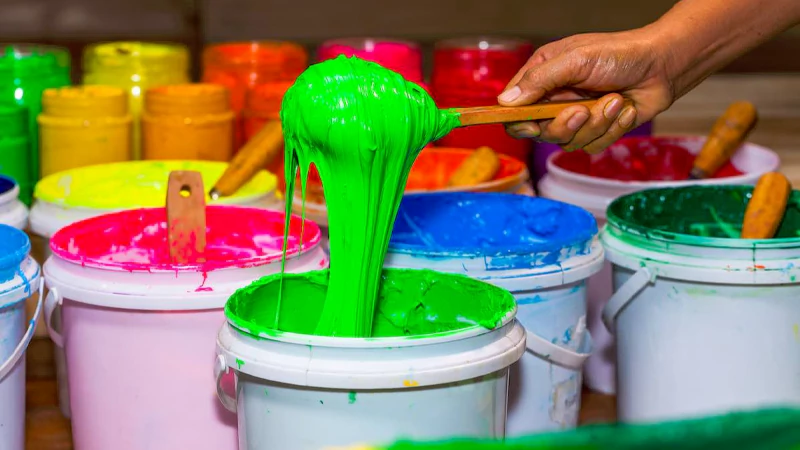
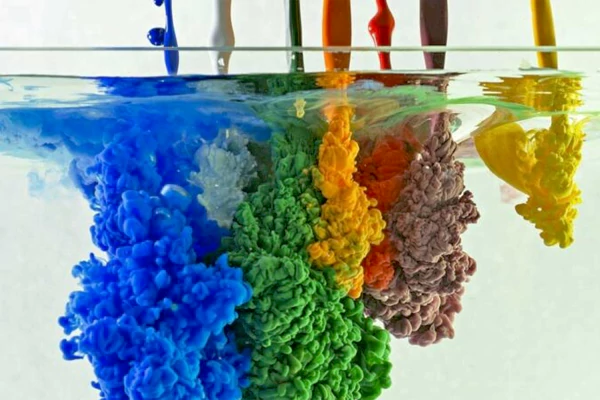
Water-based ink is a printing ink that uses water as its primary carrier instead of chemical solvents like toluene or ethyl acetate. Pigments, resins, and performance additives are dispersed through a water phase, which evaporates during drying to leave a durable, colored film bonded to the substrate.
In practical terms, replacing solvent with water has two major consequences: it eliminates the majority of volatile organic compound (VOC) emissions that make traditional inks a regulatory and environmental liability, and it makes the resulting packaging safer — particularly for food, beverages, personal care products, and anything else where chemical migration to the contents is a concern.
According to the U.S. Environmental Protection Agency (EPA), water-based inks can reduce VOC emissions by up to 90% compared to solvent-based inks. That single figure explains why the entire flexible packaging industry is in the middle of a structural transition toward water-based technology.
Water-Based Ink Composition: What’s Actually Inside
Understanding ink composition helps brand owners ask better questions of their packaging suppliers. A well-formulated water-based ink contains five functional components:
Pigments provide color. High-quality organic or inorganic pigments — carbon black, titanium dioxide, azo-based colorants — are milled to fine particle sizes and dispersed evenly through the water carrier. Pigment quality determines color density, lightfastness, and migration safety.
Resins (Binders) form the film that anchors pigment to the substrate after drying. The three most common systems in flexible packaging are acrylic dispersions (good gloss and chemical resistance), polyurethane dispersions or PUDs (superior adhesion on low-energy plastic films), and hybrid acrylic-polyurethane systems that balance both. Acrylic-polyurethane hybrid resins introduce polar groups, improving adhesion on non-absorbent substrates like BOPP and PE by up to 40%, with cross-cut adhesion reaching 4B–5B.
Water comprises 60–80% of the total formulation. It is the primary carrier and evaporates during the drying phase.
Co-solvents — typically glycol ethers or alcohols at 5–15% — improve wetting, leveling, and drying characteristics on difficult substrates.
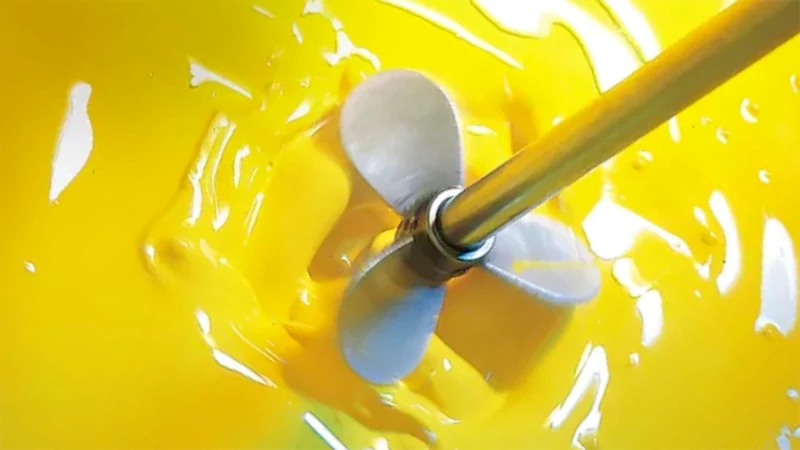
Additives fine-tune performance: surfactants control surface tension; defoamers eliminate air bubbles during high-speed printing; pH stabilizers maintain consistency across a production run; rheology modifiers optimize viscosity for the specific printing process.
Why Water-Based Ink Matters for Flexible Packaging
For most of flexible packaging’s history, solvent-based inks dominated because they performed better on low-energy plastic substrates — PE, BOPP, PET — which repel water-based systems. Difficulties with ink adhesion, wetting, and drying on low surface energy, non-absorbent flexible substrates contributed to a historical preference for solvent-based inks in the market, with solvents helping polymers attach to lower-energy substrates and evaporating much more quickly.
That technical gap has closed significantly. Advancements in water-based inks have led to improved adhesion and wetting, allowing the ink to be used more frequently in flexible packaging applications. These developments in resin technology, combined with improvements in the drying capabilities of printing equipment, have positioned water-based inks as a viable alternative on non-porous substrates used in flexible packaging.
The shift is now driven simultaneously by technology pull and regulatory push:
China’s 14th Five-Year Plan mandates a 30% VOC reduction in packaging printing by 2025, and the EU has banned toluene-containing inks. Water-based ink market share was at 32% in 2023 with a CAGR of 7.8%, while solvent-based ink is declining at -3.2%.
Around 90% of plastic-based flexible packaging is still printed with solvent-based inks — but that is about to change, as significant leaps in water-based technology make it possible to print on film substrates at a similar level of quality and cost.
For brands sourcing packaging today, choosing a supplier who prints with water-based inks is not just a sustainability statement. It is preparation for a regulatory environment that is tightening every year.
Water-Based Ink vs. Solvent-Based Ink: The Real Trade-offs
This comparison matters when evaluating packaging suppliers. The choice affects print quality, food safety, compliance costs, and sustainability credentials.
| Factor | Water-Based Ink | Solvent-Based Ink |
|---|---|---|
| VOC emissions | Very low (30–50 g/L) | Very high (up to 600 g/L) |
| Food safety | Preferred for direct and indirect food contact | Requires solvent recovery; residue risk |
| Odor | Minimal | Strong chemical smell |
| Substrate range | Paper, board, pretreated films | Wide including untreated plastics |
| Drying speed | Moderate; requires IR/hot-air systems | Fast; evaporates rapidly |
| Cleanup | Water-based; minimal chemical waste | Requires chemical solvents |
| Regulatory compliance | EU, FDA, REACH-friendly | Increasingly restricted |
| Recyclability | Compatible with paper and film recycling | Can contaminate recycling streams |
A dairy packaging plant that switched from solvent-based to a 45 g/L VOC water-based flexo ink saw VOC concentration in the workshop drop from 120 mg/m³ to 35 mg/m³ without additional exhaust treatment, saving $55,000 per year in environmental compliance costs, while solvent residues fell from 7.2 mg/m² to 1.8 mg/m².
Solvent inks emit a strong chemical smell due to VOCs and require special chemical cleaners for equipment. Water-based inks are virtually odorless and clean up easily with water before curing.
The one area where solvent inks retain a practical advantage is drying speed on untreated non-porous films. However, fast-evaporating co-solvents combined with IR and hot-air drying can cut water-based ink drying time to 2–3 seconds, matching solvent-based ink productivity at approximately 250–300 meters per minute.
Water-Based Ink and Food Packaging: Safety and Compliance
Food packaging is the most demanding application for any printing ink. When your packaging holds snacks, coffee, pet food, or personal care products, the ink used to print your brand onto that bag must meet strict safety requirements — not just for aesthetics, but to protect consumers and your brand’s legal standing.
What the Regulations Require
There is no single global “food-safe ink” certification. Instead, several interlocking standards govern different markets:
- FDA 21 CFR 175.300 governs resin-based coatings for indirect food contact in the United States
- EU Regulation 10/2011 sets specific migration limits for plastic food contact materials in Europe
- EU Regulation 1935/2004 establishes the general framework for all food contact materials
- GB 4806.14-2023 (China) requires inks to be odorless before and after food-contact simulation testing
- GB 38507-2020 (China) limits VOC content to ≤100 g/L and solvent residue to ≤5 mg/m²
For direct food contact applications, total migration after 24 hours at 40°C must be ≤10 mg/dm² under GB 31604.1-2015; for infant food packaging, the limit is ≤6 mg/dm². EU 10/2011 limits benzophenone to ≤0.6 mg/kg, and aromatic amine migration must be ≤0.01 mg/kg. Benzene, toluene, and xylene must not be detected.
Three Migration Pathways to Understand
Ink components can reach food through three mechanisms: direct penetration through the substrate; invisible set-off, where components transfer from the printed side to the food-facing side during stacking or rolling; and gas-phase transfer, where volatile ink substances move through the air inside the package.
Water-based inks significantly reduce risk across all three vectors because they eliminate the volatile aromatic solvents (toluene, xylene) that are the primary migration concern in solvent-based systems. Water-based pigment inks contain no hazardous air pollutants and are designed to minimize ink migration, making them far more compatible with paper, board, and film recycling streams and with food-contact compliance.
The Critical Distinction: Environmental Compliance ≠ Food Safety Compliance
A widespread misconception is that as long as an ink meets VOC environmental requirements, it naturally meets food-contact safety standards. In reality, environmental compliance and food-contact compliance are two interconnected yet independent systems — environmental indicators address impact on the environment, while food-contact safety focuses on impact on human health.
When evaluating a packaging supplier, ask for both: ISO 14001 or VOC compliance documentation and independent food-contact migration test results from accredited laboratories (SGS, Intertek, or equivalent). These are not the same document.
How Water-Based Inks Are Used in Flexible Packaging Printing
Flexographic Printing (Flexo)
Flexo is the dominant printing method for flexible packaging globally, and it is also where water-based ink technology has made the greatest advances. Flexographic printing is leading the global shift toward water-based inks. The principal reason is that flexographic printing uses less ink than gravure printing, meaning that even when water-based inks — which dry more slowly than solvent-based inks — are used, drying requires little energy, facilitating high-speed printing.
Modern water-based flexo inks can run at 250–300 meters per minute on CI (central impression) presses, delivering sharp color reproduction on kraft paper, BOPP, PE, and PET films. Water-based inks for flexographic printing are known for producing sharp and vivid colors, making them ideal for creating eye-catching packaging that stands out on the shelf, with excellent adhesion ensuring crisp, clear print on various substrates.
Gravure Printing
Gravure delivers the highest image resolution and is used for premium flexible packaging at high run volumes. Self-crosslinking mechanisms in acrylate dispersions and polyurethane dispersions are being used increasingly to meet the demands of flexible packaging in gravure applications, making it possible to achieve comparable properties in terms of adhesion, gloss, sealability, laminability, and resistance to aggressive substances.
Lamination Applications
In multilayer flexible packaging structures — where a printed film is laminated to barrier or sealant layers — the ink sits between substrate layers and must bond strongly without compromising lamination integrity. Water-based inks have been further adopted in lamination ink applications, which do not require the resistance properties of surface inks because they are between two layers of non-porous flexible substrate protecting them from water, chemicals, and abrasion. Water-based polyurethane dispersions have excellent substrate adhesion and cohesion, approaching the performance of solvent-based polyurethane inks.
Substrate Compatibility: What Works and What Requires Preparation
This is the most technically important consideration for brands specifying packaging. Not all films accept water-based inks the same way.
Paper and kraft substrates are the most compatible: ink penetrates the fiber structure and bonds easily. No pretreatment required. This is why water-based inks have been standard on paper packaging for decades.
Plastic films (BOPP, PE, PET, OPP, CPP) require corona treatment or chemical primer pretreatment to raise surface energy above 38–42 dynes/cm, enabling proper ink wetting and adhesion. On BOPP, PE, and PET, cross-cut adhesion must reach 4B–5B, meaning ≤5% ink removal in adhesion testing. With proper pretreatment, water-based inks now meet this standard consistently.
Aluminum foil and metallized films require specialized primer coats and are the most demanding substrate category. Advances in polyurethane binder systems have made water-based inks viable here, though formulation expertise matters.
Printing water-based inkjet inks on flexible oil-derived plastic films is literally like mixing oil and water — but printers can overcome that hurdle by preparing the substrate with appropriate coating. When done right, even a flexible plastic surface can become compatible with water-based inks. A pre-coating process optimizes the surface and also acts as an adhesive tie-layer between film, ink, and post-coatings to enable maximum print quality and productivity.
BN PACK and Water-Based Ink Printing
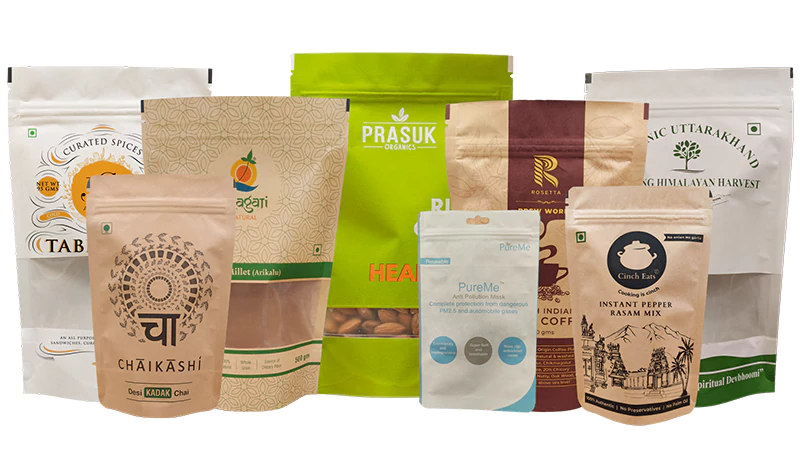
At BN PACK, water-based ink is our standard printing process for flexible packaging across kraft paper, food-grade pouches, eco-friendly packaging, and custom printed bags. Here is what that means for your brand:
Food safety compliance. Our water-based inks are formulated to comply with FDA 21 CFR 175.300, EU Regulation 10/2011, and China GB standards for food-contact packaging — covering migration limits, solvent residue, and heavy metal restrictions.
Eco-friendly credentials. Water-based inks contain no toluene, no benzene, and no xylene. For brands selling compostable or recyclable packaging, water-based ink is the required printing method — solvent inks contaminate certified compostable substrates and can complicate film recyclability.
No odor transfer. For coffee, tea, snacks, and personal care packaging, odor is a product quality issue. Water-based inks are virtually odorless and do not transfer residual solvent smell into your product.
Vibrant, consistent color. Modern water-based flexo printing on pretreated films delivers color density and accuracy comparable to solvent-based systems. Up to 10-color printing with matte, gloss, or soft-touch lamination finishes.
Supports sustainable packaging certifications. If your packaging targets OK Compost, TÜV Home Compost, or recyclability claims, your ink must align. We can confirm ink compliance for your specific substrate and certification pathway.
Our product range printed with water-based inks includes kraft paper bags, compostable pouches, recyclable pouches, coffee bags, food packaging bags, and flat bottom pouches.
Conclusion
Water-based ink has moved from a niche eco-preference to the technical and regulatory mainstream of flexible packaging printing. The combination of tightening VOC regulations, advances in resin and binder technology, and strong brand demand for sustainable, food-safe packaging has accelerated the industry’s transition — and that transition is accelerating, not slowing.
For brand owners, the practical takeaway is straightforward: if your packaging contains food, children’s products, personal care items, or anything targeting sustainability-conscious consumers, you should be specifying water-based ink printing — and confirming your supplier can provide the compliance documentation to back it up.
At BN PACK, water-based ink is not a premium add-on. It is our production standard. Get a custom quote for your flexible packaging project and we will confirm ink compliance, substrate options, and certification support from the first conversation.
FAQs
Is water-based ink permanent on flexible packaging?
Yes — when properly cured. On paper and kraft substrates, water-based ink bonds into the fiber structure and is permanently fixed once dry. On plastic films, proper corona pretreatment and IR/hot-air curing produce a film that is scratch-resistant and durable through normal handling and transit.
Is water-based ink food safe?
Water-based inks are the safest ink technology for food packaging, but “water-based” alone does not guarantee food-contact compliance. The specific formulation must be verified against FDA, EU 10/2011, and applicable regional standards. Always request migration test documentation from your supplier.
Is water-based ink waterproof?
After proper drying and lamination, yes. A water-based ink printed onto a laminated flexible pouch is fully waterproof because the ink layer is sealed between film substrates. For unlaminated surface-print applications on kraft paper, a gloss or matte varnish coating is recommended for moisture resistance.
Can water-based inks print on all flexible packaging materials?
With appropriate substrate pretreatment, water-based inks can print on paper, kraft, BOPP, PET, PE, CPP, OPP, aluminum foil, and most metallized films. Untreated or very low surface energy substrates remain challenging and require a primer or corona step before printing.
What is the shelf life of water-based ink prints?
On properly cured, laminated flexible packaging, water-based ink prints are lightfast and durable for the normal shelf life of the product. For archival applications using pigment-based formulations (fine art, archival documents), print life extends far beyond typical packaging requirements.