
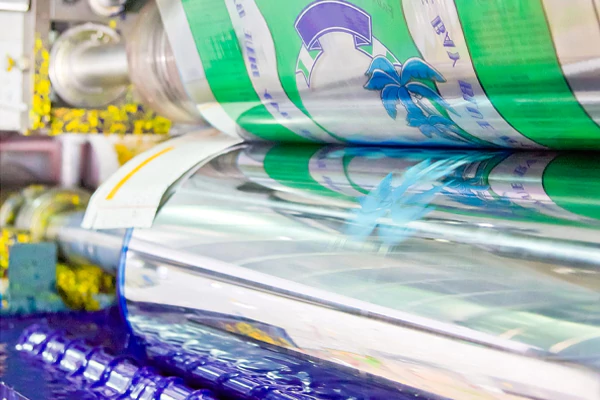
When buyers source printed packaging bags, they usually compare film structure, barrier performance, zipper options, size, MOQ, and price first. But one technical detail is often underestimated: the ink system.
The right ink affects not only print appearance, but also odor, migration risk, rub resistance, production stability, and whether the package remains suitable for filling, transport, storage, and end use.
In practice, the better question is not “What ink do you use?” but “What ink system is suitable for my product, package structure, processing conditions, and destination market?”
Why Ink Selection Matters More Than Many Buyers Realize

Packaging inks are not judged by color alone. In food and sensitive packaging, substances from printing inks can move into the pack by several routes, including migration through the substrate, set-off transfer when printed surfaces touch the reverse side in reels or stacks, and vapor-phase transfer. The actual risk depends on the full construction: substrate type, barrier properties, food type, shelf life, storage temperature, printing process, and post-print processing.
Another important point for buyers is terminology. “Low migration” is widely used in the market, but Sun Chemical notes that the term is not clearly defined in regulation and can be interpreted differently across the supply chain. Their guidance recommends specifying low taint and odour in addition to migration performance, especially for aroma-sensitive products. That matters for coffee, tea, spices, snacks, supplements, and any product where smell and taste are part of the customer experience.
Start With Intended Use, Not the Ink Name
Before discussing solvent-based, water-based, or UV systems, buyers should first define the real application. What product will be packed? Is it dry, fatty, acidic, or aroma-sensitive? Will the bag be used for ambient storage, freezing, hot fill, pasteurization, or retort? Is the design surface-printed, reverse-printed, or laminated? What films or papers are used in the structure?
These questions matter because compliance and performance are determined by the final printed package under actual conditions of use, not by the ink in isolation. EuPIA explicitly states that screening on inks is not a replacement for compliance testing of the final printed food-contact material, and IFS guidance says food manufacturers must verify suitability for the specific food, process, storage, and distribution conditions.
This also means a buyer should not accept vague claims like “food-grade ink” without more detail. In Europe, EuPIA GMP is used to help control food safety hazards in inks for food-contact materials, and Swiss rules require that only permitted or non-migrating/non-CMR substances be used in printing inks for food-contact applications, with a declaration of compliance for inks and printed materials. For buyers, the practical takeaway is simple: ask for application-specific documentation, not generic reassurance.
The Main Ink Systems Buyers Should Know
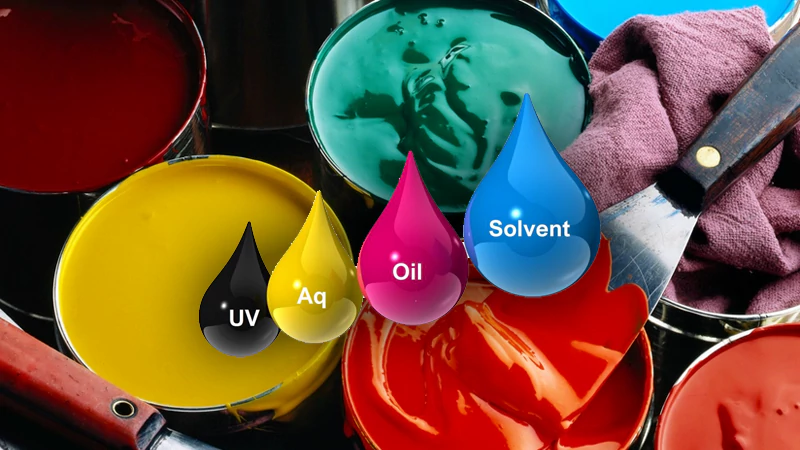
Solvent-Based Inks
Solvent-based inks remain common in flexible packaging, especially for film printing and lamination work. DIC describes solvent flexographic inks as mainly used on film, and INX highlights solvent-based laminating systems for a wide range of flexible packaging applications. These systems are often chosen for strong printability, fast drying, and compatibility with demanding film structures. But buyers also need to consider VOCs, odor control, curing/drying quality, and residual solvent management, especially when the package is used for food.
Water-Based Inks
Water-based systems are established in paper and board applications and are also increasingly used in flexible packaging, including treated films and lamination structures when the converter has the right process capability. BASF, Follmann, INX, and DIC all describe water-based options for flexible packaging and/or treated film applications, while emphasizing reduced VOCs and strong sustainability advantages. For buyers, that means water-based inks can be an excellent option, but only when matched to the right substrate, press setup, drying capacity, and performance target. Water-based should not be chosen as a slogan; it should be chosen as a technically suitable system.
UV and EB Systems
Energy-curable systems can be used in some packaging applications, but buyers should be more careful here. Sun Chemical explains that migration-compliant UV and EB systems are formulated specifically to reduce migration potential, and industry sources repeatedly emphasize that the final package still needs to be validated for the intended use. In other words, buyers should not assume that “UV” automatically means wrong, or that “low migration UV” automatically means safe for every pouch. The right question is whether the exact printed structure, cure level, substrate, and end use have been properly assessed.
How Buyers Should Choose Ink for Different Packaging Bag Applications
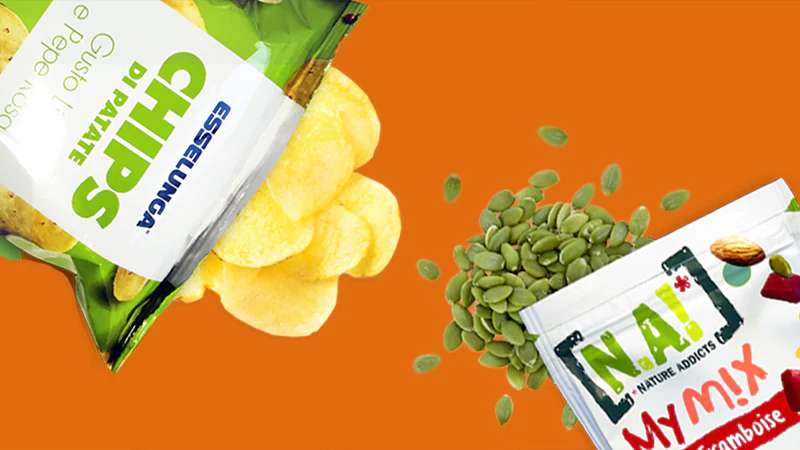
For Dry Foods, Powders, Coffee, Tea, and Supplements
For these products, odor and sensory neutrality often matter as much as visual quality. A bright print is useless if the package adds unwanted smell or affects perceived freshness. Buyers in these categories should prioritize low taint and odour performance, ask whether the print is reverse-printed or protected by lamination where appropriate, and request compliance support for the finished structure rather than only the base ink.
For Oily, Fatty, or Long-Shelf-Life Foods
Fatty foods, longer storage times, and more aggressive use conditions can change migration behavior. INX notes that migration extent depends on food type, storage temperature, and the nature of the packaging itself, while IFS requires the food manufacturer to evaluate packaging suitability for the product and process. For buyers, this means standard answers are not enough. The supplier should understand the real packed product, expected shelf life, and barrier structure before recommending an ink system.
For Hot Fill, Boil-in-Bag, Pasteurization, and Retort
This is where generic ink recommendations become risky. INX and Flint both offer dedicated lamination ink systems for retort or high-heat applications, and TOPPAN describes retort and hot-fill pouches as packaging for products that are heated or thermally processed in the pouch. In these applications, buyers should specifically ask for retort-rated or hot-fill-compatible laminating inks, along with information on heat resistance, bond strength, and low solvent retention. A standard pouch ink is not enough for a pouch that will face high heat and humidity stress.
For Recyclable Mono-Material PE Structures
If the project target is recyclability or mono-material PE, ink choice should be discussed together with the structure strategy. INX, for example, markets a nitrocellulose-free solvent-based ink system for mono-material polyethylene packaging. For buyers, the practical point is not to treat recyclability as only a film issue. Ask whether the ink system is designed for the intended mono-material structure and whether it supports the recycling or compliance goals of that format.
For Paper Bags and Paper-Based Packaging
Paper packaging often uses water-based systems, and DIC explicitly describes water-based flexo inks as commonly printed on paper for corrugated board and paper containers. But buyers still need to match the ink to the end use. A paper snack bag, a takeaway bag, and a paper pouch with barrier coating do not present the same requirements. Even with paper, intended food type, coatings, and destination-market compliance still matter.
What Documents Buyers Should Request From a Packaging Supplier
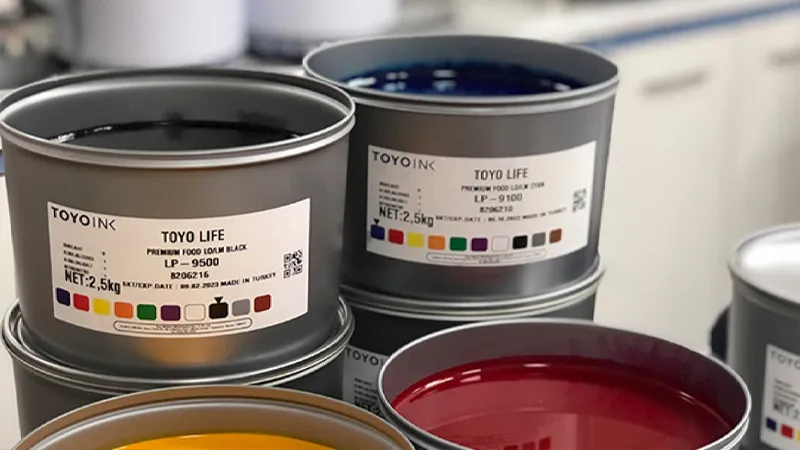
A serious supplier should be able to provide more than a color card. At minimum, buyers should ask for a declaration or statement of compliance relevant to the target market, confirmation that the ink system is manufactured under appropriate GMP principles, and migration support for the final printed structure or a clear test plan for the intended application. For aroma-sensitive products, buyers should also ask about low odour/low taint performance. And because packaging safety depends on the whole construction, the supplier should be able to explain the print side, lamination structure, and what barrier assumptions are being used.
Red Flags Buyers Should Watch For
Be cautious if a supplier only says “our ink is food grade” but cannot define the application scope. Be cautious if they cannot discuss set-off control, barrier assumptions, hot-fill or retort suitability, or what documents support their recommendation. And be cautious if they provide only raw-material-level claims without helping evaluate the finished bag structure. Multiple industry sources make the same point: the final printed pack, under real use conditions, is what determines suitability.
Conclusion
The best packaging ink is not simply the cheapest, the greenest-sounding, or the one with the brightest print. It is the one that matches your product, substrate, package structure, processing conditions, shelf-life target, and destination-market requirements. For buyers, the smartest sourcing strategy is to work with a packaging supplier that asks detailed technical questions, provides compliance documents, and validates the final printed bag instead of selling a one-size-fits-all ink story.