Quick Answer: What Jerky Bag Sizes Are There?
The jerky bag sizes you actually meet at retail run from 0.75-1 oz single-serve snack pouches, through the 2.75-3.25 oz standard share bags, up to 8 oz and 16 oz family and bulk formats. Home-dehydrating shoppers mostly buy empty pouches in the same spread: 3 × 5 inch bags for samples, 4 × 7 inch bags that hold roughly 3 oz of finished jerky, and 6 × 9 inch or 7 × 10 inch bags for half-pound and pound batches. Because jerky is light but bulky, bag dimensions matter more than weight capacity when you compare options.
Understanding jerky bag sizes saves real money at the shelf, because cost per ounce swings widely between formats, and it prevents the classic home-drying mistake of packing a pound of jerky into a bag meant for trail mix. The table maps the full range, and the sections below turn the chart into decisions by use case.
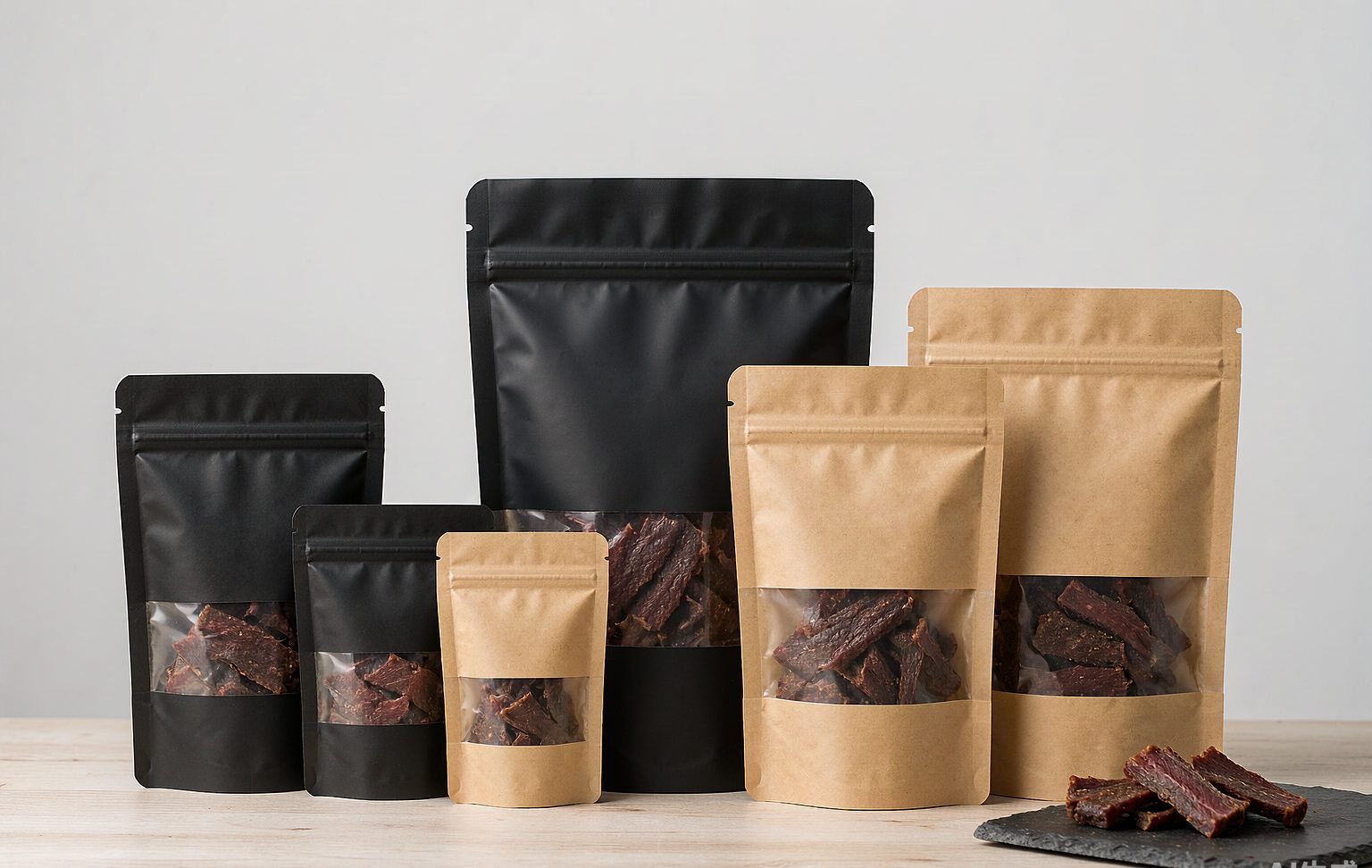
| Format | Typical fill | Common pouch dims | Best for |
|---|---|---|---|
| Single-serve snack | 0.75-1 oz | 3 × 5 in | Lunchboxes, vending, samples |
| Small share | 1.5-2.5 oz | 3.5 × 6.5 in | Gas stations, impulse buys |
| Standard retail | 2.75-3.25 oz | 4.5 × 7 in | The classic supermarket bag |
| Family size | 5-8 oz | 6 × 9 in | Road trips, pantries |
| Bulk | 9-16 oz | 7 × 10 to 8.5 × 12 in | Club stores, jerky lovers |
| Home-batch pouches | 2-16 oz of your own | 4 × 7, 6 × 9, 8 × 12 in | Dehydrator output, gifting |
In this guide:
- Jerky bag sizes compared in detail
- How to choose by use case
- From beef to bag: how much jerky you get
- Features that matter more than size
- FAQ
- The Bottom Line
Jerky Bag Sizes Compared in Detail
The table above compresses the market; here is the logic behind the rows. Jerky is sold by weight but shipped by volume, and a 3 oz bag of jerky takes up more space than a 3 oz bag of nuts because the strips interlock loosely. That is why standard jerky packaging runs taller and wider than snack-bag intuition suggests, with gusseted bottoms so the pouch stands on the shelf.
Among jerky bag sizes, the 3-3.25 oz standard bag dominates supermarket shelves for a simple reason: it matches a realistic weekly snack budget while staying cheap enough for impulse range placement. The 0.75-1 oz snack pouch thrives in vending and lunchbox culture, and club-store bulk bags of 9-16 oz serve households that treat jerky as a pantry staple rather than a treat. If you like seeing how other snack categories handle the same problem, our breakdowns of chip bag sizes and candy bag sizes show the identical small-share-bulk ladder in neighboring aisles.
How to Choose Jerky Bag Sizes by Use Case
Pick the bag for the job, not the other way around. The scenarios below cover where nearly everyone lands.
| Use case | Right size | Why |
|---|---|---|
| Hiking, gym bag, EDC snack | 0.75-1 oz | Fits a pocket, no reseal needed |
| Lunchbox for kids | 0.75-1 oz | Portion control, mild flavor formats |
| Desk or car stash | 2.75-3.25 oz | Resealable, lasts the week |
| Family movie night | 5-8 oz | One bag serves the couch |
| Hunting camp, road trip | 9-16 oz | Bulk value, shareable |
| Packing your own dehydrator batch | 4 × 7 in per 3 oz | Match pouch to yield per tray |
For home packers, a useful pairing: one standard dehydrator tray of finished jerky, roughly 3-4 oz, fills a 4 × 7 inch or 5 × 8 inch pouch almost exactly. Buying jerky bag sizes in that matched dimension, rather than squeezing a big batch into small bags, keeps strips from breaking and reduces the crushed-dust pile at the bottom.
From Beef to Bag: How Much Jerky You Get
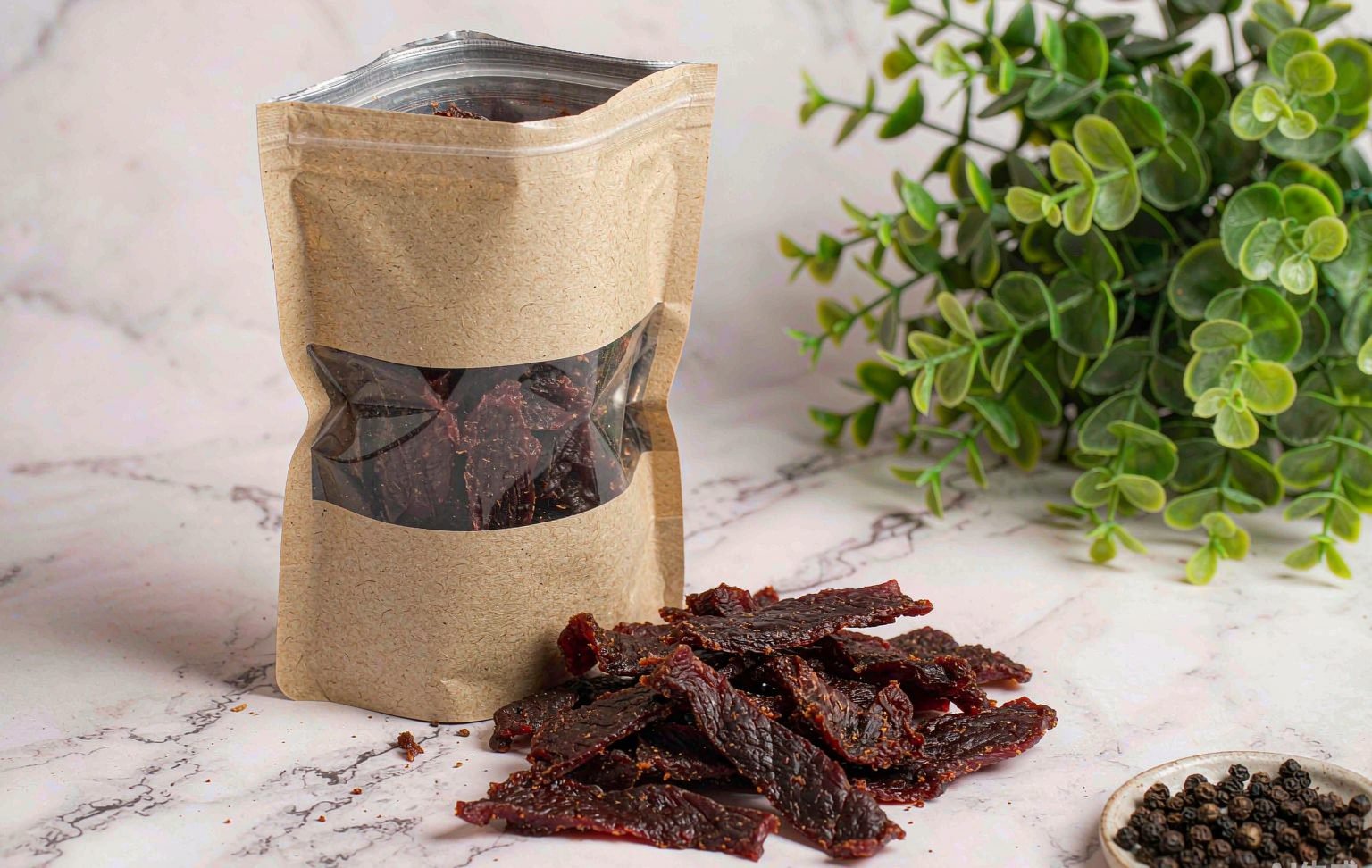
The rule of thumb in home drying is that 3-4 pounds of lean raw beef produces about 1 pound of finished jerky, because moisture loss runs around 65-70 percent during dehydration. A typical home dehydrator batch of 4-5 pounds of raw top round therefore lands near 1.25 pounds of jerky, which maps to one 8 oz family pouch plus a snack pouch, or three to four 4 × 7 inch storage bags.
This yield math is why jerky bag sizes matter more for home packers than for shoppers. Commercial producers match pouch to fill so the pouch looks full at retail; at home, matching pouch to tray yield avoids half-empty bags that let the strips grind against each other in storage. If you are drying and packing your own, our step-by-step on how to package beef jerky covers the fill-and-seal workflow, and our guide on jerky shelf life explains which size pairs with which freshness method.
Features That Matter More Than Size
Once the size is right, three features decide whether a jerky pouch keeps its contents in eating condition.
- Barrier film. Jerky’s residual fat oxidizes, and its texture swings with humidity, so foil or high-barrier film laminates beat plain cellophane for anything stored beyond a couple of weeks. The same logic that ranks our Mylar bag sizes guide applies here.
- Resealable zipper. Standard for 2.5 oz and larger, and the reason mid-size bags beat snack pouches for desk stashes. On small single-serve bags the zipper is skipped to save cost, since the portion disappears in one sitting anyway.
- Stand-up base gusset. A bottom gusset turns a pouch into a shelf display and a pantry organizer. Flat sachet-style bags are fine for samples, but anything above 3 oz earns its gusset.
Design-minded home packers and small brands also lean on presentation, which our gallery of beef jerky packaging ideas collects, and dog owners will recognize the same size ladder in our guide to dog food bag sizes, scaled up a few notches.
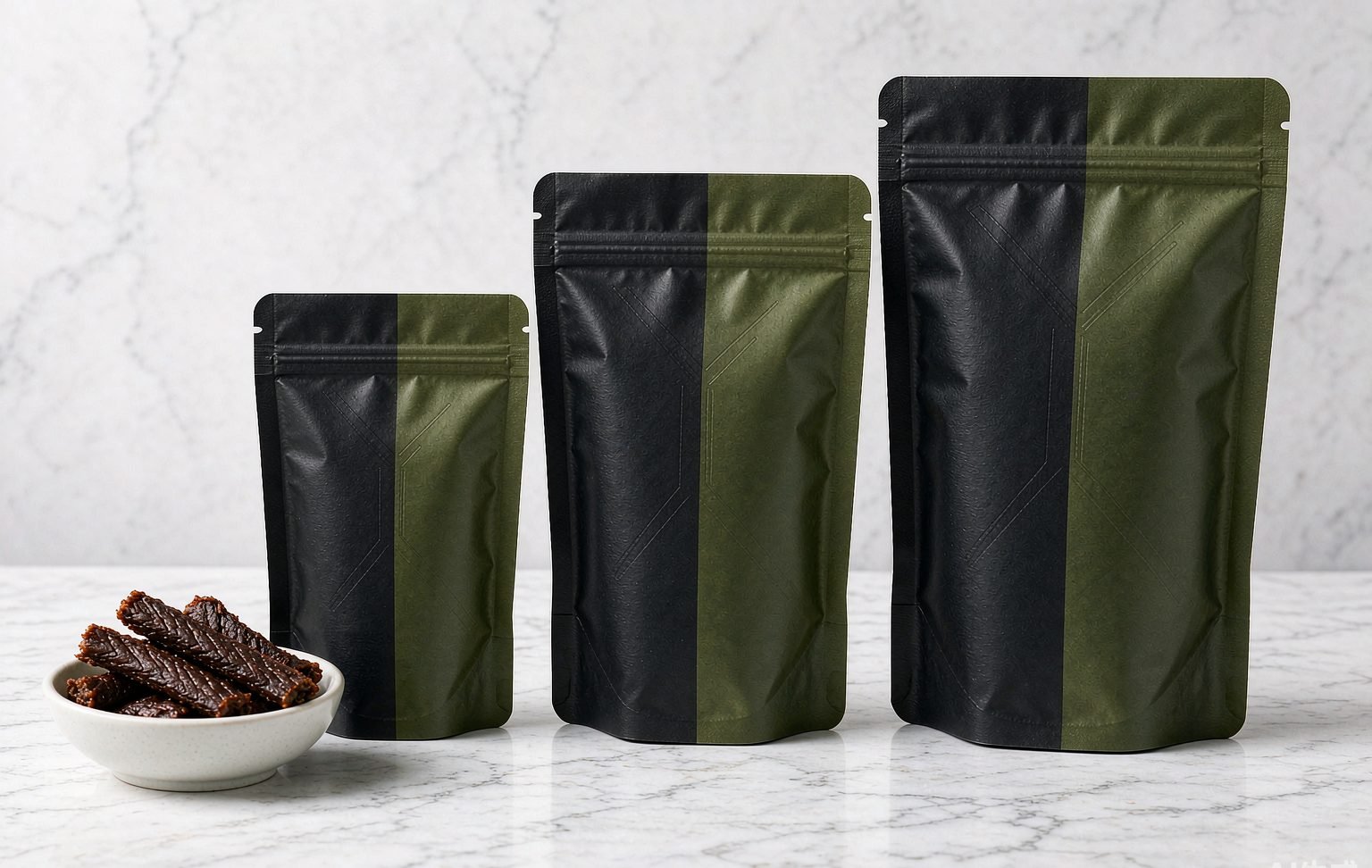
For the curious, jerky itself has a long history as dried, salted meat, as the entry on jerky explains, and that heritage is exactly why the packaging ladder looks the same today as it did for pemmican sold in cloth sacks a century ago: keep air and moisture out, portion by journey length.
FAQ: Jerky Bag Sizes
What size is a standard bag of jerky?
The standard supermarket jerky bag holds 2.75-3.25 oz in a pouch around 4.5 × 7 inches with a resealable zipper and a bottom gusset. When people compare jerky bag sizes, this is the format every other size is measured against.
How much jerky fits in a 4 × 7 inch bag?
Roughly 3-4 oz of finished jerky, which is why that dimension is the home-packer favorite: it matches one standard dehydrator tray’s yield with a little breathing room so the strips are not crushed.
Are bigger jerky bags better value?
Almost always. Cost per ounce drops steadily as format size rises, with the 8-16 oz bulk bags offering the steepest savings, trading convenience for portion control. If your household finishes 3 oz bags within days, jumping two sizes up pays for itself quickly.
What size bag is best for homemade jerky gifts?
A 5 × 8 inch kraft or matte pouch holding 3-4 oz hits the sweet spot: enough for a genuine tasting, small enough to feel like a curated gift, and it stands on a shelf or in a gift basket without support.
Do jerky bag sizes follow the same rules as other snack bags?
Yes. The sample, share, family, and bulk ladder you see in jerky bag sizes mirrors chips, candy, and trail mix, with one twist: jerky’s high protein density means each size step up in weight looks smaller on the shelf than the equivalent chip bag.
The Bottom Line
Jerky bag sizes sort cleanly into five retail tiers: 0.75-1 oz snack, 1.5-2.5 oz impulse, 2.75-3.25 oz standard, 5-8 oz family, and 9-16 oz bulk, with 4 × 7 inch and 6 × 9 inch pouches as the home-packing workhorses. Choose by use case first, check the barrier and zipper features second, and let the 3-4 pounds raw to 1 pound finished yield rule decide how many bags a batch needs.