Quick Answer: What Mylar Bag Sizes Are Available?
Mylar bag sizes run from 2 × 3 inch sample pouches (about 1–5 g) up to 20 × 30 inch five-gallon bucket liners that hold 5–6 kg of dry food. The most common retail sizes are the 4 × 6 inch (about 1 cup), the quart-size 8 × 12 inch, the gallon-size 10 × 14 inch, and the 5-gallon 20 × 30 inch liner. Choosing among mylar bag sizes is simple once you match three numbers: the fill volume of your product, the headspace you need for sealing, and the oxygen absorber size the air volume requires. The chart below maps every standard size to real fill weights so you can order the right bag the first time.

| Bag Size (W × H) | Capacity (dry goods) | Rice / Grains | Oxygen Absorber | Typical Use |
|---|---|---|---|---|
| 2 × 3 in | 1–5 g | — | 50 cc | Samples, spices, seeds |
| 4 × 6 in | ½–1 cup | 200 g | 100 cc | Herbs, tea, small batches |
| 6 × 9 in | 3–4 cups | 700 g | 200 cc | Dried fruit, jerky, flour for one month |
| 7 × 10 in | 5–6 cups | 1.1 kg | 300 cc | Baking staples |
| 8 × 12 in (quart) | 7 cups | 1.6 kg | 300–500 cc | Standard pantry portions |
| 10 × 14 in (gallon) | 14 cups | 3.2 kg | 500–1,000 cc | Bulk grains, freeze-dried meals |
| 12 × 16 in | 20 cups | 4.5 kg | 1,000 cc | Large bulk storage |
| 20 × 30 in (5-gal liner) | 5.5–6.5 kg | 15–17 kg | 2,000 cc × 2 | Bucket liner long-term storage |
In this guide:
- How mylar bag sizes are measured
- Matching bag size to your product
- Does thickness change the size?
- Oxygen absorber sizing by bag volume
- Buying tips before you order
- FAQ
How Mylar Bag Sizes Are Measured
Manufacturers state mylar bag sizes as finished width × height, measured with the bag laid flat and empty. Height includes the seal area at the top, usually 20–40 mm, so usable fill height is slightly less than the stated dimension. Gusseted bags add a third number: a 8 × 12 × 4 inch bag has a 4 inch bottom gusset that expands when filled, roughly doubling the true volume compared with a flat 8 × 12 inch sleeve. Always compare gusset depth when two suppliers quote similar sizes, because a flat sleeve and a gusseted bag with the same two numbers are not the same product.
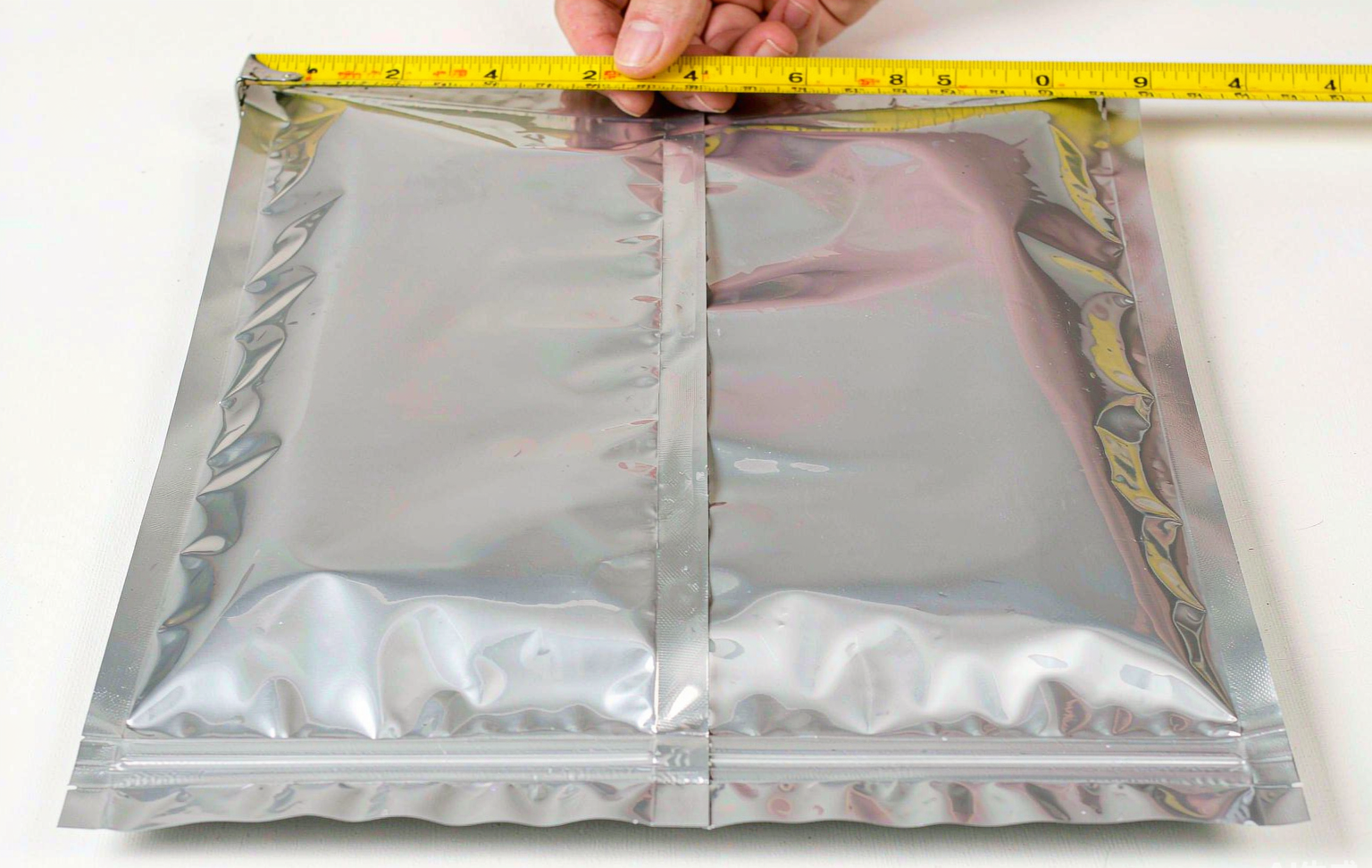
To verify a supplier’s spec, lay the empty bag flat, measure width edge to edge, then measure height from the bottom crease to the top edge. Our step-by-step article on how to measure a stand up pouch covers the same three-dimension method, and the geometry carries over directly to mylar. For context on how mylar differs from clear barrier films, the material itself is metallized PET, known industrially as BoPET, which is why the same size feels much stiffer than a poly bag.
Matching Mylar Bag Sizes to Your Product
Product density, not bag volume, decides the right size. Rice and salt are dense and fill a quart bag with 1.6 kg, while freeze-dried apple slices are airy and the same quart holds only 60 g. The practical method: fill a measuring cup with your actual product, weigh it, then use the capacity column of the chart to pick the smallest bag that leaves 25–40 mm of headspace above the contents. Headspace is not wasted space; the heat sealer needs a flat film zone to weld, and oxygen absorbers need air volume to work.
| Product | Quart bag (8×12) holds | Gallon bag (10×14) holds |
|---|---|---|
| White rice | 1.6 kg / 3.5 lb | 3.2 kg / 7 lb |
| Whole wheat flour | 1.1 kg / 2.4 lb | 2.3 kg / 5 lb |
| Granulated sugar | 1.5 kg / 3.3 lb | 3.1 kg / 6.8 lb |
| Rolled oats | 450 g / 1 lb | 900 g / 2 lb |
| Freeze-dried fruit slices | 60–80 g | 130–160 g |
| Dried pasta | 500 g / 1.1 lb | 1 kg / 2.2 lb |
| Powdered milk | 600 g / 1.3 lb | 1.2 kg / 2.6 lb |
Density also drives the barrier spec. High-fat products such as brown rice or whole-grain flour need the lowest oxygen transmission possible, which our guide on choosing pouch packaging by water activity explains alongside moisture requirements.
Does Thickness Change the Size?
Thickness and size are independent specifications. Mylar bag sizes describe geometry; thickness, measured in mils, describes strength and puncture resistance. Standard retail pouches run 3.5–5 mil, while bucket liners run 7–10 mil because they carry 15 kg of grain and survive handling. A thicker bag is not airtighter; the aluminum or metallized barrier layer is identical, so choose thickness for mechanical risk, not shelf life. Our breakdown of bottom gusset styles explains the other structural variable that changes how a given size behaves when filled.
Oxygen Absorber Sizing by Bag Volume
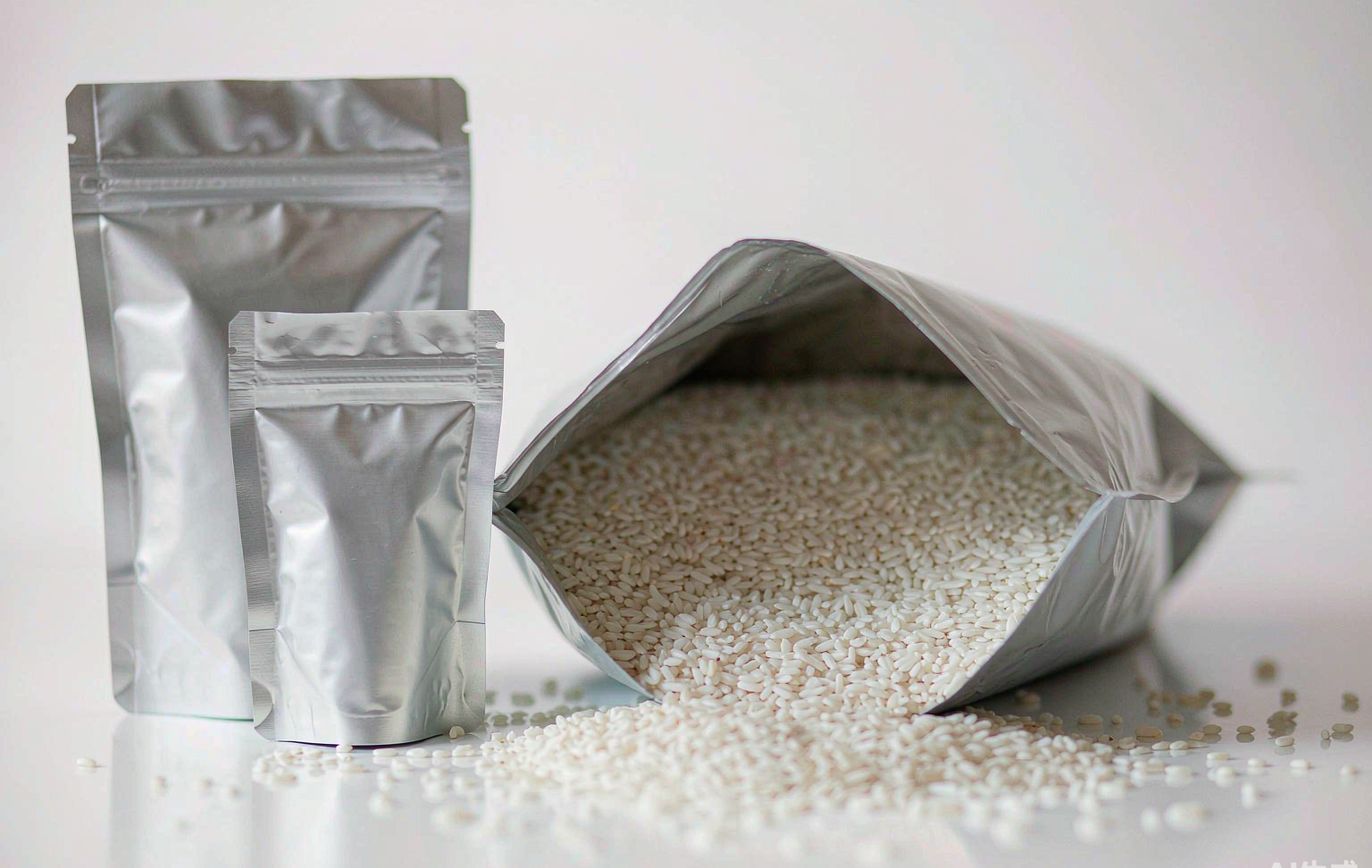
Each of the mylar bag sizes in the chart pairs with an absorber range. Undersized absorbers leave oxygen behind; oversized ones simply cost more, so err slightly high. The chart’s absorber column assumes dry, low-fat food in a standard-size bag. Split dense products across two absorbers placed on opposite sides of the bag for faster oxygen removal. Remember that absorbers start working the moment the package opens: keep spares in a sealed jar and load the bag within 15 minutes of opening the absorber pack.
Buying Tips Before You Order
Ordering mylar bag sizes follows the same density logic as the chart above, and four spec details separate good suppliers from bad ones:
- Order a size ladder, not one size. A practical starter set is 4 × 6, quart, gallon, and one 5-gallon liner; real packing habits settle within two sizes.
- Check the seal zone. Cheap bags skimp on top height, leaving no flat area for a reliable weld. Demand at least 25 mm above the zipper.
- Match zipper to use. Resealable zippers suit pantry rotation sizes; bucket liners never need one. Our guide to zipper types compares closures.
- Confirm food-grade certification. Ask for FDA food-contact compliance documentation for anything touching food.
- Plan the label surface. Metallized film needs a pre-printed panel or an adhesive label; tear notches above the seal make opening predictable, as covered in our tear notch guide.
FAQ: Mylar Bag Sizes
What is the most useful mylar bag size for beginners?
The quart-size 8 × 12 inch bag is the friendliest of all mylar bag sizes for beginners. It holds practical 1–1.6 kg portions, seals easily on any impulse sealer, and stacks efficiently, making it the best size to learn sealing technique on.
Are mylar bag sizes the same as zip-lock bag sizes?
No. A mylar quart bag is wider and taller than a poly zip-lock quart because the stated size includes the seal zone and mylar does not stretch. Compare gusset depth and fill capacity, not just the nominal name.
How much rice fits in a 5-gallon mylar bag?
A 20 × 30 inch liner holds 15–17 kg (33–36 lb) of white rice inside a 5-gallon bucket, paired with two 2,000 cc oxygen absorbers.
Do gusseted bags hold more than flat bags of the same size?
Yes, significantly. A 8 × 12 × 4 inch gusseted bag holds roughly twice the volume of a flat 8 × 12 inch sleeve once filled.
Can I order custom mylar bag sizes for my brand?
Yes. Custom widths, gussets, and heights are cut from parent roll stock, typically from 5,000-piece minimums, and can add valves, zippers, and printed panels.
The Bottom Line on Mylar Bag Sizes
Mylar bag sizes form a ladder from 2 × 3 inch samples to 5-gallon bucket liners, and the right rung is decided by product density, sealing headspace, and absorber capacity rather than by the biggest bag you can buy. Start with the chart, verify with a filled measuring cup, and always leave 25–40 mm of flat film for the weld. For other formats on the same shelf, our stand up pouch sizes chart and coffee pouch sizes guide map the retail side of the pouch family.