
The packaging you choose does far more than hold your product — it shapes how customers perceive your brand, affects shelf life, determines shipping costs, and increasingly signals your environmental values. Two of the most widely debated options in the liquid packaging space are bag in box and traditional bottles. Both have proven track records, but they serve very different needs.
This article breaks down the core differences across cost, product protection, sustainability, convenience, and branding — so you can make an informed decision about which packaging format is right for your product.
What Is Bag in Box Packaging?

Bag in box (BiB) packaging consists of two main components: a flexible inner bag — typically made from multi-layer laminates or aluminum foil — and a rigid outer corrugated cardboard box. The inner bag is fitted with a tap or spout that allows for controlled dispensing without exposing the remaining contents to air.
This format is available in a wide range of sizes, commonly from 1.5 liters up to 20 liters or more, making it suitable for both retail and bulk food service applications. Industries that frequently use bag in box packaging include wine, fruit juice, edible oil, liquid dairy, condiments, and water.
What Are Traditional Bottles?
Traditional bottles — whether glass or PET (polyethylene terephthalate) plastic — have been the dominant format for liquid products for decades. Glass offers premium aesthetics and is widely recycled; PET is lightweight and shatter-resistant. Bottles are deeply familiar to consumers and remain the preferred format for premium spirits, carbonated beverages, and single-serve retail products where bottle shape plays a role in brand identity.
Head-to-Head Comparison
Cost & Material Efficiency
When it comes to packaging costs per liter, bag in box consistently offers advantages over glass bottles. Glass is energy-intensive to produce and heavy to ship, which raises both manufacturing and freight costs. A pallet of 5-liter BiB units can carry significantly more product volume than an equivalent pallet of glass bottles, reducing the cost per liter delivered.
PET bottles offer better cost parity, but still carry a higher material-to-product weight ratio than flexible BiB pouches. Additionally, bag in box packaging has a much lower breakage risk during transport, which translates directly to fewer claims, less waste, and lower insurance costs for shippers.
Shelf Life & Product Protection
This is where bag in box delivers one of its most compelling advantages: extended shelf life after opening. The inner bag collapses as product is dispensed, meaning no air enters the container. For wine, this can extend the shelf life of an opened package from one to two days (typical for a glass bottle) to four to six weeks. For juices, sauces, and oils, the benefits are similarly significant.
Aseptic BiB options — which use sterilized filling environments and materials — are available for dairy and juice products, allowing ambient storage without refrigeration for extended periods.
Bottles have one important structural advantage: carbonation retention. Glass and PET bottles maintain pressure, making them the go-to choice for sparkling water, carbonated soft drinks, and sparkling wine. Flexible BiB formats currently cannot match this performance for pressurized products.
Sustainability & Environmental Impact
Bag in box packaging has a measurably smaller environmental footprint per liter of product compared to glass. Life cycle assessments (LCAs) consistently show that BiB generates lower carbon emissions during both production and transport. The outer corrugated cardboard box is made largely from recycled content and is easily recyclable. The inner bag, while historically more complex to recycle due to multi-layer construction, is increasingly available in recyclable mono-material or certified compostable versions.
Glass is technically recyclable and infinitely so — but in practice, glass recycling rates vary widely by region, and the energy required to produce and transport glass is high. PET is lightweight but faces a global recycling challenge, with real-world recycling rates well below what the industry claims on labels. For brands with serious sustainability commitments, BiB — especially when paired with eco-certified materials — offers a stronger environmental story.
User Convenience
Bag in box packaging offers strong practical convenience for users who regularly dispense from a large-format container. The tap system allows one-handed pouring, the package stands upright and is stackable in a refrigerator or pantry, and there is no need to re-cork or reseal after each use.
Bottles, on the other hand, win on portability and single-serve convenience. A bottle is easy to take on the go, fits in a bag or cup holder, and carries strong consumer familiarity. For on-trade hospitality and retail settings where presentation matters, the visual experience of a bottle — particularly glass — is difficult to replicate.
Branding & Customization
Bag in box offers a large, printable surface area on the outer box, which can be customized with full-color high-resolution printing, brand messaging, nutritional information, and certifications. The tap and spout can also be color-matched or branded. Custom box dimensions and structural designs are widely available from experienced manufacturers.
Bottles — especially glass — carry a premium brand perception that is difficult to match in a BiB format. The feel, weight, and shape of a glass bottle communicate quality to consumers at point of purchase. That said, BiB is rapidly gaining traction in premium wine markets, organic juice segments, and sustainable food brands, where the eco-friendly credentials of the format are themselves a brand differentiator.
Which Products Are Best Suited for Bag in Box?
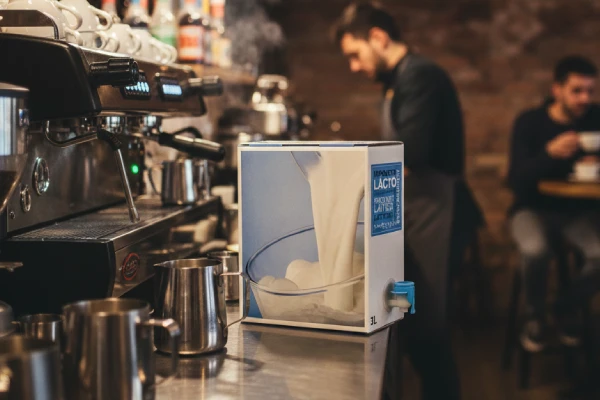
Bag in box is typically the better choice for:
- Still wines, fruit juices, and ciders that benefit from extended shelf life after opening
- Edible oils, vinegars, sauces, and liquid condiments sold in 3L–20L formats
- Liquid dairy products using aseptic filling for ambient distribution
- Food service and bulk operations where cost-per-liter and ease of dispensing are priorities
- Brands with sustainability goals seeking to reduce packaging weight and material waste
BiB is not ideal for carbonated beverages, single-serve portable drinks, or ultra-premium spirits where bottle shape and tactile quality are core to the brand positioning.
Which Products Are Best Suited for Traditional Bottles?
Traditional bottles remain the stronger choice for:
- Carbonated beverages: sparkling water, sodas, sparkling wine, and beer
- Premium spirits where bottle design and weight are central to brand equity
- Single-serve retail products sold through supermarkets or convenience channels
- Products where an extended unopened shelf life without refrigeration is needed
The Verdict: How to Choose the Right Format
There is no single winner between bag in box and traditional bottles — the right choice depends on your product, your market, and your business priorities. Use the following framework to guide your decision:
- Volume per unit: If you’re selling 3L or more per SKU, BiB almost always wins on cost and convenience.
- Distribution channel: Food service and bulk retail favor BiB; premium on-trade and single-serve retail favor bottles.
- Sustainability goals: If your brand is committed to reducing packaging waste, BiB with eco-certified materials offers a measurably stronger position.
- Product type: Carbonated? Use bottles. Still, sensitive to oxidation post-opening? BiB is the clear choice.
- Budget: BiB typically offers lower total landed cost for equivalent volume.
Conclusion
Bag in box and traditional bottles each have a legitimate place in modern liquid packaging. Bottles offer a premium aesthetic and strong consumer familiarity. Bag in box delivers on cost efficiency, extended shelf life, sustainability, and ease of use—particularly for larger volumes and food service applications.
The most forward-thinking brands are no longer asking ‘which is better?’ — they’re asking ‘which is better for this product, this channel, and this consumer?’ With the right specification and a capable manufacturing partner, bag in box packaging can match or exceed bottles on every metric that matters to your business.
At BN Pack, we specialize in custom bag in box solutions for food, beverage, and liquid product brands worldwide. With 22 years of flexible packaging expertise, ISO 9001, BRC, and US FDA certifications, and daily production capacity of over 1.2 million bags, we’re ready to help you find the right solution. Contact us today to request samples or discuss your requirements.