Quick Answer: Are Vacuum Seal Bags Safe for Sous Vide?
Sous vide vacuum seal bags are safe when they are food-grade polyethylene (PE) or PE-nylon laminates, which is what virtually every name-brand vacuum sealer bag is made of. These films stay stable across the full sous vide window of 120-185°F (49-85°C), well below the boiling point where bags start to fail, and they are the same material family used for commercial boil-in-bag meals. The one real rule is material, not brand: never cook in non-food-grade plastic storage bags or unbranded film of unknown origin.
The longer answer depends on temperature, time and what the bag is made of, so this guide to sous vide vacuum seal bags walks through seven safety facts: what temperatures vacuum bags tolerate, which materials to insist on, how to seal around liquids, whether bags can move from freezer straight to the bath, when a bag can be reused, what to do about long cooks, and which alternatives hold up. The table compresses the verdicts, and each section below gives the reasoning.
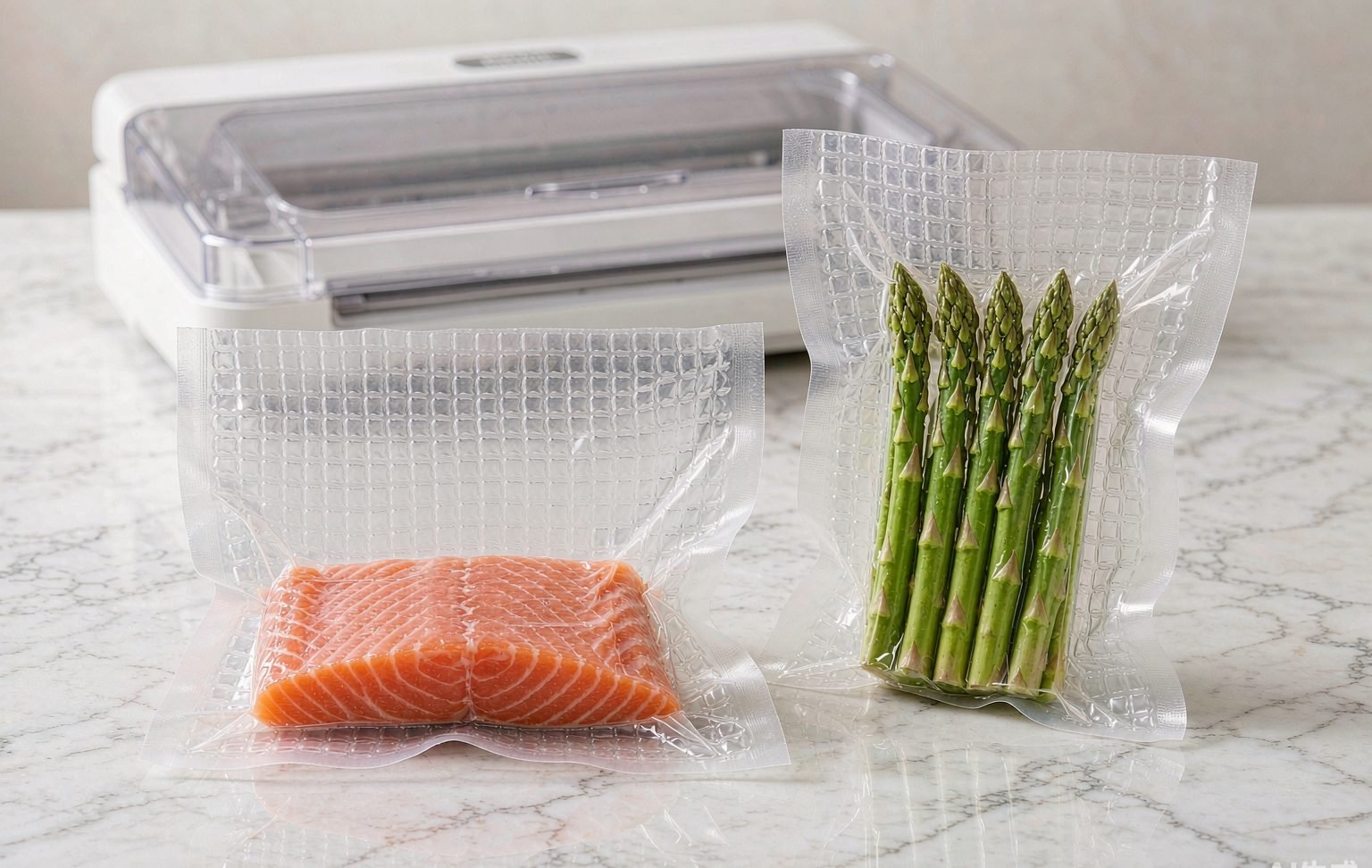
| Bag type | Sous vide safe? | Max practical temp | Notes |
|---|---|---|---|
| Textured PE/nylon vacuum bag | Yes | About 195-212°F | The default choice; full range OK |
| Smooth PE/foil vacuum bag | Yes | About 195°F | Foil blocks microwaves, not a bath issue |
| Zipper freezer bag | Mostly | About 158-176°F | Water-displacement seal; watch long cooks |
| Non-food storage plastic | No | N/A | Unknown plasticizers; never cook in it |
In this guide:
- The 7 safety facts
- Temperature limits in practice
- Long cooks and freezer-to-bath workflow
- FAQ
- The Bottom Line
The 7 Safety Facts About Sous Vide Vacuum Seal Bags
Fact one: sous vide vacuum seal bags are engineered for exactly this job. The textured channel bags sold for consumer sealers are food-grade PE or PE-nylon, the same chemically inert family used for commercial sous vide and boil-in-bag products, and they carry no plasticizer concerns at cooking temperatures.
Fact two: the temperature range is comfortable. Sous vide cooks run 120-185°F, and food-grade vacuum films handle up to roughly boiling before softening. Your bath will never ask a vacuum bag for more than it is rated for, which is why the safety conversation is about bag material, not bath temperature.
Fact three: material trumps branding. If a bag is labeled food-grade and BPA-free PE or PE-nylon, it belongs in the bath. Unmarked roll stock or bargain bin film without a food-contact claim does not, regardless of how it looks. That single check is what separates sous vide vacuum seal bags from the generic plastic film that gives the method an undeserved bad reputation.
Fact four about sous vide vacuum seal bags: sealing wet ingredients is the real skill. Liquids in the channel cause weak vacuum and misplaced seals. Freeze marinades for 20-30 minutes before sealing, fold a cuff at the bag mouth while filling, or use a chamber-style approach where the machine sits dry. A seal placed over moisture can reopen in the bath and leak dilution water into your food.
Fact five: the freezer-to-bath workflow is where vacuum bags shine. A sealed raw portion frozen at 0°F keeps good quality for two to three years against roughly six to twelve months in ordinary wrap, and it drops straight from freezer into the bath with about 30-50 percent extra cook time, no thawing step. Our guide on freezing in vacuum seal bags covers the portioning details.
Fact six: reuse has rules. A bag that held vegetables or a cooked item at gentle temperatures can be washed, dried and reused a couple of times as long as the seal zone stays intact. A bag that held raw chicken, raw fish or anything cooked above 158°F goes in the trash after one use; scrubbing it does not restore food-safety margin. The full logic lives in our guide on reusing vacuum seal bags.
Fact seven: long cooks are a seal test, not a safety test. Tough short ribs at 48-72 hours are common, and a properly sealed bag holds vacuum the whole time. The failure mode to watch is a seal placed over a wrinkle or a drop of liquid, which is why the double-seal trick, two parallel seams a quarter inch apart, is standard practice for multi-day baths.
Temperature Limits in Practice
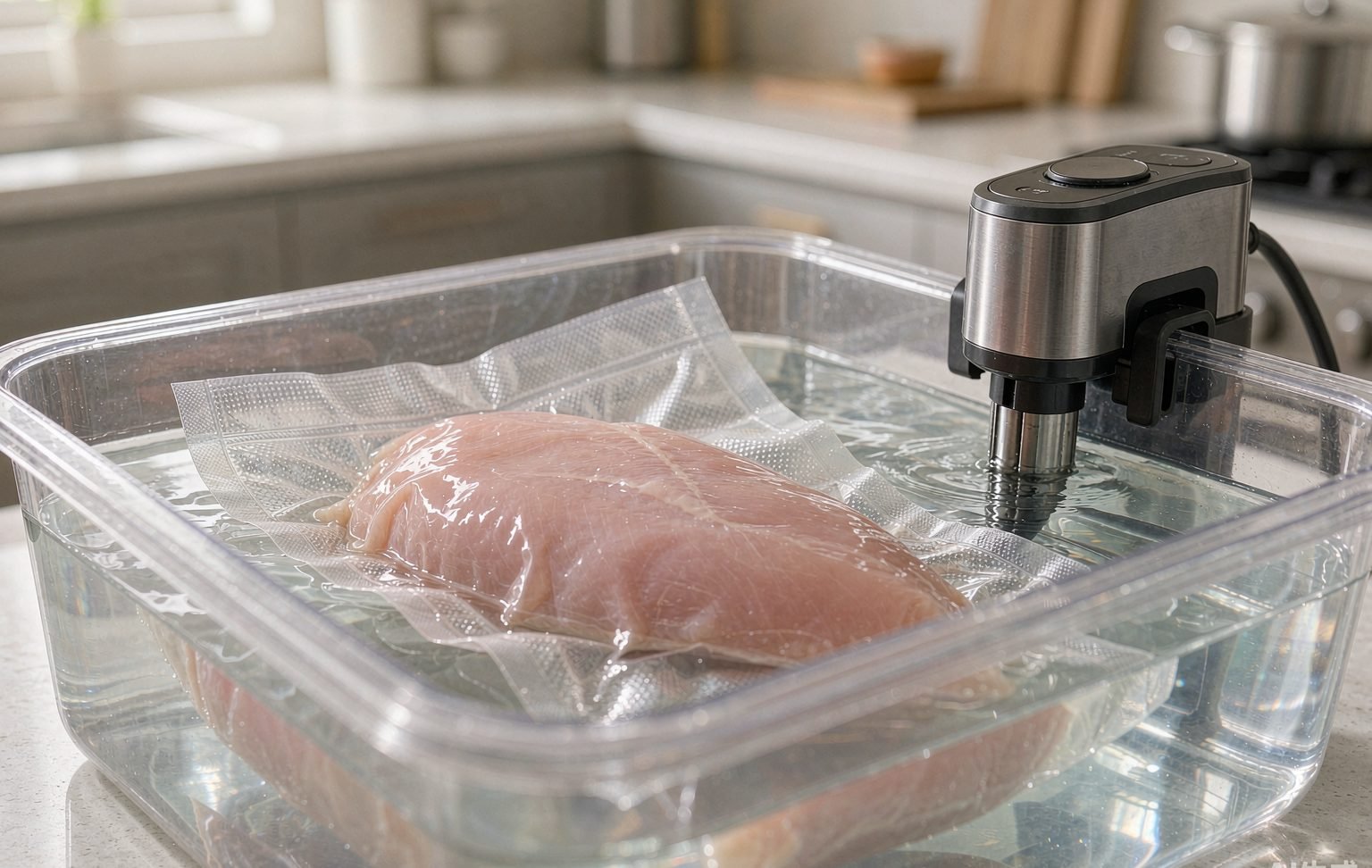
The numbers worth remembering: 129°F for medium-rare steak, 140-150°F for poultry breasts, 165-185°F for tough vegetables and braised cuts. Every one of those sits below 212°F, the point where even sturdy films start to soften and seams creep, which is the headroom that lets sous vide vacuum seal bags run thousands of cooks without drama. This is also why the answer differs from our guide on boiling vacuum seal bags, where the bath actually touches the material’s ceiling; sous vide never gets there.
Microwave reheating is the only household task that exceeds sous vide temperatures, and it changes the rules entirely because microwaves heat unevenly and can create steam pockets that pop seams. If you reheat cooked portions, our test of microwaving vacuum seal bags explains why venting and transfer to a dish is the safer route, and the same logic applies to the oven question covered in baking with vacuum seal bags.
One comparison worth making: retort pouches, the shelf-stable meal packaging used for ready meals, are engineered for pressure-cooking temperatures far beyond anything a sous vide bath produces. If a bag survives retort processing, as our article on microwaving retort pouches discusses, a 140°F bath is a mild afternoon.
Long Cooks and the Freezer-to-Bath Workflow
For cooks beyond 24 hours, three habits keep sous vide vacuum seal bags performing. First, double-seal everything and inspect the seam against light before the bag enters the water. Second, keep the bag fully submerged with a clip or weight, because a floating corner above the waterline sits at room temperature, which is both a food-safety and doneness problem. Third, for very long braises some cooks add a second bag as an outer layer; it is cheap insurance against a toothpick-sharp bone edge working at a seam for two days.
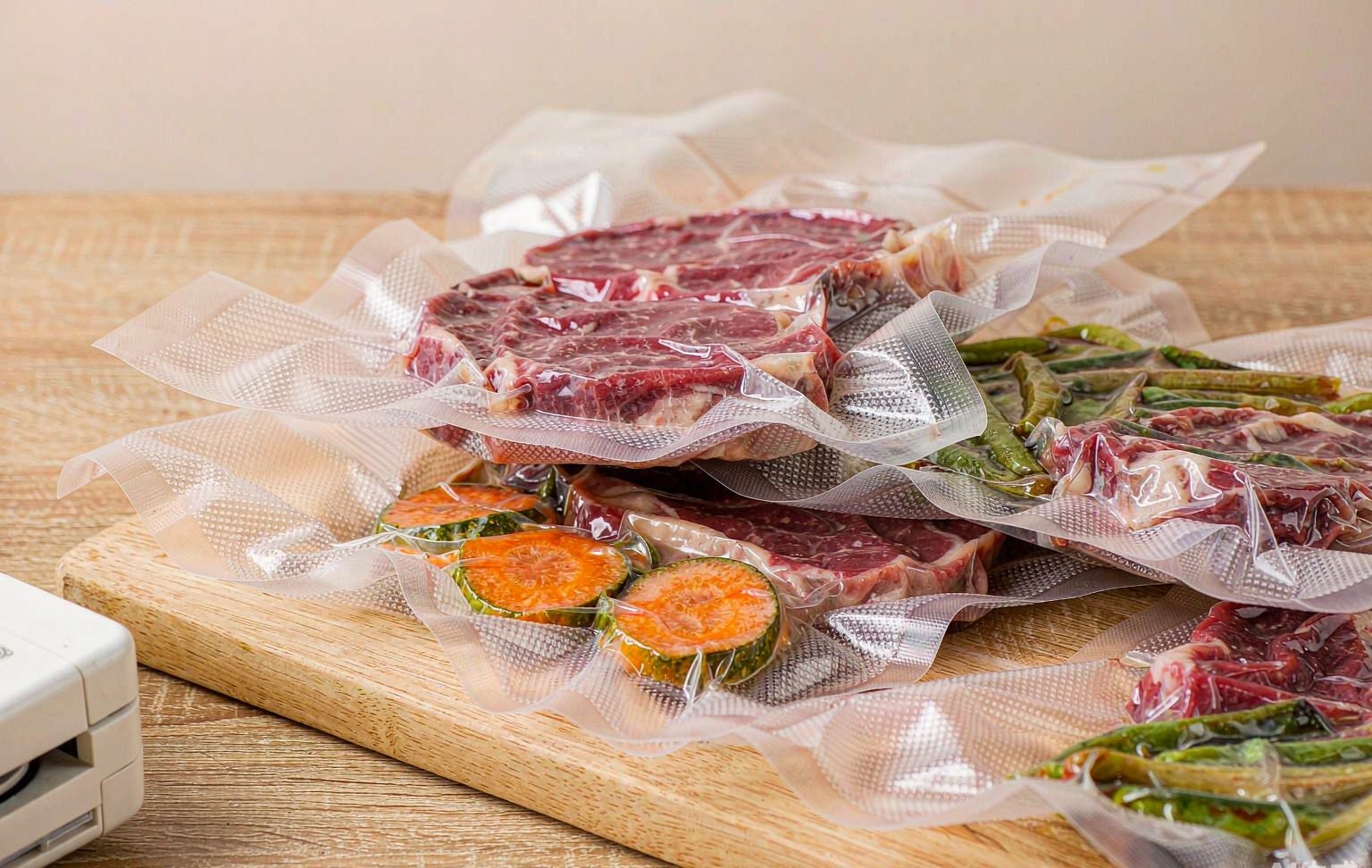
The freezer workflow for sous vide vacuum seal bags deserves the same respect. Seal portions flat for fast thawing and stackable storage, label with contents and date before freezing, and remember that a flat frozen pouch is also the perfect shape for dropping directly into a bath. Cook, chill in an ice bath if serving is hours away, and reheat later at 130-140°F, still in the same bag.
The cooking method itself is borrowed directly from laboratory precision-heating practice, as the entry on sous vide explains, and the same rigor that makes it reliable in restaurants applies at home: control the variables, starting with the bag.
Sous Vide Vacuum Seal Bags: FAQ
Can all vacuum sealer bags go in a sous vide bath?
Any bag sold as food-grade PE or PE-nylon can, which covers essentially all major brands of textured and smooth vacuum bags. That makes sous vide vacuum seal bags the default for the method. Avoid unbranded film with no food-contact labeling, and never substitute non-food storage plastic.
What is the maximum temperature for sous vide vacuum seal bags?
Food-grade PE-nylon vacuum films hold up to roughly 195-212°F, so the entire sous vide range of 120-185°F sits comfortably inside their limits. Seams are the weak point, not the film, which is why the double-seal habit matters for long cooks.
Are sous vide vacuum seal bags BPA-free?
PE and PE-nylon films do not use BPA in their construction, and bags marketed for food vacuum sealers are typically labeled BPA-free. Sous vide vacuum seal bags carrying that food-grade label cover the whole plasticizer question, so look for it first.
Can I reuse a sous vide bag?
Yes for bags that held vegetables or already-cooked food at moderate temperatures, after washing and drying, provided the seal zone is undamaged. No for bags that held raw poultry or fish, and no for any bag that cooked above 158°F, where the film has already been stressed near its limit.
Can I use zipper bags instead of vacuum bags for sous vide?
For short cooks at moderate temperatures, yes: the water-displacement method with a quality freezer zipper bag works well up to roughly 158-176°F. For long cooks, hot baths above that range, or anything with sharp bones, sous vide vacuum seal bags are the sturdier and safer choice.
The Bottom Line
Sous vide vacuum seal bags are not just safe, they are the equipment the method was built around, as long as the film is food-grade PE or PE-nylon. Stay inside the 120-185°F window the bath naturally provides, double-seal for long cooks, freeze raw portions flat so they drop straight into the water, and apply the reuse rules honestly: vegetables yes, raw proteins and high-heat cooks no. Do that and the bag is the one part of the setup you never have to think about again.