
Walk into any coffee roastery, and your senses are immediately captivated. It’s the aroma—a complex symphony of toast, caramel, chocolate, and fruit that signals the transformation of something raw into something truly special. This sensory experience, the very essence of roasted coffee, is largely orchestrated by a single, powerful chemical process: the Maillard reaction.
Often called the “browning reaction,” the Maillard (pronounced “my-YAR”) reaction is arguably the most important flavor-generating process in the culinary world, responsible for everything from the crust on a loaf of bread to the savory char on a steak.
For coffee roasters, the Maillard reaction is not just a scientific curiosity; it is their primary tool. Understanding what it is, when it happens, and how to influence it is fundamental to the craft. It’s how a roaster moves from simply applying heat to skillfully developing flavor.
What is the Maillard Reaction, Exactly?
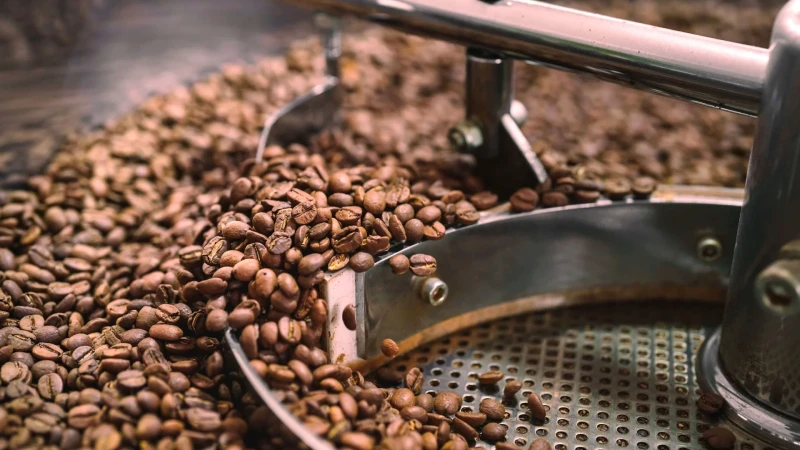
Let’s define the Maillard reaction in simple terms. It is a complex series of chemical reactions that occur when amino acids (the building blocks of proteins) and reducing sugars are subjected to heat. This interaction creates hundreds of new aroma and flavor compounds, as well as the golden-brown pigments known as melanoidins, which give roasted coffee its characteristic color.
It’s a common misconception to confuse the Maillard reaction with caramelization. While they often occur together during the later stages of a roast, they are distinct processes:
- Maillard Reaction: Involves both amino acids and sugars. It creates a vast range of savory, nutty, and malty flavors.
- Caramelization: Involves only the breakdown of sugars at higher temperatures. It creates classic caramel, nutty, and buttery notes.
A great roast profile achieves a perfect harmony between the Maillard reactions and caramelization, building layers of complexity.
The Maillard Reaction’s Role in the Roasting Phases
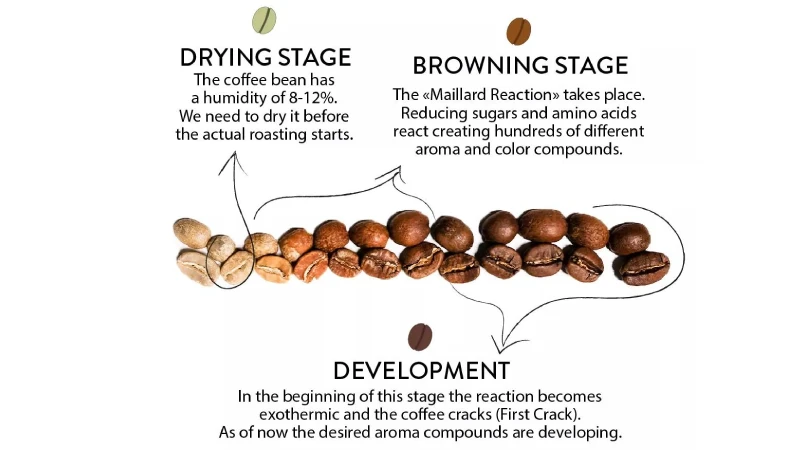
The Maillard reaction doesn’t just happen at one specific moment. It’s a journey that unfolds during distinct phases of the roast.
1. The Drying Phase
The roast begins by applying a high amount of energy to the green beans, which can contain 10-12% moisture. During this initial phase, the bean’s internal temperature rises, and water begins to evaporate. While the Maillard reaction hasn’t truly started yet, this phase is critical. Removing moisture evenly sets the stage for the reactions to occur consistently throughout the bean. A rushed drying phase can lead to uneven roasting, with the outside of the bean scorching before the inside is properly developed.
2. The Browning or “Maillard” Phase
This is where the magic truly begins. Typically starting around 300°F (150°C), the beans turn from green to a pale yellow, and a distinct grassy or hay-like aroma gives way to something more pleasant: toast, bread, or popcorn. This is the Maillard reaction in full swing. Sugars and amino acids are actively combining and transforming. The rate at which a roaster moves through this phase has a profound impact on the final cup. A longer, slower Maillard phase often develops more body and sweetness, while a faster progression can preserve more of the coffee’s inherent acidity and brightness. This “browning coffee” stage is where the foundational flavors are built.
3. The Development Phase and First Crack
As the temperature continues to rise, the Maillard reaction continues, now accompanied by caramelization and other chemical processes. The pressure building inside the bean leads to “first crack,” an audible popping sound that signals the coffee is now lightly roasted and officially drinkable. The time between the start of the Maillard phase and first crack, and the time after first crack, is where the roaster refines the flavor profile, balancing sweetness, acidity, and body. The compounds created during the Maillard reaction are either further developed or broken down into new ones, creating the final, intricate flavor profile of the bean.
The Roaster’s Craft: Influencing the Maillard Reaction
A roaster can’t simply turn a dial labeled “Maillard.” Instead, they skillfully manipulate variables to guide the reaction’s speed and intensity.
- Heat Application (Rate of Rise): The speed at which the bean temperature increases (the Rate of Rise or RoR) is the primary tool. A fast RoR can rush through the Maillard phase, while a slower RoR allows more time for complex compounds to develop.
- Airflow: Increasing airflow can carry heat away from the beans more efficiently, potentially slowing the reaction and helping to develop clarity in the cup.
- Charge Temperature: The temperature of the drum when the beans are loaded sets the initial energy for the entire roast, heavily influencing the drying phase and the momentum heading into the Maillard reaction.
Mastering these variables allows a roaster to take a single-origin coffee and express it in countless ways, from a bright and vibrant light roast to a sweet and full-bodied medium roast.
After the Roast: Protecting the Flavors You Created

The roaster’s job isn’t over when the cooling tray is activated. In fact, a critical new phase begins: preservation. The hundreds of delicate flavor and aroma compounds meticulously developed through the Maillard reaction are extremely volatile. At the same time, the roasting process has produced a significant amount of carbon dioxide (CO₂) trapped within the bean’s structure.
This creates a crucial challenge: the beans need to degas (release this CO₂), but every moment they are exposed to oxygen, the enemy of freshness, those hard-won flavors begin to degrade.
This is where your packaging becomes the final, essential piece of equipment. Simply putting coffee in a sealed bag isn’t enough. A bag without a valve will inflate and potentially burst from the CO₂ pressure. A bag left open allows destructive oxygen in.
The solution is the coffee bag with a one-way degassing valve.
At BN Pack, our coffee bags with valves are engineered to solve this exact problem. The integrated one-way valve is a marvel of simplicity and necessity:
- It allows the CO₂ molecules from degassing to escape the bag, preventing it from bursting.
- It simultaneously prevents oxygen molecules from entering the bag, protecting the coffee from staling.
This technology creates the perfect environment for your coffee to rest and mature without deteriorating. Our high-barrier pouch materials add another layer of defense, blocking external moisture, UV light, and odors. By choosing the right packaging, you ensure that the complex, beautiful results of the Maillard reaction you so skillfully managed are preserved all the way to your customer’s cup.
Conclusion: From Chemistry to Customer
The Maillard reaction is more than just a chemical term; it’s the heart of a roaster’s craft. It’s a dynamic process that transforms simple raw ingredients into a product of immense complexity and enjoyment. By understanding its principles and mastering its variables, you can unlock the true potential of your coffee. And by extending that same level of care to your packaging, you guarantee that your hard work and artistry are delivered exactly as you intended.