
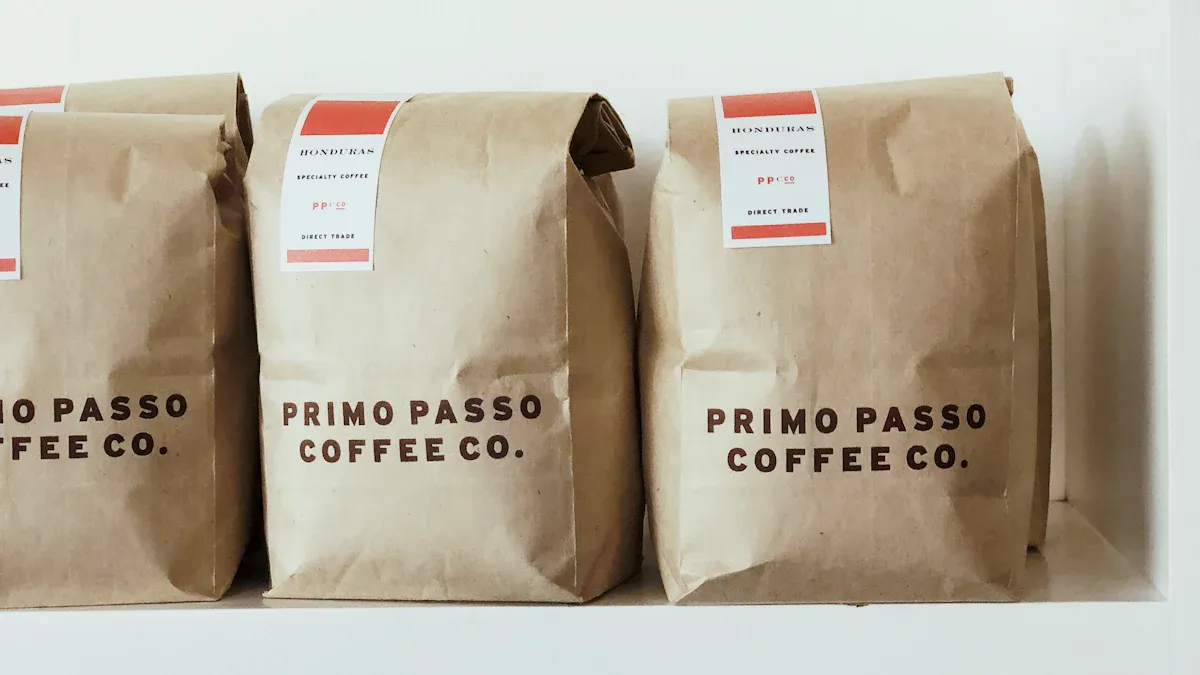
Coffee bags vents let carbon dioxide escape from freshly roasted beans while blocking oxygen and moisture. This design keeps your coffee fresh and safe. Experts note that most Americans miss out on truly fresh coffee, with quality dropping after three weeks and a clear decline after four. Check out how aroma and flavor scores change over time:
Sensory Attribute | Freshly Roasted | After 9 Months | After 18 Months |
|---|---|---|---|
Coffee Odor | 8.13 | 7.10 | 5.50 |
Coffee Flavor | 7.47 | 6.22 | 4.60 |
Choosing packaging with vents helps you enjoy the best flavor possible.
Coffee Freshness
After Roasting
When you roast coffee beans, you unlock their full flavor and aroma. The roasting process creates a burst of chemical reactions inside each bean. These reactions trap gases, especially carbon dioxide (CO₂), within the bean’s structure. Right after roasting, beans are at their most aromatic and flavorful. However, this freshness is fragile. Scientific research shows that ground coffee can lose about 60% of its aroma within just 15 minutes of air exposure. This rapid loss highlights why packaging plays such a vital role in keeping your coffee fresh. High-quality packaging, like foil-lined bags with one-way valves, helps protect these delicate flavors by blocking oxygen, moisture, and light.
Degassing
After roasting, coffee beans begin to release CO₂ in a process called degassing. This release happens quickly at first, with about 70% of the gas escaping in the first 24 hours. The speed of degassing depends on the roast level. Darker roasts tend to release CO₂ faster than lighter ones. If you brew coffee too soon after roasting, you might notice sour or under-extracted flavors because of excess CO₂. If you wait too long, the coffee can taste flat or stale. Most experts recommend letting beans rest for a few days before brewing. The table below shows how different roast levels affect the ideal rest period and peak flavor window:
Roast Level | Minimum Rest Period | Peak Flavor Window |
|---|---|---|
Light (Nordic style) | 5-7 days | Days 7-14 after roast |
Medium-Light | 3-5 days | Days 5-12 after roast |
Medium | 2-3 days | Days 3-10 after roast |
Medium-Dark | 1-2 days | Days 2-7 after roast |
Carbon Dioxide
CO₂ makes up about 1–2% of the weight of freshly roasted coffee beans. This gas is trapped inside the bean’s porous structure and slowly escapes over several weeks. The presence of CO₂ is important for flavor development, but too much can harm the taste. Packaging with one-way valves allows CO₂ to escape without letting oxygen in. This technology prevents package bloating and protects the beans from oxidation, which can ruin flavor and aroma. By understanding the role of CO₂ and using the right packaging, you can enjoy coffee that tastes as fresh as possible.
Coffee Bags Vents
One-Way Valve
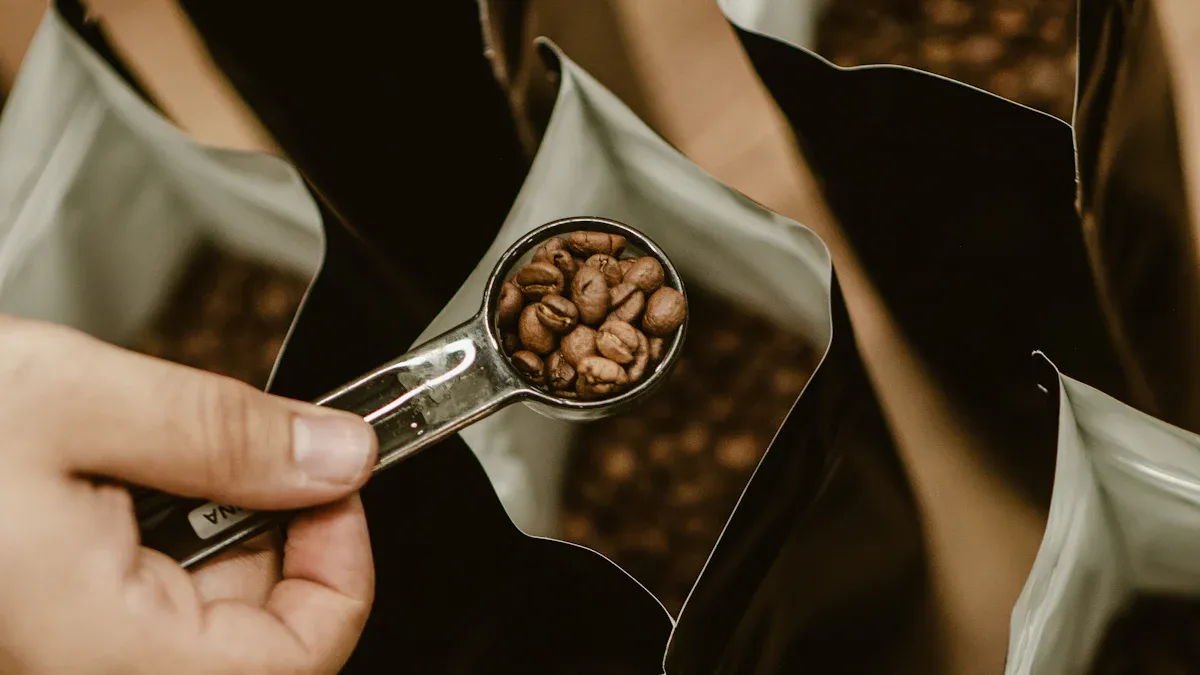
When you look at coffee bags vents, you will notice a small, round plastic piece on the front or back of the bag. This is the one-way valve. The valve acts as a tiny door that lets gas out but does not let air in. After roasting, coffee beans release carbon dioxide for days or even weeks. If you seal this gas inside, the bag can puff up or even burst. The one-way valve solves this problem by allowing carbon dioxide to escape safely.
Coffee bags vents with one-way valves:
Prevent bag swelling or bursting by releasing gas.
Block oxygen from entering, which helps keep your coffee fresh.
Protect the beans from moisture and outside contaminants.
A scientific study found that packaging designed to limit oxygen and moisture exposure, like coffee bags vents, helps maintain coffee quality over time. Hermetic sealing, similar to the function of these valves, preserves moisture content and sensory quality better than traditional packaging.
Valve Function
The one-way valve in coffee bags vents works through a simple but clever mechanism. Inside the valve, you will find a membrane and a plate. When the pressure inside the bag builds up from carbon dioxide, the membrane lifts and lets the gas escape. When the pressure drops, the membrane closes tightly, blocking outside air and moisture.
Tip: You can sometimes smell the coffee aroma through the valve. This is a sign that the valve is working and releasing gas.
Here is a quick comparison of coffee bags with and without valves:
Feature | Coffee Bag with Valve | Coffee Bag Without Valve |
|---|---|---|
CO2 Release | Valve allows CO2 to escape, preventing buildup | No vent; CO2 can accumulate inside the bag |
Freshness | Better preservation by preventing CO2 buildup | Lower freshness due to CO2 accumulation |
Oxygen Protection | Valve limits air entry, reducing oxidation | Higher oxygen exposure causing oxidation |
Moisture Control | Valve helps prevent moisture ingress | More susceptible to moisture ingress |
Aroma Retention | May lose some aroma with CO2 release | May retain aroma initially but risk spoilage |
Suitability | Ideal for long-term storage of freshly roasted coffee | Suitable for short-term storage, pre-ground coffee |
This table shows why coffee bags vents are so important for keeping your coffee fresh and safe.
Freshness Benefits
Coffee bags vents offer several key benefits for coffee lovers and roasters. By letting carbon dioxide escape and blocking oxygen, these vents help preserve the flavor, aroma, and quality of your beans. You get to enjoy coffee that tastes closer to the day it was roasted.
Vented coffee bags:
Keep coffee fresher for longer by reducing oxidation.
Prevent pressure build-up, which protects both the packaging and the beans.
Help maintain the right moisture level, avoiding mold or staleness.
Allow you to smell the coffee’s aroma, which signals freshness.
Research shows that vented packaging systems, like the Vento™ system, allow coffee to be packed right after roasting. This preserves flavor and aroma, reduces production downtime, and cuts costs. Customers report better freshness and easier handling with vented bags compared to non-vented options.
If you want the best taste and aroma from your coffee, choosing coffee bags vents with a one-way valve is a smart move. These small features make a big difference in your daily cup.
No Vents Risks
Quality Loss
When you choose coffee packaging without vents, you risk losing the freshness and flavor of your beans. Roasted coffee beans keep releasing carbon dioxide after roasting. If the packaging does not allow this gas to escape, it can build up inside the bag and harm the coffee’s quality. Here are some problems you might face:
Trapped carbon dioxide can make your coffee taste stale or flat.
Without a vent, oxygen and moisture can get inside, speeding up the loss of aroma and flavor.
Ground coffee is even more sensitive to air and moisture, so it loses freshness faster in non-vented packaging.
Packaging that does not block UV light or moisture can further damage the coffee’s taste.
You want your coffee to taste as good as possible. Coffee bags vents help you keep those rich flavors and aromas locked in.
Safety Issues
Improper coffee packaging can also create safety risks, especially for workers in roasting and packaging facilities. A scientific study found that workers exposed to dust and chemicals from coffee roasting, such as diacetyl and 2,3-pentanedione, faced higher risks of lung diseases like obliterative bronchiolitis and work-related asthma. These risks increase when packaging does not properly contain gases and particles. Facilities that use flavorings or do not have protective measures see even higher exposure levels. Safe packaging and proper venting help protect both the product and the people handling it.
Note: Good packaging practices not only keep your coffee fresh but also help create a safer environment for everyone involved in the process.
Shelf Life
Coffee loses its freshness quickly when exposed to oxygen. If your packaging does not have proper venting or an effective oxygen barrier, you will notice a shorter shelf life. Research shows:
Oxygen levels rise inside non-vented packaging, causing key aroma compounds to break down faster.
When oxygen levels reach 5% or more, important flavors like 2-furfurylthiol degrade rapidly.
Higher storage temperatures make this problem worse, as oxygen enters the bag more quickly.
Moisture can also get in, but oxygen is the main reason for faster aroma loss and reduced shelf life.
Choosing packaging with coffee bags vents and strong oxygen barriers helps you enjoy fresher coffee for longer.
Packaging Choices
Vented vs Non-Vented
When you choose coffee packaging, you face a key decision: vented or non-vented bags. Vented bags use a one-way valve to let carbon dioxide escape while blocking oxygen and moisture. This feature keeps your coffee fresh and prevents the bag from swelling or bursting. Non-vented bags do not have this valve. They work best for pre-ground coffee or beans that have already finished degassing. If you want to enjoy the full flavor of freshly roasted beans, vented packaging gives you a clear advantage.
When Vents Matter
You should pay close attention to vents if you buy or sell freshly roasted coffee. Here are some situations where coffee bags vents make a big difference:
Freshly roasted beans keep releasing carbon dioxide for days after roasting. If you trap this gas, your coffee can lose flavor and become stale.
The one-way valve lets carbon dioxide out but keeps oxygen and moisture from getting in. This helps preserve freshness.
Vented packaging allows you to pack coffee soon after roasting, so you get peak flavor at home.
By controlling gas exchange, the valve helps your coffee stay fresh until you open the bag.
A one-way valve protects your coffee from pressure buildup and shields it from air and moisture. This simple feature helps you enjoy better-tasting coffee every time.
Eco-Friendly Options
Today, you can find many eco-friendly choices for coffee packaging. More brands now use recyclable, biodegradable, or compostable materials. These options help reduce waste and support a cleaner environment. Many consumers prefer sustainable packaging, and new rules in the USA, Europe, and Asia encourage this shift. Companies now use paper-based pouches, bio-based plastics, and even reusable bags. Advances in vented packaging mean you do not have to sacrifice freshness for sustainability.
BN Packaging offers customizable, eco-friendly coffee packaging solutions, including vented pouches made from sustainable materials. Their expertise, fast turnaround, and customer-focused service make them a trusted partner for specialty coffee brands. You can choose from a wide range of materials and designs to match your brand’s values and needs.
You want your coffee to stay fresh and safe. Coffee bags vents help you keep flavor and aroma locked in while protecting against moisture and oxygen. Choose vented, eco-friendly packaging for the best results, especially with freshly roasted beans. Look for strong seals and one-way valves. If you need reliable solutions, BN Packaging offers customizable, sustainable options trusted by coffee brands worldwide.
Tip: Always check for a one-way valve when buying coffee to enjoy peak freshness.
FAQ
What does the one-way valve on a coffee bag do?
The one-way valve lets carbon dioxide escape from the bag. It blocks oxygen and moisture from getting in. This keeps your coffee beans fresh and full of flavor.
Can I recycle coffee bags with vents?
You can recycle some coffee bags with vents if they use recyclable materials. Always check the recycling symbol on the bag. Many eco-friendly brands, like BN Packaging, offer recyclable or compostable options.
How do I know if my coffee bag has a vent?
Look for a small, round plastic piece on the front or back of the bag. You might also smell coffee through this spot. This is the one-way valve.
Do I need vented bags for ground coffee?
You do not always need vented bags for ground coffee. Ground coffee releases less carbon dioxide than whole beans. Vented bags work best for freshly roasted whole beans.