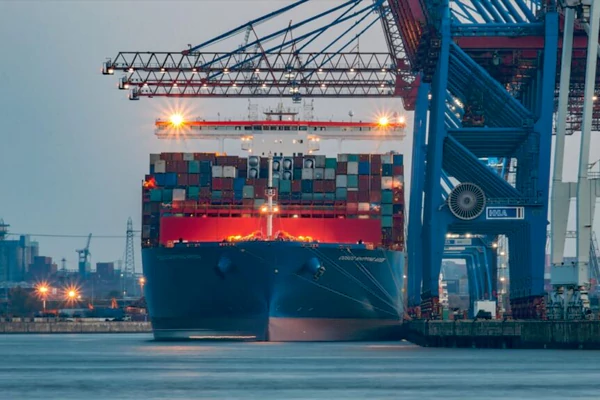
For coffee roasters, sourcing green beans is a complex global endeavor, a journey that spans continents, cultures, and currencies. This process is governed by a specialized vocabulary of international trade terms that define relationships, responsibilities, and, most importantly, price. Among the most common and crucial of these terms, one that appears on nearly every green coffee contract, is FOB.
Understanding Freight on Board pricing (FOB) is not just for importers; it is an essential piece of knowledge for any roaster who buys green coffee and wants to have a deeper understanding of their supply chain. It provides a baseline for comparing coffees, understanding costs, and engaging in more meaningful conversations about value and equity.
This guide will provide a clear and comprehensive explanation of FOB pricing. We will define what the term means, break down exactly what costs are included in that price, explore its implications for both producers and roasters, and discuss its vital role in the broader conversation about coffee ethics and transparency.
What Does FOB Price Mean in Coffee?
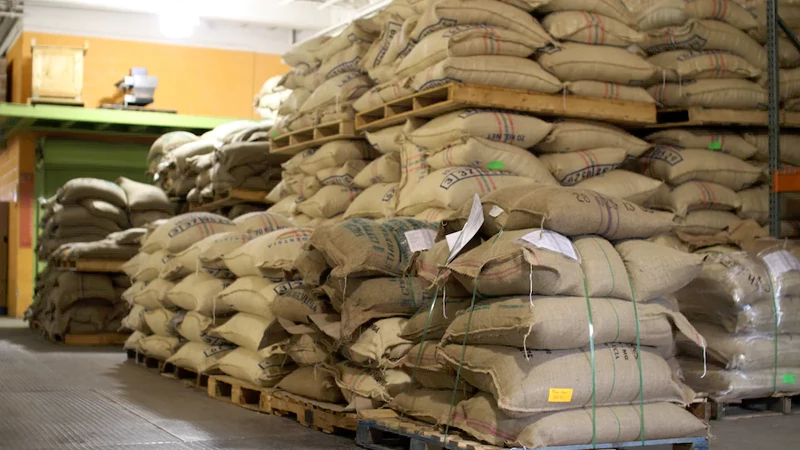
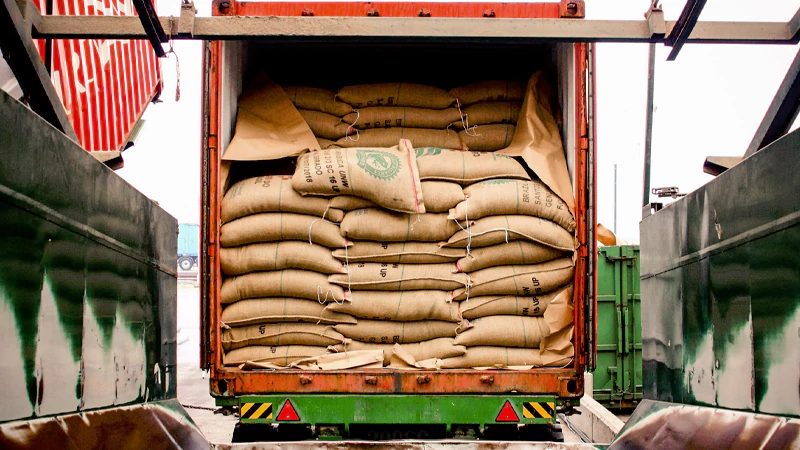
To understand the coffee price board and sourcing contracts, it’s essential to have a clear answer to the question: what is FOB price? The acronym FOB stands for “Freight on Board” or “Free on Board.” In the simplest terms, the FOB price means the total price of the coffee at the moment it is loaded “on board” a shipping vessel at its port of origin.
The FOB value is not just the price of the green coffee beans themselves. It is an accumulated cost that includes every expense incurred to get the coffee from the farm, through the milling and sorting process, and onto the ship. This price represents the total value of the goods up to the point of export.
A critical component of the FOB pricing meaning is the concept of risk and responsibility transfer. The term “Free on Board” signifies that the seller’s responsibility for the coffee ends once the goods are loaded onto the shipping vessel. At that exact point, the ownership, risk, and responsibility for the cargo—including the costs of ocean freight, insurance, and any import duties at the destination—transfer from the seller (typically the exporter) to the buyer (the importer or roaster).
Because it is a globally recognized Incoterm (International Commercial Term), the fob origin is the simplest way to price and compare green coffee from different countries. It creates a standardized, universally understood benchmark that clarifies cost and responsibility for everyone in the supply chain.
Breaking Down the Freight on Board Cost: What’s Included?
The FOB price is not a single number, but rather an accumulation of all the costs and services required to move a coffee from the farm where it was grown to the deck of a ship, ready for export. Understanding these components is key to appreciating the total value represented by the FOB quotation. A roaster is paying for an entire chain of services within the country of origin.
Here is a typical breakdown of the costs that are bundled into the final freight on board cost:
- The Price Paid to the Farmer: This is the starting point and the foundation of the entire cost structure. It is the initial price that a producer receives for their coffee, whether it’s sold as ripe cherries, wet parchment, or dried green beans.
- Milling and Processing: After the coffee leaves the farm, it must be processed for export. This includes the costs of hulling the parchment, drying the beans to the correct moisture level, sorting them by density and size, and grading them for quality.
- Inland Transportation: This is the logistical cost of moving the coffee from the processing mill, which is often located in a remote, mountainous region, to a warehouse in the port city from where it will be exported.
- Warehousing and Port Fees: Before being loaded onto a ship, the coffee is typically stored in a climate-controlled warehouse. The cost of this storage, along with any fees charged by the port authority for handling and loading the cargo, is included in the FOB price.
- Export Fees and Documentation: This includes all the administrative costs associated with international trade. It covers any export taxes levied by the origin country’s government and the fees for generating the necessary legal documents required for shipment.
- Exporter’s Margin: An exporting company is usually responsible for coordinating all these steps, from collecting the coffee to securing its place on the ship. Their operational costs and profit margin are a significant and necessary component of the final FOB price.
The Limitations of FOB: What the Price Doesn’t Tell You
While the FOB price is an essential benchmark for the coffee industry, it has significant limitations, especially when viewed through the lens of ethics and transparency. For a modern specialty coffee roaster, it’s just as important to understand what the FOB pricing figure doesn’t tell you as what it does.
The single most critical limitation is that the FOB price is not the price the farmer received. As we saw in the previous section, the final FOB value is an accumulation of many costs that occur after the coffee has left the farm—milling, transportation, warehousing, export taxes, and the exporter’s own profit margin. These downstream costs can make up a substantial portion of the final price. This means that a high FOB rate does not automatically guarantee high farmer profitability. A farmer could have been paid a very low price, but high operational costs within the country could still result in a high FOB price.
In a traditional, non-transparent supply chain, the FOB price can unfortunately obscure the true financial picture. Without a clear breakdown of the costs, it’s impossible for a roaster to know how much of the money they paid actually made it back to the producer who did the hard work of growing the coffee.
This has led to the rise of the “transparency movement” in specialty coffee. Many forward-thinking roasters and importers are no longer just looking at the FOB price. They are now actively seeking out and publishing the “Farm Gate” price—the actual price paid directly to the farmer. By sharing both numbers, they provide a much more complete and honest picture of the supply chain, allowing consumers to see how much of their purchase is supporting the producer at origin.
The Roaster’s Responsibility: From Sourcing to Packaging
Understanding FOB pricing and advocating for greater transparency is a key part of a roaster’s responsibility in the sourcing process. However, that responsibility does not end when the coffee arrives at your door. The next crucial duty is to protect the significant financial and ethical investment that you have just made in that beautiful lot of green coffee.
From the moment it arrives at your roastery and especially after it is roasted, the value of that coffee is vulnerable. Its unique flavor profile, the very characteristic you paid a premium to source, is a perishable quality that is constantly at risk of degradation from exposure to oxygen, moisture, and UV light.
The investment represented by the FOB price deserves to be protected. High-quality coffee bags from BN Pack are the final, essential step in honoring the coffee’s long journey. Our multi-layer, high-barrier bags create an airtight fortress against staling oxygen and UV light, preserving the unique flavor profile you sourced. A one-way degassing valve ensures that your freshly roasted beans can rest safely, locking in their peak freshness. Protecting your investment from the port of origin to the final cup starts with responsible sourcing and ends with superior packaging.
Conclusion
In the complex world of global coffee trade, FOB pricing serves as a critical and indispensable benchmark. It is the universal standard that represents the total cost of a coffee, sourced, processed, and loaded for export in its country of origin. As we have seen, it is a useful tool for comparing prices but, crucially, it is not a complete measure of farmer profitability or ethical impact.
For the modern coffee professional, understanding what FOB pricing means is an essential skill. It is a key piece of the larger, more intricate puzzle of sourcing high-quality, traceable, and truly ethical coffee. By using it as a starting point for deeper inquiry and advocating for greater transparency, roasters can make more informed decisions and contribute to a more equitable and sustainable future for the entire coffee industry.