
Nothing is more enticing than the aroma of a freshly baked cookie. It’s a sensory signal of craftsmanship and quality—a promise you make to your customers with every batch you pull from the oven. But this promise of perfect texture and flavor is incredibly fragile. The moment your cookies cool, a race against time begins.
Your packaging is not just a container; it is a freshness vault, the single most important line of defense protecting your hard work from the elements. Choosing the wrong packaging has immediate and disastrous consequences: your perfectly crisp shortbread will absorb moisture and turn soft, while your wonderfully soft and chewy chocolate chip cookies will lose moisture and turn hard as a rock.
This guide will serve as your ultimate resource, delving deep into how to choose the best packaging for your cookies. We will reveal the science behind achieving maximum freshness and show you that the “best” solution is not one-size-fits-all—it depends entirely on the specific type of cookie you bake.
The Science of Freshness: Your Cookie’s Four Enemies
To choose the right defense, you must first understand the enemy. The process of a cookie going stale is a chemical and physical reaction driven by four primary environmental factors. Your packaging’s sole purpose is to create a barrier against them.
Oxygen (Oxidation)
Oxygen is the number one enemy of flavor. The fats and oils in your cookies, especially in butter-rich recipes, are highly susceptible to oxidation. When exposed to oxygen, these fats begin to break down, creating unpleasant, stale, and often rancid flavors and smells. This is an irreversible process, and the only way to combat it is to limit the amount of oxygen that can get to your product.
Moisture (The Two-Way Threat)
Moisture is the critical enemy of texture. It is a two-way street, and the damage it causes depends entirely on your cookie type:
- Moisture Gain: For dry, crispy, and crunchy cookies like shortbread or biscotti, the goal is to keep moisture out. Any moisture absorbed from the atmosphere will cause the cookie to lose its signature snap and become soft and unappealing.
- Moisture Loss: For soft, chewy, and moist cookies like chocolate chip or oatmeal raisin, the goal is to keep moisture in. If the cookie’s own moisture is allowed to escape into the surrounding air, it will become dry, hard, and stale.
Light (UV Degradation)
While it may seem less obvious, direct exposure to light, especially sunlight, can be very damaging. UV rays act as a catalyst that dramatically accelerates the process of oxidation, causing the fats to go rancid much more quickly. For cookies with colored icings or ingredients like chocolate chips, light can also cause the colors to fade, making the product look old and unappetizing.
Physical Damage
Cookies, particularly delicate or decorated varieties, are fragile. The journey from your bakery to a customer’s home is a rough one, involving packing, shipping, and shelf stocking. Without proper structural protection, your beautifully crafted cookies can easily be broken, crushed, or crumbled, rendering them unsellable.
“The Best” Depends on the Cookie: A Categorical Approach
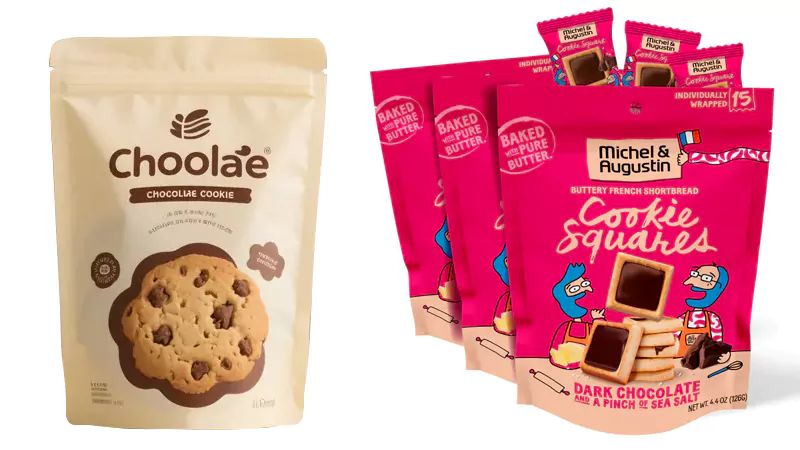
A one-size-fits-all approach to cookie packaging is a recipe for failure. The ideal package is not just the one that looks the best, but the one that is specifically engineered to combat the primary enemy of your particular cookie type. By understanding your product’s unique needs, you can make a strategic choice that guarantees a fresh and delicious experience for your customers.
We can break down most cookies into three main categories, each with a different primary enemy and an ideal packaging solution.
a. For Crispy & Crunchy Cookies (e.g., Shortbread, Biscotti, Thin Crisps)
These cookies are defined by their satisfying snap and delicate, dry texture.
- Primary Enemy: Moisture Gain. The moment these low-moisture cookies are exposed to ambient air, they begin to absorb humidity, which immediately ruins their crispy texture and turns them soft and stale.
- The Solution: You need a package with a superior moisture barrier. In technical terms, this means a material with a low Moisture Vapor Transmission Rate (MVTR), which prevents outside humidity from getting in. An airtight seal is also crucial.
- Recommended Pouch Types:
- High-Barrier Lay-Flat Pouches: Often called pillow packs, these are a highly cost-effective and efficient solution, perfect for single-serving packs or stacked cookies. When made with a metallized or foil lining, they provide an excellent barrier against moisture.
- Side Gusseted Bags: For larger quantities of cookies, a side gusseted bag is a classic and professional choice. It can be sealed tightly and, when combined with a high-barrier material, offers fantastic protection against moisture gain.
b. For Soft & Chewy Cookies (e.g., Chocolate Chip, Oatmeal Raisin, Brownies)
These cookies are beloved for their moist, tender, and decadent texture.
- Primary Enemy: Moisture Loss. Unlike their crispy counterparts, the goal here is to keep the cookie’s own moisture locked inside the package. If the moisture is allowed to escape, the cookie will quickly become dry, hard, and lose its desirable chewy texture.
- The Solution: You need a package with an excellent oxygen barrier and, most importantly, a reliable and truly airtight resealable feature.
- Recommended Pouch Types:
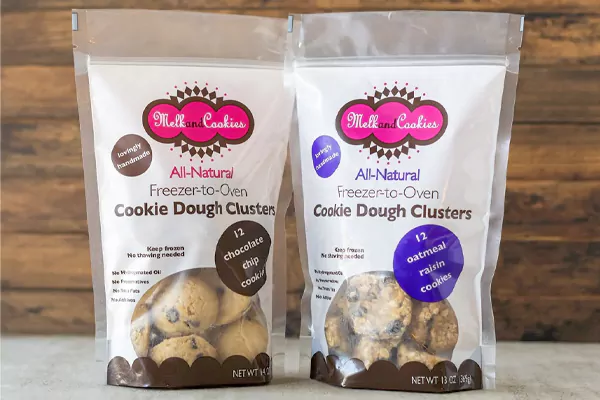
- Resealable Stand-Up Pouches: This is the ideal choice for most soft cookies. The stand-up gusset provides great shelf presence, and a high-quality press-to-close zipper allows the consumer to securely reseal the bag after each use, locking in the product’s moisture and extending its life in their pantry.
- Resealable Flat-Bottom Bags: Offering even more stability and a premium, box-like appearance, these bags provide all the benefits of a stand-up pouch with a more structured and high-end feel.
c. For Iced, Decorated & Delicate Cookies (e.g., Frosted Sugar Cookies, Macarons)
For these works of art, the presentation and physical structure are just as important as the freshness.
- Primary Enemies: Physical Damage and Moisture Transfer. The delicate icing and intricate designs can be easily smudged, cracked, or broken during shipping and handling. Furthermore, moisture transfer can cause the icing to become sticky or bleed color.
- The Solution: You need a package that offers a degree of structural integrity to minimize movement, as well as a good barrier to protect the icing.
- Recommended Pouch Types:
- Flat-Bottom Bags with a Window: The box-like shape of a flat-bottom bag provides more structural rigidity than a standard pouch, which helps to protect the cookies inside. Adding a crystal-clear window is essential for these visually-driven products, as it allows customers to see the beautiful decorations without opening the package.
- Flexible Pouches with Inner Trays: For the ultimate protection of highly delicate and expensive items like French macarons, the best solution is to place the cookies in a custom-thermoformed plastic tray, which is then sealed inside a high-quality printed flexible pouch. This provides total protection against both physical and environmental damage.
The Anatomy of a Great Cookie Bag: Key Features to Demand

Understanding which style of bag is right for your cookie is the first step. The next is to understand the specific features and materials that make that bag perform effectively. A great cookie bag is a piece of engineered technology, and knowing what to ask for is key to getting a package that truly protects your product.
Barrier Materials: The Fortress Against Staling
The “magic” of a modern flexible pouch lies in its laminated multi-layer construction. Different materials are bonded together, each providing a specific benefit. The most important of these is the barrier layer, which is the layer responsible for stopping oxygen and moisture from passing through. Key materials to know are:
- Aluminum Foil (Foil): This is the gold standard for protection, offering a near-perfect, “hermetic” barrier against oxygen, moisture, and UV light. It provides the longest possible shelf life.
- Metallized PET (VMPET): A more cost-effective alternative to foil, VMPET is a plastic film with a micro-thin layer of aluminum vapor-deposited onto it. It offers excellent protection from moisture and oxygen and a premium, metallic look.
- EVOH (Ethylene Vinyl Alcohol): This is a high-performance, transparent plastic barrier. It is an excellent choice for packages with a product window, as it can provide a very high oxygen barrier without the need for an opaque foil or metalized layer.
Resealable Features: Extending Freshness at Home
For any multi-serving package, a resealable feature is non-negotiable for ensuring customer satisfaction.
- Press-to-Close Zippers: This is the most effective option. A high-quality zipper creates a nearly airtight seal, allowing your customers to lock in freshness and protect the cookies from ambient humidity after every use.
- Tin Ties: A classic and charming option, the tin tie consists of a wire-embedded strip that can be folded down to close the bag. While less airtight than a zipper, it is intuitive to use and adds a popular “craft” or “artisanal” aesthetic.
Structural Features: Shelf Presence and Stability
How a bag is constructed at the bottom determines how it looks on the shelf.
- Bottom Gussets: This is a “W” shaped fold at the bottom of the pouch that opens up to create a base, allowing the package to stand up. This is the defining feature of a classic Stand-Up Pouch.
- Flat Bottoms: Often called “Block Bottom” or “Box Pouches,” this is a more complex construction that creates a truly flat base. This provides superior stability, allowing the bag to stand with the confidence of a rigid box, which creates a very clean and premium shelf presence.
Finishes & Windows: The Look and Feel
The final touches on your bag communicate your brand’s personality.
- Matte vs. Glossy Finish: A matte finish can create a natural, earthy, or understated luxury feel. A glossy finish is eye-catching, vibrant, and makes colors pop.
- Product Windows: A crystal-clear window is a powerful tool. It allows the beautiful appearance of your cookies to do the selling for you, building trust and enticing the customer by showcasing the quality inside.
Your Partner in Freshness: The Pouches Pack Advantage
Navigating the world of barrier materials, structural features, and resealable options to find the perfect combination for your specific cookie can seem complex. A baker’s expertise is in creating a delicious product, not in the fine details of polymer science. This is where the value of a professional packaging partner becomes clear.
At BN PACK, we deeply understand that different types of cookies have distinctly different packaging requirements. We don’t just sell bags; we provide complete freshness solutions. We offer a full range of cookie packaging options, from high-moisture-barrier lay-flat pouches to bags with reliable zippers like our stand-up and flat-bottom pouches.
Our team of experts will work with you to recommend the best material structure and bag type based on your product’s unique characteristics and your brand’s specific goals, ensuring your cookies stay perfectly fresh from your oven to your customer’s home. Let’s work together to build an outstanding home for your delicious masterpiece.
Conclusion
As we have seen, the best cookie packaging is not a one-size-fits-all solution. The ideal choice is a strategic decision based on the unique needs of your product. A crispy cookie requires a fortress against moisture gain, while a soft cookie needs a vault to prevent moisture loss. Understanding this fundamental difference is the key to ensuring your customers experience your product exactly as you intended.
Therefore, you should view your packaging not as a simple operational cost, but as a smart and essential business investment. The right package protects your product, reduces waste from spoilage, enhances your brand’s image on the shelf, and ultimately wins customer satisfaction and loyalty. An investment in freshness is an investment in quality, and it will always pay dividends in delicious returns and repeat sales.