

If you spend any time in specialty coffee, you will eventually hear someone talk about Geisha coffee. It is one of the most recognized and most expensive coffee varieties in the world, known for its intensely floral aroma, tea-like texture, and elegant fruit notes. In high-quality lots, Geisha is often described with flavors such as jasmine, bergamot, peach, and tropical fruit. World Coffee Research describes Geisha Panama as a variety associated with extremely high cup quality at high altitude, with delicate floral, jasmine, and peach-like aromatics.
For coffee buyers, roasters, and premium coffee brands, Geisha is more than a trendy name. It represents rarity, origin story, sensory distinction, and market value. It is also a variety that requires careful handling after roasting, because subtle aromatics are easier to lose when packaging quality is poor. That makes Geisha an especially relevant topic for brands selling high-end roasted coffee.
What Is Geisha Coffee?
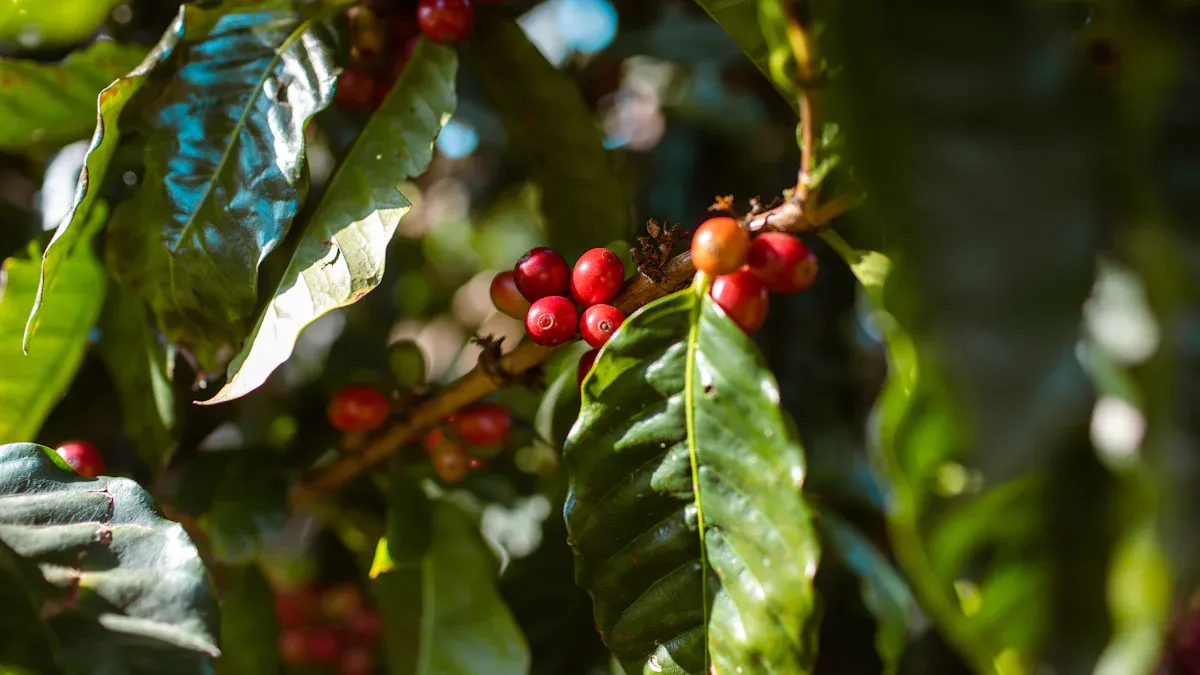
Geisha coffee, also spelled Gesha, is a coffee variety that traces back to Ethiopia. According to World Coffee Research, it was originally collected from Ethiopian coffee forests in the 1930s, later sent to Tanzania, then to CATIE in Central America in the 1950s, and distributed in Panama in the 1960s. It rose to global fame after the Peterson family in Panama entered it into the Best of Panama competition in 2005.
So when people ask, “What is Geisha coffee?” the most accurate answer is this: Geisha is a rare Arabica variety, originally from Ethiopia, that became world-famous through Panama because of its exceptional cup profile. It is not a roasting style, not a processing method, and not simply a marketing term. It is a specific coffee variety with a distinct reputation in specialty coffee.
Geisha or Gesha: Which Spelling Is Correct?
Both spellings are used, and both are seen as acceptable in the coffee industry. World Coffee Research notes that “Geisha” and “Gesha” are often used interchangeably because there is no single fixed translation from Ethiopian dialects into English. In practice, many producers outside Ethiopia use Geisha, while some origin-focused sellers prefer Gesha to reflect the Ethiopian place name more closely.
For SEO and buyer communication, it is often smart to mention both terms in one article. That helps capture searches for what is geisha coffee, what is gesha coffee, and geisha vs gesha, while still keeping the article easy to read.
Where Does Geisha Coffee Come From?
The variety’s roots are Ethiopian, but its modern fame is strongly tied to Panama. World Coffee Research records its journey from Ethiopian forests to Tanzania, then to Central America, and later into Panama, where it was first distributed as a rust-tolerant variety rather than as a luxury coffee. It was only after producers in Panama recognized its remarkable cup quality that Geisha became one of the most celebrated names in specialty coffee.
That is why many buyers associate Geisha with Boquete, Panama even though the variety itself originated in Ethiopia. Panama did not invent the variety, but it played the decisive role in turning Geisha into a global benchmark for ultra-premium coffee. Hacienda La Esmeralda says 2004 marked a turning point in coffee history, when its farm helped reveal the extraordinary attributes of Panama Geisha to the wider market.
What Does Geisha Coffee Taste Like?
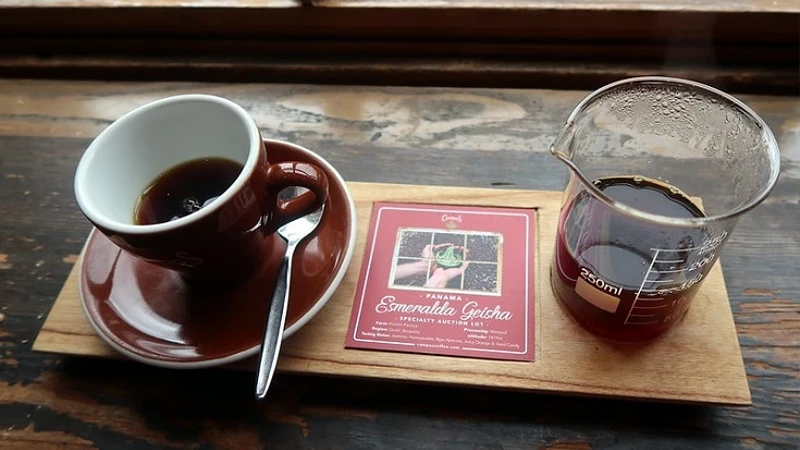
The reason Geisha became so famous is simple: it does not taste like ordinary coffee. High-quality Geisha is known for a highly aromatic, layered, elegant cup profile. Hacienda La Esmeralda describes signature Geisha notes such as jasmine, bergamot, stone fruits, and berries, while World Coffee Research highlights delicate floral, jasmine, and peach-like aromatics.
In the cup, Geisha often feels lighter and more tea-like than more traditional chocolate-forward coffees. Instead of heavy cocoa or nutty dominance, it usually emphasizes florals, citrus, stone fruit, tropical fruit, and sweetness with a refined finish. That sensory profile is one reason Geisha is so prized by pour-over brewers, competition baristas, and specialty roasters looking for clarity and elegance rather than heaviness.
Why Is Geisha Coffee So Expensive?
Geisha is expensive because it combines limited supply, demanding cultivation, exceptional cup quality, and very high market demand. World Coffee Research notes that the variety is associated with outstanding quality when managed well at high altitude, but it also has agronomic drawbacks, including brittle branches and lower producer preference in earlier decades. That helps explain why it was not widely planted for many years.
The pricing story is also driven by auction culture. Best of Panama’s 2025 auction records show a washed Geisha lot from Hacienda La Esmeralda selling for US$30,204 per kilogram, underscoring how elite Geisha microlots can reach extraordinary values in the top end of the specialty market. That does not mean every Geisha coffee sells at record prices, but it does show why the variety has become a symbol of rarity and prestige.
Is All Geisha Coffee the Same?
Not at all. The variety name matters, but origin, altitude, farm management, processing method, roast style, and brewing method all influence the final cup. A Panama washed Geisha can taste very different from a natural-processed Geisha from another country, and not every lot marketed as Geisha will show the classic floral intensity buyers expect. World Coffee Research specifically ties Geisha’s highest cup quality to strong management and high-altitude growing conditions.
That is important for buyers because the word “Geisha” alone does not guarantee a spectacular cup. Premium positioning should be supported by the full product story: origin, farm, process, roast profile, and freshness handling.
Why Panama Geisha Became So Famous
Panama’s role in Geisha’s rise is unusually important. According to World Coffee Research, the variety came to prominence after the Peterson family entered it into the Best of Panama competition in 2005. Hacienda La Esmeralda likewise positions its farm as the place where the wider market first recognized the stunning floral and fruit-driven profile of Panama Geisha.
Once the coffee world saw how distinctive those top Panamanian lots could be, Geisha stopped being just another obscure variety and became a category-defining premium coffee. Since then, auction results, brewer competitions, and luxury retail offerings have continued to reinforce the idea that Geisha is one of the world’s most aspirational coffees.
Is Geisha Coffee Good for All Coffee Drinkers?
Not necessarily. Geisha is admired for clarity, aroma, and nuance, but those same traits mean it may feel too delicate for people who prefer stronger, darker, heavier coffee styles. Drinkers used to bold espresso blends or dark roast profiles may find Geisha lighter, softer, and more tea-like than expected. The value of Geisha is usually greatest when the drinker is looking for complexity and fragrance rather than intensity alone.
That is why Geisha is especially popular in specialty filter brewing formats such as pour-over, where its floral aromatics and layered sweetness are easier to appreciate.
How Should Geisha Coffee Be Packaged?
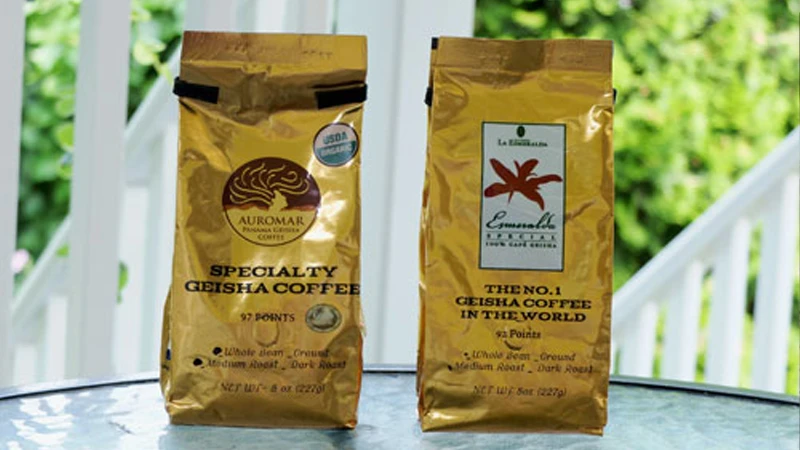
This is where the topic becomes especially relevant for a packaging website. Geisha’s value is tied closely to its aromatic precision. If the coffee loses those floral and fruit notes after roasting, a major part of its premium appeal disappears. For that reason, high-end Geisha coffee should be packed in high-barrier coffee bags that help limit oxygen, moisture, light exposure, and aroma loss. The more delicate the cup profile, the more important the packaging becomes. This is a practical inference based on the variety’s well-known aromatic sensitivity and premium positioning.
For roasted Geisha beans, brands commonly benefit from packaging features such as:
- high barrier film structure
- one-way degassing valve
- reliable heat seal
- resealable closure when appropriate
- premium printing and finish that match the product’s value
Because Geisha is often sold as a premium or ultra-premium coffee, packaging also has a branding role. The bag needs to protect freshness, but it also needs to communicate scarcity, quality, and origin story in a way that feels worthy of the coffee inside.
What Type of Coffee Bag Is Best for Geisha Coffee?
There is no single universal format, but premium Geisha is often well suited to flat bottom coffee bags, stand-up pouches, or side gusset coffee bags with strong barrier performance and a degassing valve. The best choice depends on pack size, brand positioning, and sales channel. Small microlot Geisha releases often work well in smaller premium retail formats, where shelf presentation and aroma protection both matter.
If the coffee is being sold as a limited-release specialty product, the packaging should support that positioning with clean design, clear roast and origin labeling, and materials appropriate for freshness protection. In other words, Geisha deserves packaging that performs like specialty packaging, not generic commodity coffee packaging.
Conclusion
Geisha coffee is famous because it sits at the intersection of origin story, rarity, sensory distinction, and market prestige. It began in Ethiopia, became globally celebrated through Panama, and is now one of the most recognized premium coffee varieties in the world. Its hallmark profile includes floral aromatics and elegant fruit notes, and its top lots have achieved record-breaking prices at major auctions.
For coffee brands, Geisha is not just a bean to sell. It is a product story to protect. That means the conversation should not stop at origin or flavor. It should also include how the coffee is roasted, presented, and packaged. When a coffee is this rare and this aromatic, the right coffee bag is not a small detail. It is part of the product quality itself.