
Quick Answer: Yes, you can vacuum seal liquids, but never with the bag attached to the machine in normal mode; running liquid gets pulled straight into the pump and destroys it. The four reliable methods are: freeze the liquid solid first, use the pulse button to control suction, place a folded paper towel barrier in the channel, or use a chamber vacuum sealer, which is the only machine designed to handle liquids directly. Marinating, freezing, and chamber-sealing soups all work well; sealing hot liquids never does. Each method is compared below.
| Method | Best For | Difficulty |
|---|---|---|
| Freeze first, then seal | Soups, broths, sauces | Easy, needs freezer time |
| Pulse mode | Marinades, oils, wine | Medium, needs practice |
| Paper towel barrier | Thin liquids, watery foods | Easy, disposable |
| Chamber vacuum sealer | Any liquid, best results | Easy, needs special machine |
So, can you vacuum seal liquids at home without wrecking your machine? Yes, with the right technique for the liquid in front of you. This guide walks through each method, the foods each one suits, and the safety rules for storing sealed liquids.
In This Guide
- Why Vacuum Sealing Liquids Is Tricky
- Method 1: Freeze Before Sealing
- Method 2: Pulse Mode
- Method 3: Paper Towel Barrier
- Method 4: Chamber Vacuum Sealers
- Which Liquids Seal Well
- Safety Rules for Sealed Liquids
- FAQ
- The Bottom Line
Why Vacuum Sealing Liquids Is Tricky
Before answering can you vacuum seal liquids, you need to know what the machine actually does. A suction vacuum sealer works by pulling air out of the bag through an open channel and into the pump. Air moves fast; liquids move with it. That single fact shapes every answer to can you vacuum seal liquids with a home machine. The moment free-running soup, marinade, or juice reaches the channel, the pump ingests it, and even a few milliliters of broth can ruin the motor.
That is the core reason the question “can you vacuum seal liquids” gets a qualified yes rather than a plain yes. Vacuum sealing liquid is entirely possible; it just requires keeping the liquid away from the pump, either by turning it solid, controlling the suction, or blocking the channel. Home vacuum packing as a technology was designed for solids, so liquids need one extra step of planning.
Method 1: Freeze Before Sealing
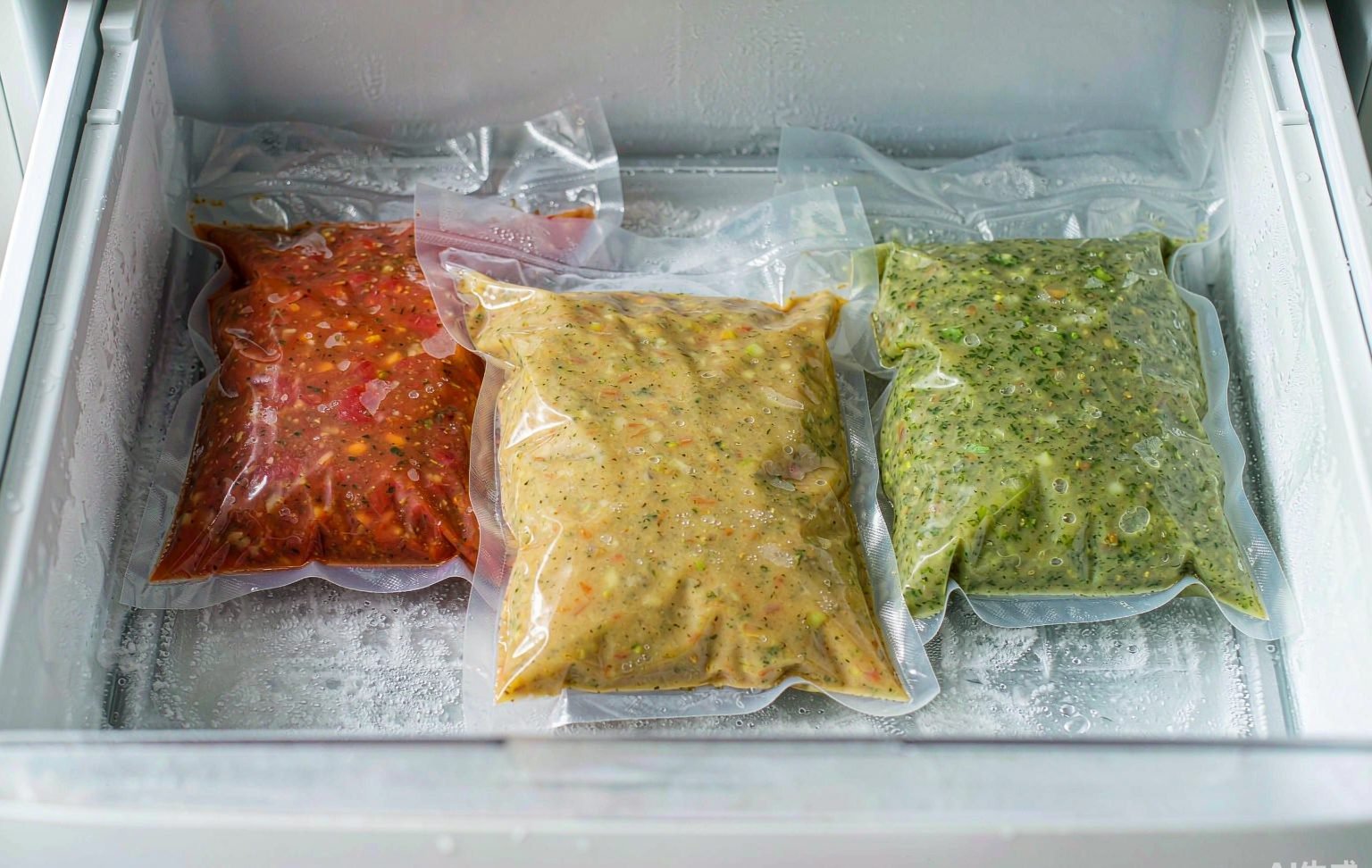
Freezing is the most foolproof method for can you vacuum seal liquids at home. Pour the soup, stock, or sauce into the bag, stand it upright in a container in the freezer, and freeze it solid. Once the liquid is a brick, seal it exactly like any solid food: flat, dry bag surface, normal vacuum mode, full seal. This makes freezing the default answer to can you vacuum seal liquids safely.
The details that matter: leave 2 inches of headspace so freezing expansion does not stress the seal, freeze the bag upright for a flat, stackable block, and wipe the seal area completely dry before it goes through the machine. A frozen bag with frost on the seal line will not weld cleanly; a quick towel wipe fixes it. For batch cooking, this rhythm of freezing then sealing is the most practical form of can you vacuum seal liquids at home.
USDA freezing guidance puts best quality for frozen soups and broths at 2 to 3 months, and vacuum sealing extends that by preventing freezer burn, the top quality killer in the home freezer. Portioning into meal-size bags before freezing also cuts thaw time on weeknights.
Method 2: Pulse Mode
Most mid-range suction sealers have a pulse button that lets you control suction in short bursts instead of one long pull. For watery marinades, wine for deglazing, or anything you want sealed right now without freezer time, pulse mode is the answer to can you vacuum seal liquids immediately.
Technique: prop the bag upright in a tall container, start pulsing in short taps, and stop the moment the liquid rises toward the channel. Watch the bag, not the machine; attention is the real skill in can you vacuum seal liquids with pulse control. The goal is a strong enough vacuum to compress the bag around the liquid without letting liquid reach the seal area. It takes two or three practice bags to get the feel; a liquid tray accessory catches overflow.
Method 3: Paper Towel Barrier
Looking for can you vacuum seal liquids on a basic machine with no pulse mode? The paper towel trick is the cheapest answer. Fold a paper towel into a strip, place it inside the bag across the channel area before sealing, and let it absorb the froth and splashes that suction creates. The towel welds into the seal, so treat it as disposable; cut the towel away after sealing if the bag will be reused.
This method suits thin, watery foods: fresh berries that release juice, watery fish, blanched vegetables. It is less reliable for true free-running liquids like broth, where the volume simply overwhelms the towel. Treat it as a partial answer to can you vacuum seal liquids, best paired with pulse mode. For soups, combine it with pulse mode or move to freezing.
Method 4: Chamber Vacuum Sealers
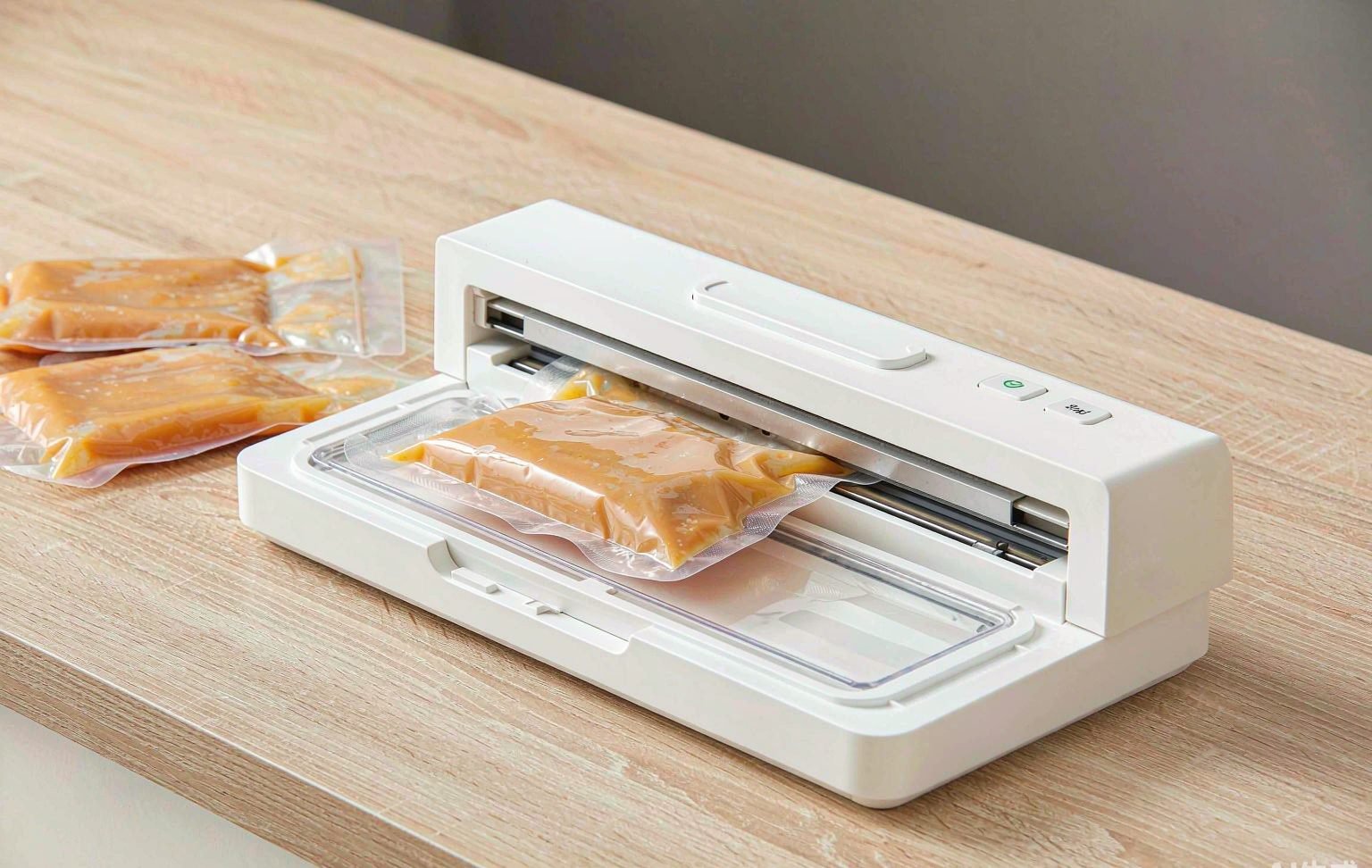
A chamber sealer answers can you vacuum seal liquids with a plain, unconditional yes. Instead of sucking air out of the bag, the machine removes air from an entire chamber, so pressure equalizes inside and outside the bag at the same time; liquid stays put because nothing is pulling it toward a channel. Soups, stocks, marinades, even cocktails for infusion all seal directly.
Chamber machines are larger and sit in the premium tier of the price range, which is why they are standard in restaurant kitchens, where they also handle degassing. For a household that seals liquids weekly, a chamber sealer is the only design that never fights you. For occasional use, the freezer method already answers can you vacuum seal liquids with the machine you already own.
Which Liquids Seal Well
| Liquid | Best Method | Storage Note |
|---|---|---|
| Soup and stock | Freeze first | 2–3 months freezer for best quality |
| Marinades with meat | Pulse mode | 24–48 hours fridge max |
| Wine / broth leftovers | Pulse or chamber | 3–5 days fridge |
| Sauces and gravies | Freeze first | Cool fully before bagging |
| Berry-heavy fruits | Towel barrier | Freezer for long term |
One rule applies across the board when deciding can you vacuum seal liquids of any kind: cool everything completely first. Hot liquid in a sealed bag creates steam, soft seals, and a temperature zone where bacteria multiply fastest.
Safety Rules for Sealed Liquids
Vacuum sealing removes oxygen, and some dangerous bacteria, notably the species that causes botulism, grow happily without oxygen. That makes temperature control the serious side of can you vacuum seal liquids: keep them refrigerated or frozen, never in a cupboard, and respect storage times. Sealing extends quality; it does not make perishable food shelf-stable.
Never vacuum seal hot liquids or hot food in any bag type; our guide on whether vacuum seal bags can be boiled explains how heat affects the plastic and the seal. Similarly, do not microwave sealed liquid bags; see our test of vacuum seal bags in the microwave. Both articles cover the temperature limits that keep sealed food safe.
Reheating sealed liquids is simple: cut the bag open, transfer to a pot, and heat normally. The same cut-and-transfer rule closes out the can you vacuum seal liquids question for every method above. For sous vide cooking the rules differ, and our guide to sous vide vacuum seal bags walks through which bags tolerate long water-bath cooking.
FAQ
Can you vacuum seal liquids in a regular vacuum sealer?
Yes, using the freeze-first, pulse-mode, or towel barrier methods. The only thing you cannot do is run free liquid through a normal suction cycle; the pump will ingest it. A chamber sealer is the only machine that seals liquids directly.
Can you vacuum seal hot soup?
No, and this is the hardest limit in can you vacuum seal liquids. Hot liquid creates steam that weakens the seal and keeps the food in the bacterial danger zone. Cool soup fully in the fridge, then freeze solid and seal, or use a chamber sealer once cold.
How long do vacuum sealed liquids last in the freezer?
Yes, and they outlast ordinary bags. Vacuum sealed soups, broths, and sauces keep best quality for 3 to 6 months frozen, roughly double the life of ordinary freezer bags because sealing prevents freezer burn. They remain safe longer, but quality slowly fades.
Can you vacuum seal liquids for marinating meat faster?
Yes, and it is one of the best uses of the technique. Vacuum pressure opens muscle fibers so marinade penetrates in 30 minutes instead of overnight. Use pulse mode, or freeze the marinade and meat together.
Are the bags reusable after sealing liquids?
Often, yes. Bags sealed with the towel barrier method should have the welded towel trimmed off first. Our guide on reusing vacuum seal bags covers washing, inspecting, and re-sealing safely, and the companion piece on vacuum seal bags in the oven explains temperature limits for any reuse.
The Bottom Line
So, can you vacuum seal liquids? Absolutely, as long as the liquid never meets the pump. Freeze soups solid before sealing, use pulse mode for marinades and wine, drop in a paper towel barrier for watery foods, and if you seal liquids every week, a chamber sealer removes the workarounds entirely. Keep every sealed liquid refrigerated or frozen, never seal anything hot, and vacuum sealing becomes the easiest way to batch-cook soups, speed up marinades, and cut freezer burn from your kitchen. For more technique guides, see our tests of freezing vacuum seal bags, the background on heat and vacuum bags, and the Wikipedia overview of vacuum packing for the science behind the method.