
Quick Answer: can you vacuum seal coffee beans? Yes, and it is one of the best ways to slow staling, with two rules: vacuum seal whole beans only, never grounds, and let fresh-roasted beans degas for about 3 to 5 days first. Vacuum sealing blocks oxygen, the main enemy of roasted coffee, so vacuum-sealed beans at room temperature hold peak flavor for roughly 4 to 6 weeks, and vacuum-sealed beans in the freezer hold it for 6 to 12 months.
If you buy beans in bulk or roast at home, whether can you vacuum seal coffee beans is worth the effort comes down to arithmetic: roasted coffee starts losing its bright aromatics within days of the roast, and most of what you taste as “stale” is oxidation plus the slow escape of aromatic oils. Vacuum sealing does not stop aging, but it slows the oxygen-driven part dramatically. Below is exactly how to do it right, when to skip it, and how the numbers compare against every other storage method in your kitchen.
In this guide:
- When Vacuum Sealing Beans Makes Sense
- Can You Vacuum Seal Coffee Beans? 7 Rules to Do It Right
- Storage Methods Compared by the Numbers
- Common Mistakes
- FAQ
- The Bottom Line
When Vacuum Sealing Beans Makes Sense
So, can you vacuum seal coffee beans in every situation? Not quite, and the exceptions matter. Vacuum sealing shines in three cases: bulk purchases you cannot finish within a couple of weeks, home-roast batches that come faster than you brew, and pre-portioned freezer packs for long-term keeping. And if the honest answer to can you vacuum seal coffee beans this week is no, that is fine too: for the bag you will empty in days, opening and resealing a vacuum bag every morning just costs effort. A simple valve pouch, rolled down and clipped, protects a working supply just fine.
Why whole beans and not grounds? Grinding multiplies the surface area exposed to oxygen enormously, so pre-ground coffee goes flat within days no matter how it is sealed. If you ask whether you can vacuum seal coffee beans that are already ground, the honest answer is that you can, but you are sealing in a product with a much shorter clock. The coffee roasting process itself sets that clock: roasting drives off moisture and creates the porous structure that stales from the moment it cools. That is also why the first rule of can you vacuum seal coffee beans successfully is always about the bean, never the machine.
Can You Vacuum Seal Coffee Beans? 7 Rules to Do It Right
Follow these and the question of whether you can vacuum seal coffee beans turns into a repeatable routine.
- Seal whole beans only. Beans are rigid enough to survive suction without crushing, and they stale far slower than grounds. That single rule is the heart of can you vacuum seal coffee beans: grind right before brewing, always.
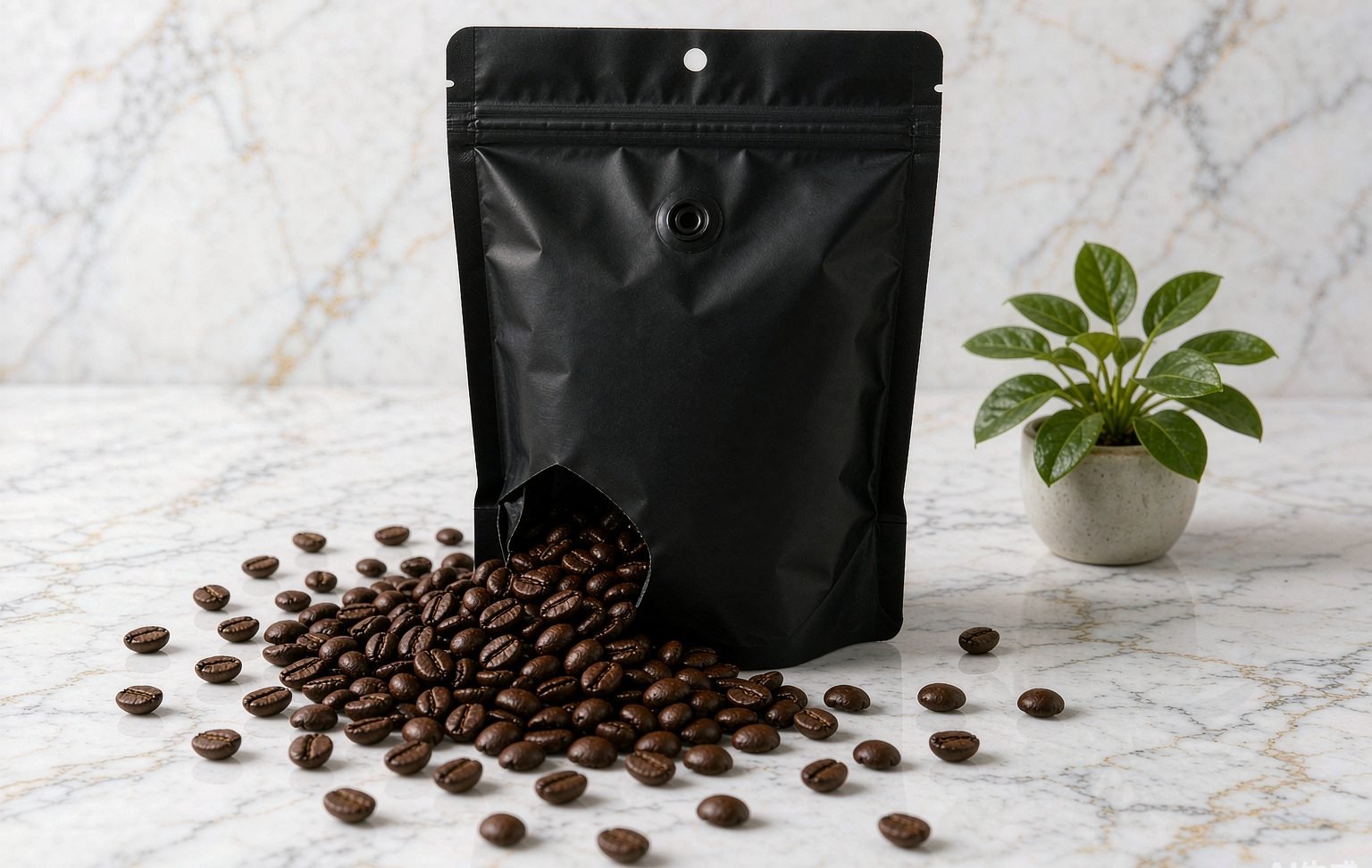
- Wait out the degas window. Fresh-roasted beans release carbon dioxide for days after the roast, with most of the burst in the first 3 to 5 days. Sealing too early traps CO2 and puffs your bag; rest the beans in a valve pouch first. That one-way valve exists precisely for this reason, covered in depth in our guide to coffee bags with valves.
- Portion before sealing. Divide beans into brew-sized batches, roughly a week’s supply each, so you break the vacuum only once per pack. Every open-close cycle floods the remaining beans with fresh oxygen.
- Cool beans completely. Never seal warm beans from a home roaster; residual heat creates condensation, and moisture is the fastest staling trigger after oxygen.
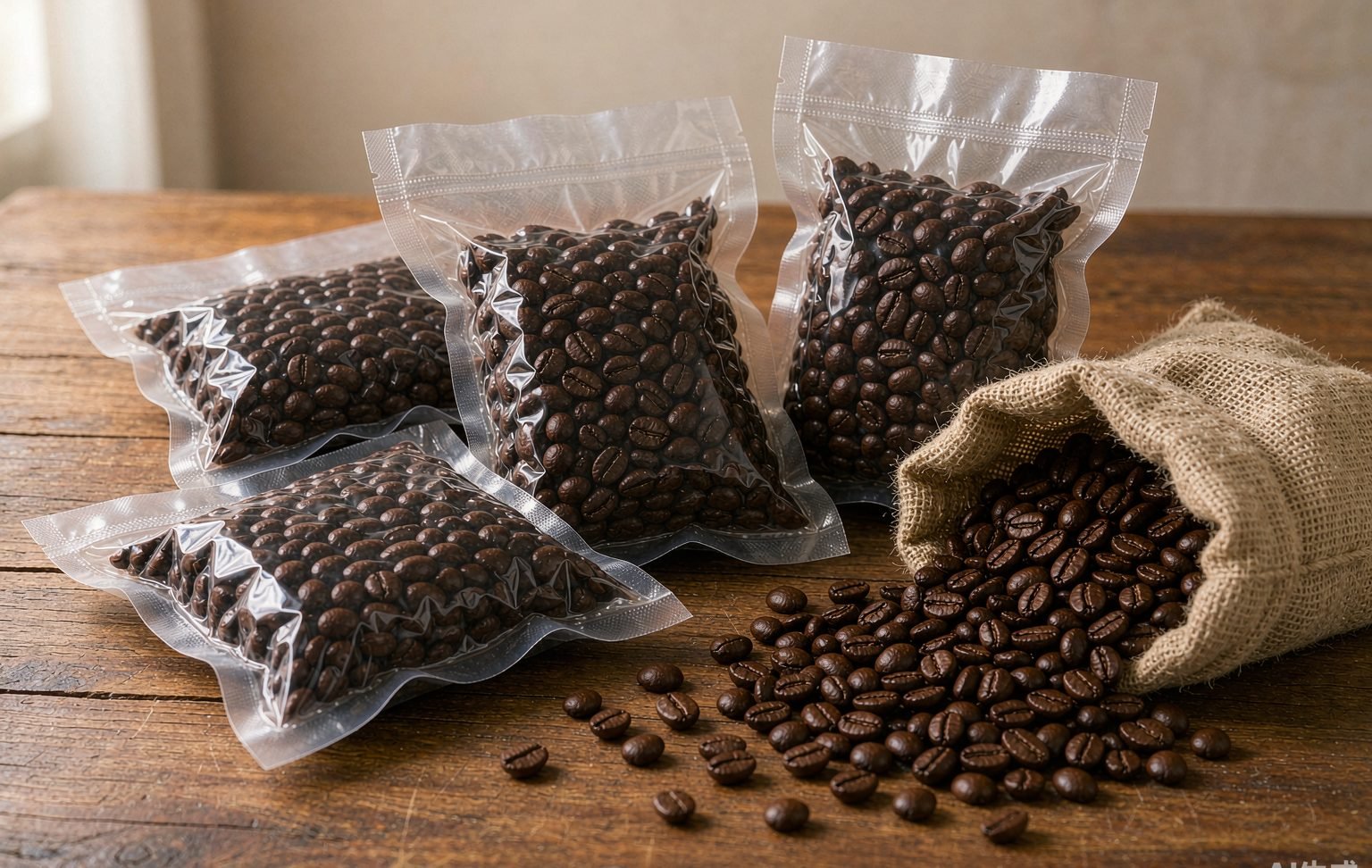
- Use textured or chamber-style bags. Textured channel bags pull a better vacuum around irregular bean shapes than smooth bags do.
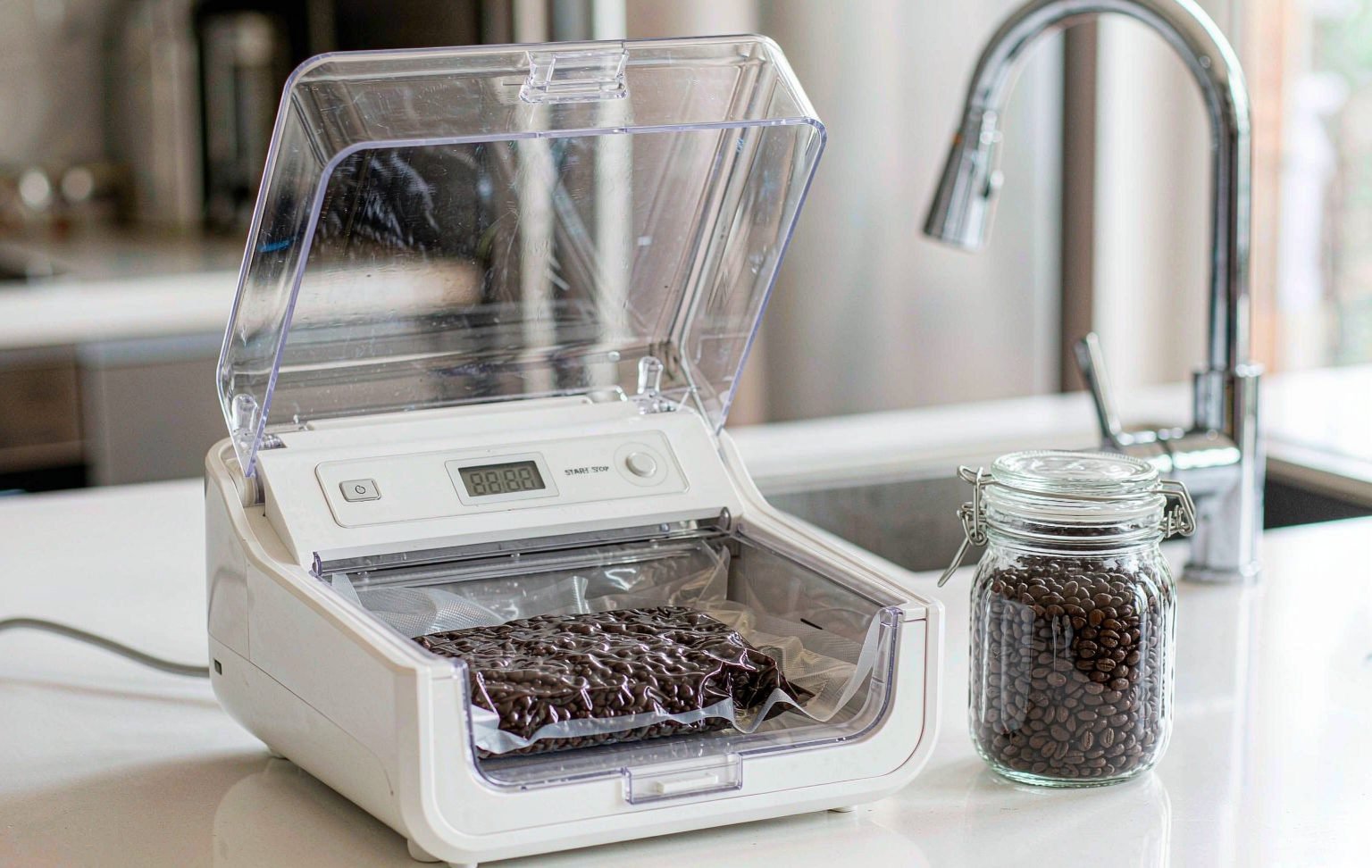
- Freeze the long-term packs. Part of mastering can you vacuum seal coffee beans for months at a time is pairing the vacuum with the freezer: the vacuum removes oxygen and the freezer slows the rest of the chemistry. Our guide on whether you can freeze vacuum seal bags covers the freeze-thaw details.
- Label with roast date, not just seal date. Vacuum hides visual staling cues, so the roast date on the label is the only honest freshness signal left.
Storage Methods Compared by the Numbers
These numbers settle can you vacuum seal coffee beans against every alternative: conservative quality windows for whole roasted beans, per what roasters and specialty coffee guides commonly publish:
| Storage Method | Oxygen Exposure | Peak-Flavor Window (whole beans) |
|---|---|---|
| Open bag, folded top | High, continuous | 1-2 weeks |
| Valve pouch, rolled and clipped | Low | 2-4 weeks |
| Vacuum sealed, room temperature | Very low | 4-6 weeks |
| Vacuum sealed + freezer | Near zero | 6-12 months |
| Clear jar on the counter | High plus light | About 1 week |
One nuance people miss when they ask can you vacuum seal coffee beans: the biology of the coffee bean ended at the roast, and everything after is a battle against oxidation and aroma loss. Vacuum sealing wins that battle on paper, but only if the seal stays intact, which is why single-portion packs beat one giant bag every time.
Common Mistakes
The same errors show up every time people first test can you vacuum seal coffee beans at home. Grinding before sealing throws away most of the benefit. Sealing on roast day traps degassing CO2 and can burst the seam. Reusing one giant bag means daily oxygen floods. And skipping the label means that in three months you cannot tell a bright natural process from a faded dark roast; if you keep multiple roasts on hand, our guide to coffee pouch sizes maps portion sizing to brew volume, and the FAQ about whether you can reuse vacuum seal bags explains why coffee’s oils make reuse a bad idea.
Two more worth flagging: never microwave a vacuum bag to “refresh” stale beans, whatever a trend video claims, since we covered that in can you microwave vacuum seal bags. And if the goal behind can you vacuum seal coffee beans is years of emergency storage, skip plastic vacuum bags entirely and use metallized bags; our mylar bag sizes guide covers the barrier packaging that holds for years.
FAQ
Can you vacuum seal coffee beans right after roasting?
Wait 3 to 5 days after the roast first. Fresh-roasted beans purge a large amount of carbon dioxide, and sealing on day one traps that gas, puffs the bag, and can stress the seam. Rest the beans in a valve pouch or open container out of direct light, then vacuum seal once the degassing tapers off.
Is vacuum sealing better than freezing coffee beans?
They solve different problems, and the best answer is both. Vacuum sealing removes oxygen, the main staling driver; freezing slows the chemistry that remains. When people compare can you vacuum seal coffee beans versus just freezing them, the data favors the combo: vacuum alone protects beans for roughly 4 to 6 weeks, while vacuum-sealed beans in the freezer commonly hold quality for 6 to 12 months.
Can you vacuum seal coffee beans in mason jars?
Yes, with a jar-sealing accessory for your vacuum sealer. A vacuum-lidded jar is excellent for a working two-week supply because glass blocks odors and the lid reseals after each opening. The jar vacuum is weaker than a bag vacuum, so for anything beyond a month, use sealed bags in the freezer.
Do vacuum-sealed coffee beans still need a one-way valve?
No, and this confuses many buyers. A one-way valve is a packaging feature for beans still degassing on the shelf; it lets CO2 escape without letting air in. Once beans are fully degassed and vacuum-sealed, there is no meaningful CO2 left to purge. The valve earns its place in the retail bag, not in your freezer pack; for the retail side, our test of whether you should squeeze the air out of coffee bags explains the whole debate.
How do I thaw vacuum-sealed frozen beans without ruining them?
Thawing matters as much as sealing in can you vacuum seal coffee beans workflows: move the pack to the refrigerator overnight, then to room temperature, and only break the seal once the beans are fully thawed. Opening the bag while it is still cold pulls condensation onto the beans, and moisture stales coffee almost as fast as oxygen. That is exactly why the portioning rule exists: thaw one week-pack, never the whole haul.
The Bottom Line
So, can you vacuum seal coffee beans? Yes, as long as they are whole, fully degassed, and portioned into single-use packs. Vacuum sealing keeps room-temperature beans at peak for roughly 4 to 6 weeks and stretches freezer storage to 6 to 12 months, the cheapest freshness upgrade a bulk buyer or home roaster can make. Seal whole, label honestly, freeze the long packs, and grind only what you brew.