
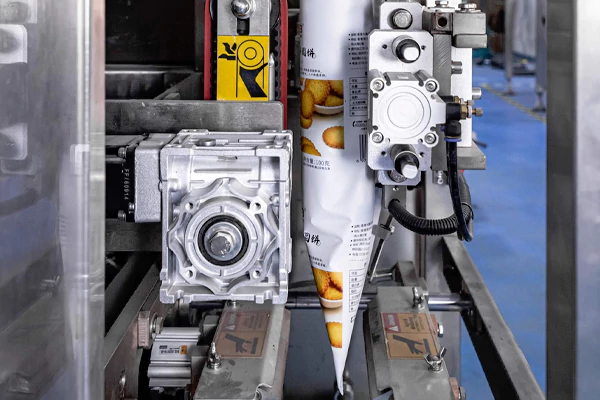
Imagine this: Your 5-ton shipment of plastic packaging roll film finally arrives. You load it onto your high-speed VFFS machine, hit “Start,” and it jams immediately. The diagnosis? Wrong unwind direction. The entire shipment is now scrap.
Unlike premade bags, roll film is a precision component of your manufacturing line. It must synchronize perfectly with your machinery. A discrepancy of just 2mm in width or a variance in friction (COF) can bring a production line running at 100 bags per minute to a grinding halt.
Don’t let a specification error wipe out your savings. This guide is your essential desk reference. Before signing your next purchase order for food packaging film rolls, run through this 10-point technical checklist to ensure your specs are flawless.
Part 1: Dimensional Specifications
The first step is getting the geometry right. If the film doesn’t fit the forming tube, nothing else matters.
Web Width (The Most Critical Measurement)
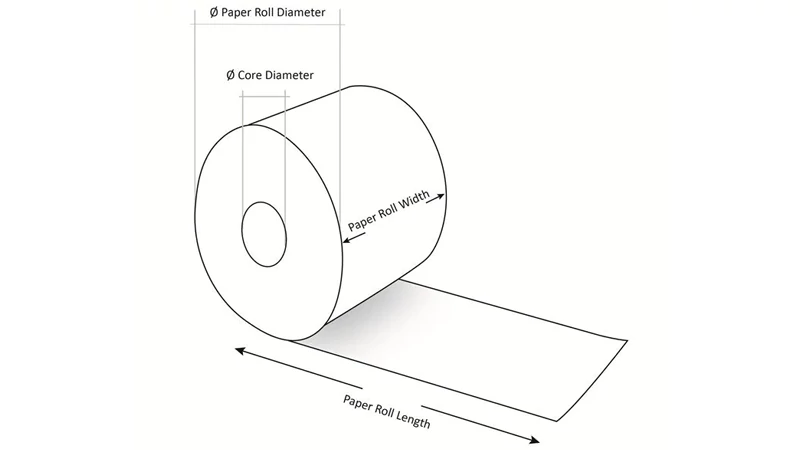
The “Web Width” is the total width of the film roll before it is formed into a bag. Getting this wrong is the most common error we see. You cannot simply guess the width based on the flat bag size. You must calculate it based on your machine’s forming shoulder.
- The Formula: For a standard pillow pouch, the formula is typically: (Front Face Width x 2) + (Back Seal Width) + (buffer for gussets).
- Tolerance: Demand a tolerance of +/- 1mm. If the film is too wide, it will wrinkle in the forming collar. If it’s too narrow, the back seal won’t overlap, and the bag will burst open.
Cut-Off Length (Repeat Length)
This is the vertical height of your package, defined by the distance between one “Eye Mark” and the next.
- Why it matters: Your machine’s photocell sensor reads this distance to tell the knife when to cut.
- The Pitfall: If the print cylinder is manufactured incorrectly, and the Cut-Off Length varies by even 1mm, the design will “drift” up or down the bag as the machine runs. After 50 bags, your logo will be cut in half.
- Our Standard: We use laser-engraved Rotogravure cylinders to ensure the Cut-Off Length is precise to the micron.
Part 2: Material Structure & Functionality
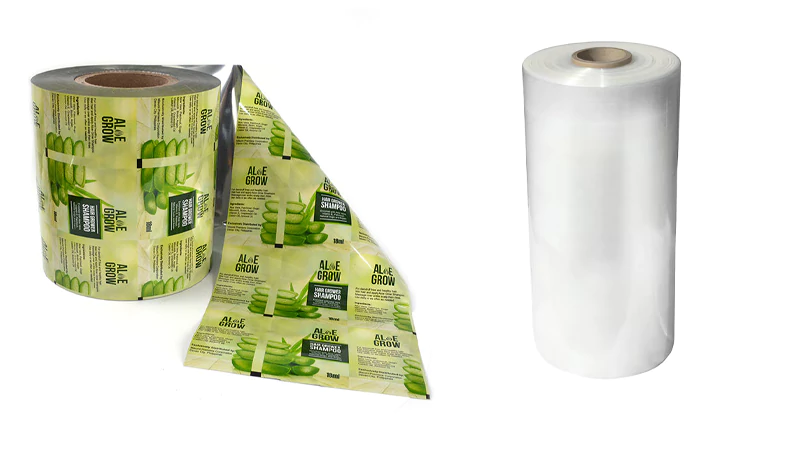
You aren’t just buying “plastic”; you are buying a multi-layer engineered laminate. The structure must match the product inside.
Material Composition: Matching Product to Polymer
Don’t use a generic structure. Specify the material based on your product’s lifecycle.
- For Dry Snacks (Chips/Nuts): You need moisture barrier and light blocking.
- Recommendation: BOPP/VMPET/PE. The VMPET (Metallized PET) acts like aluminum foil but is cheaper and sufficient for snacks.
- For Liquids/Sauces: You need burst strength and acid resistance.
- Recommendation: PET/AL/PE or NY/PE (Nylon). Nylon provides superior puncture resistance for heavy liquid food packaging film rolls.
- For Frozen Foods: Standard PE becomes brittle at -18°C.
- Recommendation: PE/PE with Metallocene additives to prevent cold cracking.
Coefficient of Friction (COF)
This is the “slippery” factor.
- The Physics: VFFS machines pull film rapidly over metal collars.
- The Spec: You must specify a Kinetic COF range.
- Too High (>0.4): The film drags, stretches, and causes “bag length variation.”
- Too Low (<0.2): The film slips in the drive belts, causing misalignment.
- Our Advice: Tell us your machine speed (e.g., 80 bpm). We will adjust the slip agent to target a COF of 0.25-0.35, ensuring smooth runability.
Seal Initiation Temperature (SIT)
Efficiency is money. A lower SIT means the sealant layer melts faster.
- Benefit: If we use premium LLDPE with a low SIT (e.g., 105°C instead of 125°C), you can run your machine faster without burning the outer layer. This increases your daily output.
Part 3: Printing & Machine Compatibility (The “Silent Killers”)
These are the specs that often get forgotten until the roll is on the machine—and by then, it’s too late.
Unwind Direction (The #1 Mistake)
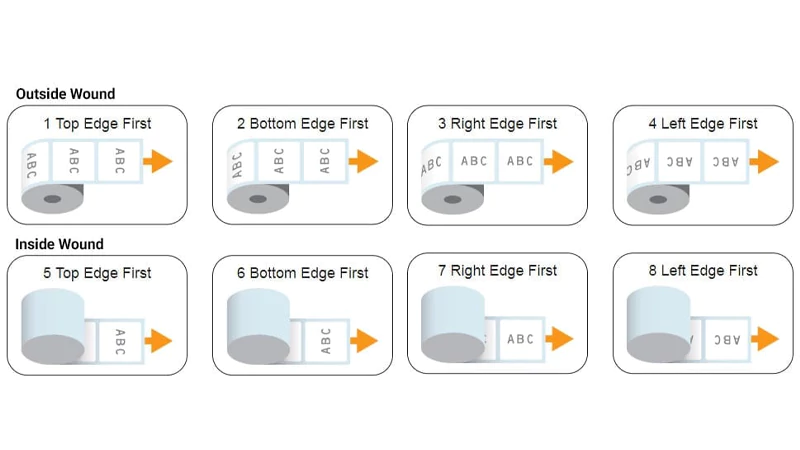
This is the single most confusing aspect of ordering plastic packaging roll film. The “Unwind Direction” dictates how the film comes off the roll and which side (the print or the sealant) faces the machine.
- The Chart: There are typically 8 standard unwind positions (Type #1 to #8).
- The Critical Check: You must confirm if your machine requires “Poly In” (Sealant on the inside surface of the roll) or “Poly Out” (Sealant on the outside).
- Warning: If you order “Poly In” for a machine designed for “Poly Out,” the machine will try to seal the non-melting PET layer, and the bags will never close. Always request an Unwind Direction Chart from us and circle your requirement.
Eye Mark (Photocell) Specifications
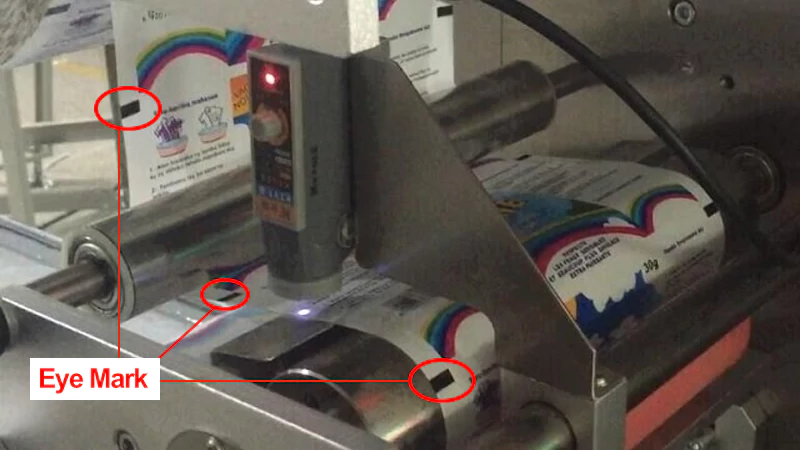
The “Eye Mark” is the small block (usually black) on the edge of the film that tells the machine where to cut.
- Size: Standard is 5mm x 10mm or 3mm x 8mm.
- Contrast: It must be dark enough for the sensor to see. (Black mark on white background is best).
- The “Quiet Zone”: The area surrounding the eye mark (at least 3mm) must be completely clear of text or design. If your design intrudes into this zone, the sensor will get confused and mis-cut the bag.
Core Size & Roll Diameter
Core ID: The standard industry core is 3 inches (76mm). However, heavy-duty machines may use 6 inches (152mm). Check your spindle size.
Max OD (Outer Diameter): Check the physical clearance of your machine. If you order a massive roll with a 400mm diameter, but your machine only fits 350mm, you physically cannot mount the roll.
Weight: Consider your packaging film roll lift capacity. Don’t order 50kg rolls if your operators have to lift them manually. Standard rolls are often kept between 15kg-25kg for manual handling.
Part 4: Compliance & Supplier Reliability
Finally, ensure the film is legal and safe.
Food Safety Certifications
Never assume. Explicitly request documentation.
- FDA & EU 10/2011: Ensure the food packaging plastic roll film complies with regulations for direct food contact.
- BPA Free: Confirm the films are free from Bisphenol A and heavy metals.
Solvent Retention Levels
Since most laminated packaging film rolls are made with solvent-based adhesives, there is a risk of residual chemical smell.
- The Spec: Demand a Certificate of Analysis (COA) showing solvent retention is < 2 mg/m².
- Why: Anything higher risks tainting the flavor of your food product, leading to customer complaints.
Why Choose BN PACK as Your Roll Film Partner?
Sourcing packaging film roll manufacturers in China can be daunting, but we bridge the gap between price and performance.
- Capacity: We produce over 500 tons of roll stock monthly using high-speed Rotogravure presses (up to 10 colors).
- Lab Verified: We don’t guess specs. Every batch is tested in our in-house lab for COF, Solvent Retention, and Seal Strength before shipping.
- Customization: Whether you need a low-temperature sealant for ice cream or a high-barrier foil for coffee, we engineer the film structure to fit your machine, not the other way around.
Conclusion & Downloadable Checklist
Saving a few cents on plastic packaging roll film is not worth the risk of shutting down your production line. By defining these 10 specifications clearly in your purchase order, you eliminate 99% of potential errors.
Ready to streamline your packaging procurement? Don’t guess—verify. Click below to download our Free Specification Sheet. Fill it out and send it to our engineering team, and we will provide you with a precise quote and a free sample roll for testing.
Note for Buyers: If you are unsure about the Unwind Direction or Material Structure, please send us a photo of your current roll running on the machine, or mail us a physical sample. Our lab will analyze it for free.