
There’s a moment every coffee roaster knows — that narrow window during a roast when a bean stops tasting raw and starts tasting alive. Behind that transformation is chemistry, and at the center of it is a compound most coffee drinkers have never heard of: chlorogenic acid.
Whether you’re a roaster, a specialty coffee brand, or simply someone who cares about what’s in your cup, understanding chlorogenic acid (CGA) gives you a new lens for reading flavor. It explains why a light roast can taste like bright lemon zest while a dark roast turns bitter. It explains why Robusta and Arabica taste so different. And it explains why, once a roaster nails that perfect balance, the right coffee packaging bag becomes the last line of defense in protecting everything they worked for.
What Is Chlorogenic Acid (CGA)?
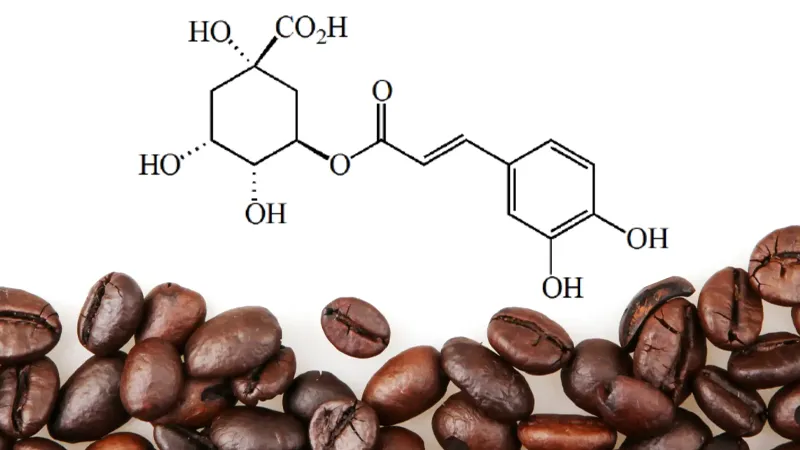
Chlorogenic acids are not a single molecule — they are a family of natural phenolic compounds, specifically esters formed from caffeic acid and quinic acid. They belong to the polyphenol group and are known as potent antioxidants found across a wide range of plants and foods.
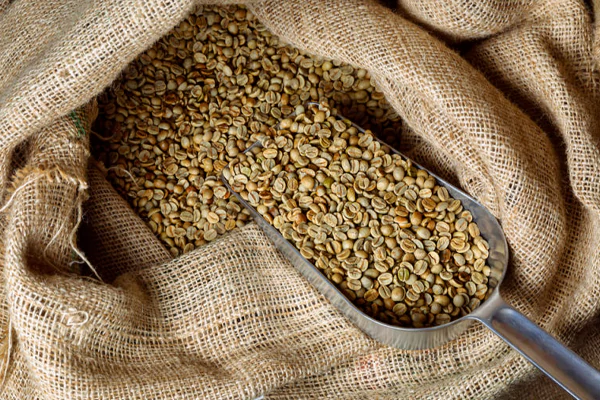
But coffee is in a class of its own. Green, unroasted coffee beans contain anywhere from 6% to 10% CGA by dry weight — making coffee one of the richest dietary sources of chlorogenic acid by a significant margin. For context, while you’ll find traces of CGA in apples, pears, tomatoes, artichokes, and tea, none of these come close to the concentration present in coffee. This is why CGA is so central to coffee’s chemistry, and why it has a disproportionately large impact on the final cup.
Before roasting, this abundance of CGA is part of why raw green coffee tastes harsh, astringent, and intensely sour — it hasn’t been transformed yet.
The Dual Role of CGA in Coffee Flavor
Here’s where CGA gets interesting: depending on how much heat it’s exposed to, it can make your coffee taste brilliant or terrible. It plays two completely opposite roles in flavor development.
CGA as the Source of Bright Acidity
When heat is applied during roasting, CGA molecules begin to break down. In the early and middle stages of a roast, this degradation produces smaller organic acids — primarily quinic acid and caffeic acid — that give coffee its perceived acidity. This is the bright, vibrant, almost sparkling quality that specialty coffee drinkers associate with high-quality light and medium roasts. The citrus notes, the wine-like complexity, the green apple crispness — much of that is CGA doing its job.
This is why light roasts, which preserve more of the original CGA and its beneficial breakdown products, tend to be the most acidic and the most complex in flavor. The CGA potential in the green bean is being converted into something expressive and desirable.
CGA as the Precursor to Harsh Bitterness
The problem is that if the roast goes too far, those beneficial acids don’t stay beneficial. At higher temperatures, the quinic and caffeic acids that CGA produced continue to break down into compounds that register as sharp, harsh bitterness on the palate — the kind often described as “roasty,” “ashy,” or simply unpleasant.
This is the defining challenge of roasting: applying enough heat to transform raw CGA into desirable acidity, but stopping before that acidity itself collapses into bitterness. The roast profile is essentially a race against over-degradation, and CGA is the compound being managed.
How Roast Level Changes CGA

CGA decreases in a predictable way as roast level increases. The longer and hotter the roast, the less CGA remains in the finished bean.
Light Roasts retain the highest levels of CGA. The roast is stopped shortly after first crack, preserving most of the original compound and maximizing the acidic breakdown products. Light roasts are bright, complex, and often fruit-forward — and they carry the most CGA-derived health benefits.
Medium Roasts have undergone significantly more CGA degradation. The acidity softens, raw astringency reduces, and the sweetness developed through Maillard reactions and caramelization becomes more prominent. The cup is more balanced and approachable for a wider range of palates.
Dark Roasts have very little CGA remaining. The compound has been largely degraded, which is why dark roasts have low acidity. However, the secondary breakdown products from over-degraded CGA and its byproducts contribute to the bold, bitter, and intensely roasty character that defines the dark roast profile. The bitterness is not from caffeine — it’s largely from these degradation compounds.
Understanding this progression helps roasters make deliberate decisions. Adjusting time, temperature, and airflow during a roast isn’t arbitrary — it’s CGA management.
Other Factors That Influence CGA in Coffee
The roasting process transforms CGA, but the amount available to work with starts in the green bean. Several factors influence the initial CGA concentration before any heat is applied:
Coffee Species This is the biggest variable. Robusta (Coffea canephora) beans contain nearly double the CGA of Arabica (Coffea arabica). This is a major contributor to Robusta’s heavier, more bitter flavor profile — it starts with more CGA, and more CGA means more potential bitterness if the roast isn’t managed carefully. Arabica’s lower CGA levels make it naturally more suited to the nuanced flavor profiles associated with specialty coffee.
Growing Altitude and Terroir Beans grown at higher altitudes tend to develop more slowly, which allows for a richer accumulation of complex compounds including CGA. Soil chemistry and climate also play roles in how phenolic compounds develop during the growing cycle.
Processing Method Washed (wet processed) coffees tend to express CGA-derived acidity more cleanly because the fruit mucilage is removed before drying. Natural processed coffees, where the bean dries inside the fruit, develop different flavor compounds alongside CGA that can mask or complement its acidic characteristics.
Storage of Green Coffee Even before roasting, CGA can degrade over time if green coffee is stored poorly — exposed to heat, humidity, or oxygen. Freshly harvested and properly stored green beans will have higher and more active CGA content than aged or poorly stored lots.
Why Packaging Is the Last Step in Protecting CGA
A skilled roaster can spend weeks dialing in a roast profile, obsessing over first crack timing and drop temperature, calibrating every variable to land the CGA balance exactly where they want it. That balance — the precise ratio of brightness, sweetness, and body — is real, repeatable chemistry. And it’s fragile.
The moment roasted coffee is exposed to oxygen, that chemistry starts to reverse. Oxidation doesn’t just make coffee taste stale in some vague way. It continues the degradation that the roaster worked to control, breaking down the very flavor acids that give the coffee its character. A light roast that was vibrant and citrusy on day one can taste flat and papery by day five if it’s not properly sealed.
This is why coffee packaging bags are not a commodity decision — they are a direct extension of the roasting process.
What a Coffee Bag Actually Needs to Do
To protect CGA-derived flavor, a coffee packaging bag needs to address three threats: oxygen, moisture, and the CO₂ released by freshly roasted beans.
Oxygen barrier is the most critical function. High-barrier multi-layer laminate bags — typically combining materials like PET, aluminum foil, and a sealant layer — dramatically slow the rate at which oxygen penetrates the bag and contacts the coffee. The difference between a low-barrier bag and a high-barrier bag can mean days versus months of preserved freshness.
Moisture resistance protects the hygroscopic coffee grounds or whole beans from absorbing ambient humidity, which accelerates staling and can contribute to off-flavors.
One-way degassing valve solves a problem unique to coffee: freshly roasted beans off-gas significant amounts of CO₂ for 24–72 hours after roasting. Sealing coffee immediately without a valve can cause the bag to bloat or burst. A one-way valve allows CO₂ to escape without letting oxygen in — making it possible to package coffee right off the roaster rather than waiting for it to degas in open air, which itself causes flavor loss.
Resealable zipper matters for whole bean and ground coffee that will be opened multiple times before finishing. Every opening introduces oxygen; a quality reseal closure minimizes exposure between uses.
Matching the Bag to the Roast Profile
Different roast levels and coffee products often call for different bag formats:
Stand-up pouches with valve and zipper are the industry standard for specialty whole bean and ground coffee at retail. They offer excellent shelf presence, high barrier performance, and consumer convenience. They’re ideal for light and medium roasts where the nuanced flavor derived from carefully managed CGA needs to be preserved as long as possible.
Flat-bottom coffee bags (also called box pouches or brick bags) offer a premium, structured look that stands upright without external support. Their larger flat surface makes them a strong canvas for branding, and the format signals quality to consumers. Well-suited for artisan roasters and premium single-origin offerings.
Side gusset coffee bags are designed for volume. Their expandable gusseted sides hold more weight and are preferred by wholesale roasters and food service suppliers packing 1kg, 2kg, or larger formats. The format is also classic for whole bean coffee in grocery channels.
Kraft paper coffee bags with inner barrier liners balance an artisan aesthetic with functional protection. They signal natural and sustainable positioning, making them popular with roasters who want packaging that communicates craft and provenance. The key is ensuring the inner liner provides sufficient oxygen and moisture barrier despite the natural material outer layer.
How to Choose the Right Coffee Bag for Your Product
Given everything CGA tells us about the chemistry of coffee freshness, the decision about packaging should start with the product, not the price sheet.
Consider roast level. Light roasts have more active, CGA-derived volatile acids and are more sensitive to oxidation. They need the best available barrier performance. Dark roasts are more oxidation-stable but can still benefit from valve bags when packed right after roasting.
Consider format and channel. Retail shelf placement rewards structure and branding surface area — flat-bottom and stand-up pouches work best. E-commerce and wholesale prioritize structural integrity and weight capacity — side gusset bags shine here.
Consider sustainability goals. Recyclable mono-material PE coffee bags and compostable coffee bags have improved significantly in their barrier properties. They can now provide meaningful protection while supporting brand commitments to environmental responsibility.
Consider fill timing. If you’re filling bags immediately after roasting (within hours), a degassing valve is non-negotiable. If you’re allowing a rest period before packing, a valve is still recommended as off-gassing can continue for days.
Protecting the Roaster’s Work: Custom Coffee Bags from BN Pack
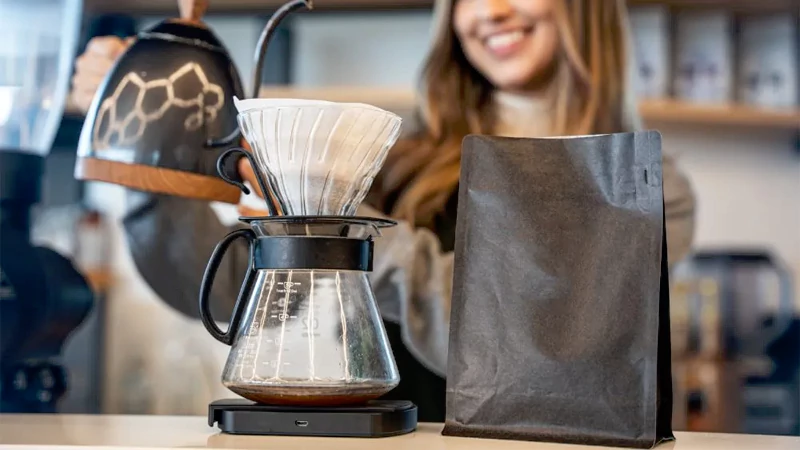
At BN Pack, we manufacture custom coffee packaging bags for specialty roasters, private label brands, and large-scale coffee producers worldwide. Our coffee bags are built around what the product actually needs: high-barrier laminate structures, precision one-way degassing valves, resealable zippers, and print quality that brings your brand to life on shelf.
We offer the full range of coffee bag formats — stand-up pouches, flat-bottom bags, side gusset bags, and kraft paper bags — all fully customizable in size, material, finish, and print. Whether you’re launching a new single-origin light roast that demands maximum freshness protection, or scaling a wholesale dark roast operation that needs volume-efficient packaging, we can engineer the right solution.
Because the chemistry a roaster carefully develops through mastering CGA deserves packaging that preserves it, from the roaster to the cup.
Explore our custom coffee bags or contact us for a quote.
Frequently Asked Questions
What is chlorogenic acid in coffee?
Chlorogenic acid (CGA) is a family of natural phenolic compounds found in very high concentrations in coffee beans. It plays a central role in coffee’s flavor, contributing to acidity during roasting and to bitterness if over-roasted. It is also a significant source of antioxidants.
Does roasting destroy chlorogenic acid?
Roasting degrades CGA — the longer and hotter the roast, the more CGA is broken down. In the early stages of roasting, CGA converts into organic acids that create desirable flavor complexity. In later stages, those acids further degrade into bitter-tasting compounds. Light roasts retain the most CGA; dark roasts retain very little.
Do light roasts have more CGA than dark roasts?
Yes. Light roasts preserve significantly more CGA than dark roasts. This is why light roasts tend to be more acidic, more complex in flavor, and also higher in CGA-related health benefits such as antioxidant activity.
Why does Robusta taste more bitter than Arabica?
One key reason is that Robusta beans contain nearly twice the CGA of Arabica beans. This higher starting concentration means more potential for bitter degradation compounds to form during roasting, contributing to Robusta’s characteristically bold, heavy, and often more bitter flavor.
How does coffee packaging protect CGA and flavor?
Once coffee is roasted, oxidation continues to break down the acids and volatile compounds produced from CGA degradation. High-barrier coffee packaging bags with one-way degassing valves protect roasted coffee from oxygen exposure, slowing this process and preserving the flavor the roaster achieved.
What type of coffee bag is best for specialty light roast coffee?
For light roast specialty coffee, a high-barrier stand-up pouch or flat-bottom bag with a one-way degassing valve and resealable zipper offers the best combination of freshness protection, shelf presence, and consumer convenience.