
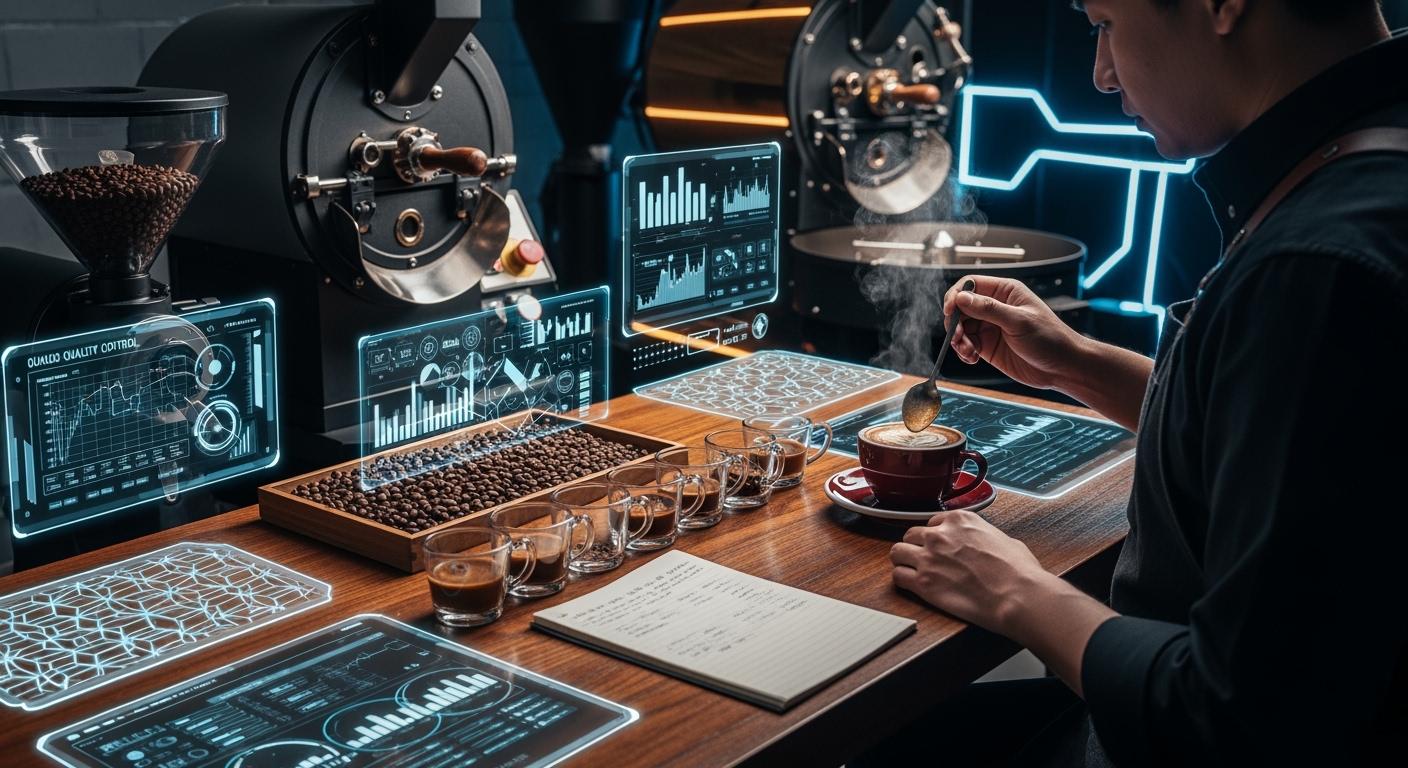
You see coffee quality testing when roasters check each batch. They use exact measurements to keep coffee the same every time. They measure color, moisture, and TDS to make sure it meets standards. Coffee color shows how dark the roast is. It helps match taste and how long coffee stays fresh. Roasters use special tools to avoid mistakes and keep coffee good. They follow steps and rules at every part of the process. They listen to feedback and make changes to keep quality high. The table below shows how measuring color helps with coffee standards and quality:
Evidence Description | Key Points |
|---|---|
Coffee color measurement plays a vital role in determining roast level | It changes the taste, how long it lasts, and keeps it the same for customers. |
Consistent roast color is essential for maintaining product uniformity | It removes guessing and uses real numbers instead. |
Regular calibration ensures long-term accuracy | It helps find small changes between different roast levels. |
Innovation in specialty coffee relies on accurate color data | R&D teams use it for tests and to follow set rules. |
Factors Impacting Brew Consistency
Green Bean Variability
You begin with green coffee beans, but they are not all alike. Where beans come from, how wet they are, and if they have defects can change the taste. You must check moisture content. It should stay between 10% and 12%. Beans that are too wet roast unevenly and may grow mold. Beans that are too dry age quickly and taste bitter. You want to avoid beans with defects. Even a few bad beans can spoil the flavor. The table below shows how these things affect brew consistency:
Variable | Impact on Brew Consistency |
|---|---|
Moisture Content | Should be between 10-12%. Too moist leads to uneven roasting and mold risk; too dry causes rapid aging and bitterness. |
Roast Color Measurement | Agtron analyzers provide objective roast color metrics, ensuring consistency and preventing flavor imbalance. |
Physical Defects | Defective beans can ruin flavor; even a few can significantly affect the overall brew quality. |
The place where coffee grows also matters. Studies show both the type of coffee and the environment change the final cup. This is important for specialty coffee. You want every cup to taste the same.
Roasting Equipment and Calibration
You need to keep roasting equipment working well for brew consistency. You should time batches, track how fast the roast changes, and write down any changes in gas or airflow. Many roasters use software to compare roast profiles. You should recalibrate grinders every two to four weeks. This keeps grind size even and helps with consistency in specialty coffee.
Batch Size and Environmental Factors
You must watch batch size and the environment in your roastery. Changes in temperature and humidity make roasting harder. If air is too humid or too dry, beans roast differently. You may need to change your roasting style for big or small batches. This helps you keep brew consistency, even when the weather changes.
Packaging and Storage
You protect coffee after roasting by using good packaging and storage. Bags with degassing valves and oxygen barriers keep coffee fresh. Some roasters use nitrogen to push out air before sealing bags. You should store beans in cool places. If you keep them too long or in hot spots, flavor fades. Specialty coffee needs careful storage to keep brew consistency from the roaster to the cup.
Coffee Quality Testing Methods
Moisture and Density Measurement
You begin by checking moisture and density in coffee beans. These tests show how beans will act when roasted. Tools like the SINAR BEANPRO help measure moisture and density. This tool uses capacitance and is very accurate. Most roasters use it because it works well. Oven tests can also check moisture, but they take a long time. The graduated cylinder method is simple for density. You fill a cylinder with beans, weigh them, and find density. This way is not as exact as special tools, but many roasters use it.
Method | Description | Accuracy/Precision |
|---|---|---|
SINAR BEANPRO | Capacitance-based moisture analyzer used by over 60% of the coffee industry for moisture and density measurement. | Typically 0.3 STD for %mc and 1.0 g/l STD for density |
Oven tests (Loss On Drying) | A traditional method for moisture content evaluation, though impractical due to time requirements. | Less practical due to time consumption |
Graduated cylinder method | A cost-effective method for measuring density by calculating mass/volume, though less precise. | Common practical approach, less precise |
Checking moisture and density is important before roasting. Higher density beans often taste better and are more acidic. Softer beans with low density need gentle roasting. This helps stop burning. You can write down roasting temperatures and other details. Later, you taste the coffee to see how moisture and density changed the flavor.
Color Analysis (Agtron)
You use color analysis to check roast level and keep batches the same. The Agtron analyzer is a common tool for this job. It gives a number for roast color, so you do not have to guess. You can compare your results with other roasters. Agtron meters help match roast profiles and meet what customers want. The analyzer checks itself, so results stay reliable. You can also use Agtron to check green beans and guess flavor.
“The ground roast score is most important for keeping products the same.”
– Agtron M-Basic II manual
Evidence Description | Purpose |
|---|---|
Professional roasters use Agtron meters to replicate roast profiles. | Ensures batch-to-batch consistency and meets customer specifications. |
The Agtron coffee color analyzer standardizes roast profiles. | Ensures consistency across batches. |
The Agtron analyzer performs automatic internal calibration. | Maintains reliability across multiple readings by compensating for environmental changes. |
Buyers and roasters evaluate green coffee samples using the Agtron analyzer. | Helps assess roast uniformity and predict flavor outcomes. |
The Agtron analyzer enhances quality control by providing objective color measurements. | Replaces subjective visual assessments with precise, repeatable data for quality assurance. |
“If we compare our readings to another Agtron in a different place, the results are less steady, but still better than guessing.”
– Kenneth Davids
Sensory Evaluation and Cupping
You use sensory evaluation and cupping to check taste and smell. You follow the SCA protocol, which uses a 100-point scale. This scale rates things like smell, flavor, aftertaste, acidity, body, balance, and sweetness. Coffees with over 80 points are specialty coffee. You use this system to make sure your coffee is high quality. You also follow ISO rules for sensory tests. These rules help set up the lab and pick tasters. You need trained people who notice small changes. Sensory evaluation gives you data to improve coffee and keep it the same.
Sensory scores help you know what customers like. You use these scores to make sure your coffee matches what people want. This is a big part of real coffee quality testing.
Advanced Sensory Tests (Triangle, In/Out)
You use advanced sensory tests to find small differences in coffee. The triangle test is a strong method for this. You give three samples to a tester—two are the same, one is not. The tester must find the odd one. You need 26 to 40 people for normal tests, and more for tiny changes. Each session should have only 6-8 samples to avoid tiredness. You use water or plain crackers to clean the mouth. The room should have no strong smells and good light. You mix up the order of samples to stop bias. These steps make the triangle test fair and accurate.
The triangle test helps you spot changes in taste and quality. You use it for quality control and new products. You can also use in/out tests to see if a batch matches your standard. Specialty coffee roasters use these tests to keep quality high.
Method | Description | Frequency of Use |
|---|---|---|
Coffee Quality Method | Comprehensive assessment including overall quality rating and sensory attributes. | Not explicitly stated |
SCA/Q-grading protocols | Standardized evaluation using a 100-point scoring scheme for specialty coffee. | Not explicitly stated |
TDS and Weight Loss Tracking
You track TDS and weight loss during roasting. TDS shows how much coffee is dissolved in your drink. You use a refractometer to measure TDS. This helps you check how much coffee is extracted and if it is the same each time. Beans lose water and other things during roasting, which is called weight loss. You write down weight loss to learn about roasting and batch data. Tools like Cropster Cafe help you link roast data with brew numbers like TDS and extraction yield. You use this to help roasting and brewing teams work together.
TDS and weight loss tracking are good ways to test coffee quality. You use them to control extraction and flavor. These tests help you make sure every batch tastes the same.
Tip: Use TDS readings to change your brewing recipe and get the best taste from each batch.
Coffee quality testing uses both physical and sensory tests. You measure moisture, density, color, taste, and extraction. You use advanced sensory tests to find small changes. You track TDS and weight loss to improve roasting and brewing. You follow strict rules to make sure your coffee is always good. If you want to test coffee quality, you need to use these methods. Real coffee quality testing means checking every step and using data to keep your coffee the same.
How Roasters Maintain Consistency
Standard Operating Procedures
You need clear steps to keep coffee the same every time. Standard operating procedures help you and your team know what to do. These steps let you control things that can change the coffee. You use them to check if coffee is fresh and taste each kind. You also rotate stock so old coffee gets used first. You look at milk texture and food quality too. You teach staff new recipes and ways to make coffee. You listen to what customers say and fix problems. You hold cupping sessions to check if the flavor is right. You test if staff know about coffee origins and brewing. You also train them on customer service and how to brew.
Component | Description |
|---|---|
Quality Control Systems | You set up checkpoints during production to keep quality and efficiency high. |
Fresh Roasting | You roast coffee fresh to keep flavor at its best. |
Waste Reduction | You prevent problems early to reduce waste and keep quality. |
Staff Training | You train your team often so everyone knows how to keep standards high. |
Technology Integration | You use data tools to track and improve quality control. |
You use these steps to make sure every batch is good. You keep coffee the same by following the same rules each time. You use technology to write down data and watch the process. This helps you find problems early and fix them fast.
Roast Profile Control
You control roast profiles to keep coffee the same. You write down charge and drop temperatures for each batch. You watch how long the roast takes and the ratio to get the right taste. You check the rate of rise to stop big temperature changes. You use thermal cameras to see bean temperature without touching them. You use roasting software to change profiles and compare batches. You run test batches with sample beans to check profiles and cooling times.
Changing roast profiles helps you get the taste you want. You change heat, airflow, and timing for each coffee type. You keep notes about roast times and the environment. You watch for first crack and turnaround. You use roasting software to see data and compare results. These tools help you keep coffee the same, even if things change.
Tip: Use thermal cameras and roasting software to spot small changes in the roasting process. This helps you keep every batch the same.
Equipment Maintenance Schedules
You keep your machines working well to protect coffee quality. You follow a schedule with daily, weekly, and monthly jobs. You clean the roaster drum and check the cooler fan often. You oil moving parts and change filters. You do deep cleaning and calibration checks every month. You look at electrical and gas lines and adjust belts. Every few months, you check the whole system and update software.
Maintenance Type | Frequency | Key Tasks | Benefits |
|---|---|---|---|
Routine Maintenance | Daily/Weekly | Clean drum, inspect fan, lubricate parts, change filters | Prevents buildup, keeps airflow and heat transfer high |
Preventive Maintenance | Monthly | Deep clean, calibrate, inspect lines, adjust belts | Finds wear early, keeps safety and precision |
Comprehensive Service | Quarterly | Full audit, replace thermocouples, update software, run diagnostics | Maximizes uptime, extends equipment life |
You use IoT sensors to watch machines and find problems early. This can save money and stop machines from breaking. You use quality checks and charts to find issues fast. You make maintenance part of your daily work. This keeps every batch and cup the same.
Batch Tracking and Documentation
You track every batch and keep good records to keep coffee the same. You use systems that show inventory in real time and track each batch from start to finish. You connect batch tracking with other jobs, like ordering and reports. You use tools like Katana, FlexiBake, or Prodio to manage batches, expiry dates, and inventory.
You write down details for each roast. You keep notes about roast profiles, the environment, and cupping results. You use these notes to look at data and make better choices. You hold cupping sessions and write down results to check for consistency. You use quality systems to cut down on problems and waste.
Note: Good records help you get better over time. You use them to see patterns, fix problems, and keep every batch good.
You teach your team to follow steps and use records. You check results and change steps as you learn. This focus on getting better helps you keep coffee the same and reach your goals.
Brew Quality Assurance After Roasting
Packaging Materials and Techniques
You protect brew quality by choosing the right packaging for your coffee. You use bags with strong seals and one-way valves. These valves let gas escape but keep air out. This keeps your brew fresh and stops outside water from getting in. You may use nitrogen flushing to push out oxygen before sealing. This step helps your specialty coffee stay good for a long time. You check packaging for leaks and test how well it keeps out air and water. You want every batch to reach your customer with the same brew quality you tasted after roasting.
Storage Environment Management
You keep your coffee in a cool, dry place to protect brew quality. You avoid sunlight and heat, which can change the taste of your brew. You use shelves or bins that keep water away from your coffee. You check the room for changes in temperature and humidity. You track each batch and move older coffee first. This keeps your brew fresh and stops waste. Specialty coffee needs extra care, so you check storage often. You want every batch to keep its brew quality from roasting to brewing.
Ongoing Brew Quality Checks
You test brew quality after roasting to make sure every batch meets your standards. You cup production batches and compare them to your roast goals. You look for changes in taste, aroma, and body. You brew samples using different brewing process methods like espresso, batch brewers, or cold brew. You want your brew to taste good with any water or brewing process. You check packaging and shelf life to see if your brew stays fresh. You also buy your coffee from stores or online to test brew quality after it leaves your roaster.
You keep digital logs for each batch. You write down roast curves, cupping scores, and sensory notes. You use these logs to improve your roasting and brewing process. You ask trained tasters to check flavor and aroma. You listen to feedback from customers and partners. This helps you change your roasting or brewing process if you find problems. You use all this information to keep your brew quality high for every batch of specialty coffee.
Tip: Always test your brew with different water and brewing process methods. This helps you see how your coffee will taste for every customer.
You keep coffee quality high by using a clear system. You test each batch, control every step, and check results often. This approach helps you make every cup taste the same.
Test beans and roasts with tools and tasting.
Track data and follow set steps.
Listen to feedback and improve your process.
Remember: When you adapt and learn, you keep your coffee at its best.