
For years, “decaf” was almost a dirty word in the specialty coffee industry, often associated with compromised flavor and a less discerning palate. But the landscape has shifted. Today’s coffee drinkers, from millennials to seasoned connoisseurs, are increasingly reaching for decaffeinated options, seeking the rich, complex flavors of coffee without the caffeine. For coffee roasters and brands, this isn’t just a fleeting trend—it’s a significant market opportunity.
But what really is decaf? How do you get decaffeinated coffee beans? And what’s the difference between regular and decaf when it comes to the delicate art of roasting?
This guide unpacks the world of decaffeinated coffee. We’ll explore how caffeine is removed, what it means for the bean itself, and most importantly, how to deliver a decaf product that stands proudly alongside your best caffeinated offerings.
What Does “Decaf” Stand For? Unpacking the Meaning
At its core, “decaf” is simply short for decaffeinated coffee. The definition seems straightforward: coffee with the caffeine removed. However, a common misconception is that decaf is 100% caffeine-free.
So, does decaffeinated coffee have caffeine? Yes, but in trace amounts. By industry standards (in the U.S., for example), for coffee to be labeled “decaffeinated,” it must have had at least 97% of its original caffeine content removed. A typical cup of decaf coffee contains 2-5 milligrams of caffeine, compared to the 95-165 milligrams in a regular cup. The decaffeinated caffeine content is minimal, but it’s not zero. This addresses the question, “is decaf coffee completely caffeine free?”—the answer is no, but it’s very close.
The Heart of the Matter: How is Caffeine Removed from Coffee?
All coffee beans naturally contain caffeine. The magic of decaf happens before the beans are roasted, when they are still green. The goal of any decaffeination process is to extract the caffeine while leaving the bean’s precious flavor and aroma compounds intact. There are several methods to achieve this, each with its own impact on the final product.
1. Solvent-Based Processes
These are the most common methods. The solvents used, typically methylene chloride or ethyl acetate, have a strong affinity for caffeine molecules.
- The Direct Method: Green coffee beans are first steamed to open their pores and are then soaked repeatedly in a solvent solution that bonds with the caffeine. The caffeine-laden solvent is drained away, and the beans are steamed again to remove any residual solvent before being dried.
- The Indirect Method: The beans are soaked in hot water, which dissolves the caffeine as well as flavor compounds. The beans are then removed, and the “flavor-charged” water is treated with a solvent that selectively removes the caffeine. This now-decaffeinated water is used to wash the next batch of beans, allowing them to reabsorb their original flavor compounds without reabsorbing caffeine.
A noteworthy solvent is ethyl acetate, which can be derived from natural sources like fruit or sugar cane. When sourced this way, the process is often marketed as “natural decaffeination” or the “Sugar Cane E.A. Process,” a popular choice in the specialty coffee world, especially for Colombian beans.
2. The Swiss Water® Process (Organic, Chemical-Free)
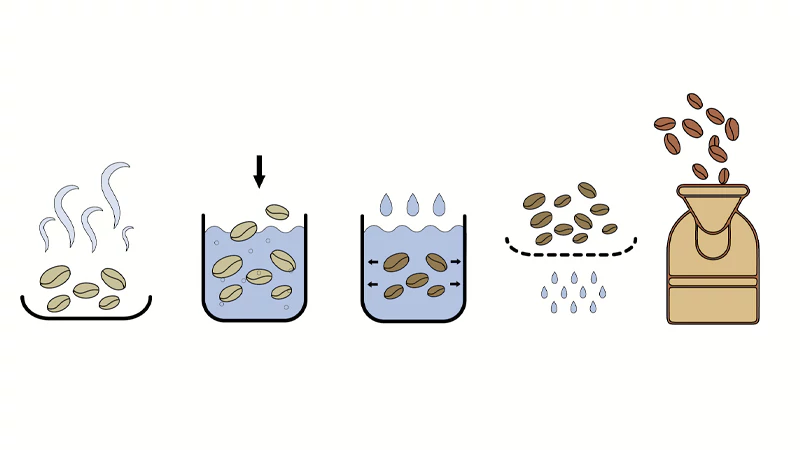
For consumers seeking organic decaf coffee with no chemicals, the Swiss Water Method is the gold standard. This patented process relies solely on water, temperature, and time.
Here’s how it works:
- A batch of green coffee beans is soaked in hot water, creating a solution called Green Coffee Extract (GCE). This initial GCE is saturated with all the water-soluble compounds found in coffee, including caffeine.
- The original beans are discarded, and the GCE is passed through a series of carbon filters that are specifically designed to capture only the larger caffeine molecules.
- The result is a caffeine-free GCE that is rich in all the other flavor compounds. This extract is then used to wash new batches of green coffee beans. Since the GCE is already saturated with flavor, it can’t absorb any more from the beans. Instead, only caffeine migrates from the beans into the extract, leaving the bean’s original flavor profile almost entirely intact.
This process removes up to 99.9% of caffeine and is certified organic, making it a premium choice for roasters.
3. The CO2 Process (Supercritical Carbon Dioxide)
This is the most modern and often most expensive method. It uses carbon dioxide (CO2) in a “supercritical” state—somewhere between a liquid and a gas.
- Water-soaked green coffee beans are placed in a high-pressure chamber which is then flooded with liquid CO2.
- At this extreme pressure, the CO2 acts as a solvent, attracting and dissolving the caffeine molecules while leaving the larger flavor molecules behind.
- The caffeine-rich CO2 is then transferred to another chamber where the pressure is released, causing the CO2 to return to a gaseous state and leave the caffeine behind. The caffeine-free CO2 can then be recaptured and reused.
This method is exceptionally effective at preserving the coffee’s original characteristics, making it another favorite for high-end specialty decaf coffee.
Roasting Decaf Coffee: A Different Beast
For a coffee roaster, decaf beans present a unique challenge. The decaffeination process, regardless of the method, fundamentally alters the bean’s cellular structure, color, and moisture content.
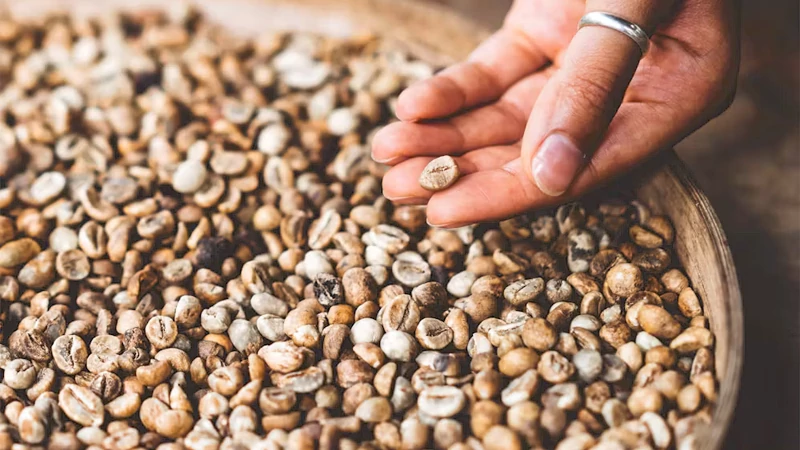
- Color: Decaffeinated green coffee beans are typically darker, ranging from tan to a deeper brown, which can make it difficult to judge roast progression by eye. Using your sense of smell and hearing for the “cracks” becomes even more critical.
- Moisture and Density: Decaf beans are often less dense and more porous. This means they can absorb heat faster and may roast more quickly than their caffeinated counterparts. Roasters often need to apply heat more gently at the beginning of the roast to avoid scorching and ensure even development.
- Degassing: Due to their altered structure, decaf beans often require a longer degassing period after roasting. This allows excess CO2 to escape, ensuring a more balanced and stable flavor when brewed.
Successfully roasting decaf coffee requires careful attention and a willingness to adapt your roast profiles. But when done right, the result is a decaf whole bean coffee that is rich, flavorful, and indistinguishable from a high-quality regular coffee.
Packaging is Paramount: Protecting Your Decaf Investment
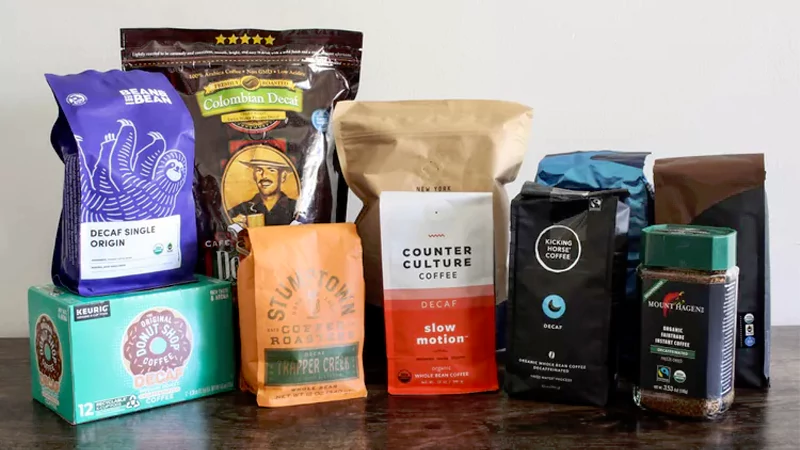
The increased porosity of decaffeinated beans doesn’t just affect roasting; it also makes them more vulnerable to environmental factors after roasting. Oxygen, moisture, and UV light are the enemies of freshness, and for decaf beans, the threat is even greater. Stale, oxidized coffee is a risk for any roaster, but the investment made in high-quality decaf beans makes protecting them absolutely essential.
This is where your packaging becomes the final, crucial step in quality control. As a coffee roaster or brand, you need a coffee bag partner who understands the unique demands of specialty coffee, including decaf.
At BN PACK, we specialize in creating high-barrier packaging solutions designed to preserve the delicate aromatics and flavors you worked so hard to achieve in the roaster. Our multi-layer pouches offer superior protection against oxygen and moisture, preventing your decaf whole bean coffee from going stale prematurely. Features like one-way degassing valves are critical for freshly roasted decaf, allowing CO2 to escape without letting damaging oxygen in.
Whether you need stand-up pouches, flat-bottom bags, or custom-printed solutions that tell your brand’s story, we provide the packaging that ensures the decaf coffee you roast is the decaf coffee your customer tastes. Don’t let your exceptional decaf beans be compromised by inferior packaging. Protect your roast and your reputation with a solution from BN Pack.
Conclusion: Embrace the Decaf Revolution
The question is no longer “are there decaf coffee beans?” but “which decaf coffee beans are you choosing?” From the Swiss Water Process to the Sugar Cane E.A. method, the options for sourcing high-quality, delicious decaf have never been better.
By understanding how decaffeinated coffee is made, adapting your roasting approach, and investing in protective packaging, you can offer a decaf product that delights your customers and boosts your bottom line. Decaf is not a compromise; it’s a craft. And for the dedicated roaster, it’s an opportunity to shine.