
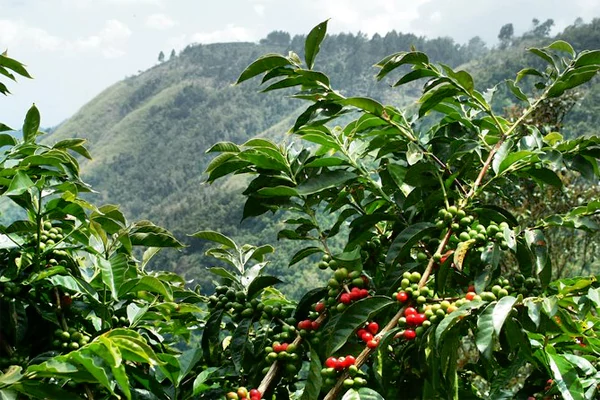
In the world of luxury goods, certain names carry an undeniable weight and a promise of unparalleled quality: Champagne from France, watches from Switzerland, and for coffee lovers, Blue Mountain from Jamaica. It is a coffee shrouded in mystique and protected by one of the most rigorous quality control systems on the planet. For decades, it has been celebrated by connoisseurs as the “Champagne of Coffees,” a benchmark for elegance and balance, all while commanding a famously high price.
But what is it that truly makes this coffee so special? In a modern market filled with exotic and experimentally processed beans, does this classic profile still hold up? Is it a genuinely superior coffee, or is it a product of clever marketing and decades of hype? In short, is it worth the price?
This guide will provide a definitive look at authentic Blue Mountain coffee. We will explore its unique history and geography, the strict regulations that govern its production, its celebrated flavor profile, and ultimately offer a balanced perspective on its enduring value and legendary status.
The Geography of Excellence: What and Where are the Blue Mountains?
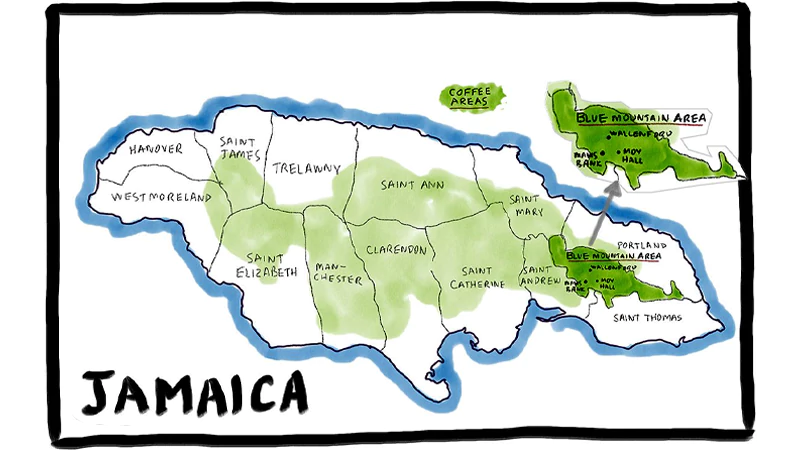
The name “Blue Mountain” is not a generic marketing term; it is a legally protected designation for coffee grown in a very specific and unique geographical location. The official growing region is a small, rugged, and mountainous area in the easternmost part of Jamaica, defined by the majestic peaks of the Blue Mountains themselves. This is a terroir unlike any other in the world, and its specific combination of natural factors is what gives the coffee its foundational character.
Several key geographical elements contribute to its unique profile:
- High Altitude: The coffee is grown at some of the highest elevations in the Caribbean, typically between 3,000 and 5,500 feet (914 to 1,676 meters). This high altitude means cooler temperatures and a slower growth cycle for the coffee plant.
- Rich Volcanic Soil: The soil of the Blue Mountains is exceptionally fertile and porous, with a high nitrogen and phosphorus content. This rich volcanic soil provides the coffee plants with ample nutrients and offers excellent drainage, which is crucial for healthy root development.
- A Cool, Misty Climate: This is perhaps the most critical and unique factor. The Blue Mountains are perpetually shrouded in a cool, heavy mist and near-constant cloud cover. This natural “shade canopy” filters the direct tropical sun, dramatically slowing down the maturation process of the coffee cherries. This extended ripening period, which can be almost double that of other coffee regions, allows the beans inside to develop a higher concentration of sugars and a more complex chemical structure, resulting in a denser bean and a more nuanced and elegant final flavor.
Crucially, this entire growing region is overseen by the Coffee Industry Board of Jamaica (CIB). The CIB is a government-chartered regulatory body that has absolute control over the Jamaican Blue Mountain name. No coffee can be legally sold or exported with this designation unless it is grown in this specific area and has been officially certified by the CIB.
The Seal of Approval: The Strict Regulations of the CIB
The exceptional terroir of the Blue Mountains provides the foundation for the coffee’s quality, but it is the rigorous, uncompromising regulatory system that truly sets it apart. The name “Jamaican Blue Mountain” is a globally protected certification mark, much like “Champagne” from France or “Parmigiano-Reggiano” from Italy. This certification is controlled and enforced by a single entity: the Coffee Industry Board of Jamaica (CIB). Their seal of approval is the only guarantee that a coffee is authentic, and it is only granted after a batch has passed a series of incredibly strict tests.
This meticulous quality control process is a primary reason for the coffee’s consistently high quality and its corresponding high price. The key criteria include:
- Strict Geographical Boundaries: First and foremost, the coffee must be grown within the legally specified zone of the Blue Mountains. Coffee grown just a few miles outside this boundary, even if it’s the same varietal, cannot be called Jamaican Blue Mountain.
- Rigorous Quality Inspection: After processing, every single batch of green coffee beans is physically inspected by the CIB. They are meticulously sorted by size and screened for any defects. Only the top grades—Grade 1, Grade 2, and Peaberry—are eligible to be exported as 100% Jamaican Blue Mountain coffee. Any beans with imperfections are rejected.
- Mandatory Expert Cupping: This is the ultimate test. Before any barrel of coffee can be certified for export, a sample must be cupped (tasted) by a team of official, highly trained Q-graders at the CIB’s headquarters. They evaluate the cup for the classic JBM flavor profile—the mildness, the lack of bitterness, and the clean, vibrant finish. If the cup does not meet their exacting standards, the entire batch is rejected.
- Iconic Wooden Barrels: Uniquely in the coffee world, 100% certified Jamaican Blue Mountain green coffee is not exported in jute or burlap sacks. Instead, it is traditionally sealed and shipped in handmade Aspen wood barrels, a practice that adds to its legendary status and distinguishes it from all other coffees on the market.
The Famous Flavor Profile: A Jamaican Blue Mountain Coffee Review
After all the discussion of geography and regulation, what does the coffee actually taste like? A proper Jamaican Blue Mountain coffee review must begin by noting that this coffee is celebrated as much for what it lacks as for what it possesses. Its most famous and universally acclaimed characteristic is its profound and near-total lack of bitterness. It is this incredible smoothness that forms the foundation of its luxurious reputation.
The classic profile of authentic JBM is a masterclass in balance, subtlety, and cleanliness. When cupping this coffee, professionals and connoisseurs consistently identify the following key attributes:
- Exceptionally Mild and Mellow: The coffee is incredibly smooth on the palate, with a clean finish and no harsh aftertastes.
- Vibrant, Clean Acidity: While it has a bright and lively acidity, it is never sharp or sour. It provides a delicate structure to the cup without being overpowering.
- A Rich, Creamy Body: The mouthfeel is often described as smooth and velvety, adding to the overall sense of elegance.
- Subtle and Sweet Flavor Notes: The flavor profile is not one of loud, intense fruit. Instead, it is a delicate and harmonious blend of sweet, nuanced notes. Tasters frequently describe it with hints of milk chocolate, toasted nuts, and a clean, floral sweetness.
Ultimately, this blue mountain coffee review concludes that JBM is not an “exotic” coffee in the modern sense of a wild, fruit-forward natural or a funky, fermented anaerobic. It is the absolute pinnacle of a classic, clean, and perfectly balanced cup. Its greatness lies not in intensity, but in its flawless subtlety and profound harmony. It is a coffee defined by its quiet perfection.
The Price vs. The Hype: Why is Blue Mountain Coffee So Expensive?
With its legendary status comes a legendary price tag. A single pound of authentic Jamaican Blue Mountain coffee can often cost four or five times more than a typical bag of specialty coffee. This naturally leads to the biggest question for consumers: is it just hype, or are there real reasons for the high cost of blue mountain coffee? The premium price is a direct result of a perfect storm of economic factors: incredibly limited supply, massive international demand, and high production costs.
Factor 1: Extremely Limited Supply
The legally defined Blue Mountain growing region is tiny. The total area is only about 15,000 acres, and the annual production is minuscule compared to a coffee giant like Brazil or Colombia. This extreme geographical limitation means that the global supply of authentic JBM is inherently scarce from the very beginning.
Factor 2: Massive International Demand (The Japan Factor)
This is the single biggest driver of the jamaica blue mountain price. Following a significant investment in the Jamaican coffee industry in the 1960s, Japan became the primary importer of this luxury coffee. This relationship has persisted for over half a century. Today, it is a well-established fact in the coffee industry that over 80% of all certified Jamaican Blue Mountain coffee is exported directly to Japan, where it is revered and commands a very high price. This leaves only a tiny fraction—less than 20% of an already small harvest—to be divided among the rest of the world, including North America and Europe, creating extreme scarcity and intense price competition.
Factor 3: Rigorous Production and Quality Control Costs
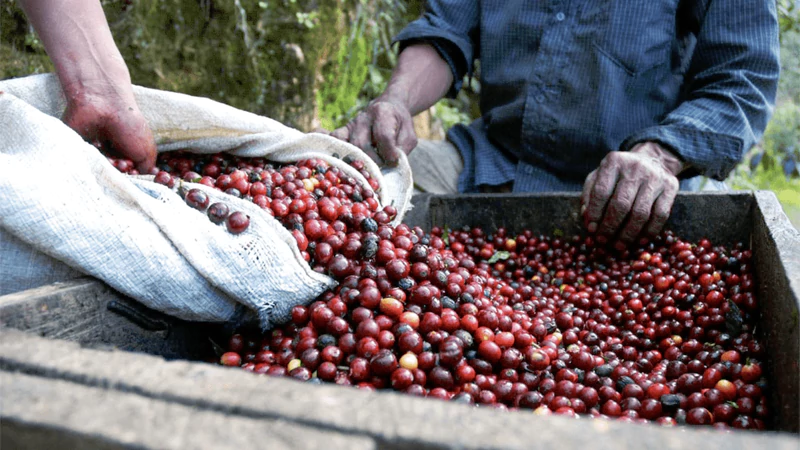
Producing coffee in the steep, rugged terrain of the Blue Mountains is incredibly labor-intensive. Harvesting must be done entirely by hand, a difficult and costly process. Furthermore, as we’ve seen, every single bean must go through the CIB’s multi-stage, rigorous inspection and certification process. From the hand-sorting of the green beans to the mandatory cupping by expert tasters and the use of expensive wooden barrels for export, every step adds significant cost to the final product.
The Verdict: The high price of Jamaican Blue Mountain coffee is not a result of marketing hype. It is a genuine reflection of classic supply and demand economics, where a very small supply is met with massive, concentrated demand, all built upon a foundation of high production costs.
Buying Authentic JBM: Protecting Your Investment
Because of its high price and prestigious reputation, the coffee market is unfortunately flooded with counterfeits, misleading blends, and coffees that use the “Blue Mountain” name illegally. A bag labeled “Blue Mountain Style” or “Blue Mountain Blend” may legally contain as little as 10% of actual Jamaican Blue Mountain beans. To ensure you are getting the authentic product, you need to be a savvy and observant buyer.
How to Spot the Real Deal
When looking for authentic blue mountain coffee, there are a few key things to check on the packaging:
- Look for the Official Seal: This is the most important step. Every bag of 100% authentic Jamaican Blue Mountain coffee must bear the official seal of the Coffee Industry Board of Jamaica (CIB). This is a blue circular seal with a map of Jamaica, a barrel, and a coffee bean inside. This is your number one guarantee of authenticity.
- Check the Wording: The label must clearly state “100% Jamaican Blue Mountain Coffee.” If it says “Blend” or “Style,” it is not the pure product.
- Be Wary of a Low Price: The price is a major indicator. While a large retailer like Costco, jamaican blue mountain coffee might offer a legitimate product, always double-check the label to see if it is a blend. If a price for 100% JBM seems too good to be true, it almost certainly is.
The Roaster’s Role in Communicating Authenticity
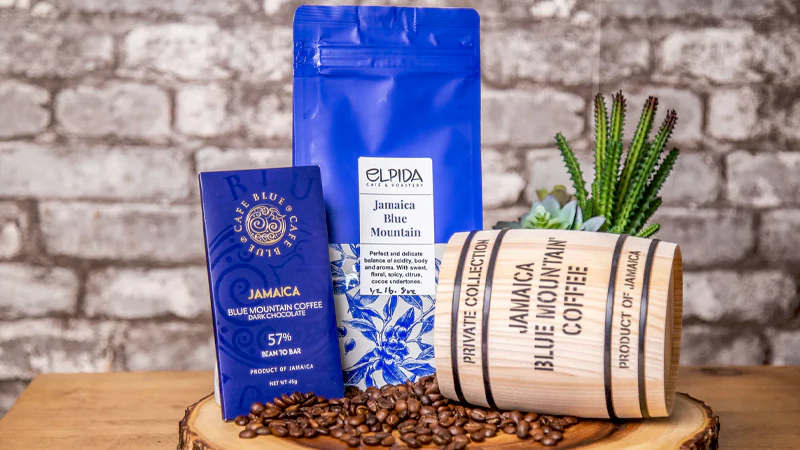
For a roaster selling the best coffee from Jamaica, communicating this authenticity is paramount. The packaging must do more than just hold the beans; it must signal the coffee’s elite status and protect your customer’s significant investment. Premium coffee bags from BN Pack provide the perfect canvas to showcase the official CIB seal and tell the story of this legendary coffee. Our high-barrier materials ensure that the famously delicate and clean flavor profile is perfectly preserved, protecting the beans from the staling effects of oxygen and light, and delivering the full, luxurious experience your customers paid for.
Conclusion
So, is Jamaican Blue Mountain coffee worth the hype and the high price? For the coffee drinker who appreciates a flawlessly clean, exceptionally mild, and perfectly balanced cup, the answer is a resounding yes. It delivers on its promise of a smooth, bitterness-free experience with an elegant, gentle sweetness.
It is not a coffee of loud, exotic, or funky notes that challenge the palate. Instead, it is a coffee of profound subtlety and quiet perfection—a true and enduring icon of the specialty coffee world.