
Coffee lovers have probably experienced this dilemma: you buy a bag of vacuum-packed coffee, leave it at home for months, and only drink it occasionally. Is it still fresh?
Vacuum packing is indeed an effective way to extend the shelf life of coffee. By removing the air inside the packaging, vacuum sealing not only slows down the oxidation process but also helps preserve the coffee for a longer time. But how long can vacuum-packed coffee really stay fresh? Do coffee beans last longer than ground coffee, or does ground coffee spoil faster?
In the following, we’ll explore the shelf life of vacuum-packed coffee in detail, analyze the factors that affect freshness, and provide tips on how to store your coffee to keep it as fresh as possible, so every cup tastes like it was just ground.
What is Vacuum Packed Coffee?
Definition and Principle of Vacuum Packing
Vacuum packing is a method where coffee is placed in a special sealed bag, and the air inside the bag is removed before sealing, creating a low-oxygen environment. This method uses physical principles to eliminate the oxygen in the air, slowing down the oxidation process of coffee beans or ground coffee. Vacuum packing effectively reduces the impact of oxygen on the coffee’s quality and also prevents the loss of aroma, thereby preserving the flavor and fragrance of the coffee.
How Vacuum Packing Extends the Shelf Life of Coffee
When coffee is exposed to air, the oxygen accelerates the oxidation process, causing the flavor to fade and potentially leading to expired or spoiled tastes. Vacuum packing removes the air from the packaging, reducing the contact between oxygen and the coffee, effectively extending its freshness.
In addition to extending the shelf life of coffee, vacuum packing also prevents external moisture, dust, and contaminants from entering, further ensuring the cleanliness and hygiene of the coffee. With the seal intact, coffee can retain its original flavor, aroma, and taste for a much longer period. Vacuum packing is suitable not only for coffee beans but also for ground coffee, especially when coffee is stored for a longer time and used infrequently, effectively prolonging its shelf life.
Factors Affecting the Shelf Life of Vacuum Packed Coffee
Storage Conditions: Temperature, Humidity, and Light Exposure
Storage conditions are an important factor affecting the shelf life of vacuum packed coffee. Temperature, humidity and light can all have a significant impact on the flavor and aroma of coffee.
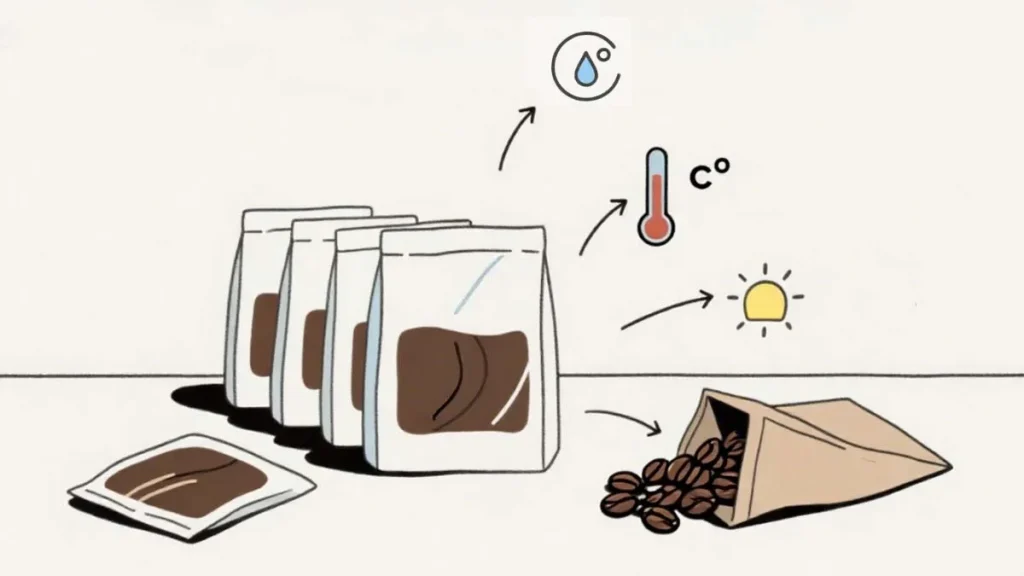
- Temperature: High temperatures speed up the oxidation of the oils in coffee, which can cause the flavors to fade. To keep your coffee at its freshest, it’s best to store it in a cool, dry place—away from direct sunlight or heat sources like stoves or microwaves.
- Humidity: Moisture is one of the biggest enemies of coffee quality. A humid environment can cause the coffee to absorb moisture, altering its flavor and, in more extreme cases, leading to mold growth. To avoid this, vacuum-packed coffee should be stored in a dry area, far from damp places.
- Light: Light, especially UV rays, can accelerate the oxidation process and cause the coffee’s aroma to dissipate. While vacuum packing does offer some protection, exposing the coffee to sunlight can still affect its quality. To preserve its taste, keep your coffee in a darker area and avoid prolonged exposure to strong light.
Coffee Type: Coffee Beans vs. Ground Coffee
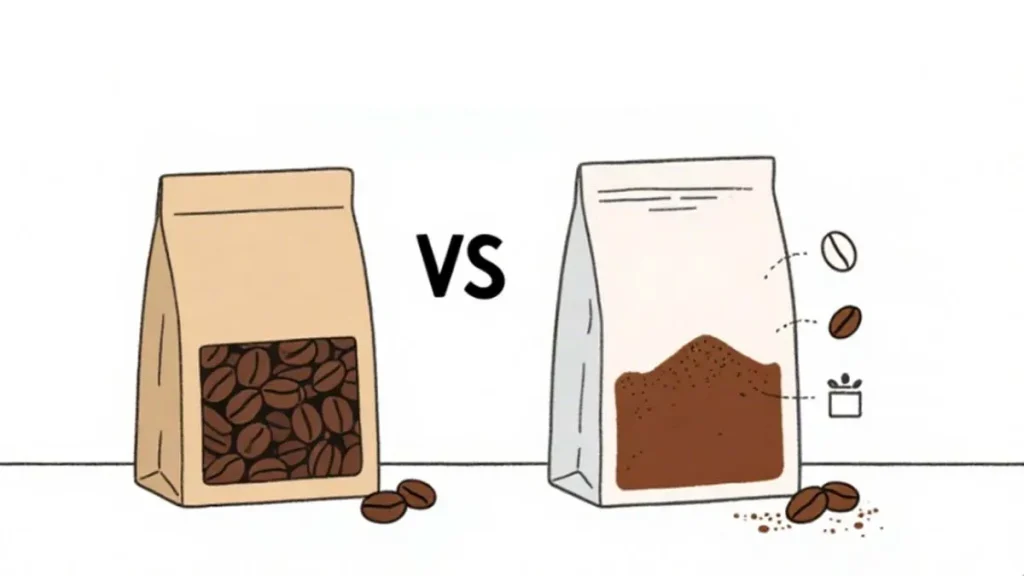
The difference in the freshness of coffee beans versus ground coffee is a very important factor. Generally, coffee beans stay fresher longer than ground coffee.
- Coffee Beans:The intact shell of coffee beans protects the oil and aroma inside the coffee, so they can keep their freshness better than ground coffee. Vacuum packaging can more effectively extend the shelf life of coffee beans, which can usually be stored at room temperature for 6 months to 1 year, or even longer.
- Ground coffee: Once the coffee beans are ground into powder, the surface area is greatly increased, and oxygen, moisture and light are more likely to come into contact with the coffee powder, accelerating the oxidation process. Therefore, the shelf life of ground coffee is shorter, usually 6 months to 1 year (in the case of vacuum packaging), but the flavor will decrease significantly over time.
| Coffee Type | Shelf Life | Protection from Oxidation | Storage Conditions | Flavor Retention |
|---|---|---|---|---|
| Coffee Beans | 6 months to 1 year (or longer) | Whole beans protect oils and aroma | Best stored in cool, dry place | Better retention over time |
| Ground Coffee | 6 months to 1 year (vacuum packed) | Exposed surface area accelerates oxidation | Should be stored in cool, dry place | Flavor diminishes faster over time |
Packaging Quality: Differences in Vacuum Packaging Quality
The quality of vacuum packaging directly affects the preservation of coffee. High-quality vacuum packaging can effectively isolate the air and maintain a low-oxygen environment, which can reduce the contact between coffee and the outside world. Poor-quality packaging may leak, which will accelerate the oxidation of coffee.
The sealing and durability of the packaging material are also very important. Using specially designed high-quality vacuum bags can ensure that the sealing of the packaging is maintained for a long time and better protect the flavor of the coffee.
Signs That Vacuum Packed Coffee Has Gone Bad
Changes in smell
If you open the vacuum package and find that the coffee has a sour, moldy or other odor, it means that the coffee has gone bad. Normal coffee should have a fresh and rich aroma, while spoiled coffee will lose its aroma and even produce a strange smell.
Color and appearance changes
If your beans or ground coffee become dull or uneven in color, this could be a sign of oxidation. Ground coffee in particular will appear drier and more powdery, while beans may have noticeable oily spots.
Taste changes
Spoiled coffee usually loses its original aroma and flavor, and tastes sour or bland. If the coffee you drink is not as strong as before, or the taste has deteriorated significantly, it may be expired.
How to Extend the Shelf Life of Vacuum Packed Coffee?
How to choose the appropriate storage method (refrigerated vs. room temperature)
- Storage at room temperature: If you drink coffee every day, you can store it at room temperature. But remember to keep it in a cool and dry place, away from direct sunlight, high temperature and humidity.
- Refrigerated storage: For coffee that is not often used, refrigerated storage is an effective way to extend its shelf life. Putting the coffee in a sealed bag or container and ensuring that no air enters can greatly delay the oxidation process.
Methods for removing air and moisture
Make sure the package is completely sealed to prevent air and moisture from getting in. Use a vacuum sealer to seal the package tightly, or use a high-quality airtight bag to prevent outside air from coming into contact with the coffee.
Use auxiliary tools such as sealing bags
When storing coffee, in addition to vacuum packaging, you can also use sealing bags, moisture absorbers and other tools to further protect the coffee. Especially in the case of refrigeration or long-term storage, it is very important to ensure that there is no air in the package.
Conclusion
Vacuum-packed coffee provides an effective way to extend the shelf life of coffee, but to maximize its freshness, the correct storage method is essential. Whether stored at room temperature or refrigerated, ensuring that the package is completely sealed and away from light, moisture and high temperature is the key factor in maintaining the flavor of coffee.