You’ve perfected your recipe. It’s the talk of the farmer’s market, and your friends and family rave about it, insisting that “you should sell this in stores!” Now, you’re starting to dream bigger, picturing your carefully crafted food product sitting proudly on the shelves of your local grocery store or even a major national retailer. It’s a powerful and exciting vision, but it can also be an intimidating one.
The journey from a great idea to a successful retail product is a marathon, not a sprint. The path is filled with unique challenges, from navigating production and pricing to understanding the unwritten rules of pitching to professional buyers. Success requires more than just a delicious product; it demands a strategic, step-by-step approach.
We will walk you through the essential stages of how to get your food product in stores, covering everything from perfecting your product and packaging to creating your sales pitch and successfully landing your first retail account.
Step 1: Perfecting Your Product and Packaging
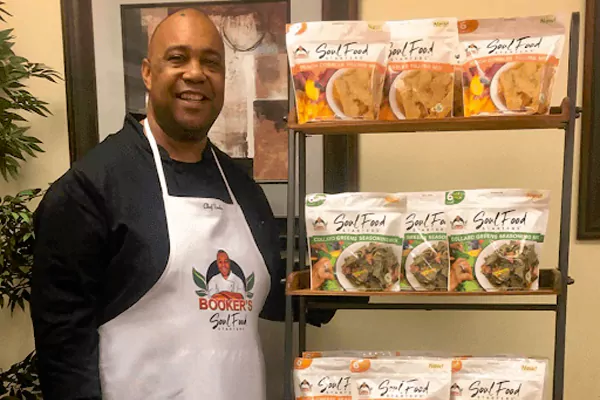
Before you even think about creating a sales pitch or contacting a buyer, your product must be absolutely “retail ready.” This means moving beyond a home kitchen recipe and establishing a consistent, scalable, and professional operation. A retail buyer will not take a risk on a product that isn’t 100% prepared for the rigors of commercial sales.
Product Readiness
Your product must be flawless and consistent. This means you have:
- A Final, Scalable Recipe: Your recipe must be finalized and documented, able to be produced in larger batches without any loss of quality or consistency.
- A Solid Production Plan: You need to know exactly how your product will be made, whether in a licensed commercial kitchen you rent or through a co-packer (a commercial food manufacturer).
- Shelf-Life and Nutritionals: You must have conducted shelf-life testing to determine a reliable “Best By” date and have a finalized Nutrition Facts panel and ingredient list that complies with all FDA labeling requirements.
The Crucial Role of Packaging
For a retail buyer, your packaging is just as important as the product inside. It is your silent salesperson and the first thing they will judge. Your small business food packaging must be professional and serve three critical functions:
- It Must Be Compliant and Food-Safe: All packaging materials must be food-grade and your label must meet all local and federal labeling laws.
- It Must Be Durable: Your product will be packed in cases, stacked on pallets, shipped in trucks, and handled by stockers. Your packaging must be robust enough to withstand this journey and still look perfect on the shelf.
- It Must Be Visually Appealing: Your package has seconds to grab a customer’s attention. The design, branding, and overall look must be compelling and professional enough to compete with established national brands.
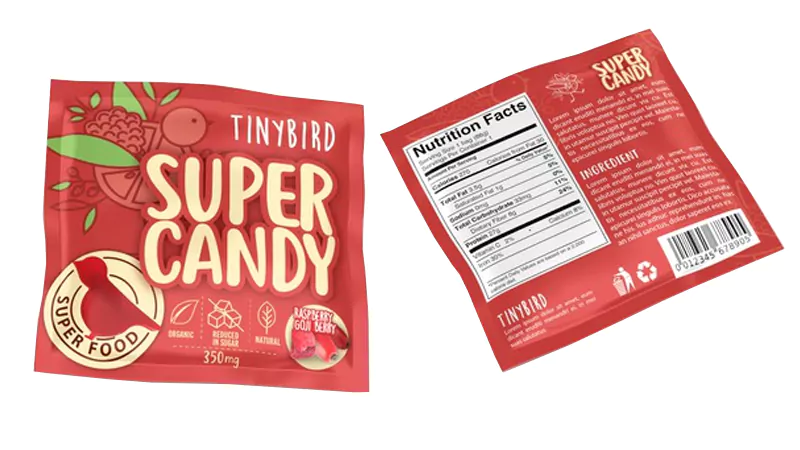
Before you are ready to sell, you must have your final, fully designed packaging complete with your brand name, product information, Nutrition Facts, ingredient list, and a scannable UPC barcode.
Step 2: Create Your “Sell Sheet” – The Retailer’s First Impression
Once your product and packaging are perfected, you need to create your single most important sales tool: the sell sheet. A sell sheet is a concise, one-page document that serves as your product’s resume. It is often the very first thing a busy retail buyer will see, and it must quickly and professionally communicate everything they need to know to make an initial decision about your brand. When you plan to sell your product to retailers, a polished and comprehensive sell sheet is absolutely non-negotiable.
Think of it from the buyer’s perspective. They see hundreds of new products a month. They do not have time for a long story or a rambling email. They need all the critical data in one easy-to-read format. A great sell sheet shows that you are a serious, organized, and professional partner.
Essential Components of a Sell Sheet:
Your sell sheet should be visually appealing and include the following key pieces of information:
- High-Quality Product Photos: Include a clear shot of your packaged product and, if possible, a “lifestyle” shot of the product being used or enjoyed.
- A Compelling Brand Story (in brief): In one or two sentences, explain what makes your company and your food product unique. Is it a family recipe? Sourced from special ingredients? A mission-driven brand?
- Product Details: Clearly list the different sizes, flavors, or varieties you offer. Include key attributes like “Organic,” “Gluten-Free,” or “Keto-Friendly” if applicable.
- Wholesale and Pricing Information: This is the most critical data for the buyer.
- Unit Size: The size of a single product (e.g., 8 oz jar).
- Case Pack: How many units are in a case (e.g., 12 units/case).
- Wholesale Cost: The price the retailer pays per unit and per case.
- Suggested Retail Price (SRP): The price you recommend the store sells it for to the customer.
- Contact Information: Your name, email, phone number, and website.
- UPC Barcode: Include a clear image of the product’s scannable barcode.
The goal is to create a document that a buyer can glance at for 30 seconds and understand your product, your pricing, and your brand.
Step 3: Nailing Your Pricing Strategy
This is often the most challenging and intimidating step for new food entrepreneurs, but it is absolutely critical to get it right. Before you can pitch your product, you must have a solid pricing structure that allows both you and your retail partners to be profitable. A retail buyer’s first question will always be about cost, and you need to have a confident and well-reasoned answer.
Understanding the Retail Math
There are three key numbers you must know inside and out:
- Cost of Goods Sold (COGS): This is your direct cost to produce one single unit of your product. It includes all your ingredients, packaging, labels, and direct labor. If it costs you $1.50 to make one jar of your sauce, your COGS is $1.50.
- Wholesale Price: This is the price the retail store pays you for one unit of your product.
- Suggested Retail Price (SRP): This is the price the final customer pays for your product at the shelf.
Working Backwards from the Margin
The most important concept to understand is the retail margin. A grocery store is a business, and they need to make a profit on every product they sell to cover their rent, labor, and other overheads. A typical retail margin for a specialty food item is between 30% and 50%.
You must price your product by working backward from what a customer is willing to pay. For example:
- Let’s say a customer would reasonably pay $6.99 (your SRP) for your product.
- The grocery store needs a 40% margin on that price. (40% of $6.99 is $2.80).
- This means the store must be able to buy the product from you for approximately $4.19 (your Wholesale Price). ($6.99 – $2.80 = $4.19).
- If your COGS is $1.50, your profit per unit is $2.69 ($4.19 – $1.50). This is a healthy margin.
If your COGS was $3.80, however, your profit would only be $0.39, which is likely not a sustainable business model.
The Distributor Factor
If your goal is to get into larger chains, you will likely need to work with grocery distributors. These are companies that buy products from manufacturers and sell them to retailers. They also take a margin, typically 20-30%. This margin is taken out of your wholesale price, further squeezing your profit. It is essential to factor this into your pricing from the very beginning if you plan to scale.
Step 4: How to Get Your Product in Stores – The Pitch
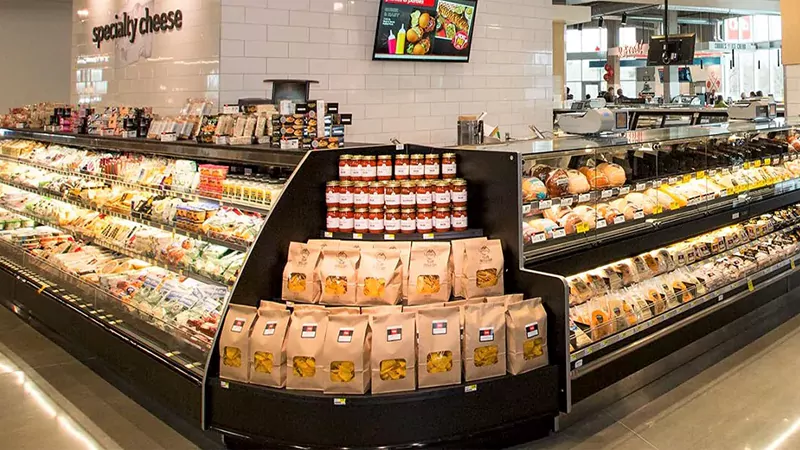
With a perfected product, professional packaging, a comprehensive sell sheet, and a solid pricing strategy, you are finally ready to start the outreach process. This is where persistence and professionalism are key. Knowing how to get your product in stores is a skill, and it starts with finding and effectively communicating with the right person.
Finding the Right Buyer
For small, independent local stores, you can often speak directly with the owner or manager. However, for larger chains, you need to connect with the specific “category buyer.” This is the person at the corporate level who is responsible for a specific aisle or category in the store (e.g., the “Salty Snacks Buyer” or the “Frozen Desserts Buyer”). You can often find their names and contact information through professional networking sites like LinkedIn, by calling the corporate office and asking, or by attending industry trade shows.
The Initial Outreach
Your first contact with a buyer will most likely be via email. Keep it short, professional, and to the point.
- Introduce yourself and your brand in one sentence.
- Briefly describe your product and who your target customer is.
- Explain why your product is a great fit for their specific store and their customers.
- Attach your sell sheet and mention that you would love to send them some samples.
Do not send a long, rambling story. A buyer is extremely busy; your goal is simply to pique their interest enough to look at your sell sheet and agree to receive samples.
The Meeting
If you secure a meeting, be prepared. Bring your professional sell sheet, your detailed pricing list, and, most importantly, plenty of pristine samples of your product for them to taste and see. Be ready to answer the tough questions they will inevitably ask:
- What makes your product different from what I already have on my shelf?
- Who is your target customer, and do they shop in my stores?
- What is your marketing and promotion plan to drive sales once the product is on the shelf? (e.g., in-store demos, social media advertising).
- What are your production capabilities? Can you handle the volume if we place a large order?
Answering these questions confidently is key to showing that you are a reliable and strategic business partner, not just someone with a tasty recipe. This is how to get your product in grocery stores.
The Final Step: Protecting Your Product and Your Brand
Congratulations! Getting a “yes” from a retail buyer is a monumental achievement. It is the moment your dream begins to turn into a reality. But this victory is the start of a new and even more demanding challenge: fulfilling orders consistently and ensuring your product always looks its best on the shelf, week after week.
The journey from your production facility to the retail shelf, through distribution centers and stock rooms, is a rough one. Your packaging is now the only thing protecting your product’s integrity and your brand’s reputation. A scuffed, damaged, or unappealing package will not sell and can even lead to your products being rejected by the retailer.
This is where a partnership with BN Pack becomes essential. We create durable, retail-ready food packaged on site for retail sale. Our high-quality materials and strong seals are engineered to withstand the rigors of shipping and handling, ensuring your product arrives in perfect condition. Simultaneously, our vibrant, high-definition printing makes your brand pop on the shelf, attracting customers and driving sales. From the initial design to the final production, we help you create packaging that secures and maintains your hard-won place into retail.
Conclusion: Your Journey to the Shelf
The path from a kitchen idea to a product on a retail shelf is a journey of passion, persistence, and professionalism. As we’ve seen, it requires a holistic approach. You must not only perfect your product and its packaging but also create a compelling sell sheet, master the complexities of retail pricing, and confidently pitch your brand to buyers. Each step is a critical building block on the road to success.
Getting your food in stores is undoubtedly a challenging process, filled with hard work and potential setbacks. However, it is also an incredibly rewarding one. With a great-tasting product, a solid strategy, and a professional presentation, your dream of seeing your brand in the shopping carts of customers across the country is absolutely achievable.