
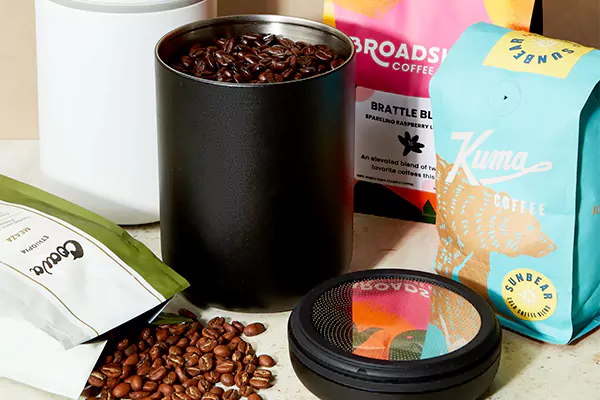
There’s nothing quite like the aroma of freshly brewed coffee — rich, complex, and full of life. But that same coffee, left exposed to the wrong conditions, can turn flat and stale within days. The difference between a vibrant cup and a disappointing one often comes down to one thing: how the coffee was stored.
Whether you’re a home brewer, a specialty roaster, or a coffee brand looking to deliver the best experience to your customers, understanding how to keep coffee fresh is essential. This guide covers everything — from the science of staleness to the best storage methods and packaging solutions.
Why Coffee Goes Stale: The Four Enemies of Freshness
Before diving into storage tips, it helps to understand what actually causes coffee to lose its flavor. Coffee has four main enemies:
1. Oxygen Oxidation is the primary cause of stale coffee. When roasted coffee beans are exposed to air, the aromatic compounds that give coffee its complexity begin to break down. Ground coffee is especially vulnerable because the grinding process dramatically increases the surface area exposed to oxygen.
2. Moisture Coffee is highly hygroscopic — meaning it readily absorbs moisture from its surrounding environment. Excess humidity causes the oils and volatile compounds in coffee to degrade faster, leaving behind a flat, sometimes musty flavor. This is also why storing coffee near a sink or in a humid kitchen is a poor idea.
3. Heat Heat accelerates the chemical reactions that cause coffee to go stale. Storing coffee near a stove, oven, or in direct sunlight speeds up flavor degradation significantly. Even the warmth of a kitchen counter near appliances can be enough to impact quality over time.
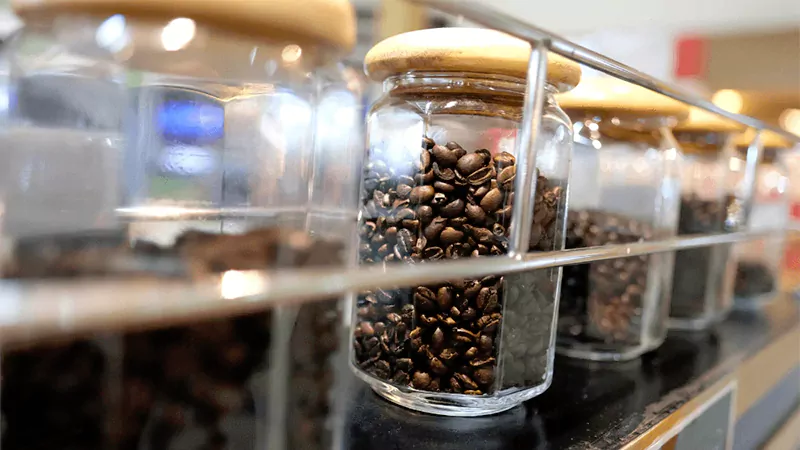
4. Light Exposure to light — particularly UV light — triggers photo-oxidation, which breaks down coffee’s delicate flavor compounds even when the bag remains sealed. Clear glass jars may look attractive on a countertop, but they’re among the worst containers for long-term coffee storage.
Whole Beans vs. Ground Coffee: What’s the Difference?
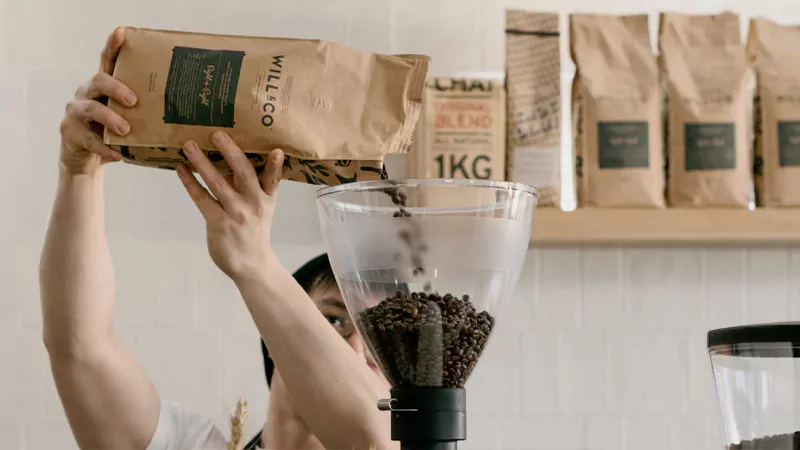
The form of your coffee matters enormously when it comes to freshness. Whole beans retain their flavor far longer than ground coffee because the intact bean structure protects the aromatic oils inside.
Once coffee is ground, the massive increase in surface area accelerates oxidation dramatically. Ground coffee can lose noticeable freshness within 30 minutes of grinding if left unsealed. Whole beans, by contrast, can stay fresh for several weeks when stored properly.
The practical takeaway: always buy whole beans and grind just before brewing if flavor is your priority. If you purchase pre-ground coffee, use it quickly and store it carefully in between.
How Long Does Coffee Stay Fresh?
Understanding shelf life helps you shop and store more effectively:
- Unopened whole beans (vacuum-sealed or nitrogen-flushed packaging): 6–12 months
- Opened whole beans (stored in an airtight container): 2–4 weeks at peak freshness
- Unopened ground coffee (valve-sealed packaging): 3–5 months
- Opened ground coffee (airtight container): 1–2 weeks
Note that coffee doesn’t “expire” the way perishable foods do — it simply loses its flavor over time. A “best by” date on a coffee bag refers to peak flavor, not safety.
7 Proven Tips to Keep Coffee Fresh Longer
1. Use an Airtight Container
This is the single most important step you can take. Air is coffee’s biggest threat, so sealing your coffee away from oxygen is non-negotiable. Transfer opened coffee into an airtight container — ideally one made from ceramic, stainless steel, or opaque glass. Avoid containers with loose-fitting lids or those that let in light.
For the best results, look for containers with a one-way valve or a vacuum-seal mechanism that actively removes air each time you close it.
2. Store in a Cool, Dark Place
Keep your coffee away from heat sources and light. A kitchen cupboard or pantry away from the oven, dishwasher, and windows is ideal. Avoid storing coffee on open shelves or countertops where it will be exposed to fluctuating temperatures and light throughout the day.
3. Don’t Store Coffee in the Refrigerator
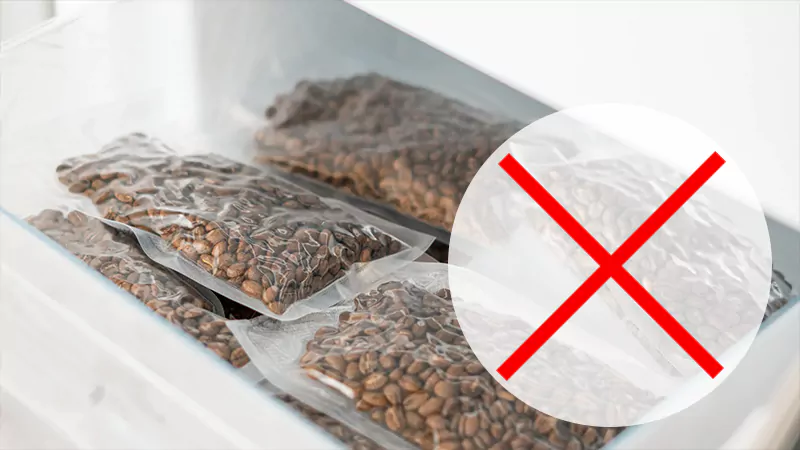
This is one of the most common coffee storage myths. The refrigerator seems like a logical choice, but it’s actually one of the worst places for coffee. The fridge is full of moisture, and coffee readily absorbs odors from surrounding foods. Your coffee can end up tasting like last night’s leftovers — not ideal.
4. Buy Smaller Quantities More Frequently
No storage method can fully compensate for old coffee. The freshest coffee comes from buying beans as close to the roast date as possible, in quantities you’ll consume within one to two weeks. Many specialty roasters print the roast date on their bags — look for this and prioritize it over the “best by” date.
5. Grind Just Before Brewing
If you have a grinder, use it right before you brew. Grinding coffee exposes a dramatically larger surface area to oxygen, which accelerates staling. Pre-ground coffee stored overnight in a bag will already be noticeably less vibrant than freshly ground beans. Even a modest burr grinder can make a meaningful difference to cup quality.
6. Freeze Only for Long-Term Storage — and Do It Right
Freezing coffee is a polarizing topic, but done correctly, it can extend the life of whole beans effectively. The key rules are:
- Divide beans into single-use portions before freezing
- Seal each portion in an airtight, moisture-proof container or bag
- Never refreeze — once a portion is taken out of the freezer, use it entirely
- Let frozen beans come to room temperature before grinding
Repeated freeze-thaw cycles introduce moisture and cause flavor degradation, so pre-portioning is essential.
7. Keep Coffee in Its Original Packaging When Possible
Quality coffee bags are purpose-designed to preserve freshness. If your coffee comes in a resealable bag with a one-way degassing valve, you may not need to transfer it at all — simply press out excess air, reseal tightly, and store in a cool, dark place.
The Role of Coffee Packaging in Freshness
For coffee brands and roasters, packaging is the first and most critical line of defense against staleness. The right packaging doesn’t just protect coffee — it actively preserves the flavors and aromas that make it exceptional.
One-Way Degassing Valves
After roasting, coffee beans release carbon dioxide (CO₂) for days — sometimes weeks. This is a natural part of the process. However, if the CO₂ has no way to escape, it builds up pressure inside the bag, causing it to swell and potentially burst during shipping.
A one-way degassing valve solves this elegantly: it allows CO₂ to escape from the bag while preventing oxygen from entering. The result is a package that stays airtight, maintains freshness, and arrives at the customer in perfect condition. Whole beans stored in valve bags can remain fresh for two to four months; ground coffee typically lasts four to eight weeks — compared to less than two weeks without a valve.
Opaque, Multi-Layer Materials
Premium coffee bags use multi-layer laminate structures that block light and provide a moisture barrier. Opaque packaging prevents photo-oxidation — flavor breakdown triggered by UV exposure — even during prolonged storage or retail display.
Resealable Closures
Zip-lock closures and tin ties allow consumers to reseal the bag after each use, maintaining an effective barrier between the coffee and the surrounding environment between brewing sessions.
Nitrogen Flushing
Many commercial roasters use nitrogen flushing during packaging — replacing the oxygen inside the bag with inert nitrogen gas before sealing. This dramatically slows oxidation and extends shelf life significantly for products intended for retail distribution or export.
How to Tell If Your Coffee Has Gone Stale
Not sure if your coffee is still good? Here’s what to look (and smell) for:
- Aroma test: Fresh coffee has a rich, lively, complex smell. Stale coffee smells flat, faint, or musty.
- The bloom test: When you brew fresh coffee, pouring hot water over the grounds should produce vigorous bubbling — this is CO₂ escaping. Little or no bloom is a sign the coffee has gone stale.
- Texture: Fresh ground coffee feels slightly tacky from its natural oils. Stale grounds feel dry and powdery.
- Taste: Fresh coffee delivers bright, layered flavors. Stale coffee tastes one-dimensional, bitter, or flat.
Fresh Coffee Starts with the Right Packaging
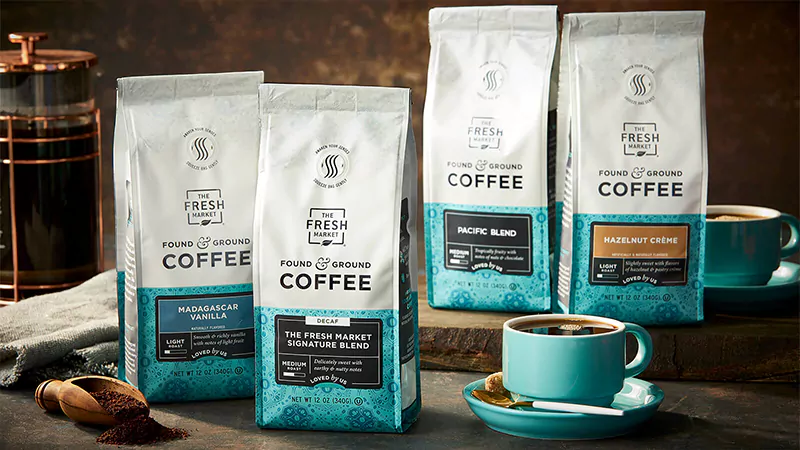
For roasters, cafés, and coffee brands, the freshness journey begins long before the consumer opens the bag. Investing in high-quality packaging — with proper sealing, degassing valves, and light-blocking materials — is what ensures that every cup delivers on the promise of your roast.
At BNPack, we specialize in custom coffee packaging designed to protect freshness from roaster to cup. Our coffee pouches are available with one-way degassing valves, resealable closures, and multi-layer barrier materials that safeguard flavor and aroma through every stage of the supply chain.
Looking for coffee packaging that keeps your product at its best? Contact our team to explore custom packaging solutions tailored to your brand.