

Rwanda coffee is special because of its bright flavors and careful handling. You taste lively notes and a strong body in each cup. Farmers work hard on quality and use new washing stations. More people around the world want this coffee now. This is because of better quality and more demand. Freshness is important, so BN PACK coffee bags use strong layers and special valves. These keep every bean fresh and tasty. Rwanda’s land and customs help make your coffee unique. You can learn to brew it well to get the best flavors.
Feature | Description | Benefit |
|---|---|---|
Barrier Properties | Multi-layer laminates block oxygen, moisture, and light | Keeps beans fresh and flavorful |
Degassing Valves | Let roasted beans release CO2 without letting air in | Prevents loss of aroma and taste |
Resealable Design | Lets you close the bag after opening | Preserves freshness for each brew |
Rwanda Coffee Origins

History
Coffee came to Rwanda in 1904. Germans brought the first coffee plants. Later, Belgians made farmers grow coffee. Many farmers did not get paid well. This made people think differently about coffee for a long time.
Germans first brought coffee to Rwanda in the early 1900s. Belgians forced farmers to grow coffee during their rule.
The genocide in 1994 hurt coffee farms. Many stopped working. In 2001, Rwanda got its first private washing station. This helped farmers care more about quality. The government and partners worked to fix the industry. Now, Rwanda coffee is famous for its taste and quality.
Year/Period | Event Description |
|---|---|
1904 | Germans brought coffee plants to Rwanda. |
1930s | Belgians made farmers grow lots of coffee, but it was low quality. |
1994 | Genocide caused big problems for coffee farms. |
2001 | First private washing station opened, helping quality improve. |
2000s | Recovery started with help from the government and others. |
Growing Regions
Rwanda’s coffee grows in the south, west, north, and east. Each area has special things that help coffee grow.
Region | Altitude (MASL) | Unique Features |
|---|---|---|
South | 1700 – 2000 | Many farms and lots of coffee grown. |
Western | 1700 – 2000 | Near Lake Kivu, gets lots of rain. |
Northern | 1200 – 2000 | Not much coffee, mostly in Rulindo. |
Eastern | ~1300 | Lower land, grows a good amount. |
These places are high above sea level. Volcanic soil helps coffee plants. Rain comes often. The temperature is about 19 degrees Celsius. These things make Rwanda great for growing good coffee.
Local Varieties
Most coffee in Rwanda is arabica. Red Bourbon is the main type, covering almost all plants. It tastes creamy and sweet, with flavors like citrus and chocolate. Catuai and Caturra are other types. They taste strong and grow well.
Red Bourbon: Creamy, sweet, with citrus and chocolate flavors.
Catuai: Grows a lot, fights pests, tastes strong.
Caturra: Like Catuai, but has its own flavor.
Coffee from Rwanda can taste like white chocolate, jasmine, caramel, or tropical fruit. These flavors come from the land, weather, and how farmers care for the beans.
Rwanda Coffee Flavors

Taste Notes
Rwanda coffee tastes sweet, fruity, and floral. These flavors come from the land and how farmers process beans. Experts say the taste is bright and lively. You might notice honey, stone fruit, or citrus. Some coffees taste like chocolate or berries. Others have wood or earthy flavors.
Here is a table that shows common taste notes in Rwanda coffee:
Taste Notes | Description |
|---|---|
Sweet but quiet flowers | Can be interpreted as honey. |
Stone fruit | Includes flavors reminiscent of fruits like peaches or plums. |
Ripe citrus | Bright, zesty flavors that enhance the coffee’s profile. |
Crisp roasted cacao nib or cocoa | Adds a rich, chocolatey element to the taste. |
Tartly sweet berry | Notes of black or red currant that provide a fruity tartness. |
Musky florals | Floral notes that can be deep and complex. |
Deep-toned wood | Flavors reminiscent of oak or redwood, adding depth. |
Starchy, root-vegetable undertones | Can range from pleasant to less desirable, adding earthiness. |
Tip: When you brew Rwanda coffee, try to notice these flavors. Each sip can show something new.
Rwanda coffee is different from other African coffees. Many people like its bright acidity and complex flavors. It stands out because it tastes clean and has a tea-like body. You might taste red berries, stone fruit, or jasmine. Some cups have a little spice.
Rwanda coffee is known for bright acidity and complex flavors.
You often find tea-like body, citrus, and floral or fruity notes.
Ugandan coffee is rich and full-bodied with dark chocolate notes, but Rwanda coffee feels lighter and more vibrant.
You may notice fruity and floral notes, like red berries and jasmine, with a medium body and a bit of spice.
Acidity & Body
Altitude and processing methods affect Rwanda coffee’s acidity and body. Most coffee grows high up, which gives it lively acidity. This means the coffee tastes bright and fresh. The body is how the coffee feels in your mouth. Rwanda coffee usually has a medium body, so it feels smooth and balanced.
Different processing methods change the taste:
Processing Method | Acidity Characteristics | Body Characteristics |
|---|---|---|
Washed | Full aroma, pleasant acidity | Higher market value due to quality |
Dry | Less acidity, full body | Associated with lower quality beans |
Semi-washed | Medium quality, variable | N/A |
Washed beans from Rwanda taste clean and crisp with pleasant acidity. Dry-processed beans feel heavier and less bright. You can pick the method you like best.
Note: If you want a lively, fresh cup, choose washed Rwanda coffee beans. For a heavier, richer cup, try dry-processed beans.
Aroma
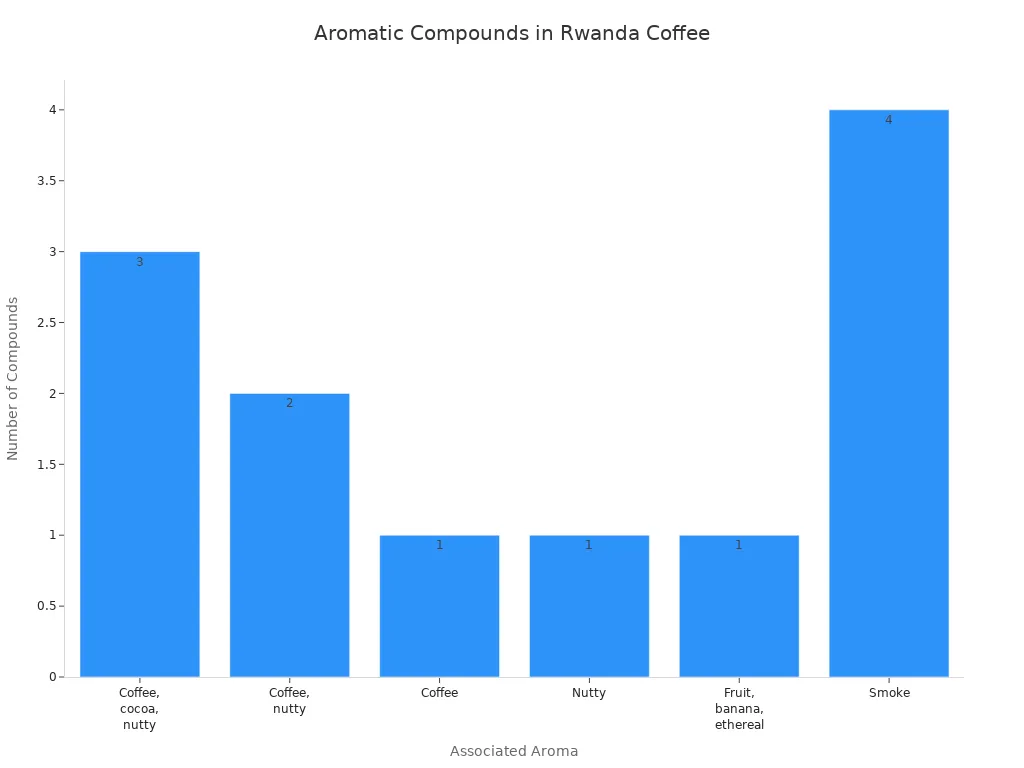
The aroma of Rwanda coffee is exciting. When you open a bag, you smell sweet, nutty, and fruity scents. Experts found many aromatic compounds in Rwanda coffee. These make smells like cocoa, nuts, fruit, and smoke.
Here is a table showing some main compounds and their aromas:
Compound Type | Compound Name | Associated Aroma |
|---|---|---|
Furan | 2,5-dimethylfuran | Coffee, cocoa, nutty |
Furan | 2-methoxymethyl furan | Coffee, cocoa, nutty |
Furan | 2-acetyl furan | Coffee, cocoa, nutty |
Pyrazine | 2-methylpyrazine | Coffee, nutty |
Pyrazine | 2-ethylpyrazine | Coffee, nutty |
Pyrazine | Coffee pyrazine | Coffee |
Pyrazine | Nutty pyrazine | Nutty |
Other | Furfuryl acetate | Fruit, banana, ethereal |
Other | Pyridine | Smoke |
Phenol | ortho-guaiacol | Smoke |
Phenol | 4-ethyl guaiacol | Smoke |
Phenol | 4-vinyl guaiacol | Smoke |
You can see from the chart below that coffee, nutty, and fruity aromas are most common in Rwanda coffee:
When you brew Rwanda coffee, stop and enjoy the aroma. The smell can tell you about the flavor you will taste. A good aroma means the beans are fresh and well cared for.
Pro Tip: Always keep your coffee beans in a sealed bag. This keeps the aroma strong and the flavor fresh.
Brewing Rwanda Coffee
Roast Levels
You can choose different roast levels to bring out the best in Rwanda coffee. Each roast changes the way the coffee tastes in your cup.
Light roasts highlight the floral notes and bright acidity that make Rwanda coffee special. You taste more of the origin and the complex flavors.
Medium roasts give you a balance. The body feels fuller, and the sweetness stands out. You still notice the unique character of the beans.
If you want to taste the true flavors of Rwanda, start with a light roast. This roast lets you enjoy the fruity and floral notes. Medium roasts work well if you like a bit more sweetness and a rounder body.
Tip: Try both light and medium roasts. You will discover which one matches your taste best.
Best Methods
You have many brewing methods to choose from, but some work better for Rwanda coffee. The right method helps you taste all the special notes in the beans.
Drip coffee makers and pour over methods work best. These methods highlight the floral and fruity notes in Rwanda coffee.
French press is less recommended. The longer steep time and larger grind size can hide the delicate flavors.
If you use a pour over, you control the water flow and brewing time. This helps you bring out the bright acidity and clean finish. Drip coffee makers also give you a smooth cup with balanced flavors.
Note: Use fresh, filtered water for the best results. Water quality changes the taste of your coffee.
Tips for Flavor
You can follow a few simple tips to get the most flavor from your Rwanda coffee beans. Pay attention to the details, and you will enjoy every cup.
Parameter | Recommendation |
|---|---|
Water Temperature | 195°F to 205°F (90°C to 96°C) |
Coffee-to-Water Ratio | 1:15 to 1:18 |
Use the right water temperature. Water that is too hot or too cold changes the taste.
Measure your coffee and water. A ratio of 1 part coffee to 15-18 parts water works well.
Grind your coffee beans just before brewing. Freshly ground beans keep the aroma and flavor strong.
Store your coffee beans in a sealed bag. This keeps them fresh and full of flavor.
Pro Tip: Avoid using old coffee or water that has been boiled too long. Fresh ingredients make a big difference.
You can experiment with different brewing methods and roast levels. Each change gives you a new way to enjoy Rwanda coffee. Take notes on what you like best. Soon, you will know how to brew the perfect cup every time.
Coffee Bag Packaging by BN PACK

Freshness Protection
You want your coffee to taste fresh and good. BN PACK coffee bags have special features to keep it that way. These bags use one-way degassing valves. The valves let carbon dioxide out but stop oxygen from getting in. This keeps the taste and smell strong. The bags use strong barrier materials. These block water and light, which can hurt the beans. There is a dual zipper system on the bag. It makes the bag airtight every time you close it, so freshness stays inside.
Feature | Description |
|---|---|
One-way degassing valves | Allows CO2 to escape while preventing oxygen from entering, preserving flavor and aroma. |
High barrier properties | Protects against moisture and light, which can degrade coffee quality. |
Dual zipper system | Creates an airtight seal, keeping oxygen out and maintaining freshness. |
Mineral-based barrier films | Further enhances protection against external elements that can affect coffee quality. |
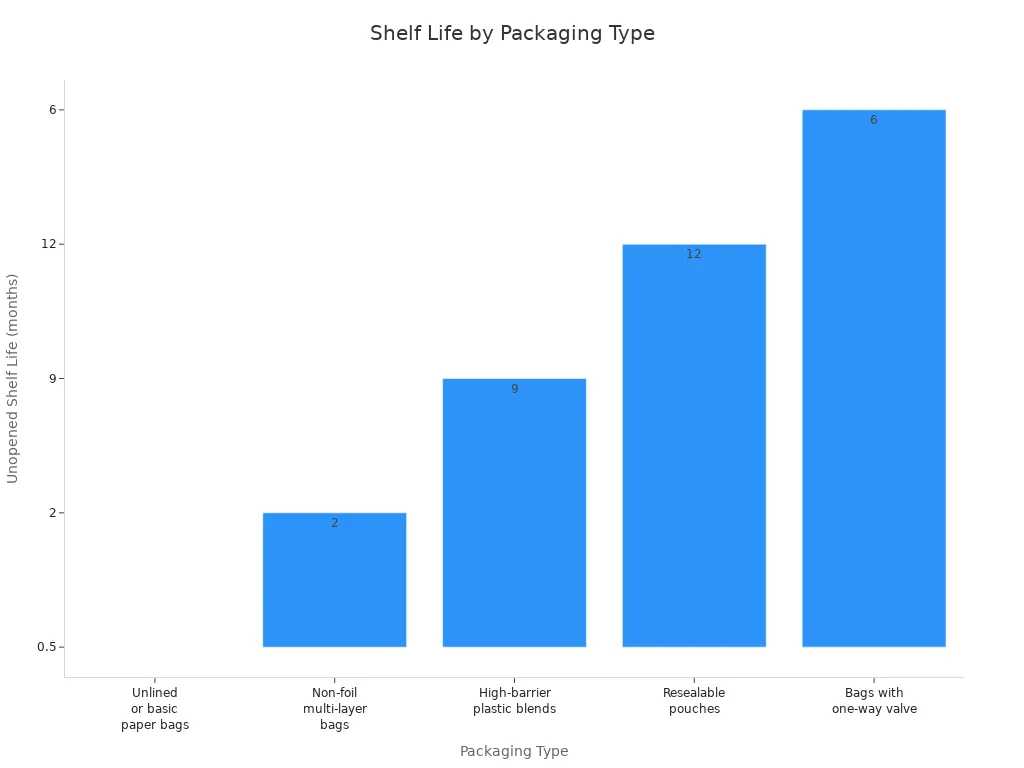
Good packaging helps Rwanda coffee last longer. If you use BN PACK bags, your coffee can stay fresh for up to 12 months. Regular paper bags only keep coffee fresh for a short time. The chart below shows how long coffee lasts in different bags:
Customization Options
BN PACK lets you make your coffee bags special. You can pick from foil, kraft paper, or biodegradable films. The bags come in many sizes, from 8 oz to 5 lb. You can add bright colors, logos, and cool designs with good printing. These choices help your coffee stand out in stores and get more buyers.
Customization Aspect | Description | Benefits |
|---|---|---|
Materials | Foil, kraft paper, biodegradable films | Barrier protection, rustic look, eco-friendly choices |
Sizes | 8 oz to 5 lb, unique shapes | Fits different needs, boosts shelf appeal |
Color and Design | High-quality printing | Eye-catching, builds brand recognition |
Sustainability | Eco-friendly materials | Appeals to green consumers, improves brand image |
Branding Opportunities | Unique logos and designs | Makes your coffee memorable |
Special packaging can help more people notice your coffee. Bags that look nice are easy to spot and remember.
Eco-Friendly Choices
You want to help the planet. BN PACK has eco-friendly coffee bags. You can choose bags that break down in compost. Some bags are made to be recycled, using special plastics or paper. Lighter bags use less material and help lower pollution. These choices help make less trash and keep the earth clean.
Eco-Friendly Material | Description | Environmental Impact |
|---|---|---|
Biodegradable Packaging | Made from PLA, breaks down in composting environments | Reduces landfill waste, supports circular economy |
Recyclable Packaging | Mono-material plastics or paper-based laminates | Promotes recycling, saves resources |
Lightweight Packaging | Thinner films, flexible pouches | Lowers transport costs, reduces carbon footprint |
BN PACK coffee bags also meet world eco-certifications like EN 13432, ASTM D6400, and FSC. These show your packaging is good for the environment.
Tip: Picking BN PACK coffee bags helps keep coffee fresh, brings in customers, and is better for the earth.
When you make Rwanda coffee, you taste bright acidity. The coffee has a medium body and sweet floral notes. Small farms grow beans high up in the mountains. This gives each cup flavors like caramel, chocolate, and orange blossom. Use gentle brewing methods such as pour over or drip. These methods help you taste all the flavors. Keep your coffee fresh by storing it in BN PACK’s custom bags.