Biodegradable vs Recyclable Coffee Packaging Which Suits Your Business Best
Winnie
Table of Contents
You want to choose packaging that aligns with your business’s sustainability goals, customer values, and local recycling options. Imagine standing in front of two coffee bags—one biodegradable, one recyclable—and wondering which will make your brand stand out. Recent studies show that packaging shapes how customers see your brand and how fresh they think your coffee is. Color, texture, and design can even change taste expectations. The right choice in biodegradable vs. recyclable coffee packaging can set your product apart and build strong customer trust.
What Is Biodegradable Coffee Bag?
Definition and Features
A biodegradable coffee bag breaks down naturally into non-toxic elements like water, carbon dioxide, and biomass. You can use these bags to reduce your environmental impact. They decompose much faster than traditional plastic bags, but only under certain conditions, such as in industrial composting facilities. These bags help you support a cleaner planet and show your customers that you care about sustainability. Many coffee businesses choose biodegradable packaging to appeal to eco-conscious buyers and to build a responsible brand image.
Materials Used in BN PACK Coffee Bags
BN PACK uses advanced materials to create biodegradable coffee bags. The main material is PLA (polylactic acid), a thermoplastic made from renewable resources like corn starch. PLA offers a strong moisture barrier and is compostable in industrial settings. Kraft paper forms the outer layer, giving your packaging a natural look and a surface for branding. Sometimes, BN PACK combines PLA with kraft paper and other biodegradable plastics to balance protection and sustainability. Aluminum foil may also be used as a barrier layer to keep your coffee fresh. The table below shows the main materials and their roles:
Biodegradable, natural look, but porous; requires lamination for barrier protection
PLA
Inner lining or part of multilayer structure
Corn starch and other renewables
Biodegradable, compostable, moisture barrier
Aluminum Foil
Barrier layer in laminated structure
N/A
Protects against oxygen, moisture, and light
Other Biodegradable Plastics
Used in laminates for sealing and durability
Various sources
Adds moisture resistance and heat sealing
Pros and Cons
When you compare biodegradable vs. recyclable coffee packaging, you see unique benefits and challenges. Biodegradable coffee bags reduce landfill waste and can enrich soil if composted properly. They attract eco-conscious customers and help you build an ethical brand. These bags also meet regulations and serve as alternatives to single-use plastics. However, they need specific conditions to break down, such as high heat and moisture in industrial composting. They may not protect coffee as well as traditional packaging, and they often cost more to produce. Some customers may prefer reusable or recyclable options instead.
Tip: If your business values sustainability and wants to stand out to green-minded customers, biodegradable coffee bags offer a strong choice. Make sure your local area supports industrial composting to get the full benefits.
What Is Recyclable Coffee Bag?
Definition and Features
Recyclable coffee bags give you a way to package coffee while supporting sustainability. In the coffee industry, recyclable packaging often uses paperboard-based containers designed for easy recycling and consumer convenience. For example, some brands use advanced technology to form canisters from flat paperboard blanks. These canisters include features like a one-way degassing valve and a hinged lid to keep your coffee fresh. Many recyclable coffee bags meet the “widely recyclable” standard, which means most curbside recycling programs accept them. The materials often come from responsibly managed forests, reducing carbon emissions and plastic use. You can choose recyclable coffee bags to show your commitment to the environment and to meet the growing demand for sustainable products.
Materials Used in BN PACK Coffee Bags
BN PACK offers recyclable coffee bags made from high-quality, eco-friendly materials. You can select from mono-material polyethylene (PE) or polypropylene (PP) films, which make recycling easier. Some bags use recyclable kraft paper, providing a natural look and feel. BN PACK also uses advanced barrier films that protect your coffee from moisture and oxygen while still being recyclable. The table below highlights the main materials and their benefits:
Material
Role in BN PACK Coffee Bags
Key Properties and Notes
Mono-material PE
Main structure, easy recycling
Lightweight, flexible, accepted in many programs
Kraft Paper
Outer layer, branding surface
Natural look, recyclable, printable
Recyclable PP
Barrier layer, product protection
Moisture barrier, recyclable, food-safe
Pros and Cons
When you compare biodegradable vs. recyclable coffee packaging, you see that recyclable bags offer unique advantages. They help reduce waste and conserve resources, which lowers your carbon footprint. You can attract eco-conscious customers and boost your brand reputation. Recyclable bags use versatile materials and meet the demand for sustainable products. However, you may face challenges if the bags get contaminated with food or oils, making recycling harder. Some local recycling programs may not accept all types of recyclable packaging. Costs can be higher than non-recyclable options, and some materials may not protect against moisture or light as well as others.
Pros
Cons
Reduce waste and conserve resources, lower carbon footprint
Recycling challenges if contaminated with food or oils
Some recyclable labels may be misleading if not accepted locally
Align with market demand for sustainable products, boost sales
Possible durability issues, such as less protection against moisture and light
Tip: If your business wants to support recycling and appeal to eco-friendly customers, recyclable coffee bags provide a strong option. Always check local recycling guidelines to ensure your packaging gets properly processed.
Which Packaging Fits Your Business?
Key Decision Factors
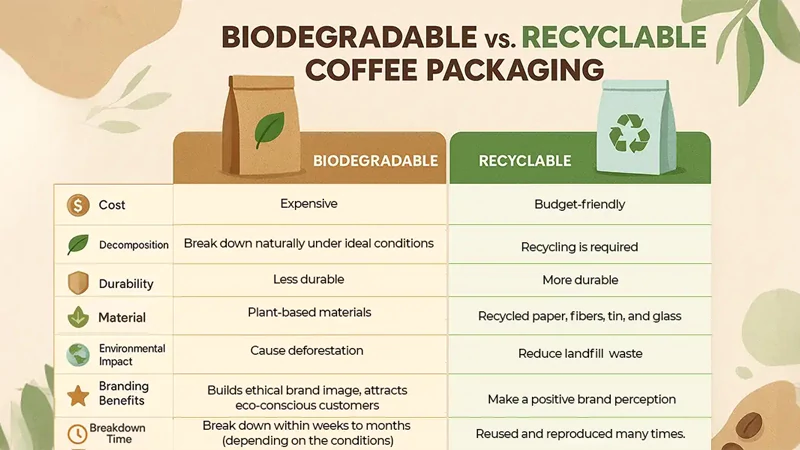
Choosing between biodegradable and recyclable coffee packaging depends on several important factors. You want packaging that fits your business goals, budget, and customer needs. Start by looking at the main differences in cost, environmental impact, and product protection. The table below helps you compare the two options:
Factor
Biodegradable Packaging
Recyclable Packaging
Cost
Higher raw material costs
Lower material costs, but some options can be pricey
Match your packaging with your sustainability goals and local regulations.
Balance quality and cost, especially if you order in bulk.
Make sure the packaging keeps your coffee fresh and safe.
Choose features like resealable zippers or degassing valves for better customer experience.
Think about what your customers expect and what your brand stands for.
While biodegradable materials may cost more at first, they can boost your brand image and customer loyalty over time. Smart packaging choices help you stand out as a leader in sustainability.
Aligning with Your Brand
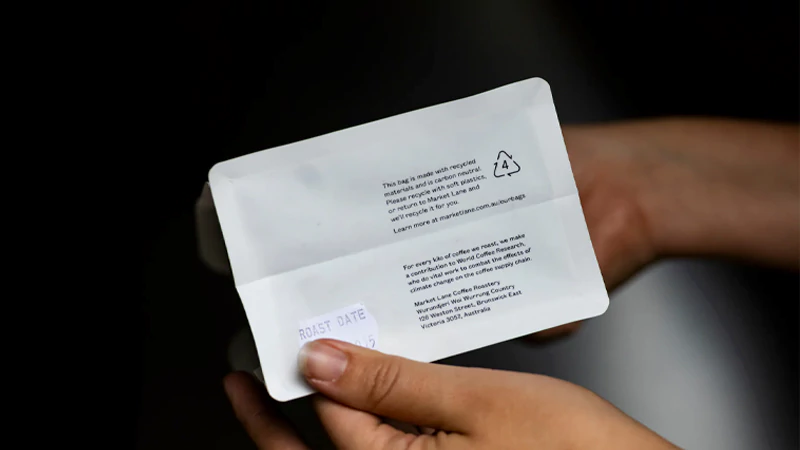
Your coffee packaging should reflect your brand’s identity and values. Use materials, colors, and graphics that show what your business stands for, such as eco-friendliness or innovation. Clear labels like “biodegradable” or “100% recyclable” help customers see your commitment to the environment. Many customers expect packaging to show social and environmental responsibility. Custom packaging with unique designs or QR codes can create a memorable unboxing experience and build trust.
Sustainable packaging, such as bio-plastic or mono recyclable materials, lowers your carbon footprint and supports a circular economy. Certifications like EN 13432 or GRS add credibility and build consumer trust. Consistent design across all your products strengthens brand recognition. Packaging can also serve as a marketing tool, especially if you use limited editions or special promotions.
Tip: Listen to customer feedback and use surveys to keep your packaging in line with their changing preferences. This approach helps you stay ahead in the competitive coffee market.
Using biodegradable vs. recyclable coffee packaging gives you a chance to connect with eco-conscious customers and show your brand’s dedication to a better planet.
Biodegradable vs. Recyclable Coffee Packaging
Environmental Impact
When you compare biodegradable vs. recyclable coffee packaging, you see that both options help reduce waste, but they work in different ways. Biodegradable coffee packaging breaks down into natural elements like water and carbon dioxide, but only under the right conditions, such as in an industrial composting facility. If you throw biodegradable packaging into a landfill or regular trash, it may not break down quickly and could even release methane, a greenhouse gas. Compostable packaging, a type of biodegradable packaging, can enrich soil if processed correctly. However, making biodegradable packaging uses energy and water, which can offset some of its environmental benefits.
Recyclable coffee packaging, such as aluminum or mono-material plastics, can be recycled and used again. Aluminum, for example, can be recycled many times without losing quality. However, recycling depends on local facilities and whether people clean and sort their packaging properly. If recyclable packaging ends up in a landfill, it does not break down quickly. The recycling process itself also uses a lot of energy, especially for materials like aluminum, which increases the carbon footprint.
Recent studies show that biodegradable packaging made from bio-based materials like PLA can lower greenhouse gas emissions and reduce landfill waste compared to traditional plastics. However, the environmental benefits depend on how you dispose of the packaging and the availability of composting or recycling facilities in your area.
Note: Both packaging types have environmental trade-offs. The best choice depends on your local waste management options and how your customers dispose of the packaging.
Cost and Durability
The cost of coffee packaging can vary a lot based on the material and design. Biodegradable coffee bags often cost more to produce because they use special materials like PLA or compostable paper. For example, the price for biodegradable coffee bags can range from $0.02 to $0.58 per piece, depending on the size and features. Recyclable coffee bags, such as those made from mono-material PE or kraft paper, usually have a lower unit price, but the cost can still be higher than traditional plastic bags.
When you look at durability and shelf life, recyclable coffee bags often perform better. They provide stronger barriers against moisture, oxygen, and light, which helps keep your coffee fresh for longer. Biodegradable bags, while eco-friendly, may not protect coffee as well. Tests show that coffee stored in compostable bags can lose flavor and freshness after just a few weeks, while recyclable bags with foil linings and degassing valves can keep coffee fresh for months.
Tip: If you want to maximize shelf life and product protection, recyclable packaging may be the better choice. If your main goal is to reduce plastic waste, biodegradable packaging offers a strong alternative.
Customer Perception
Customer perception plays a big role in your packaging decision. Surveys show that many consumers care about sustainability and are willing to pay more for eco-friendly packaging. In fact, about 65% of people say they would pay a 10-15% premium for coffee in sustainable packaging. Younger customers, especially those aged 25-34, show the strongest support for biodegradable options and are more likely to pay extra for compostable packaging.
Awareness of recyclable packaging is higher than compostable packaging, but the preference for biodegradable vs. recyclable coffee packaging is nearly equal. Many customers see compostable or biodegradable packaging as more environmentally friendly, even if recycling is more common in their area. However, confusion exists about what “biodegradable” and “compostable” really mean. Some people think biodegradable packaging will break down anywhere, but it often needs special composting conditions.
Callout: Clear labeling and customer education help build trust and ensure your packaging gets disposed of correctly.
Quick Comparison Table
Here is a side-by-side summary to help you decide:
Feature
Biodegradable Coffee Packaging
Recyclable Coffee Packaging
Environmental Impact
Breaks down in composting facilities; reduces landfill waste; may emit methane if landfilled
Reduces landfill waste if recycled; energy-intensive recycling; depends on local infrastructure
Carbon Footprint
Lower if composted; production uses energy and water
Can be high due to recycling process, especially for aluminum
Seen as highly sustainable; growing demand, especially among younger buyers
Familiar; trusted by many; high awareness
Regulatory Trends
Increasing certifications and composting mandates
Strong push for recyclability and labeling
Remember: The best choice for your business depends on your sustainability goals, customer base, and local waste management options. Both biodegradable and recyclable coffee packaging can help you build a responsible brand, but each comes with unique benefits and challenges.
Choosing the Right Coffee Bag for Your Business
Assessing Your Needs
Choosing between biodegradable vs. recyclable coffee packaging starts with understanding your business’s unique situation. You need to look at your goals, your customers, and your local environment. Here are practical steps to help you make the best choice:
Evaluate your business context. Think about your location, customer base, product types, and how much coffee you sell. Consider if you run a small local café or a large distributor.
Check your local waste management options. Find out if your area supports recycling or industrial composting. This step is important because packaging only helps the environment if customers can dispose of it properly.
Use data-driven tools to compare packaging materials. Some businesses use software to measure carbon footprint, circularity, and end-of-life options for each material.
Match packaging formats and materials to your volume and distribution needs. For example, high-barrier bags work well for long-distance shipping, while compostable bags may suit local sales.
Join collection programs or recycling schemes. These programs help ensure your packaging gets processed correctly.
Remember, there is no one-size-fits-all answer. You should tailor your packaging to your business priorities and sustainability goals.
Tip: Always balance shelf life, product protection, and environmental impact when you choose between biodegradable vs. recyclable coffee packaging.
Budget plays a big role in your decision. Biodegradable materials like kraft paper often cost less upfront, but you may need extra linings to keep coffee fresh. Recyclable materials such as aluminum or composite cans offer better protection but usually cost more. Many brands manage costs by ordering in bulk, using standard designs, or working closely with suppliers. You can also lower expenses by sourcing locally and simplifying your packaging.
Local recycling and composting facilities are essential for your packaging to deliver real environmental benefits. Biodegradable bags need industrial composting to break down. Without these facilities, they may not decompose and could even harm the environment. Recyclable packaging depends on local recycling centers and consumer participation. If your area lacks proper infrastructure, even recyclable bags may end up in landfills.
You may face some logistical challenges when switching to sustainable packaging:
Biodegradable packaging often has higher production costs and a shorter shelf life. It also needs special disposal conditions.
Recyclable packaging requires active consumer participation and reliable recycling infrastructure. Energy-intensive recycling processes can add to the challenge.
Soft plastics, which are common in coffee packaging, have low recycling rates due to contamination and collection issues.
Note: You should always check what your local facilities can handle before making a final decision.
Coffee packaging choices also affect your business’s sustainability ratings and certifications. Brands that use eco-friendly packaging, like compostable or recyclable bags, often receive higher ratings and attract more customers. Packaging that meets local certification standards can help you avoid extra fees and improve your brand image.
Here is a chart comparing the shelf life of different coffee packaging types:
Customization with BN PACK
You can set your coffee brand apart by customizing your packaging. BN PACK offers a wide range of options to help you meet your business needs, protect your product, and show your commitment to sustainability. Customization lets you choose the right size, material, and features for your coffee bags.
Customization Category
Options Available
Materials
Foil, Kraft paper, Biodegradable films
Sizes
8 oz to 5 lb bags; stand-up pouches, flat bags, flat-bottom, side-gusset styles
Color & Design
Vibrant printing, custom logos, matte or glossy finishes, various colors (white, yellow, black, brown)
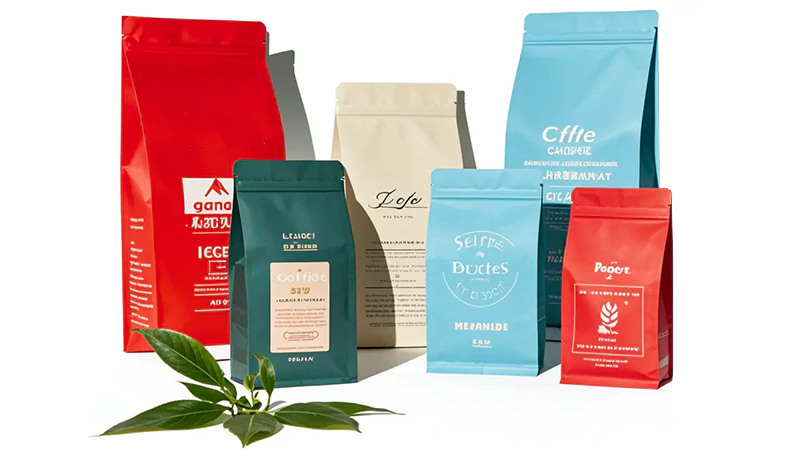
You can select materials that match your sustainability goals. For example, you might choose biodegradable films for compostable packaging or recyclable foil for longer shelf life. You can also pick from different sizes and shapes to fit your product range, from single-serve samples to large wholesale bags.
BN PACK helps you create packaging that stands out on the shelf. You can add your logo, choose bright colors, and select finishes that match your brand style. Functional features like resealable zippers and degassing valves keep your coffee fresh and make the bags easy to use.
Callout: Custom packaging from BN PACK lets you balance product protection, sustainability, and brand identity. You can meet customer expectations and support your business goals.
BN PACK works with businesses of all sizes. For example, a small-batch roaster might choose kraft paper stand-up pouches with a custom logo and compostable lining. A large distributor might select flat-bottom bags with aluminum barriers and vibrant printing for maximum shelf appeal. You can also request special packaging for events or e-commerce.
When you compare biodegradable vs. recyclable coffee packaging, customization gives you the flexibility to find the best fit for your business. You can adjust your choices as your needs change, ensuring your packaging always supports your brand and sustainability goals.
Choosing the right coffee packaging means looking at your business goals, customer preferences, and local waste management options. You should compare the benefits and challenges of each type, considering how well each protects coffee and fits your area’s disposal systems. BN PACK helps you find the best solution by offering eco-friendly materials, strong product protection, and expert guidance on compliance and sustainability.
Get custom packaging that matches your brand and supports your environmental goals.
Access recyclable and biodegradable options, QR code disposal guides, and rapid prototyping.
Rely on BN PACK’s certifications and global expertise for peace of mind.
Reach out to BN PACK to create coffee packaging that works for your business and the planet.
FAQ
What is the difference between biodegradable and compostable coffee bags?
Biodegradable bags break down naturally over time. Compostable bags break down into safe, usable compost under specific conditions. All compostable bags are biodegradable, but not all biodegradable bags meet composting standards.
How do you dispose of biodegradable coffee packaging?
You should place biodegradable bags in an industrial composting facility if possible. Home composting may not work for all materials. Check local guidelines for the best disposal method.
Can you recycle coffee bags with a degassing valve?
Some recyclable coffee bags have removable valves.
Remove the valve before recycling.
Always check your local recycling rules for details.
How does packaging choice affect coffee freshness?
Packaging Type
Freshness Protection
Biodegradable Bag
Good, but shorter shelf life
Recyclable Bag
Excellent, longer shelf life
Choose high-barrier materials and degassing valves to keep your coffee fresh.
Winnie is a specialty coffee educator and the lead content creator at BN Pack.
With years of experience exploring the entire coffee journey—from unique processing methods to the nuances of a perfect roast—she understands what makes a coffee special.
At BN Pack, Winnie channels this expertise into helping coffee brands choose ideal packaging solutions, ensuring the story of quality that begins at the farm is perfectly preserved all the way to the final cup.