
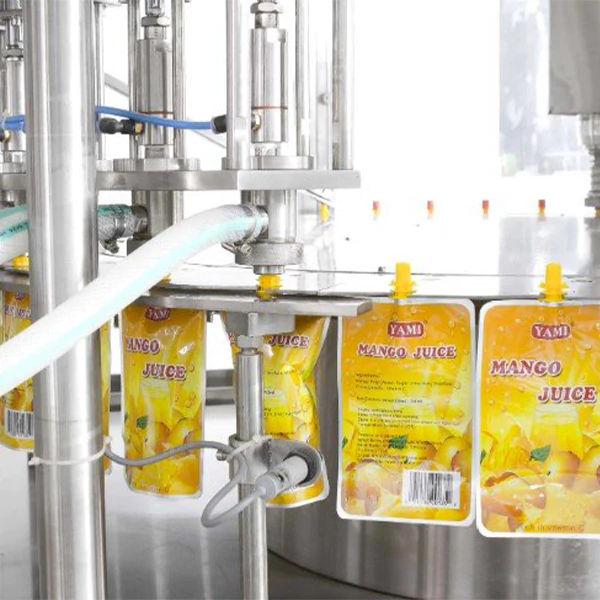
You need efficient spout pouch filling and sealing to protect liquid and semiliquid products. Material innovations like bio-polymers and smart caps boost product safety and integrity. BN PACK’s Custom Spouted Pouches offer advanced packaging that preserves product integrity. Careful selection of materials and equipment ensures your spout pouch meets strict quality standards.
Spout Pouch Benefits
Versatility and Uses

You can use a spout pouch for many types of products. This flexible packaging works well for liquids, semi-liquids, and even some powders. Many industries rely on spout pouch solutions because they meet specific needs for freshness, convenience, and safety. The table below shows how different sectors use spout pouch technology and what they require:
Industry | Common Uses / Products | Specific Requirements / Benefits |
|---|---|---|
Food and Beverage | Sauces, juices, smoothies, baby food | Preserve freshness, convenience |
Personal Care and Cosmetics | Liquid soaps, shampoos, lotions | Controlled dispensing, easy pouring |
Pet Food | Liquid or semi-liquid pet food | Portion control, mess-free dispensing |
Household and Cleaning Products | Cleaning solutions, detergents | Precise pouring, minimize waste |
Industrial Chemicals and Lubricants | Chemicals, lubricants, oils | Durability, leak-proof properties |
Pharmaceutical and Healthcare | Oral liquids, syrups, supplements | Resealable spout, product integrity |
Automotive | Motor oil, coolant, washer fluid | Easy pour spout, durability |
Agricultural and Horticultural | Fertilizers, pesticides | Accurate dispensing |
Sports and Fitness | Energy drinks, protein shakes | Easy consumption, convenience |
E-commerce and Retail | Snacks, beverages, sauces | Cost-effective, space-efficient packaging |
Key Features
A spout pouch offers several features that make it a smart choice for modern packaging. You get resealability, which keeps products fresh and prevents spills. The lightweight design makes each spout pouch easy to carry and store. Controlled dispensing through the spout helps you avoid mess and waste. Many spout pouch options use advanced barrier materials to protect against oxygen and moisture, which extends shelf life and reduces spoilage. You also benefit from cost savings because a spout pouch uses less material and takes up less space during shipping. Eco-friendly materials and refillable designs support sustainability goals. As consumer demand grows for convenient, portable, and sustainable packaging, the spout pouch continues to lead the way in innovation.
Spout Pouch Materials
Material Types
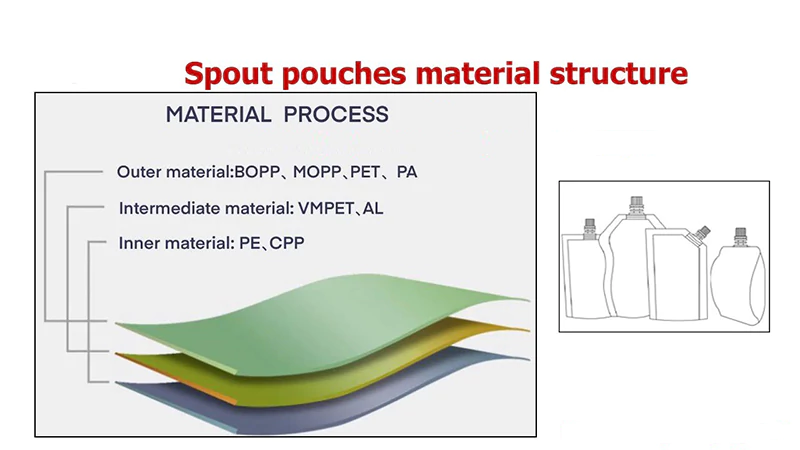
You need to choose the right materials for your spout pouch to protect your product and keep it fresh. Most spout pouch designs use multilayer laminated films. These layers work together to block oxygen, moisture, and light. You often see food-grade LLDPE as the inner layer, which touches your product. The middle layer can include aluminum foil, polyamide, or metallized PET. These materials add strength and barrier protection. The outer layer might be kraft paper, aluminum, or clear plastic. This layer helps with printing and branding.
PET/Al/PE and PET/PA/LDPE structures give your spout pouch durability and a strong barrier.
Metallized foil laminates like BOPP/VMPET/LDPE offer a soft feel and keep products safe from light and air.
Aluminum foil provides the best protection against moisture and oxygen, which helps extend shelf life.
Adhesives bond the layers, and water-based inks add color and information.
You can use these materials for juices, sauces, cleaning solutions, and more. The right choice keeps your spout pouch leak-proof and safe.
Design Options
You have many design choices for your spout pouch. BN PACK offers custom spout and cap styles, including tamper-evident and child-resistant options. You can select top or corner spout placement for easy pouring and resealing. The spout and cap design affects sealing and product compatibility. Heat-sealable interiors help you get a strong seal. You need to match the spout and cap with your filling and sealing equipment for the best results.
Tip: Custom finishes like matte, gloss, metallic, or kraft paper make your spout pouch stand out on the shelf. Transparent windows and printed graphics boost your brand’s visibility.
A well-designed spout pouch supports user convenience, keeps products safe, and fits your packaging needs.
Spout Pouch Filling and Sealing Equipment
Filling Machines
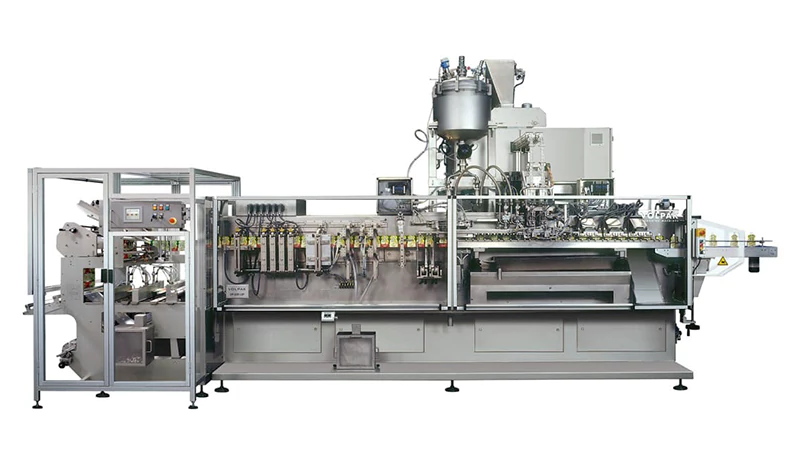
You have several options when choosing a filling machine for your spout pouch operation. Manual systems work well for small batches or startups. You can fill and seal each spout pouch by hand, but this method takes more time and labor. Semi-automatic machines speed up the process. You place the pouch, and the machine handles the filling and sealing. Fully automatic spout pouch filling and sealing machines deliver the highest output and consistency. These machines suit large-scale production and reduce labor needs.
Feature | Manual System | Semi-Automatic System | Fully Automatic System |
|---|---|---|---|
Typical Output (pouches/hr) | Low (< 1,000) | Moderate (2,000 – 5,000) | High (> 8,000) |
Initial Investment (CAPEX) | Low | Medium | High |
Labor Requirement | High | Medium | Low / Supervisory |
Filling Accuracy & Consistency | Low / Variable | High | Extremely High / Repeatable |
Ideal Business Scale | Startups | SMEs / Growing Brands | Large Production |
You must consider the viscosity of your liquid and semiliquid products. Thicker products need a filling machine with adjustable speed and larger filling heads. Pneumatic liquid filling machines handle a wide range of viscosities and offer precise volume control.
Sealing Spout Pouch Methods
You can choose from several methods of sealing spout pouch. Heat sealing remains the most common. You use a suitable heat sealer to apply heat and pressure, creating a strong bond. This method works well for most spout pouch materials. Some spout pouch sealer models use ultrasonic sealing for extra precision. You may also find impulse sealing spout pouch options for sensitive products.
Tip: Always match your spout pouch sealer to your product’s needs and production scale. The right sealing spout pouch method ensures leak-proof packaging and keeps your products safe.
When you select a spout pouch sealer, check if it supports your chosen methods of sealing spout pouch. BN PACK’s spout pouch designs work with many sealing spout pouch systems, so you can find the best fit for your operation.
Fill and Seal Spout Pouches: Step-by-Step
Filling and sealing spout pouches requires careful attention to detail. You need to follow a clear process to maintain product quality and hygiene. This step-by-step guide will help you achieve consistent results, whether you work in a small business or a large production facility.
Preparation
You must start with proper preparation to ensure a smooth spout pouch filling and sealing process. Follow these steps:
Gather all materials and tools. You need gloves, spout pouches, your product, a spout pouch sealer, and filling equipment such as funnels or machines.
Clean and sanitize your workspace. This reduces the risk of contamination.
Inspect each spout pouch for defects. Check for leaks, tears, or faulty spouts.
Expand the bottom gusset so the pouch stands upright. This makes filling easier.
Remove the spout cap or seal. Set it aside for resealing later.
Choose your filling method. Use a funnel for manual filling or set up your filling machine for larger batches.
If your product is thick, warm it slightly to improve flow.
Wear gloves and follow hygiene protocols throughout the process.
Tip: For oxygen-sensitive products, consider nitrogen flushing before filling to extend shelf life.
Filling Process
You need to use the right filling techniques to avoid spills, leaks, and contamination. The filling process can differ between small-scale and large-scale operations. The table below compares the two approaches:
Step | Small-Scale (Manual) | Large-Scale (Automated) |
|---|---|---|
Product Preparation | Mix or heat product as needed; check viscosity | Use equipment for temperature and consistency control |
Filling Method | Use funnel or nozzle; fill up to 80-90% capacity | Automated machines fill with precise volume |
Air Removal | Tap or squeeze pouch to remove bubbles | Machines remove air before sealing |
Cap Application | Manually tighten cap or close flip-top | Automated capping systems apply consistent torque |
Quality Control | Inspect fill level and seal by hand | Automated inspection for leaks and fill accuracy |
You should always leave some headspace in the pouch. This allows for proper sealing and prevents overfilling. Monitor the fill volume and flow rate to maintain consistency. If you use a filling machine, calibrate it for your product’s viscosity and pouch size. Regularly check for leaks or spills during the filling process.
Best practices: Train your staff on equipment use and hygiene. Keep your workspace organized and clean to minimize contamination.
Sealing Process
The sealing spout pouch step locks in freshness and prevents leaks. You need to select the right sealing method for your pouch material and product. Heat sealing is the most common technique. It uses controlled heat and pressure to bond the pouch layers. Adjust the temperature and pressure based on the pouch material. Too much heat can damage the pouch, while too little can cause weak seals.
Use a spout pouch sealer that matches your pouch type.
Align the pouch edges carefully before sealing.
Apply the correct temperature, pressure, and dwell time for your material.
For tamper-evident or child-resistant caps, ensure they are applied securely.
After sealing, inspect each pouch for leaks or weak spots.
You can use impulse sealing, ultrasonic sealing, or induction sealing depending on your needs. Regularly test seal strength with water immersion or air pressure tests. This helps you catch problems early and maintain product integrity.
Note: Optimizing your sealing parameters improves shelf life and protects your product from contamination.
By following this step-by-step guide, you can fill and seal spout pouches efficiently and safely. Consistent filling and sealing practices help you deliver high-quality products every time.
Hygiene and Compliance
Sanitation Protocols
You must follow strict sanitation protocols when filling and sealing spout pouches. These steps help you prevent contamination and keep your products safe for consumers. Facilities that handle food and beverage products use the following procedures:
File a scheduled process with the FDA, detailing how you achieve commercial sterility for your product and packaging.
Sterilize equipment and packaging materials using methods like superheated steam, hydrogen peroxide with heat, or gamma irradiation.
Monitor critical control points such as temperature and sterilization media flow rate with automatic recording devices that you calibrate regularly.
Use only sterile water in filling areas and control it carefully to avoid contamination.
Keep all equipment downstream of the product sterilizer, including fillers and valves, under sterile conditions.
Install flow diversion systems to keep non-sterile product away from the filler.
Sterilize and vent aseptic surge tanks to prevent air pockets and maintain sterile air pressure.
Monitor and change filters for sterile air or gas as recommended, and test them for integrity.
If you detect any loss of sterility, reprocess, destroy, or segregate the affected product and re-sterilize equipment before restarting operations.
Following these sanitation protocols helps you maintain high standards and protect your brand reputation.
Regulatory Standards
You must comply with international regulatory standards to ensure the hygiene of your spout pouch packaging. These standards help you meet safety requirements and gain consumer trust.
The FDA and EFSA set rules for material safety, migration limits, and labeling.
Certifications like ISO 9001, ISO 22000, BRCGS, and SQF show that you follow strict hygiene and safety practices.
The Food Safety Modernization Act (FSMA) focuses on preventing contamination through hygienic equipment design.
BRC Global Standards highlight the importance of safe packaging for consumers.
Wisconsin Dairy 3A Sanitation Standards require equipment that is easy to clean and free from contamination traps.
Hygienic design uses FDA-certified materials, stainless steel, and self-draining surfaces to reduce contamination risks.
Meeting these standards and certifications ensures your packaging is safe and accepted in global markets.
Cost Considerations
Equipment Costs
When you plan your spout pouch operation, you need to understand the costs of filling and sealing equipment. Entry-level manual or semi-automatic machines start at under $1,000. These work well for small businesses or pilot runs. As your production grows, you may need fully automatic machines. These can cost over $11,000 and offer higher speed and accuracy. Some advanced models for powder or liquid pouch filling reach up to $54,000. The table below shows typical prices for different machine types:
Machine Type / Model Description | Price Range (USD) |
|---|---|
Manual or Semi-Automatic Spout Pouch Filling Machines | $959 – $1,599 |
Spout Pouch Filling Machine with 4 Nozzles | $1,249 |
Spout Pouch Liquid Filling & Capping Machine | $4,299 – $5,349 |
Fully Automatic Spout Pouch Filling & Capping Machine | $11,299 |
Other Pouch Filling & Sealing Machines (powder, liquid) | $420 – $54,000+ |
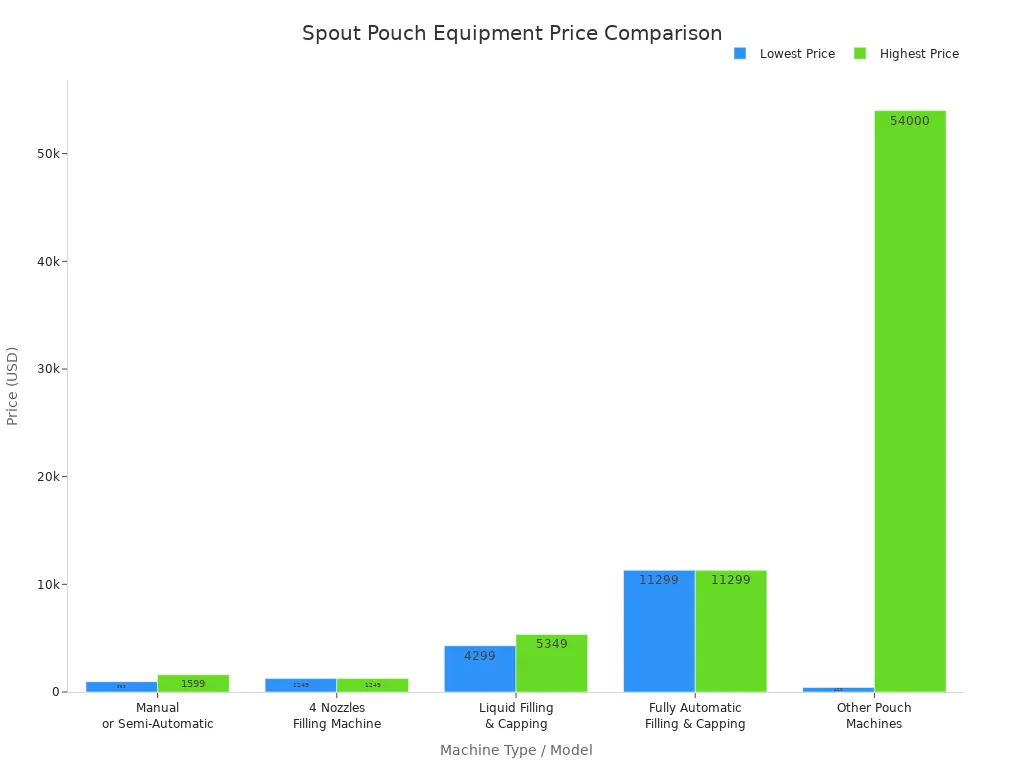
You should match your equipment choice to your production needs and budget. Investing in the right machine helps you control costs and improve efficiency.
Operational Efficiency
Efficient operations help you save money and boost productivity. Automatic filling, capping, and sealing systems reduce manual labor and errors. You can adjust capping speed to fit your production pace. Sensors stop the process if a pouch is missing, which prevents waste. Durable stainless steel parts lower maintenance costs. Compact designs make cleaning and repairs easier. PLC-HMI controls give you precise process management, so you get consistent results.
Automation cuts labor costs and increases output.
Precise filling and capping reduce material waste.
Sensors and advanced controls prevent downtime.
Reliable components keep your line running smoothly.
When you choose efficient equipment, you lower your overall production costs and deliver high-quality packaging every time.
Quality Assurance
Inspection and Testing
You need to perform regular inspection and testing to maintain the integrity of your spout pouch packaging. A quality check starts with visual inspection to confirm print alignment and spout placement. You should also use leak testing and seal strength testing to detect defects before products reach consumers. The table below shows common procedures:
Inspection/Test Procedure | Description |
|---|---|
Leak Testing | Pressure or vacuum tests to detect leaks. |
Seal Strength Testing | Peel tests to measure seal integrity. |
Visual Inspection | Check print alignment and spout placement. |
A rigorous leakage test involves filling pouches with water, boiling them at 110°C for 15 minutes, then cooling for 15 minutes. This simulates real usage and helps you find weak spots at the bottom or sealing points. You can also run seal integrity tests and burst tests to check for leaks and ensure the pouch can handle transport and storage. By following strict testing and inspection protocols, you reduce the risk of defects and protect your brand reputation.
Tip: Frequent sampling during production helps you catch issues early and maintain high standards.
Advanced Controls
You can improve reliability by using advanced quality control measures. Modern filling and sealing machines offer real-time monitoring with integrated sensors. These sensors check seal integrity, filling levels, and cap alignment as each pouch moves through the line. Some systems, like impulse sealing technology, use precise temperature control and rapid cooling to create strong, uniform seals. You should also schedule regular machine inspection and calibration to prevent breakdowns and maintain consistent sealing quality.
Monthly operator training helps your team spot defects quickly.
Weekly sample testing ensures product consistency.
Automated spout inserters with vision systems reduce human error and improve accuracy.
Industry 4.0-compatible machines allow you to optimize production and respond quickly to demand changes. By using these technologies, you maintain reliable packaging and minimize waste.
You ensure product safety by following each step of spout pouch filling and sealing with care. Choosing the right materials and equipment boosts efficiency and hygiene.
Many brands report fewer leaks and higher sales after switching to BN PACK’s Custom Spouted Pouches.
Feature | BN PACK Custom Spouted Pouches |
|---|---|
Filling Efficiency | 99.5% |
Leak Prevention | Rigorous HydroGuard™ testing |
Sustainability | Up to 83% lower emissions |
FAQ
How do you prevent leaks in spout pouches?
You should check each pouch for defects before filling. Use the correct sealing temperature and pressure. Test seals with water or air pressure for extra assurance.
Can you recycle BN PACK’s Custom Spouted Pouches?
Yes, you can choose recyclable or biodegradable materials for your pouches. BN PACK offers eco-friendly options to support your sustainability goals.
What products work best with spout pouches?
You can use spout pouches for juices, sauces, cleaning solutions, gels, and more. The design fits both liquid and semi-liquid products across many industries.