

Many people notice shiny, oily coffee beans when they open a fresh coffee bag. This oil appears because chemical changes happen during roasting, especially with dark roasts. Oily coffee beans do not mean poor quality. They show a natural process in coffee roasting. Coffee lovers often see these beans and wonder about their flavor or freshness. BN PACK coffee bags help protect coffee and keep its rich aroma by using advanced packaging.
Oily Coffee Beans
Roasting Process
The roasting process transforms green coffee beans into the familiar brown beans used for brewing. This process involves several stages, each with unique temperature ranges and effects on the beans. As the temperature rises, the beans undergo physical and chemical changes that influence their appearance, flavor, and oiliness.
Roasting Stage | Temperature Range (°C) | Effects on Coffee Beans |
|---|---|---|
Drying Stage | 20–130 | Beans become lighter. |
Yellowing Stage | 130–140 | Beans swell and turn yellow due to non-enzymatic browning. |
Expansion Stage | 140–160 | Volume increases, micropores form, surface cracks appear, beans become brittle; aroma and volatile compounds begin to develop. |
Maillard & Pyrolysis Stage | 160–190 | Maillard reaction progresses, internal pyrolysis reactions occur. |
Final Stage | 190–220 | Beans emit smoke, porosity increases due to volatilized CO2; typical coffee aroma develops. |
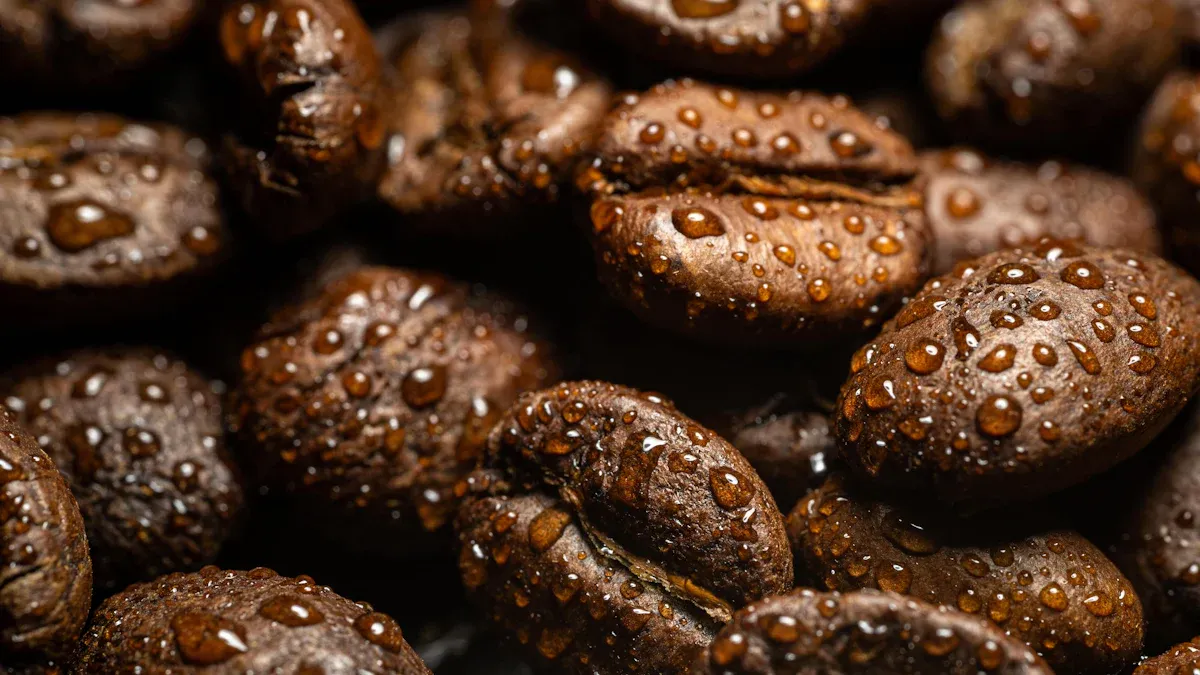
During the final stage, the internal structure of the beans changes rapidly. The high temperature causes the oils inside the beans to move toward the surface. This migration leads to the shiny appearance seen on many dark roasted coffee beans. Overdeveloped or scorched beans, which result from excessive heat or improper roasting, often show a very dark, greasy look and may taste burnt or bitter. The roasting process, especially at higher temperatures and longer durations, increases the high oil content on the surface of the beans.
Tip: Not all oily beans are the result of poor roasting. Many specialty coffees intentionally use a dark roast to bring out certain flavors and aromas.
Chemical Changes
As coffee beans roast, they experience a series of chemical reactions. The most important reactions include caramelization and the Maillard reaction. These reactions create the complex flavors and aromas that coffee lovers enjoy. However, the most noticeable change in oily coffee beans comes from the movement of coffee bean oils.
Inside each bean, natural oils and lipids remain locked away until the roasting process begins. As the temperature rises, internal pressure builds up. This pressure pushes the oils from the center of the bean to its surface. The oils help trap volatile compounds, which are responsible for much of the coffee’s aroma and flavor. In dark roasted coffee, the structure of the bean becomes more porous, allowing even more oils to escape to the outside. This is why dark roast beans often look shinier and feel slick to the touch.
The extra oils on the surface do not mean the coffee is fresher. Many people believe that oily coffee beans are always fresh, but oiliness depends more on the roasting process than the roast date. The presence of these oils is a natural result of roasting, especially for dark roasted coffee.
Oxidation
Once oils reach the surface of oily beans, they become exposed to air. This exposure starts a process called oxidation. Oxidation changes the chemical makeup of the oils, which can affect both the flavor and shelf life of the coffee. Scientists use several measurements to track how oxidation impacts oily coffee beans:
Parameter | Description | Observed Effect of Oxidation on Oily Coffee Beans |
|---|---|---|
Peroxide Value (PV) | Indicator of primary lipid oxidation | PV increases with storage time and temperature, leading to early rancidity. |
p-Anisidine Value (P-AV) | Measures secondary oxidation products (aldehydes) | P-AV rises with storage time and temperature, causing rancid odors and flavor loss. |
Total Oxidation Value (TOTOX) | Combined measure of primary and secondary oxidation | TOTOX values go up, showing overall oil deterioration and reduced quality. |
Iodine Value (IV) | Degree of unsaturation in fatty acids | IV drops over time and at higher temperatures, indicating breakdown of healthy oils. |
Oxidation happens faster when oily beans are stored at higher temperatures or in poor packaging. As the oils break down, the coffee can develop off-flavors and lose its appealing aroma. Proper packaging, such as high-barrier bags with degassing valves, helps slow down oxidation and keeps the coffee fresher for longer.
Note: Oily coffee beans need protection from air, light, and heat to maintain their best flavor. Good packaging and storage practices make a big difference in preserving quality.
Characteristics of Oily Coffee
Appearance
Oily coffee beans stand out because of their unique look. People can spot these beans by several clear signs:
A glossy sheen or shiny finish covers the surface.
The shine appears most often in dark roasted beans, such as French roast or Italian roast.
Intense heat during roasting pushes natural oils to the outside.
Freshly roasted oily beans may leave an oily residue on fingers when touched.
The oiliness is much more visible in darker roasts than in lighter ones.
Sometimes, excessive oiliness can signal over-roasting or older beans, which may look wet or greasy.
These visual clues help coffee drinkers judge the roast level, freshness, and possible quality of the coffee beans. The characteristics of oily coffee make it easy to tell apart from lighter, drier beans.
Flavor and Aroma
Oils on the surface of oily beans play a key role in shaping the flavor and aroma of coffee. Sensory analysis studies show that these oils carry many important flavor compounds. These compounds create the burnt, sweet, bready, chocolate-like, and roasted notes that people enjoy in a cup of coffee. During roasting, chemical reactions form these compounds, and the oils help keep them from escaping or breaking down. The presence of these oils preserves the aroma and flavor quality, making oily coffee beans popular among those who prefer bold and rich tastes. The oils not only protect the flavor compounds but also enhance the overall sensory experience, leading to higher consumer preference in taste tests.
Dark Roast and Oily Beans
Why Dark Roasts Are Oily
Dark roast coffee stands out for its glossy, oily appearance. This shine comes from several chemical and physical changes that happen during roasting. As the beans heat up, they expand and crack, which increases their porosity. The Maillard reaction and caramelization both intensify at higher temperatures, breaking down the bean structure and allowing oils to move from the inside to the surface. The following table shows the main processes responsible for the oiliness of dark roasted coffee beans:
Chemical Reaction / Process | Description | Role in Increased Oiliness |
|---|---|---|
Maillard Reaction | Amino acids and sugars react at high roast levels | Breaks down structure, helps oils migrate |
Caramelization | Sugars decompose at high temperatures | Changes color, allows oil release |
Breakdown of Cellular Structure | Cell walls rupture and become porous | Oils move to the surface |
Release of CO2 and Reaction w/ O2 | CO2 released reacts with oxygen | Adds to oily appearance |
Physical Expansion and Cracking | Beans expand and crack under heat | Increases porosity, lets oils escape |
Degassing Post-Roast | CO2 escapes after roasting | Brings oils to the surface |
High Roasting Temperatures | 430°F to 450°F (220°C to 232°C) | Accelerates all processes, increases oil migration |
During roasting, the breakdown of the bean’s structure and the release of CO2 help bring oils to the surface. This process gives dark and oily coffee its signature look and bold flavor. Oily coffee beans are common in dark roast varieties, especially French and Italian roasts.
Light vs. Dark Roast
Light roast and dark roast coffee beans differ in both appearance and oil content. Laboratory tests show that dark roast beans contain much more fat—about 135.84 grams per kilogram—while light roast beans have only 68.64 grams per kilogram. The higher oil level in dark roasted coffee comes from the breakdown of carbohydrates and the loss of volatile compounds, which concentrate the oils.
Light roast beans look dry and have a lighter color. They keep more of their original flavors and acidity. Dark roasted coffee beans, on the other hand, appear shiny and feel slick because of the surface oils. Medium roasted beans and medium-dark roast beans fall between these two extremes, showing some oiliness but not as much as oily dark roasted coffee.
Coffee drinkers who prefer bold, smoky flavors often choose oily dark roasted coffee. Those who enjoy bright, fruity notes may prefer light roast or medium roasted beans. The choice depends on personal taste, but the science behind oily beans helps explain why each roast looks and tastes so different.
Identifying Oily Beans
Visual Signs
Recognizing oily coffee beans starts with careful observation. Shoppers and coffee enthusiasts can use several visual cues to spot these beans in a package or at home:
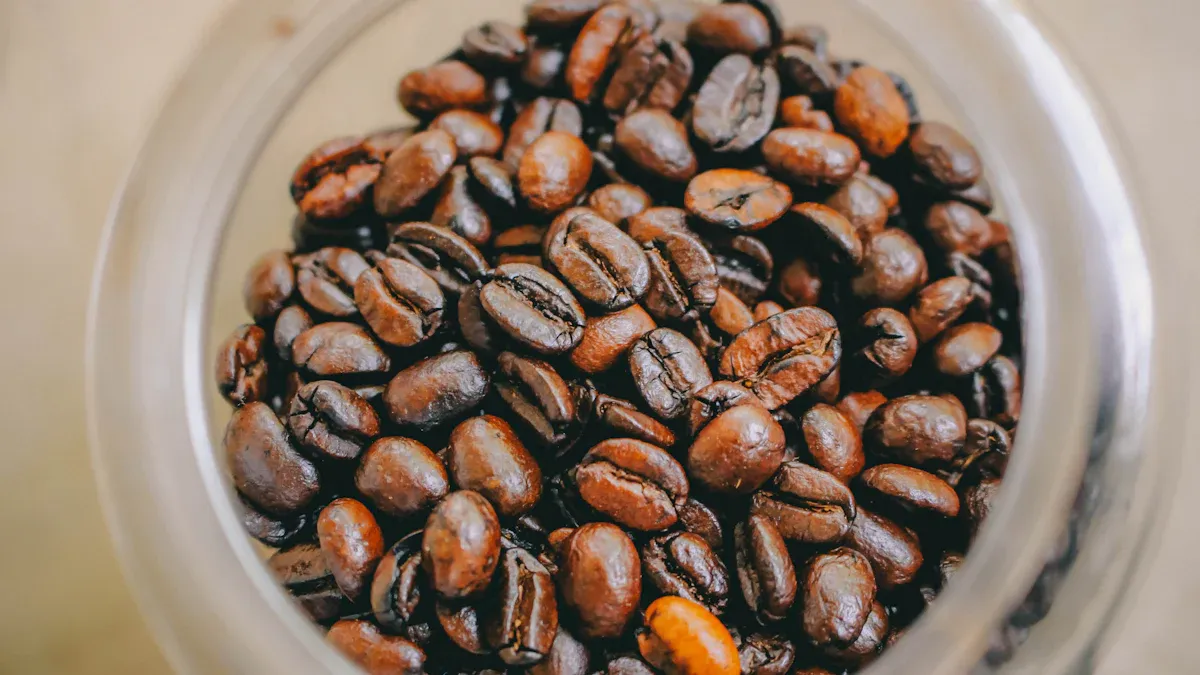
A glossy sheen or shiny finish covers the surface of oily beans, especially in dark roasts. This oily film results from natural oils moving to the outside during roasting.
Freshly roasted oily coffee beans may leave a slight residue on fingers when handled.
Uniformity in size and shape often signals consistent sorting and roasting, which points to higher quality.
Consistent color, especially a deep brown or almost black shade, matches the expected roast level. Darker roasts usually have a more pronounced oily appearance.
Beans that look wet, greasy, or have lost their shine may indicate over-roasting, age, or poor storage. These signs can mean the coffee has lost its best flavor.
Defects such as chips, cracks, or discolorations suggest lower quality or rough handling.
Consumers can also check for a strong, smoky aroma, which is common in dark, oily beans. If the smell is stale or rancid, the coffee may have oxidized.
What It Means
The presence of oil on coffee beans tells a story about both the roast level and the freshness of the coffee. Dark roasts often show more surface oils because the roasting process breaks down the bean structure, allowing oils to escape. Light and medium roasts rarely display an oily film, so oiliness in these beans may signal age or improper storage.
Oily coffee beans are not automatically a sign of poor quality. Many specialty roasters create dark roasts with a shiny surface to enhance flavor and aroma. However, excessive oiliness or a greasy feel can mean the beans are past their prime. Proper storage in airtight, opaque containers helps preserve the desirable qualities of oily beans and prevents the oils from turning rancid. Consumers should use oily beans within a few weeks of opening to enjoy the best taste and aroma. Recognizing oily coffee beans involves looking at both appearance and freshness, not just the presence of oil.
Equipment and Oily Beans
Grinder Care
Coffee grinders play a crucial role in preparing fresh coffee. When users grind oily beans, they often notice that grounds stick to the grinder’s internal parts. This sticky buildup can clog the grinder and reduce its efficiency. Burr grinders handle oily beans better than blade grinders because they can be disassembled for thorough cleaning. Regular cleaning helps prevent coffee oil residue from accumulating inside the grinder.
Manufacturers recommend several steps to maintain grinder performance:
Clean the grinder about once a week when using oily beans.
Dismantle and wipe burrs to remove stuck grounds and oils.
Use specialized grinder cleaners, such as Urnex SuperGrindz, to absorb oil residue.
Adjust grind settings to a coarser level to reduce clumping.
Alternate between oily and non-oily beans to minimize residue buildup.
Grind white rice through the grinder occasionally to absorb oils and clean internal parts.
Store coffee beans in airtight, cool, and dry containers to maintain freshness and reduce excess oiliness.
Consider using a secondary grinder dedicated to oily beans to protect the main grinder.
Blade grinders are not recommended for oily beans because they tend to clog easily and are harder to clean. Grinding oily beans directly in coffee makers with built-in grinders may shorten machine life.
Tip: Proper grinder care ensures consistent coffee flavor and extends equipment lifespan.
Espresso Machines
Espresso machines require careful attention when brewing coffee with oily beans. Dark roasted beans contain more oils, which can build up inside the machine. This buildup may clog grinders and internal components, leading to malfunctions and inconsistent grind size. Superautomatic espresso machines are especially vulnerable to damage from oily beans over time.
Regular cleaning and descaling help prevent oil accumulation and maintain machine performance. Oily beans increase the risk of clogging, so users should clean machines more frequently. Choosing medium or medium-dark roasts with less oil can reduce maintenance needs and preserve machine health. Dry beans pose a lower risk of damage and are easier to maintain. The oils from dark roasts can affect both performance and flavor consistency if not managed properly.
Coffee enthusiasts who want to protect their espresso machines should avoid using overly oily beans. They should follow manufacturer guidelines for cleaning and maintenance to ensure the best results.
Coffee Bag Packaging by BN PACK
Preserving Freshness
BN PACK coffee bags use advanced packaging technology to keep coffee beans fresh from the moment of roasting to the last cup. High-barrier materials such as aluminum foil and multilayer films block oxygen, moisture, and light. These elements are the main causes of coffee staling and flavor loss. One-way degassing valves allow carbon dioxide from a fresh roast to escape while stopping oxygen from entering. This process prevents oxidation, which can make coffee taste stale and reduce its shelf life. Resealable zippers help keep air and moisture out after opening, so the beans stay fresh longer.
High-barrier materials protect coffee from oxygen, moisture, and light.
One-way degassing valves let carbon dioxide out but keep oxygen from getting in.
Resealable zippers help maintain freshness after opening.
Customizable bag shapes and eco-friendly materials support both function and sustainability.
Compared to standard packaging, BN PACK’s solutions extend the shelf life of oily coffee beans and preserve their aroma and flavor. These features make a big difference for both home brewers and businesses that want to serve the best coffee possible.
Packaging Features
BN PACK coffee bags offer a range of features that benefit both coffee quality and brand visibility. The bags come in different styles, such as stand-up pouches, flat-bottom, and side gusseted designs. Each style can be customized with vibrant colors, clear branding, and unique shapes to attract attention on store shelves. Packaging design plays a key role in keeping coffee fresh and building brand recognition.
Feature | Benefit |
|---|---|
High-barrier materials | Extend shelf life and protect flavor |
Prevent bag swelling and oxidation, keep coffee fresh | |
Resealable closures | Maintain freshness after opening |
Custom printing | Boost brand visibility and consumer appeal |
Eco-friendly options | Support sustainability and attract eco-conscious customers |
Eco-friendly packaging options, such as compostable and recyclable materials, help reduce waste and support environmental goals. These choices encourage responsible consumer behavior and improve community health. Customization also allows brands to share their story, highlight the origin of the coffee, and connect with customers. Eye-catching designs and clear labeling can influence buying decisions and foster brand loyalty.
Storage Tips
Best Practices
Proper storage helps preserve the flavor and aroma of oily coffee beans. Coffee preservation experts recommend several best practices to keep beans at their peak:
Store coffee in its original packaging if it has a one-way gas-release valve. This valve lets carbon dioxide escape while blocking oxygen, which helps maintain a sign of freshness.
Use airtight, opaque containers to protect beans from air and light. Ceramic or stainless steel containers work well.
Keep coffee in a cool, dark place, away from heat and sunlight. A pantry or cupboard is ideal.
Buy coffee in small batches. Smaller amounts ensure the beans are used within two to three weeks after roasting, which keeps the taste vibrant.
Always check the roast date before buying. Freshness starts from the day of roasting.
If you need to store beans for longer, freezing can help. Place beans in airtight, moisture-proof bags and avoid thawing and refreezing. Allow beans to reach room temperature before opening to prevent condensation.
Clean storage containers regularly to prevent contamination from rancid oils.
Tip: Grinding coffee just before brewing preserves its flavor and aroma.
Avoiding Staleness
Improper storage can quickly make oily coffee beans stale. Exposure to light, heat, and moisture speeds up chemical breakdown and oxidation. Oily dark roasts are especially vulnerable because their surface oils oxidize faster when exposed to air. Refrigerators are not recommended for storage. Their humidity causes beans to absorb moisture, which leads to off-flavors and even mold. Temperature changes from opening and closing the fridge also harm the beans.
Scientific studies show that once a coffee package is opened, oxygen exposure increases. This change accelerates aroma loss and staling. Airtight containers with screw caps slow down this process, while loose closures like clips or tape allow more air in and speed up staleness. Keeping beans in small, airtight portions and storing them in a cool, dry place helps maintain their quality. These steps ensure every cup tastes as fresh as possible.
Oily coffee beans result from roasting, especially at dark levels, and do not signal poor quality. Key points include:
Dark roasting drives oils to the surface, changing flavor and increasing oiliness.
Proper packaging, like BN PACK coffee bags with one-way valves, preserves freshness and flavor.
Regular equipment care and correct storage maintain coffee quality and enjoyment.
Choose beans and packaging that match your taste, and follow best practices for storage and equipment maintenance to enjoy every cup.