
You might wonder, what is the perfect coffee temperature? Experts suggest the ideal coffee temperature for brewing sits between 195°F and 205°F. Small changes in water temperature can shift the taste of your coffee. For example:
Higher temperatures bring out more bitterness and sourness.
Cooler brewing makes coffee taste sweeter and less acidic.
Each sip reveals how temperature shapes flavor.
Perfect Coffee Temperature for Flavor
Ideal Coffee Temperature Range
You want to brew coffee at the perfect coffee temperature to unlock the best flavor in every cup. Experts from the Specialty Coffee Association recommend an ideal water temperature between 195°F and 205°F for most brewing methods. This range is not just a suggestion—it is the result of years of research into the science behind coffee temperature. When you use the ideal brewing temperature, you help extract the right balance of compounds that create a rich aroma, smooth body, and vibrant taste.
Tip: Use a thermometer or a temperature-controlled kettle to keep your water temperature steady. This helps you achieve consistency and a perfectly extracted cup every time.
The National Coffee Association also supports this range, noting that the right water temps are key for balanced extraction and quality. If you brew outside this range, you risk missing out on the full spectrum of coffee flavor.
Brewing Temperature and Extraction
The extraction process is where the magic happens in coffee brewing. Water acts as a catalyst, pulling flavors, oils, and aromas from the coffee grounds. If you use water below 195°F, you get under-extraction. This means your coffee will taste sour, weak, or underdeveloped. On the other hand, water above 205°F leads to over-extraction, making your coffee bitter and harsh.
Brewing coffee at the ideal temperature ensures balanced extraction.
Lower temperatures highlight fruity and sweet notes but can leave the cup flat.
Higher temperatures bring out more bitterness and acidity, sometimes masking delicate flavors.
The science behind coffee temperature shows that different compounds dissolve at different rates. For example, acids and fruity flavors come out first, followed by sweetness, and finally, bitter compounds. By controlling brewing temperature, you guide which flavors dominate your cup.
Brewing Temperature | Extraction Process Outcome | Taste and Aroma Impact |
|---|---|---|
Below 195°F | Under-extraction | Sour, weak, underdeveloped taste, muted aroma |
195°F–205°F | Balanced extraction | Sweet, rich, complex flavor, full aroma |
Above 205°F | Over-extraction | Bitter, harsh taste, overpowering aroma |
Maintaining temperature consistency during brewing is crucial. Fluctuations can cause uneven extraction, leading to unpredictable taste and lower quality.
Flavor Outcomes at Different Temperatures
You experience the most exciting changes in coffee flavor when you adjust the brewing temperature. Within the perfect coffee temperature range, you can tune your brew to highlight different taste notes:
Lower end (195°F): Expect sweeter, milder, and sometimes more floral or fruity flavors. Bitterness and acidity stay low.
Upper end (205°F): You get a bolder cup with more pronounced bitterness and acidity. Darker, roasted notes become stronger.
The science behind coffee temperature explains that as you increase the temperature, you extract more volatile compounds. These compounds boost aroma and flavor intensity. However, too much heat can overpower sweetness and introduce burnt or smoky notes.
Note: As your coffee cools, you may notice the taste changes. Sweetness peaks around 111°F, while acidity and bitterness become more noticeable as the temperature drops.
You can use these insights to experiment with your brewing temperature. Try brewing at different points within the ideal range to find the flavor profile that matches your preference. This approach helps you appreciate the full potential of your beans and enjoy a consistently high-quality cup with every sip.
Best Brewing Temperature by Method
Pour Over
Pour over coffee brewing gives you control over every variable. The ideal brewing temperature for pour over sits between 195°F and 205°F. This range helps you balance extraction, so your cup avoids bitterness or sourness.
Cooler water (around 195°F) draws out delicate aromas and floral notes.
Hotter water (up to 205°F) brings out sweetness and body but can risk bitterness if too high.
Grind size matters. Finer grinds extract faster, so you may want to use slightly cooler water to prevent over-extraction. Coarser grinds need hotter water for full flavor. Consistent grind size ensures even extraction and a balanced taste.
Tip: Boil water, then let it cool for 30–60 seconds before pouring. This helps you hit the best brewing temperature for pour over.
French Press
French press coffee brewing works best with water between 195°F and 205°F. Experts recommend preheating your press to keep the temperature steady. Steep for about 4 minutes to get a rich, full-bodied cup.
Dark roasts do well with lower temperatures (around 195°F) to avoid bitterness.
Lighter roasts benefit from the higher end of the range for better extraction.
Bean origin and processing also affect the ideal brewing temperature. Experiment with steeping time and grind size to match your beans and personal taste.
Roast Level | Recommended Temp (°F) | Notes |
|---|---|---|
Dark | 195 | Prevents bitterness |
Medium | 195–200 | Balanced extraction |
Light | 200–205 | Enhances sweetness and aroma |
Espresso
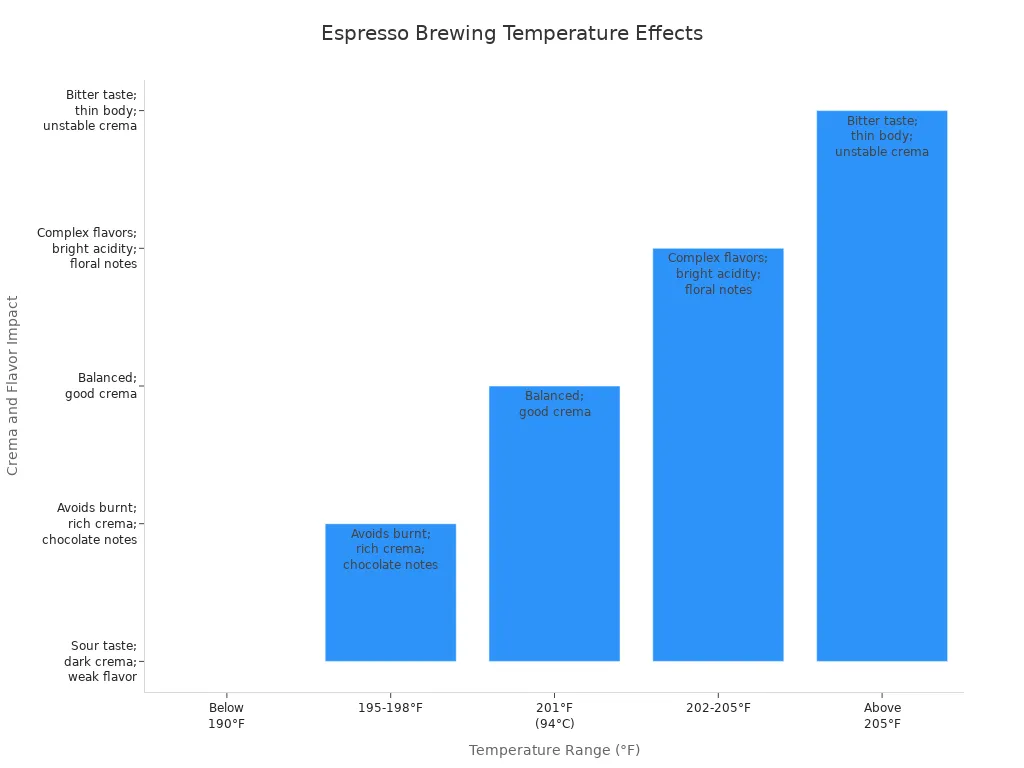
Espresso requires precise temperature control. The standard brewing temperature is about 201°F, but you can adjust between 195°F and 205°F based on your beans:
Light roasts need hotter water (202–205°F) for full extraction and bright flavors.
Dark roasts do better at lower temperatures (195–198°F) to avoid burnt notes.
Modern espresso machines use PID controllers to keep water temperature stable, which helps you get consistent crema and flavor. Even small changes in temperature can change the taste and aroma of your espresso.
Cold Brew
Cold brew coffee brewing uses a different approach. You steep coarse grounds in cold water (40°F–50°F) for 12–24 hours. This slow process creates a smooth, sweet cup with low acidity and bitterness.
Higher cold temperatures (like 75°F) shorten steeping time but do not change the flavor much.
Oversteeping can make your cold brew taste sour.
Cold brew highlights chocolate and nutty notes, with a creamy body and mellow aroma. Try different steeping times and ratios to find your favorite profile.
Note: No matter the method, experimenting within the recommended brewing temperature range helps you discover your perfect cup. Your personal preference plays a big role in what you enjoy most.
You shape every sip by controlling brewing and serving temperature. Scientific research shows that temperature changes both flavor and taste, helping you find the perfect balance of flavors. Try different methods and temperatures to discover your great tasting cup. With each sip, you move closer to your perfect coffee sip.