
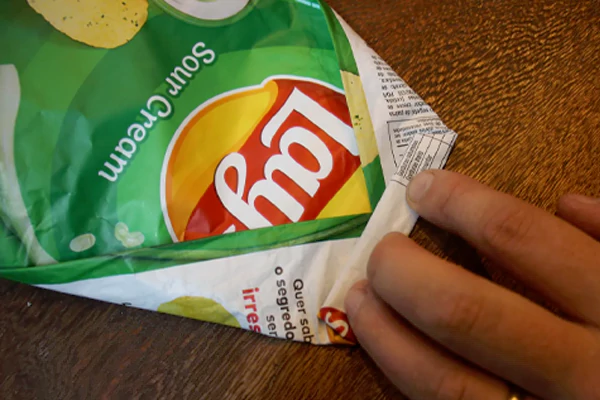
It’s a familiar scene played out in living rooms and kitchens across the world: You’re settling in for a movie or grabbing a midday snack, you open a fresh, family-sized bag of your favorite potato chips, and enjoy a satisfying handful. But then what happens? You’ve had your fill for the moment, but the chip clip—that essential yet perpetually elusive kitchen gadget—is nowhere to be found. You’re left with a gaping bag, a ticking clock on its freshness, and a universal household dilemma.
An open chip bag is an open invitation for staleness. It’s a guarantee that the next time you reach for a snack, your perfectly crispy, salty chips will have transformed into a soft, chewy, and deeply disappointing mess. The crunch will be gone, and with it, the entire point of the snack.
In this guide, we will solve this common problem once and for all. First, we will teach you a brilliant and foolproof folding technique for how to close a chip bag without a clip. Then, we will explore the modern, engineered solution that is changing the game for snack food packaging: the re-sealable chip bag.
Why a Proper Seal Matters: The Science of a Stale Chip
Before we learn how to close the bag, it’s important to understand why an open bag is so detrimental to your chips. The process of a chip going stale isn’t just a matter of texture; it’s a two-front war being waged by chemistry and physics against your snack.
Enemy #1: Oxygen (Oxidation)
The delicious, savory flavor of a potato chip comes from the oils used to fry it. Unfortunately, these fats are highly susceptible to oxidation when they are exposed to the oxygen in the air. This chemical reaction causes the oils to break down, resulting in the stale, slightly rancid, and often “cardboard-like” flavor that is the hallmark of old chips. Every moment the bag is open, this process is accelerating.
Enemy #2: Moisture (Humidity)
The second and more immediate enemy is the moisture in the air. A perfectly fried potato chip has an extremely low moisture content, which is what makes it so crispy. In scientific terms, chips are “hygroscopic,” meaning they act like a dry sponge, actively pulling moisture from the surrounding atmosphere. This absorption of water vapor is what destroys the chip’s signature crunch, turning it from a satisfyingly crisp snack into a soft, limp, and chewy disappointment.
A good seal is your only defense. Its primary job is to create a strong barrier that locks out both the oxygen and the humidity, preserving the perfect flavor and texture the manufacturer intended.
The Step-by-Step Guide: How to Close a Chip Bag Without a Clip
This brilliant folding technique, sometimes called the “origami” or “viral” chip bag fold, is a game-changer for any serious snacker. It uses the bag’s own structure to create a surprisingly secure, self-locking seal. It may take a try or two to master, but once you learn it, you’ll never be helpless in the face of a clip-less bag again.
Here’s exactly how to fold a chip bag without a clip, step-by-step:
Step 1: Flatten and Expel the Air
First, lay the bag on a flat surface or hold it upright and gently press out as much excess air as possible without crushing the chips inside. The goal is to minimize the amount of oxygen you trap in the bag, as this is the primary cause of staleness.
Step 2: Make the Initial Folds
Take the top, open edge of the bag and fold it down neatly over itself. Make a sharp, clean crease. For a more secure base, fold it down a second time. You should now have a clean, straight folded edge at the top of your bag.
Step 3: Create the “Wings”
This is the key to the locking mechanism. Take the left and right corners of the folded edge you just made. Fold both corners inward towards the center line of the bag, creating two sharp, 45-degree triangles, much like the first step of making a paper airplane. Press down firmly to create strong creases.
Step 4: Roll It Down Tightly
Now, starting from the top folded edge (with your triangles folded in), begin to tightly and neatly roll the top of the bag down over itself. Continue rolling several times until the rolled section is snug against the pile of chips inside the bag. The tighter the roll, the more secure the final seal will be.
Step 5: The Final Tuck and Lock
This is the magic step that locks everything in place. Hold the tightly rolled section with one hand. You will notice that the two triangular “wings” you created in Step 3 are now tucked into the ends of the roll. Carefully flip the entire rolled section over and upward against the front of the bag. As you do this, a small, horizontal flap or pocket created by the initial folds will be revealed in the center.
Now, take the left and right ends of the roll (the “wings”) and push them inward, tucking them securely into that central pocket. This action uses the tension of the roll to create a surprisingly strong, self-locking seal that will not come undone easily. You can now store your bag, confident that it is sealed.
The Limits of the Fold: A Good Hack, But Not a Perfect Seal
Let’s be clear: the origami fold is a brilliant trick. The method for how to fold a chip bag without a clip is a testament to human ingenuity and a fantastic skill to have in your snacking arsenal. It is the perfect solution for short-term storage—ideal for keeping a bag of chips fresh overnight or for a day or two until your next snack session.
However, for long-term freshness and true product preservation, it’s important to understand its limitations. The fold is a clever hack that works around a packaging flaw, but it doesn’t eliminate the flaw itself.
Here are the honest drawbacks:
- It’s Not Truly Airtight: While the fold is very secure, it is not a hermetic (completely airtight) seal. Microscopic gaps still exist, allowing air and humidity to slowly seep into the bag over a period of several days. For a chip lover in a humid climate, this means the dreaded softness will still eventually set in.
- It Lacks Durability: The seal relies on the tension of the fold. If the bag is jostled around in a crowded pantry, tossed into a backpack for a trip, or roughly handled, the fold can come undone, leaving your chips exposed once again.
- It’s Not User-Friendly for Everyone: The process, while simple once mastered, can be tricky to learn. It may not be an easy or intuitive solution for children or other family members who just want to quickly put the chips away.
It’s a fantastic temporary solution, but it highlights the need for a more permanent, reliable, and user-friendly answer to the problem of keeping chips fresh.
The Ultimate Solution: The Rise of the Resealable Chip Bag
While the folding hack is a clever response to a common design flaw, the ultimate solution is to eliminate the flaw itself. In recent years, forward-thinking snack brands have begun to adopt a superior technology that was once reserved for products like shredded cheese or deli meats: the modern, resealable chip bag.
What is a Re-sealable Chip Bag?
This is packaging that comes with a built-in, press-to-close zipper integrated directly into the bag. This simple but powerful feature is a game-changer for the consumer experience, transforming the package from a disposable container into a high-performance, long-term storage solution. There is no need for clips, no complex folding to remember—just the simple, intuitive action of pressing the zipper closed.
Why It’s Superior
For both the consumer and the brand, the advantages of a built-in zipper are immense, directly solving all the problems that a simple fold or a lost clip cannot.
- A Truly Airtight Seal: A high-quality zipper creates a nearly airtight seal every single time you close it. This provides the ultimate protection against the two great enemies of crispiness we discussed earlier. It locks out damaging oxygen to prevent the oils from oxidizing and going stale, and it creates a powerful barrier against ambient humidity, keeping your chips perfectly crunchy for weeks, not just days.
- Unmatched Convenience: The convenience of an integrated zipper is unparalleled. There are no tricks to master, no accessories to lose. It is an intuitive, one-step process that anyone in the household can use correctly, ensuring the bag is properly sealed every time. This simple, user-friendly design dramatically enhances the customer’s overall experience with your product.
- Guaranteed Freshness & Reduced Food Waste: Because the seal is so effective, the chips stay fresher for much longer. This has two powerful benefits. First, it reduces food waste for the consumer, as they are far less likely to throw away a half-eaten bag of stale chips. Second, it ensures that the last chip from the bag tastes just as good as the first, which is the ultimate protection for your brand’s reputation for quality.
A Premium Brand Experience
For a snack brand, choosing to invest in a re-sealable bag is a powerful statement. It signals a commitment to quality, a respect for the customer’s experience, and an investment in the longevity of your product after it leaves the store. It elevates the product’s perceived value, can justify a premium price point, and builds significant brand loyalty. It shows you’ve thought not just about the first chip, but about every single chip in the bag.
Your Partner in Freshness: Packaging Innovation at BN Pack
The clear shift towards user-friendly, value-added packaging is a key trend that is defining the modern snack industry. For a brand, making the move to a re-sealable format is one of the most powerful investments you can make in customer satisfaction and brand loyalty.
At BN Pack, we specialize in creating high-performance flexible packaging that meets this demand. We engineer and manufacture premium chip bags with integrated, reliable press-to-close zippers that provide a secure seal every time. Our bags combine this essential convenience feature with high-barrier materials to lock in crispness and flavor, and vibrant printing to provide a stunning canvas for your brand. If you’re ready to upgrade your packaging from a temporary problem to a permanent solution that protects your product and delights your customers, we’re here to help.
Conclusion
Knowing how to close a chip bag without a clip is a fantastic and practical skill for any snacker to have in their arsenal. It’s a testament to human ingenuity and a perfect fix when you find yourself in a pinch. The clever fold ensures your chips stay fresh for the short term and prevents unnecessary waste.
However, the evolution from a clever fold to a built-in zipper is a perfect example of how smart packaging design can solve everyday problems at their source. For brands, investing in a re-sealable bag is an investment in quality, customer satisfaction, and a truly superior snacking experience. It demonstrates a commitment to freshness that lasts from the first chip to the very last.