
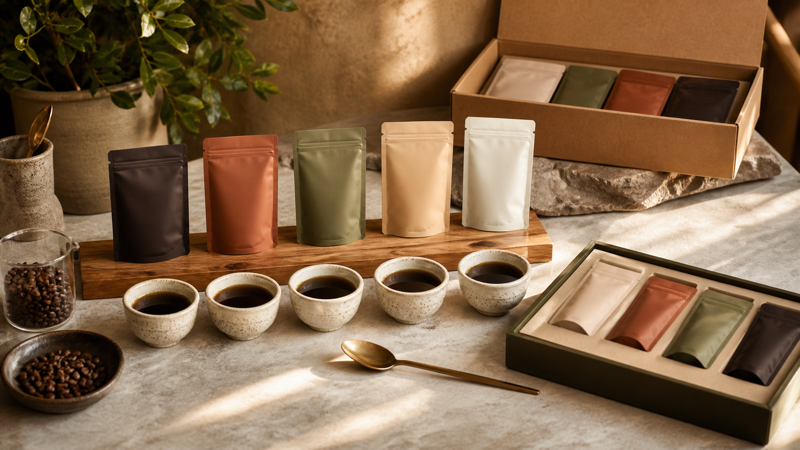
Coffee sample packs serve several different jobs. A roaster may send green or roasted coffee for evaluation, distribute small bags at an event, build a subscription discovery set, or sell a tasting flight. Each application needs enough coffee for the intended brew method while protecting aroma, controlling cost, and presenting clear lot information.
The smallest package is not automatically the best sample. Very small fills create a high package-to-product ratio, limited artwork space, and difficult filling tolerances. A larger sample improves brewing flexibility but raises postage and may exceed what the recipient needs. The correct design begins with the tasting task.
Compare Common Sample Formats
| Sample purpose | Typical packaging approach | Main priority | Common risk |
|---|---|---|---|
| Single-brew trial | Small flat sachet or compact pouch | Exact dose and low shipping volume | Insufficient coffee for the recipient’s brewer |
| Multi-cup tasting | Small resealable or heat-sealed bag | Enough product for repeat evaluation | Aroma loss after first opening |
| Cupping or trade sample | Clearly coded barrier bag | Lot identity and evaluation consistency | Label mix-ups across many similar samples |
| Event giveaway | Attractive mini coffee bags | Fast packing and brand recall | High unit cost or unclear brewing instructions |
| Subscription discovery set | Several coordinated bags in one mailer | Variety, sequence, and unboxing | Sorting errors and excessive parcel volume |
Net weight should be selected from the expected brew or cupping protocol, not copied from a competitor. Test the pack with the actual coffee and fulfillment workflow.
Define the Use Before the Weight
For a single brew, calculate coffee dose from the intended method and recipe, then add only a sensible tolerance. Espresso, pour-over, immersion, and cupping use different amounts. If recipients are expected to dial in grind settings or repeat a tasting, one dose may be insufficient.
Professional evaluation samples need consistency and traceability more than elaborate presentation. The recipient should know whether the coffee is green, roasted, whole bean, or ground; when it was roasted or packed; and which lot it represents. Consumer discovery packs need simpler language, brew guidance, and a clear sequence.
The discussion of coffee bag samples for roasters can help separate packaging-development samples from coffee-product samples. In both cases, the evidence should match the decision the recipient needs to make.
Choose the Package Format
Flat three-side-seal sachets use material efficiently and fit narrow mailers. They work well for single doses and event distribution, but usually need scissors or a tear notch and are not ideal for repeated opening. A compact stand-up or bottom-gusset pouch provides better presentation and may support a zipper, though it consumes more space.
Single-serve coffee bags can refer to portioned ground coffee, steeping formats, or small packaging designed around one preparation. Confirm whether the product is loose coffee, an inner filter bag, or another delivery format before selecting barrier and dimensions.
For tasting sets, several small packages may fit better in a shallow carton than one divided pouch. Individual packs protect identity and allow the recipient to open one coffee at a time. The tradeoff is more seals, labels, filling steps, and components.
Match Dimensions to Coffee Density
Whole beans, ground coffee, and green coffee occupy different volumes. Roast degree and bean size also change bulk density. Fill representative samples rather than sizing from net weight alone. A sample pouch that looks full with dense light-roast beans may appear underfilled with a dark roast.
Small pouches magnify filling tolerance. A few grams of variation can change headspace, seal cleanliness, and perceived value. Use suitable weighing and dosing equipment, verify calibration, and keep coffee out of the seal area.
Leave enough header for the final seal, tear notch, date code, and consumer grip. If a zipper is used, the sample must still have usable product space below the profile. Oversized headers make a small sample look wasteful, but insufficient clearance creates weak seals.
Barrier and Freshness
Small samples have a high package surface area relative to coffee mass. Oxygen entering through film or seals can therefore affect a small amount of coffee quickly. Select barrier according to roast-to-use interval, coffee form, and shipping conditions.
Ground coffee is especially sensitive because of its exposed surface area. Whole beans retain aroma longer but still require oxygen, moisture, and odor protection. Green coffee samples prioritize moisture stability, contamination control, and lot integrity.
Custom coffee bags can use foil, metallized film, or transparent barrier options. Clear windows may show beans but can expose them to light and increase gas transmission. For samples, visibility is useful only if it does not compromise the evaluation period.
Nitrogen Flushing and Valves
Nitrogen flushing can reduce residual oxygen in roasted-coffee samples, particularly for ground coffee or samples stored before distribution. The small headspace may make gas use efficient, but nozzle control and fast sealing are essential. Excessive flow can blow light samples from the pouch or contaminate seals with coffee dust.
Residual oxygen should be measured on the actual small package. Large-package settings do not automatically transfer because headspace, opening, purge time, and sealing sequence differ. Validate sensory shelf life, not only an immediate instrument result.
A degassing valve may be unnecessary for small samples that are rested before packing or consumed quickly. It adds component cost, area, and another possible leakage path. Freshly roasted larger samples may benefit from a valve when gas release could inflate the pouch. Decide from roast-to-pack timing, fill weight, shelf life, and distribution.
Labels and Variable Information
Sample programs often include many coffees and small quantities, making fully printed packaging inefficient. A common preprinted pouch with a high-quality variable label can support low MOQ and frequent lot changes. The label must adhere to the surface, remain legible in transit, and avoid covering tear features, seals, valves, or required information.
Use a controlled data source for coffee name, origin, producer, variety, process, roast, lot, date, net weight, and brewing instructions as relevant. Barcodes or QR codes can connect to detailed stories without crowding the small pack, but test scan performance on the filled curved surface.
Packaging for Cupping and Professional Evaluation
Cupping samples should preserve identity and avoid introducing odor. Use neutral food-contact materials and store empty packaging away from chemicals or fragrances. Seal samples promptly and keep roast or preparation timing consistent across the set.
Professional recipients may need enough coffee for moisture measurement, green grading, sample roasting, multiple cups, or repeated sensory review. Confirm their protocol before fixing weight. A beautiful consumer-size sachet may not provide enough material for technical evaluation.
Chain of custody matters for valuable lots. Use tamper evidence, lot codes, and documented packing records when samples influence purchasing decisions. The shipping mailer should keep different samples from rubbing, tearing, or exchanging odor.
Events and Giveaways
Event samples need fast distribution and immediate brand recognition. Choose a pack that fits bags, pockets, and booth storage without bending or leaking aroma. Include a simple brew recommendation and a clear call to action, but avoid covering the front with too much small text.
Unclaimed samples can become obsolete after roast date or event branding changes. Conservative quantities and flexible labels may cost less overall than a large custom-printed overrun.
Subscription Discovery Sets
Discovery subscriptions can sequence samples by origin, process, roast, or flavor. The mailer should hold every pouch in a predictable order and prevent movement during parcel drops. A lightweight divider or printed insert can organize the set without excessive packaging.
Measure the combined settled thickness of all pouches. Alternating top seals can reduce bulk, while stacking valves directly can create pressure points. Model dimensional weight and carrier thresholds before finalizing pouch size.
The pack should make comparison easy. Use consistent net weights, roast-date presentation, and brewing guidance unless a deliberate difference is part of the tasting. Invite structured feedback that can inform future subscription selections.
Sample-Pack Checklist
- Define whether the sample supports one brew, repeat tasting, cupping, an event, or subscription discovery.
- Set net weight from the recipient’s actual protocol and acceptable fill tolerance.
- Test dimensions with representative green, whole-bean, or ground coffee.
- Choose barrier, nitrogen flushing, zipper, and valve according to use period.
- Keep seals clean and leave enough header for opening and coding.
- Use controlled variable data and unmistakable lot identification.
- Test the complete mailer for movement, odor transfer, crushing, and dimensional weight.
- Balance custom printing against flexible labels, labor, and obsolete inventory.
Coffee sample packaging is successful when the recipient has enough well-protected product to complete the intended evaluation. A precise dose may suit a single brew, a larger barrier pouch may support cupping or repeated tasting, and coordinated small bags can create a strong subscription experience. Purpose should set the weight, and the weight should set the package—not the other way around.