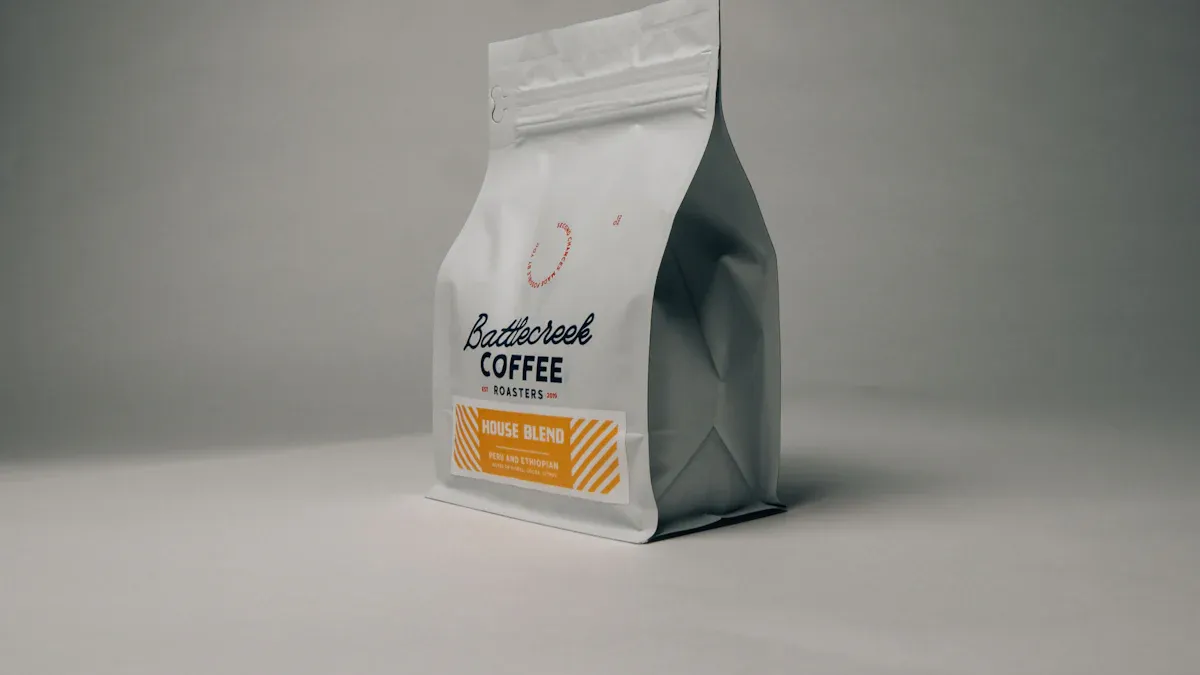
When you create custom design coffee bags, you need to focus on several main considerations for custom design coffee bags. You should balance your brand identity, material selection, functionality, sustainability, and proper label placement. The right packaging protects your coffee and keeps it fresh. A clear label helps customers trust your product. BN Packaging stands out by offering custom design coffee bags that combine strong packaging, eye-catching label options, and eco-friendly solutions. Your choices in custom design and packaging impact coffee quality and the overall customer experience.
Brand Identity in Custom Design
Logo and Colors
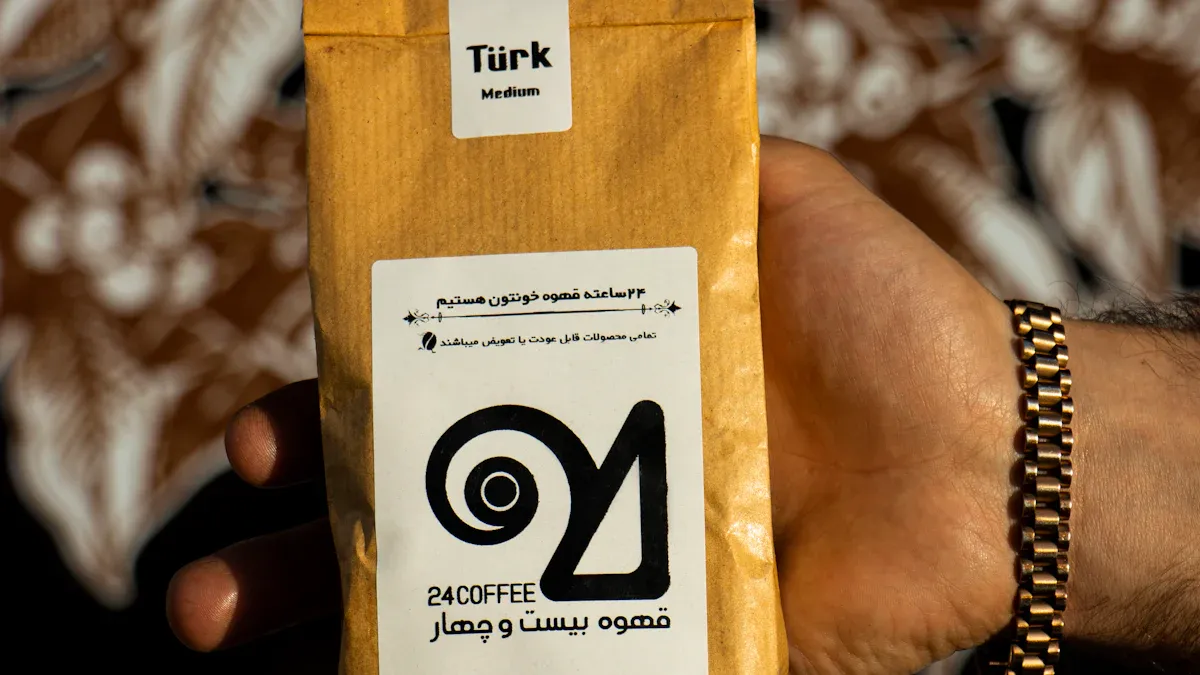
You shape your brand’s first impression with your logo and color choices. When you select a logo for your custom design, you create a symbol that customers remember. A strong logo on your coffee packaging helps your product stand out on crowded shelves. You can use bold or minimalist logos, depending on your brand’s personality. Color choices also play a big role in coffee packaging design. Bright colors can attract attention, while earth tones can suggest freshness or sustainability. For example, Death Wish Coffee uses a striking logo and a bold color scheme to connect with its audience. This approach shows how logos and colors can tell a story and build recognition, even when the label does not list every detail. You should always consider the right coffee bag label size to make sure your logo and colors remain clear and visible. The right size ensures your custom printed coffee bags look professional and appealing.
Graphics and Typography
Graphics and typography give your custom design a unique voice. You can use illustrations, patterns, or photos to highlight your coffee’s origin or flavor notes. These graphics help your coffee packaging stand out and tell customers what makes your product special. Typography matters just as much. You should choose fonts that match your brand’s style. A modern font can suggest innovation, while a classic font can hint at tradition. The size of your text on the label should be easy to read, even from a distance. You want your labels to communicate important information, such as roast level or tasting notes, without clutter. When you plan your coffee bag label size, you make sure every word and graphic fits well. This careful planning helps your coffee packaging design look clean and organized.
Tip: Use a simple table to plan your label layout. List each element—logo, product name, roast date, and certifications—along with the ideal size for each. This method helps you balance all parts of your custom design.
Storytelling Elements
You can use storytelling to connect with your customers on a deeper level. Your coffee packaging can share your brand’s journey, values, or commitment to quality. When you add a story to your label, you invite customers to become part of your brand’s world. Many brands use eco-friendly packaging to show their values. For example, Lush uses recycled materials and rewards customers for returning containers. This approach builds loyalty and trust. You can also use interactive elements, such as QR codes, to share videos or recipes. These features turn your coffee bag into an experience, not just a container. Interactive storytelling makes your custom design memorable and encourages customers to share their experience online. The right coffee bag label size gives you enough space to include these elements without making the label look crowded. You should always check that your labels fit your custom packaging and tell your story clearly.
When you focus on logo, color, graphics, typography, and storytelling, you create a coffee bag design that stands out. You make your coffee packaging both attractive and informative. The right custom design and label size help you connect with customers and build a strong brand identity.
Consistency Across Coffee Packaging
Consistency in your coffee packaging design plays a key role in building a strong brand. When you keep your visual elements uniform, you help customers recognize your products quickly. This recognition leads to trust and loyalty. You want your coffee bags to look like they belong together, whether they sit on a shelf or appear in an online store.
You should use the same color palette, fonts, and imagery across all your coffee packaging. This approach makes your brand easy to spot. Customers often remember colors and shapes before they read any words. If you change your design too often, you risk confusing your audience. Consistent packaging helps your coffee stand out in a crowded market.
Tip: Create a brand style guide for your coffee packaging. List your approved colors, fonts, logo placement, and image styles. Share this guide with your team and your packaging supplier to keep every bag on-brand.
Visual consistency does more than just look good. It strengthens your brand’s authenticity and helps you build a loyal customer base. When you use the same design elements, you send a clear message about your brand’s values and quality. Customers start to trust your products because they know what to expect.
Visual consistency across your coffee packaging strengthens brand recognition and authenticity. This is essential for building brand loyalty.
Using the same colors, fonts, and imagery that match your target audience captures attention and builds trust. This encourages customers to buy from you again.
Visual storytelling through your packaging can reflect cultural values or lifestyle goals. This deepens the emotional connection with your customers.
Simple and clear designs improve brand recall. Customers can make faster decisions and are more likely to choose your coffee again.
A balance between attractive design and clear information increases your product’s impact on the shelf and supports business success.
You should also keep your messaging consistent. Use the same tone of voice and key phrases on every bag. If you highlight sustainability or quality, make sure every package shares that message. This approach helps customers remember your brand and what it stands for.
BN Packaging makes it easy to maintain consistency. Their digital workflow lets you approve designs and track orders, so every batch matches your brand guidelines. You can request 3D previews and samples to check that your colors and logos look right before production. This process ensures that your coffee bags always reflect your brand identity.
When you focus on consistency, you build a brand that customers trust. Your coffee packaging becomes more than just a container—it becomes a symbol of your quality and values. Consistent design helps you grow your business and keep customers coming back for more.
Material Selection for Coffee Packaging
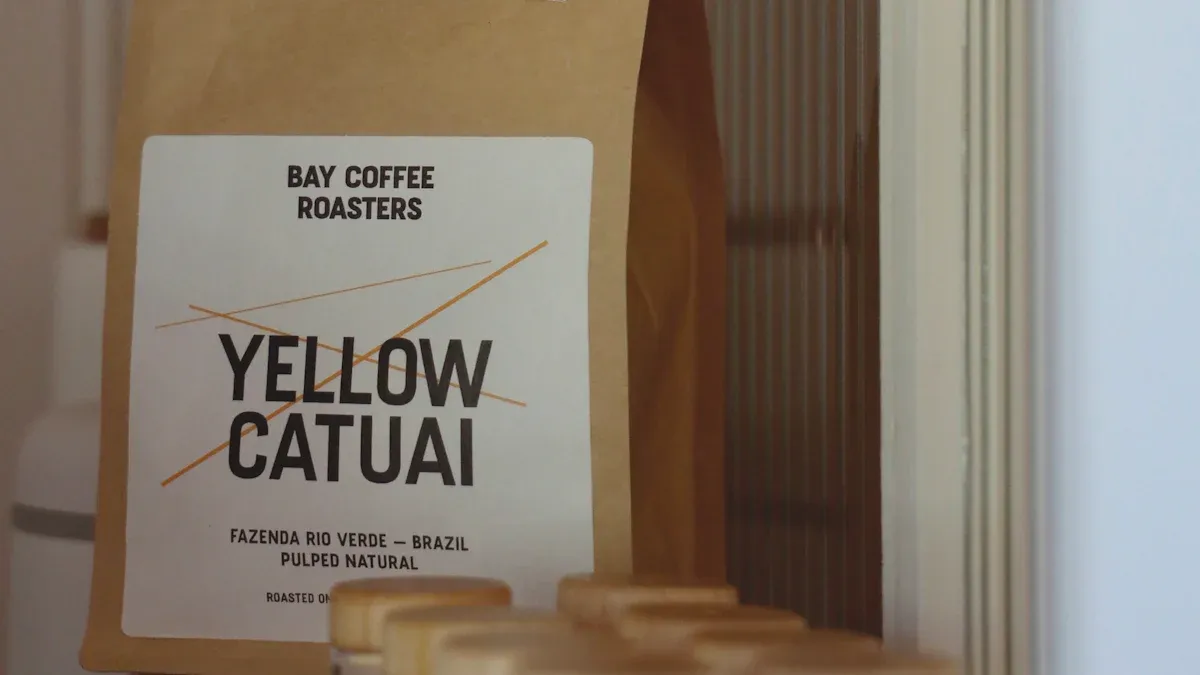
Barrier Properties
When you select materials for coffee packaging, you must consider barrier properties first. These properties determine how well your packaging protects coffee from oxygen, moisture, and light. Oxygen is the main enemy of coffee freshness. If oxygen enters the bag, it causes oxidation, which leads to stale flavors and loss of aroma. Scientific experiments at Zurich University of Applied Sciences show that porous materials like paper or thin plastic allow oxygen to pass through. This results in faster oxidation and a drop in quality. Packaging with a thick aluminum layer blocks oxygen almost completely, keeping your coffee fresh for a longer time.
You should also think about how the packaging performs after opening. A study compared different ways to reseal coffee packaging, such as using tape, clips, or integrated screw caps. The results showed that packaging with a screw cap preserved aroma best. This happened because the screw cap created a strong barrier against oxygen. The study used gas chromatography to measure changes in aroma compounds, proving that better barriers slow down freshness loss. When you choose coffee packaging with strong barrier properties, you protect both the taste and the aroma of your product.
Tip: Always check the oxygen transmission rate (OTR) of your packaging material. Lower OTR means better protection for your coffee.
Eco-Friendly Materials
Today, many customers want eco-friendly packaging for their coffee. The global sustainable packaging market is growing fast. Experts predict it will reach $303.6 billion by 2025. This growth comes from both consumer demand and industry changes. Big coffee brands now use compostable and biodegradable coffee bags made from plant-based plastics or paper. You can see this trend in the coffee packaging market, which is expected to grow from $816.7 million in 2023 to over $1.1 billion by 2032. More people want recyclable and biodegradable options, and new rules push companies to use greener materials.
When you choose eco-friendly packaging, you help the environment and meet customer expectations. BN Packaging offers a wide range of sustainable, food-safe materials. You can pick from biodegradable, compostable, or recyclable options that still provide strong barrier properties. These materials keep your coffee fresh while reducing waste. If you want to show your commitment to the planet, select eco-friendly packaging and highlight this on your labels. Customers notice these details and often choose brands that care about sustainability.
Note: Make sure your labels clearly state if your packaging is compostable or recyclable. This helps customers dispose of it correctly.
Durability and Protection
Durability is another key factor in coffee packaging. Your packaging must protect coffee during shipping, storage, and handling. Studies compare different bag types, such as hermetic GrainPro bags and traditional jute bags, under various temperatures and storage times. Researchers found that GrainPro bags offer excellent barrier properties, keeping coffee quality high for up to 12 months. Jute bags also protect coffee well, especially at cooler temperatures, but they allow more oxygen in than hermetic bags.
Sensory tests measured aroma, acidity, and aftertaste. Coffee stored in jute bags at 10°C kept most of its quality, losing only a small amount of flavor after three months. GrainPro bags performed even better, especially for natural processed coffee stored at very low temperatures. Chemical tests tracked changes in chlorogenic acids and caffeine, showing only minor losses over time. These results prove that the right packaging material preserves both the taste and the chemical makeup of your coffee.
When you design your coffee packaging, think about the size and shape of the bag. The right size prevents extra air inside, which can speed up oxidation. You should also make sure your labels fit well and stay readable during transport. Durable packaging keeps your labels intact and your coffee safe from damage.
Tip: Test your packaging under real-world conditions. Check if the labels stay attached and readable after shipping and storage.
Choosing the right material for your coffee packaging means balancing barrier properties, eco-friendly options, and durability. You protect your coffee, support the environment, and give your customers a product they can trust. BN Packaging provides coffee packaging solutions that meet all these needs, helping you stand out in a crowded market.
Print and Finish Options
When you design custom coffee bags, your print and finish choices matter as much as the material itself. These options help you create packaging that stands out and communicates your brand’s message clearly. You can use different print methods and finishes to make your coffee bags look unique and professional.
Printing Methods
You have several printing methods to choose from:
Digital Printing: This method works well for short runs and detailed designs. You can change artwork quickly and see fast results. Digital printing gives you vibrant colors and sharp images.
Rotogravure Printing: This method suits large orders and complex graphics. You get consistent quality and rich colors. Rotogravure works best when you need high-volume production.
Flexographic Printing: This method offers a cost-effective solution for simple designs. You can print on many types of materials. Flexographic printing works well for basic logos and text.
BN Packaging uses advanced digital workflows. You can upload your design, approve proofs online, and track your order in real time. This process saves you time and reduces errors.
Finish Options
The finish of your coffee bag affects how customers see and feel your product. You can choose from several finishes:
Matte Finish: This finish gives your coffee bag a soft, modern look. It reduces glare and feels smooth to the touch. Matte finishes work well for brands that want a natural or premium image.
Glossy Finish: This finish makes colors pop and adds shine. Glossy bags catch the light and attract attention on store shelves. You can use this finish to highlight bold graphics or vibrant colors.
Soft-Touch Coating: This coating feels velvety and luxurious. Customers notice the difference when they pick up your bag. Soft-touch finishes help your product stand out in a crowded market.
Metallic and Foil Effects: These effects add sparkle and a sense of luxury. You can use metallic inks or foil stamping to highlight your logo or special features. Metallic finishes work well for limited editions or gift packaging.
Tip: Use a combination of finishes to create contrast. For example, you can pair a matte background with glossy highlights on your logo.
Customization Features
You can add special features to your coffee bags to make them even more unique:
Feature | Benefit |
|---|---|
Spot UV Coating | Highlights specific areas with shine |
Embossing/Debossing | Adds texture for a premium feel |
Transparent Windows | Lets customers see the coffee inside |
Custom Shapes | Makes your bag stand out on the shelf |
BN Packaging offers all these options. You can work with their design team to choose the best print and finish for your brand. Before production, you receive 3D previews and physical samples. This step helps you check colors, finishes, and overall look.
Why Print and Finish Matter
Your print and finish choices do more than decorate your coffee bag. They protect your branding, share important information, and influence buying decisions. A high-quality finish signals that you care about your product. Customers often judge the value of your coffee by the look and feel of the packaging.
Note: Always test your chosen finish under different lighting and handling conditions. This step ensures your coffee bag looks great in stores and online.
When you select the right print and finish options, you create coffee packaging that attracts attention, builds trust, and supports your brand’s story. BN Packaging gives you the tools and support to make your vision a reality.
Functionality in Custom Coffee Bags
Resealable Closures
You want your custom coffee bags to keep coffee fresh after opening. Resealable closures play a key role in this process. When you choose a bag with a resealable feature, you help slow down oxidation. Oxygen, moisture, light, and heat can make coffee stale. Resealable closures, such as tin ties or zippers, create a tight seal that keeps these elements out. This means your coffee stays aromatic and flavorful for longer.
Comparative studies, like the one by Johnson & Brown (2019), show that resealable closures significantly extend the shelf life of coffee. These closures reduce oxygen ingress and moisture absorption. You get a better coffee experience every time you open the bag. Customers appreciate the convenience and freshness that resealable closures provide. When you design custom coffee bags, always consider adding this feature to improve satisfaction and product quality.
Tip: Choose resealable closures for your custom design coffee bags to maintain freshness and boost customer loyalty.
Degassing Valves
Freshly roasted coffee releases carbon dioxide gas. If you seal this gas inside the bag, it can cause the bag to inflate or even burst. Degassing valves solve this problem. These small, one-way valves let carbon dioxide escape without letting oxygen in. You protect the aroma and quality of your coffee by using degassing valves in your custom coffee bags.
Degassing valves prevent package over-inflation and help preserve coffee aroma and bean quality.
Technical reports show that the design and manufacturing of these valves are critical. Proper coupling dimensions ensure the valve works as intended.
Manufacturers use statistical models to predict and reduce defect rates in valve production.
Improvements in the manufacturing process have greatly reduced valve defects.
A working valve allows CO2 to escape while blocking oxygen, which keeps coffee fresh and aromatic.
You should always include degassing valves in your custom design coffee bags, especially for freshly roasted beans. This feature shows your commitment to quality and helps your coffee stand out in a competitive market.
Bag Shapes and Sizes
You have many options when it comes to the shape and size of your custom coffee bags. Market research shows that consumers prefer different bag sizes for different needs. Some people want small, single-serve pouches for convenience. Others look for larger bags for home or commercial use. You can meet these needs by offering a range of custom coffee bags.
Stand-up pouch coffee bags are very popular. They are easy to handle, practical, and help preserve freshness.
Many consumers now prefer eco-friendly materials and sustainable packaging options, such as recyclable or bio-based polymers.
Features like resealable closures and custom printing make bags more appealing and support your brand identity.
Coffee shops often choose bags that keep coffee fresh and reflect their brand values. This has led to more specialized packaging options.
Trends show that consumers want packaging that is both functional and attractive.
When you design custom coffee bags, think about how the bag shape and size will affect the user experience. A well-chosen bag makes your coffee packaging design more practical and appealing. You can use custom shapes to make your brand stand out. You can also select sizes that match your customers’ lifestyles. This attention to detail helps you build a loyal customer base and strengthens your brand.
Note: Always test your custom coffee bags with real customers. Their feedback will help you choose the best shapes and sizes for your market.
User Experience Features
When you design custom coffee bags, you need to think about how people will use them every day. User experience features make your bag easy to open, close, carry, and store. These details help your coffee stand out and keep customers coming back.
You can add many features to improve the experience with your custom coffee bags. Some of the most popular options include:
Easy-open tear notches: These notches let you open the bag without scissors. You avoid spills and messes.
Ergonomic handles: Handles make it simple to carry larger bags. You can take your coffee anywhere with ease.
Clear windows: A window lets you see the beans or grounds inside. You know how much coffee you have left.
Flat-bottom designs: These bags stand up on their own. You can store them neatly on a shelf or counter.
One-handed resealable zippers: You can open and close the bag with one hand. This feature is helpful when you are busy in the kitchen.
Rounded corners: Rounded corners prevent snags and make the bag feel smooth in your hand.
Tip: Choose features that match your customers’ needs. For example, single-serve custom coffee bags work well for travel, while larger bags with handles suit families or cafes.
You can see the impact of these features in customer feedback. Many companies collect both numbers and comments to measure how much people like their packaging. For example, when a company redesigned a manual coffee grinder to be more comfortable, user satisfaction jumped by 40%. This shows that small changes in design can make a big difference. Coffee packaging companies use surveys to ask about ease of opening, eco-friendliness, and how the bag looks. They group the answers to find out what matters most to customers.
Here is a table showing how user experience features can improve custom coffee bags:
Feature | Benefit for Customers |
|---|---|
Easy-open tear notch | No tools needed, less mess |
Ergonomic handle | Easier to carry, less strain |
Clear window | See product, track freshness |
Flat-bottom design | Stands up, saves space |
One-handed zipper | Quick access, keeps coffee fresh |
Rounded corners | Safer, more comfortable to hold |
You can also use feedback tools like Zigpoll to collect ratings and reviews. These tools help you see which features people love and which ones need work. When you listen to your customers, you can keep improving your custom coffee bags.
Customers often mention how much they enjoy opening a new bag of coffee. The unboxing experience matters. A bag that feels good in your hand and looks attractive makes your coffee feel special. Many people also care about eco-friendly features. If your bags use compostable or recyclable materials, you can highlight this on the packaging. This builds trust and loyalty.
Note: Always test your custom coffee bags with real users before you launch. Ask them what they like and what could be better. Their feedback will help you create the best bag possible.
When you focus on user experience features, you make your custom coffee bags more than just containers. You turn each bag into a part of your brand story. Customers notice the difference, and they remember your coffee for all the right reasons.
Sustainability in Custom Design Coffee Bags
Eco-Conscious Choices
You play a key role in shaping the future of coffee packaging. When you choose eco-friendly packaging, you help reduce waste and protect the environment. Many single-use coffee pods and cups end up in landfills. The amount is so large that these items could circle the Earth several times. You can make a difference by selecting packaging that supports recycling and reuse.
Cups with easy-to-peel lids make recycling simple.
Reusable cups for machines like Keurig let you use them again and again.
Compostable cups need special composting facilities, so drop-off systems help.
Recyclable pods made from aluminum or paper can be reused, recycled, or composted.
You also encourage better habits by making recycling and composting easy for your customers. When you offer sustainable packaging solutions, you show that you care about the planet and your community. Many younger customers, such as Millennials and Gen Z, look for eco-conscious packaging. They often pay more for products that match their values. By choosing eco-friendly options, you meet these expectations and build loyalty.
Certifications and Standards
Certifications help you prove your commitment to quality and safety in coffee packaging. When you use packaging certified with ISO9001, QS, or BRC, you show that your products meet high standards. BRC Global Standards is a leading program used by over 22,000 suppliers in 123 countries. It guarantees that your packaging meets strict safety and quality rules. ISO9001 certification shows that you follow recognized quality management practices.
Coffee packaging bags with ISO9001 and BRC certifications meet global standards.
ISO9001 means you follow strong quality management systems.
BRC certification proves you meet legal and consumer protection needs.
These certifications tell your customers and partners that your packaging is safe and reliable.
BN Packaging holds these certifications. You can trust their coffee packaging solutions to protect your coffee and support your brand’s reputation.
Communicating Sustainability
You need to share your sustainability story with your customers. When you communicate clearly, you build trust and encourage people to choose your coffee. Many brands now use QR codes on their packaging. These codes let customers scan and learn about your eco-friendly practices. Research shows that people are more likely to trust and buy products when they can easily access sustainability information. QR codes with helpful messages get higher scan rates. Customers who scan these codes often rate the product’s sustainability higher and want to use this feature again.
You can also use simple labels and icons to show that your packaging is recyclable, compostable, or made from renewable materials. A table can help you plan your communication:
Method | Benefit |
|---|---|
QR Codes | Share detailed information |
Icons/Labels | Quick recognition |
Storytelling | Build emotional connection |
When you make sustainability information easy to find, you help customers make better choices. You also set your coffee apart from others on the shelf. BN Packaging supports you with clear labeling and digital tools, so you can communicate your values with every bag.
Customization and Differentiation
Unique Finishes
You can make your custom coffee bags stand out with unique finishes. These finishes do more than add style—they shape how customers feel about your product. Consumer studies show that matte or soft-touch finishes on coffee packaging create feelings of warmth and comfort. When you use these finishes, you give your coffee a premium look and feel. Textured sleeves can make your bag seem handcrafted and artisanal. This impression tells customers that you care about quality and detail.
Sustainability also matters. Many people now prefer finishes that look eco-friendly. Matte or paper-based finishes often signal that your brand values the environment. Strong brand recognition, paired with unique finishes, can boost how customers see the flavor and quality of your coffee. You help your product stand out on crowded shelves and leave a lasting impression.
Tip: Try combining a matte finish with metallic highlights for a modern, eye-catching effect.
Tactile Elements
Tactile elements add another layer of experience to your custom coffee bags. When customers pick up a bag with embossing or raised textures, they notice the difference right away. These features make your packaging memorable and help your brand stand out. Market trends show that tactile elements like embossing or unique coatings influence how people feel about your product. They connect the sense of touch with the idea of luxury and care.
You can use tactile elements to reinforce your brand story. For example, a raised logo can remind customers of your commitment to quality. A textured surface can suggest that your coffee is special and worth trying. These small details can turn a simple bag into a powerful marketing tool.
Embossed logos create a premium feel.
Soft-touch coatings add comfort and warmth.
Textured patterns suggest craftsmanship and attention to detail.
When you focus on tactile elements, you give your custom bags a unique identity that customers remember.
Window Features
Window features let customers see the coffee inside your custom bag. This simple addition can make a big difference in how people choose your product. Packaging experts explain that die-cut windows, with or without a clear film, allow customers to view the beans or grounds while keeping the bag strong and fresh. Transparent windows increase shelf appeal and help customers feel confident about what they are buying.
You can use different shapes and sizes for your window features. A small round window can highlight the quality of your beans. A larger window can show off the freshness and color of your coffee. These features support customization and help your bags stand out in stores.
Note: Make sure your window does not weaken the bag’s barrier properties. Choose materials that keep your coffee fresh while showing off your product.
Customization in coffee packaging is more important than ever. Market trends support this shift:
Sustainability trends push you to use recyclable and biodegradable materials.
Minimalist designs help your bags get noticed quickly.
Customization lets you personalize the experience and build brand loyalty.
Unique finishes, tactile elements, and window features help your custom bags attract attention and create a strong brand identity.
When you use these design tools, you give your coffee a competitive edge and create a memorable experience for your customers.
Limited Editions
You can use limited edition coffee bags to create excitement and boost your brand’s appeal. Limited editions give your customers something special and exclusive. When you launch a unique design or a seasonal package, you encourage people to buy quickly before the product runs out. This sense of urgency can drive sales and help your coffee stand out in a crowded market.
Many coffee brands have seen great results with limited edition packaging. You can see how these strategies work by looking at real-world examples:
Case Study Description | Outcome |
|---|---|
Co-branded limited edition gift set pairing Stumptown Coffee and Moonstruck Chocolate with unified packaging featuring local landmarks | Generated 37% higher sales than individual products; expanded customer bases by 22%; became a high-demand seasonal gift item featured in local hotels |
Limited edition packaging collaborations with local artists creating collectible designs | Resulted in 28% higher social media engagement; 40% higher customer retention due to collectible nature; customers 34% more likely to make repeat purchases to collect full series |
Numbered limited edition packaging (e.g., “7 of 100”) | Enhanced collectibility and customer value perception, driving repeat sales and brand differentiation |
You can see that limited edition packaging does more than just look good. It can increase your sales, attract new customers, and keep people coming back for more. When you work with local artists or create co-branded sets, you add extra value to your coffee. Customers love to collect these special bags, and they often share their finds on social media. This buzz helps your brand reach even more people.
Seasonal and holiday-themed designs also work well. You can release special bags for holidays, festivals, or local events. These packages often become popular gifts and conversation starters. When you use creative visuals and unique finishes, you make your coffee bags memorable and desirable.
Tip: Try numbering your limited edition bags. When customers see a number like “12 of 100,” they feel like they own something rare. This small detail can make your packaging even more collectible.
You should also think about how to tell the story behind each limited edition. Share the inspiration for the design or highlight the artist who created it. Use your packaging, website, or QR codes to connect customers with the story. This approach builds a deeper connection and makes your coffee more meaningful.
Limited edition coffee bags help you stand out and create lasting memories for your customers. When you offer something exclusive, you show that your brand values creativity and innovation. You also give your customers a reason to return, collect, and share your products with others.
Regulatory and Informational Needs
Labeling Compliance
You must follow strict rules when designing labels for your coffee bags. The FDA and other agencies set clear requirements for what you must include. These rules help you avoid legal problems and build trust with your customers. Here are some key factors influencing coffee bag label size and content:
The label must show the product identity, so customers know it is coffee.
You need to display the net contents, such as weight or volume, in a clear spot.
Nutrition facts must appear on the label, listing calories, fats, sugars, and other nutrients.
Ingredient declaration is required, with all ingredients listed by weight.
Allergen information must be easy to find if your coffee contains common allergens.
Contact information for the manufacturer, packer, or distributor must be present.
You also need to consider state and international rules. For example, California Proposition 65 may require warnings for certain chemicals, and Vermont has rules for GMO labeling. The European Union asks for country of origin, metric-only measurements, and environmental details. The Code of Federal Regulations Title 21, Volume 2, gives you the standards for label formatting and allowable names. You must choose a label size that fits all this information without crowding the design. Remember, label size matters for branding and compliance.
Tip: Consult regulatory experts to make sure your labels meet all local and international laws. This step helps you avoid recalls, fines, or damage to your reputation.
Product Information
Clear product information on your coffee bag labels helps customers make smart choices. Consumer Reports shows that many ecolabels are not strictly regulated, so you need to provide detailed and honest information. You should include:
Roast level and flavor notes
Brewing instructions
Storage tips
Coffee origin and processing method
A common size for a coffee bag label allows you to fit all this information in a readable way. Standard coffee bag label sizes often range from 3×4 inches to 4×6 inches, but you should pick a size that matches your bag and your brand’s needs. The importance of coffee bag label size becomes clear when you try to balance legal requirements with customer-friendly design. If you use too small a label, you risk leaving out key details. Too large a label can overwhelm your packaging.
Tips for designing effective coffee bag labels: Use clear fonts, avoid clutter, and organize information in sections. Make sure your label size matches the amount of information you need to share.
Certifications and Dates
Certifications on your labels show your commitment to quality and sustainability. You might use USDA Organic, Rainforest Alliance, or Fair Trade logos. Each certification has its own rules for how you display the logo and what claims you can make. For example, USDA Organic rules say that only coffee with 100% organic ingredients can use the full organic label. If your coffee is at least 70% organic, you can say “Made with organic coffee.” Rainforest Alliance and Fair Trade have their own standards and require you to source from certified suppliers.
You must also include important dates on your labels. These can be roast dates, best-by dates, or expiration dates. Accurate dating helps customers know when your coffee is freshest. It also helps you manage inventory and avoid selling old stock.
Certification | What It Means | Labeling Rule |
|---|---|---|
USDA Organic | 100% organic or made with organic | Logo must not be smaller than other logos |
Rainforest Alliance | Sustainable farming practices | Use updated logo and meet sourcing standards |
Fair Trade | Ethical sourcing and fair wages | Only use if certified by Fair Trade America |
You need to choose a label size that fits all certifications and dates without making the label look crowded. This is why standard coffee bag label sizes are so important for both branding and compliance.
Note: Always update your labels if certification standards change. Outdated or incorrect logos can lead to fines or loss of certification.
Practical Tips for Main Considerations
Prototyping and Testing
You should always start your custom coffee bag project with clear goals for your prototypes. Decide if you want to test usability, design, or technical features. This focus helps you get the most out of each prototype. Involve your team and stakeholders early. When you include users, designers, and decision-makers, you make sure the final product meets everyone’s needs.
Follow these steps for effective prototyping and testing:
Define what you want to learn from each prototype. Focus on key aspects like how easy it is to use the bag or how well the label fits.
Gather feedback from real users and your team. Early input helps you avoid costly mistakes.
Use an iterative approach. Make small changes based on feedback, then test again.
Try different types of prototypes. Low-fidelity models help you test ideas quickly. High-fidelity prototypes, such as 3D printed bags, let you check the fit and look of your label in real life.
Use advanced tools. AI-powered platforms and 3D previews speed up the process and help you spot problems with your label design before you print.
Here is a table comparing prototype types:
Prototype Type | Benefits | Challenges |
|---|---|---|
Functional Prototypes | Realistic user experience, detailed label testing | Can be costly and time-consuming |
3D Printed Models | Accurate physical feedback, test label placement | Need special equipment and materials |
AI tools now help you analyze feedback and suggest improvements. These tools can even automate label testing and generate new design ideas. You save time and get better results when you use these technologies.
Tip: Always test your label under real-world conditions. Make sure it stays readable and attractive after handling.
Balancing Cost and Creativity
You want your coffee bag to stand out, but you also need to manage your budget. Digital printing works well for small batches. It gives you creative freedom and fast turnaround without high setup costs. This method lets you try new label designs or limited editions without a big investment.
For larger orders, flexographic printing offers a cost-effective solution. You can scale up production and keep costs down. Material choice also affects your budget. Some materials protect freshness better, while others help you save money. Choose a material that matches your brand and supports your label design.
Sustainability matters, too. Many customers look for eco-friendly packaging. You can use recyclable or compostable materials that work well with your label and meet green standards. This choice supports your brand values and meets customer demand.
Note: Work with your supplier to find the best balance between creative label design and cost. Ask for samples to see how your label looks on different materials.
Supplier Collaboration
Strong supplier collaboration leads to better results. Choose a supplier who supports you at every step. BN Packaging offers a digital workflow that lets you upload your label design, approve proofs, and track your order online. You get fast feedback and can make changes before production starts.
Low minimum order quantities (MOQs) help you test new label ideas without a big commitment. You can order as few as 500 bags and see how your label performs in the market. The design team at BN Packaging works with you to refine your label and packaging. You receive 3D previews and physical samples, so you know exactly what your customers will see.
Good communication with your supplier ensures your label meets all requirements. Share your brand guidelines and label specifications early. Ask for advice on materials, finishes, and printing methods. This teamwork helps you avoid delays and get the best possible result.
Tip: Use 3D previews and physical samples to check your label before full production. This step saves time and prevents costly mistakes.
Scalability
Scalability means your coffee packaging can grow with your business. When you start small, you may only need a few hundred bags. As your brand becomes popular, you might need thousands. You want a packaging partner who can handle both small and large orders without delays or quality issues.
You should plan for growth from the beginning. Choose packaging solutions that let you increase order size easily. BN Packaging helps you scale by offering low minimum order quantities (MOQs) starting at just 500 units. This feature lets you test new products or seasonal blends without a big investment. When your sales increase, you can place larger orders with the same trusted supplier.
Tip: Start with a small batch to test your market. Use customer feedback to improve your design before scaling up.
A digital workflow makes scaling simple. BN Packaging’s online platform lets you upload designs, approve proofs, and track orders 24/7. You save time and avoid mistakes. Fast turnaround times—often just 5-7 days—mean you can respond quickly to market trends or sudden demand spikes.
Here is how BN Packaging supports your scalability:
Feature | Benefit for Your Business |
|---|---|
Low MOQs | Easy to launch new products |
Fast Turnaround | Quick response to demand changes |
Digital Workflow | Streamlined design and approval |
Design Support | Professional help at every stage |
3D Previews & Samples | Confident scaling with validation |
You should also think about storage and logistics. As you scale, you may need more space for packaging and finished products. Choose bag sizes and shapes that stack well and fit your storage needs. BN Packaging offers a variety of options, so you can pick what works best for your business.
Scalability also means keeping your brand consistent. When you order more bags, you want every batch to look the same. BN Packaging uses advanced printing technology to ensure color and quality stay uniform, no matter the order size.
Note: Always review a physical sample before placing a large order. This step helps you catch any issues early and keeps your brand strong as you grow.
When you plan for scalability, you set your coffee business up for long-term success. You can meet customer demand, launch new products, and keep your brand looking sharp—all with the support of a reliable packaging partner.
You shape your brand’s future when you focus on custom design coffee bags. Strong packaging choices protect your coffee and show your values. You build trust by selecting materials that keep coffee fresh and support the environment. Custom design coffee bags let you highlight your story and stand out on the shelf. When you choose the right packaging, you improve both product quality and customer experience. For reliable custom coffee bags and expert support, consider BN Packaging for your next project.
FAQ
What materials work best for custom coffee bags?
You should choose materials with strong barrier properties. Options like aluminum foil, kraft paper, and compostable films keep coffee fresh. BN Packaging offers biodegradable, compostable, and recyclable materials that protect your product and support sustainability goals.
How do resealable closures benefit coffee packaging?
Resealable closures help you keep coffee fresh after opening. They block oxygen and moisture, which preserves aroma and flavor. Customers appreciate the convenience and improved shelf life these closures provide.
Why should I include a degassing valve in my coffee bag?
Freshly roasted coffee releases carbon dioxide. A degassing valve lets gas escape without letting oxygen in. This feature prevents bag inflation and keeps your coffee tasting fresh longer.
Can I order small quantities of custom coffee bags?
Yes, you can. BN Packaging offers low minimum order quantities starting at 500 units. This flexibility helps you test new designs or launch seasonal products without a large investment.
What information must appear on my coffee bag label?
You must include product identity, net weight, nutrition facts, ingredient list, allergen information, and manufacturer contact details. Certifications and best-by dates also help customers trust your product.
How do I make my coffee bag design stand out?
Use bold colors, unique finishes, and tactile elements. Add storytelling or window features to engage customers. Consistent branding and creative design help your coffee bags attract attention on crowded shelves.
Are eco-friendly coffee bags durable?
Yes, many eco-friendly materials offer strong protection. BN Packaging’s compostable and recyclable options maintain freshness and resist damage during shipping and storage.
How can I test my custom coffee bag before full production?
Request 3D previews and physical samples from your supplier. This step lets you check design, fit, and durability. You can make changes before placing a large order.