What Are Aseptic Spout Pouches?
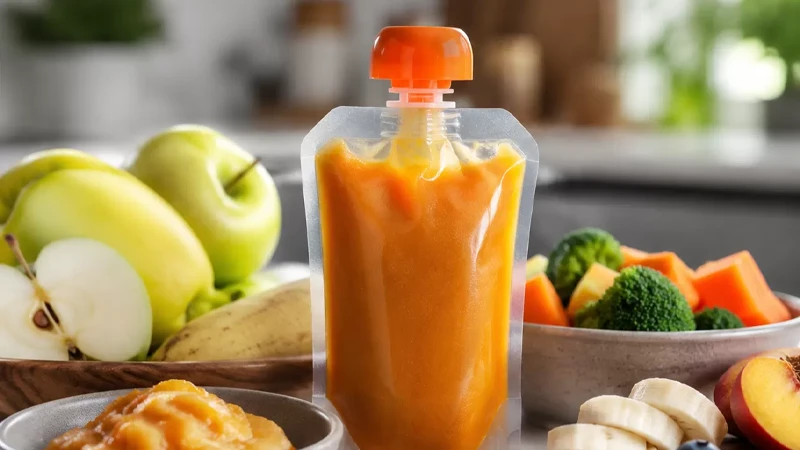
Aseptic spout pouches represent a major shift in modern baby food packaging, combining sterile processing with flexible design. Unlike traditional packaging, the aseptic process sterilizes the food product and the packaging separately. The baby food is then filled and sealed in a completely sterile environment. This advanced manufacturing method ensures the final product remains free of bacteria and contaminants without requiring chemical preservatives.
Key Features of Aseptic Baby Food Packaging
The high adoption rate of aseptic spout pouches in the United States commercial market stems from their specialized, multi-layer material engineering.
- Multi-Layer Barrier Protection: Typically constructed from laminates of polyethylene (PE), aluminum foil, and polyethylene terephthalate (PET) to block oxygen, light, and moisture.
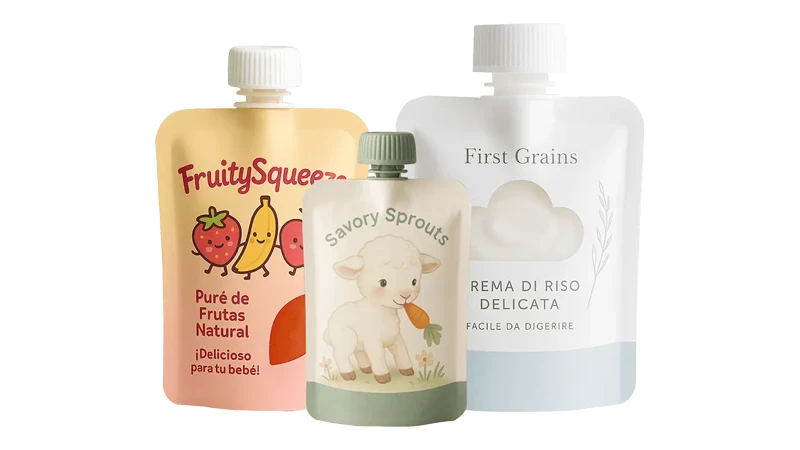
- Tamper-Evident Spouts: Equipped with choking-hazard safe, large-diameter caps featuring integrated safety rings to guarantee product integrity.
- Hermetic Resealability: High-performance spouts allow parents to cleanly reclose the pouch if the child does not finish the meal in one sitting.
- BPA-Free Materials: Manufactured strictly with non-toxic, food-grade polymers that comply with FDA infant health standards.
| Component | Primary Material | Main Function |
|---|---|---|
| Outer Layer | PET / OPA | High tensile strength, puncture resistance, and printability |
| Barrier Layer | Aluminum Foil / AlOx Coating | Complete block against UV light, oxygen, and moisture |
| Inner Layer | Food-Grade PE | Safe direct product contact and reliable thermal sealing |
| Spout & Cap | HDPE (BPA-Free) | Structural integrity, choke prevention, and airtight resealing |
Common Baby Food Products Using Spout Pouches
Our aseptic spout pouches accommodate a wide range of product viscosities and nutritional formulations popular in the American infant nutrition sector.
- Organic Fruit and Vegetable Purees: Smooth blends of apples, bananas, sweet potatoes, and spinach that retain their natural color and vitamin profiles.
- Yogurt and Dairy Blends: Shelf-stable dairy formulations, smoothies, and probiotics that remain stable without refrigeration before opening.
- Infant Cereals and Grain Porridges: Ready-to-feed oatmeal, quinoa, and rice blends mixed with milk or fruit bases.
- Thicker Meat and Vegetable Stews: High-protein, savory purees containing chicken, beef, or lentils engineered for stage-2 and stage-3 infant feeding.
Why Baby Food Brands Prefer Aseptic Spout Pouches
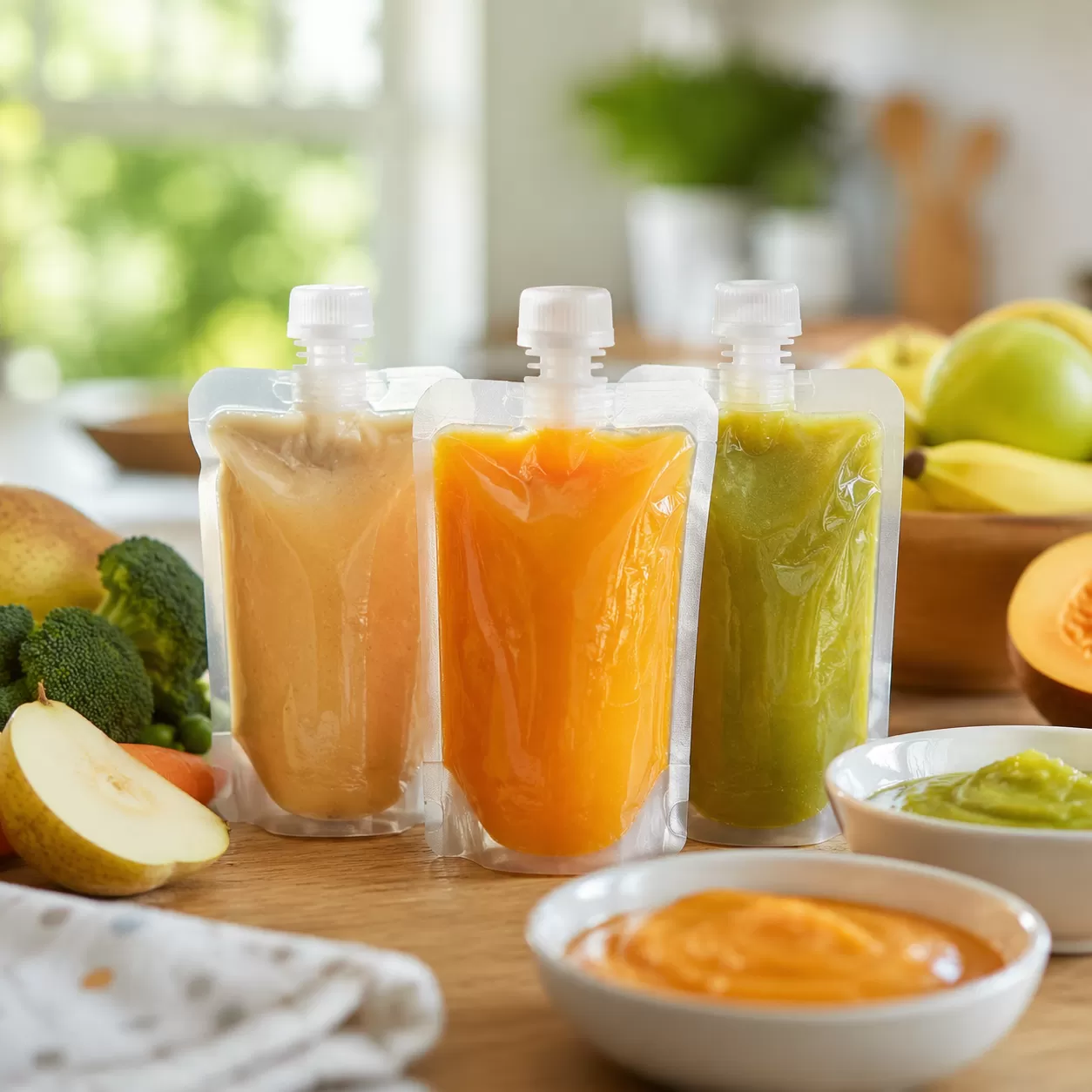
We are seeing a massive shift in how companies package early-childhood nutrition. Driven by modern parenting trends and strict quality standards, more baby food brands are switching to aseptic spout pouches to stay competitive in the US market.
Longer Shelf Life Without Refrigeration
Maintaining product freshness from the factory to the high chair is a major challenge. Aseptic processing fills sterile food into sterile pouches under a completely sterile environment.
- No Cold Chain Needed: These pouches keep baby food fresh on ambient grocery shelves for months.
- Reduced Food Waste: Retailers get a longer sell-through window, and parents can stock up their pantries without worrying about immediate expiration dates.
- Preserved Nutrition: Because the food doesn’t undergo prolonged high-heat retorting inside the final package, vitamins and natural flavors remain intact.
Better Product Safety and Freshness
Safety is the number one priority for American parents. Aseptic spout pouches offer multi-layer barrier protection that shields delicate purees from light, oxygen, and moisture.
| Safety Feature | Benefit to Baby Food Brands |
|---|---|
| Tamper-Evident Caps | Gives parents peace of mind that the product hasn’t been opened. |
| BPA-Free Materials | Meets strict US food safety compliance standards for infant health. |
| Zero Preservatives | Allows brands to market clean-label, organic ingredients safely. |
Convenient for Parents and Children
Today’s parents are busier than ever, making convenience a deciding factor at the supermarket shelf. This packaging format aligns perfectly with active, on-the-go lifestyles.
- Self-Feeding Design: The integrated spout allows toddlers to easily feed themselves, promoting motor skills.
- Mess-Free Portability: Unlike breakable glass jars, lightweight pouches won’t shatter in a diaper bag and can be re-sealed with a quick twist of the cap.
- Easy Dispensing: Parents can squeeze the exact amount needed directly onto a spoon or into a bowl, eliminating waste.
Aseptic Spout Pouches vs Traditional Packaging
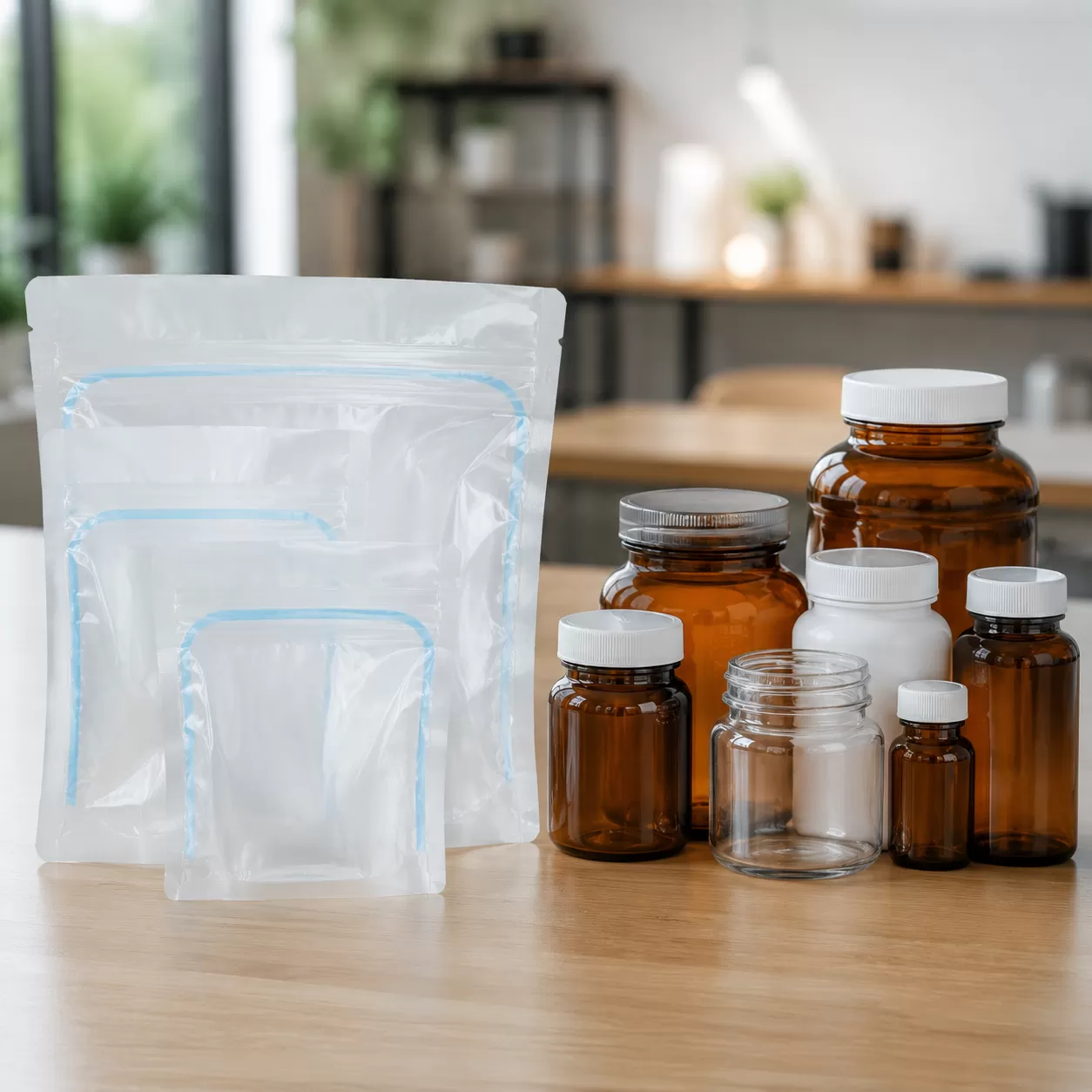
When looking at the shift toward aseptic spout pouches, traditional options like glass and rigid plastic just can’t keep up. Modern parents demand convenience, and our supply chains require efficiency. Pouches deliver on both fronts in ways old-school packaging never could.
Comparison with Glass Jars
For decades, glass jars were the standard for baby food. However, today’s market demands better performance, safety, and lower shipping overhead.
- Shatter Risk: Glass breaks easily, creating safety hazards during shipping and feeding. Pouches are completely shatterproof.
- Weight & Bulk: Glass is heavy and takes up massive warehouse space. Pouches ship flat, drastically lowering fuel costs and emissions.
- User Experience: You need a spoon and a separate dish for glass jars. Spout pouches allow for direct feeding, making them perfect for on-the-go parents.
Comparison with Plastic Bottles
While rigid plastic bottles solve the breakage issue, they still fall short when compared to the benefits of why baby food brands are switching to aseptic spout pouches.
- Product Freshness: Traditional plastic bottles often require chemical preservatives or high-heat pasteurization that strips away nutrients. Our aseptic pouches use multi-layer barrier films to lock in nutrients and flavor naturally.
- Total Product Evacuation: Kids and parents can squeeze every last drop out of a flexible pouch. Rigid plastic bottles trap leftover food inside, leading to unnecessary product waste.
- Storage Efficiency: Empty plastic bottles take up the same amount of space whether they are full or empty. Pouches optimize storage before and after filling.
At a Glance: Pouches vs. Traditional Packaging
| Feature | Aseptic Spout Pouches | Glass Jars | Plastic Bottles |
|---|---|---|---|
| Shatterproof | Yes | No | Yes |
| Preservative-Free Shelf Life | Yes (Aseptic) | No (Requires high heat) | Seldom |
| Lightweight / Low Freight Cost | Excellent | Poor | Moderate |
| On-the-Go Feeding Convenience | High (Direct pouch-to-mouth) | Low (Requires utensils) | Moderate |
| Space-Saving Storage | Yes (Ships flat) | No | No |
Cost and Sustainability Advantages
Switching our baby food lines to aseptic spout pouches isn’t just about safety and convenience—it also dramatically improves the bottom line and reduces our environmental footprint. For brands looking to scale in the United States market, the financial and eco-friendly benefits of this packaging shift are impossible to ignore.
Lower Transportation Costs
Shipping heavy, bulky traditional packaging across the country drains margins quickly. Aseptic spout pouches completely change the logistics game.
- Maximum Space Efficiency: Unfilled pouches ship flat, taking up a fraction of the space required by empty glass jars or rigid plastic bottles.
- Optimized Truckloads: We can fit significantly more product into a single shipping truck, drastically cutting down the number of freight trips needed.
- No Cold Chain Needed: Because the aseptic process ensures shelf-stability at room temperature, we eliminate the high costs of refrigerated transport.
Reduced Packaging Weight
In the shipping world, less weight equals less expense. Lowering the physical mass of our product packaging yields immediate savings.
| Packaging Type | Average Weight | Freight Efficiency |
|---|---|---|
| Traditional Glass Jar | High | Low (requires heavy protective dividers) |
| Rigid Plastic Bottle | Moderate | Medium (bulky, wastes space) |
| Aseptic Spout Pouch | Extremely Low | High (lightweight, flexible, shatterproof) |
By cutting out the dead weight of heavy glass or thick plastic, we minimize fuel consumption during distribution while protecting profits from rising freight surcharges.
Eco-Friendly Packaging Trends
Modern parents in the United States actively seek out brands that align with their environmental values. Choosing aseptic baby food packaging helps meet that demand head-on.
- Lower Carbon Footprint: The manufacturing and transportation of lightweight pouches generate significantly fewer greenhouse gas emissions compared to glass or rigid plastics.
- Source Reduction: Pouches use less raw material from the start, meaning less waste enters the lifecycle.
- Smarter Resource Use: Our streamlined production uses less water and energy, giving us a powerful, authentic sustainability narrative that resonates with eco-conscious consumers.
Choosing a Baby Food Pouch Packaging Supplier
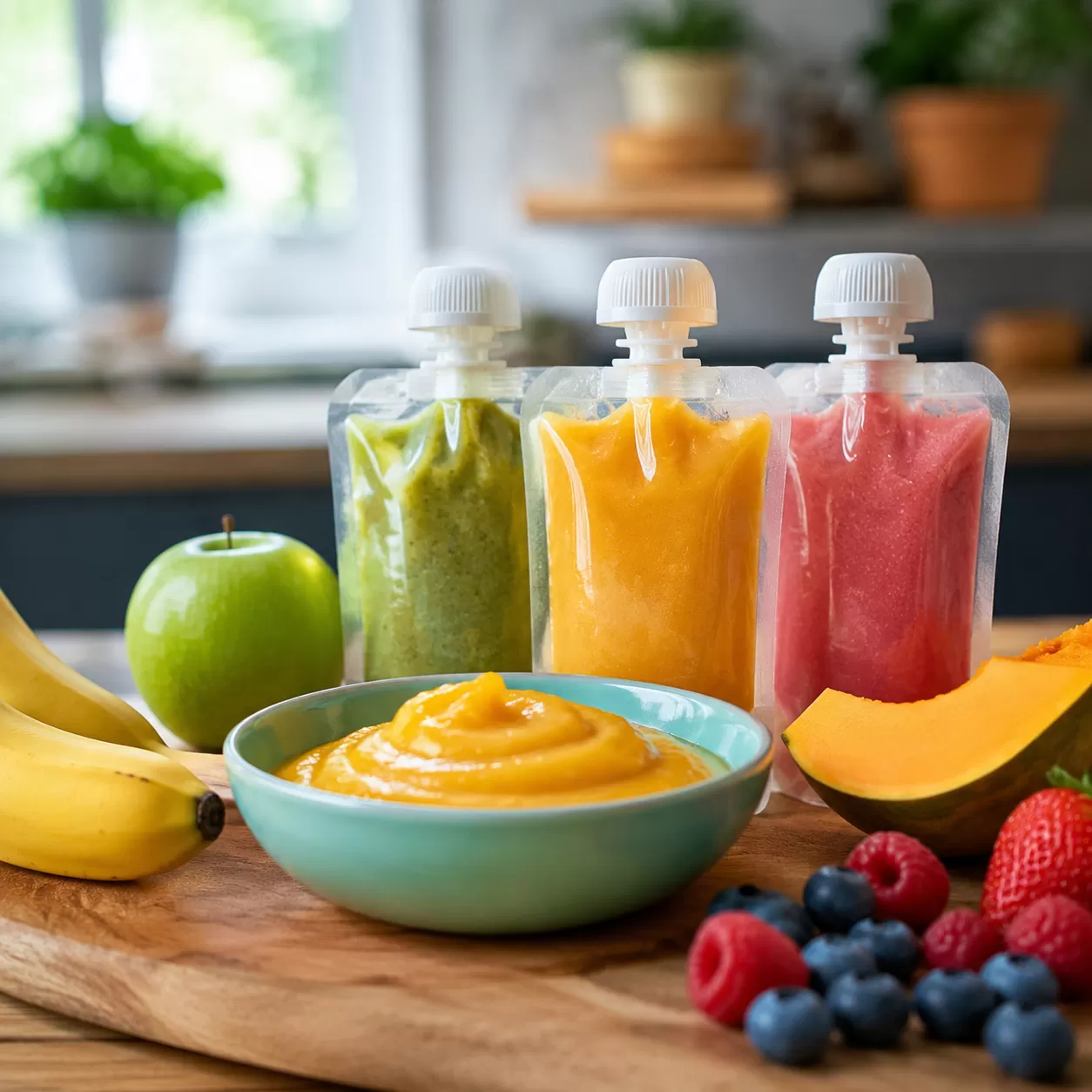
Finding the right manufacturing partner is everything when you are bringing a product to market. In the United States, parents expect absolute safety, and retail buyers demand reliable supply chains. When evaluating a baby food pouch packaging supplier, we focus on three non-negotiable pillars: strict certifications, design flexibility, and scalable production.
Food-Grade Material Certifications
Safety is our absolute baseline. The U.S. market has a zero-tolerance policy for chemical leaching in infant products. We require suppliers to provide verified documentation proving their materials are completely safe for high-heat aseptic processing and long-term shelf storage.
| Certification | What It Guarantees for Baby Food Pouches |
|---|---|
| FDA Compliance | Materials are fully cleared for direct food contact under U.S. regulations. |
| BPA-Free & Phthalate-Free | Ensures zero harmful plasticizers leach into the purees. |
| BRCGS / SQF | Global food safety standards that prove the packaging facility maintains strict hygiene. |
Custom Printing and Spout Options
To win on crowded American grocery shelves, your packaging needs to stand out while remaining highly functional. We look for suppliers offering advanced structural and visual customization to match our brand’s unique selling points:
- Choke-Proof Caps: Large, cross-shaped, or structured spouts designed specifically to prevent swallowing hazards for infants.
- Tamper-Evident Seals: Clear, broken-ring indicators that give parents instant peace of mind that the product hasn’t been opened.
- High-Definition Printing: Rotogravure or flexographic printing that ensures vibrant colors, clean text, and clear nutritional labels.
- Clear Windows: Strategically placed transparent sections so parents can see the freshness and color of the food inside before buying.
Production Capacity and Quality Control
A great pouch design means nothing if your supplier can’t keep up with your growth or delivers defective batches. Aseptic spout pouches require perfect seals to maintain sterility, making automated quality checks mandatory.
- Defect Testing: The supplier must run real-time burst testing and seal-integrity checks on every batch to prevent leaks and contamination.
- Scalable Output: They need high-capacity forming and spouting machinery to easily scale from initial test runs to massive retail rollouts.
- Lead Time Consistency: Reliable domestic logistics or established shipping pipelines to ensure we never face out-of-stock situations at retail locations.
The Future of Baby Food Packaging
The shift toward aseptic spout pouches isn’t just a passing trend—it’s the future of the industry. For baby food brands looking to stay competitive in the United States market, switching to this modern packaging format is a smart, strategic move. It directly addresses what today’s parents care about most: safety, freshness, and ultimate convenience.
By upgrading to aseptic pouches, brands can deliver high-quality, shelf-stable baby food that meets strict safety standards while lowering shipping costs and reducing environmental impact. Making the switch means positioning your brand as a modern, trustworthy choice for the next generation of parents.