
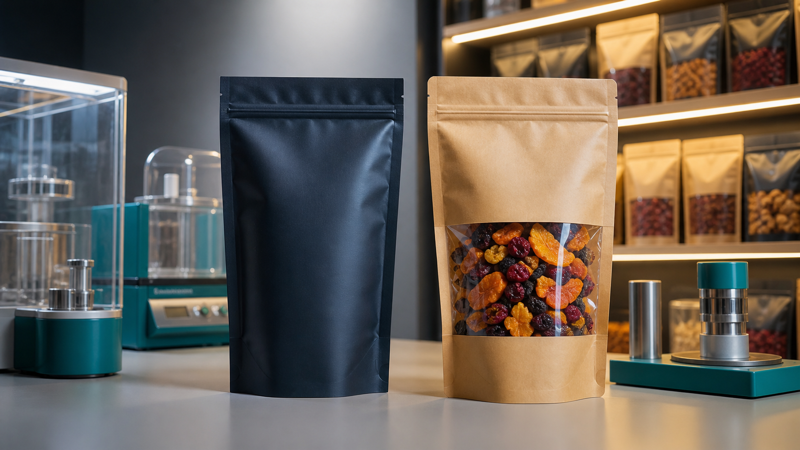
A clear window lets shoppers see the product before buying it. The feature can communicate freshness, texture, color, portion size, and authenticity more quickly than a photograph. It can also weaken light, oxygen, or moisture protection if the window replaces part of a high-barrier layer. The design challenge is to reveal enough product to build confidence without shortening shelf life or creating an inconsistent retail appearance.
The right decision depends on the product’s sensitivity, target shelf life, storage conditions, window size and position, package structure, and marketing value. A window is not simply an unprinted area. Its performance is determined by which barrier layers remain transparent and which are removed, interrupted, or replaced.
Why Windows Increase Shelf Appeal
Product visibility reduces uncertainty. Consumers can assess whole coffee beans, dried fruit, nuts, candy, grains, tea leaves, pet treats, or handmade products directly. Natural variation may reinforce authenticity, especially in kraft or paper-look packaging. A window can also help distinguish flavors and sizes without adding more printed imagery.
The window should support the brand hierarchy rather than compete with it. Its shape can frame the product, create negative space, or become part of an illustration. However, complex registered windows require precise alignment between printing, white ink, metallization, lamination, and pouch cutting. Simpler shapes generally tolerate process variation better.
What Barrier Can Be Lost
Barrier pouches control oxygen, water vapor, light, aroma transfer, and sometimes grease or chemical migration. Foil and opaque high-barrier structures can block light and provide very low gas transmission. A transparent window cannot use ordinary aluminum foil in the viewing area, so the design may rely on a clear polymer, clear coating, or localized absence of a metallized layer.
The window area can become the fastest pathway through the package. Overall shelf-life performance is not the average visual impression of the laminate; it is the combined transfer through every area, seal, fold, and closure. Even a relatively small window can matter when the product is extremely oxygen-sensitive or when the rest of the pouch has very high barrier.
Light is separate from oxygen and moisture. A clear high-barrier coating may reduce gas transmission while still allowing visible and ultraviolet light to reach the product. Oils, pigments, vitamins, flavors, and natural colors can degrade under retail illumination. If light sensitivity is significant, window size and placement may need to be restricted even when OTR and WVTR look acceptable.
Understand How the Window Is Made
One common approach uses transparent film throughout the pouch and creates opaque printed or white-backed areas around a clear zone. This produces a true see-through window but gives the entire structure the barrier performance of the transparent laminate. It is common in transparent coffee bags and other products where visibility is central.
Another approach uses metallized film with a registered demetallized window. The metal layer is selectively removed so a clear shape remains while the rest retains metallic appearance and higher light barrier. Registration and edge quality are important, and the local clear area still has different barrier behavior.
Paper-look structures may combine paper with a transparent film window. The opening can be cut from the paper layer while continuous film maintains package containment. In other designs, the “paper” appearance is printed on film and the window is simply left unprinted. The construction affects barrier, recyclability claims, sealability, and tactile feel.
Products marketed in rice paper bags may use a translucent or frosted appearance rather than a completely clear view. This can suggest natural material while partially obscuring cosmetic variation. Always request a layer description because visual terms do not identify the actual substrate.
Match the Window to Product Sensitivity
Dry products with low oxygen and light sensitivity may tolerate a large window, provided moisture barrier remains adequate. Products rich in unsaturated fat, volatile aroma, sensitive vitamins, natural colors, or oxidation-prone ingredients need more caution. Coffee, nuts, powdered supplements, spices, and some dried foods can lose quality long before the package shows a physical leak.
Begin with the deterioration mechanism. If crispness is lost through moisture gain, focus on WVTR and seal integrity. If rancidity or aroma loss is the concern, evaluate OTR, headspace oxygen, light, and closure behavior. If color fades, conduct light-exposure trials under realistic illumination. A generic “high barrier” claim does not answer these product-specific questions.
Shelf life also depends on pack size and turnover. A small pouch consumed quickly may accept a different window than a large resealable pouch stored for weeks after opening. The unopened distribution period and the consumer-use period should be evaluated separately.
Window Size and Position
Use the smallest window that achieves the marketing objective. A narrow vertical strip can show fill level and texture with less transparent area than a full front panel. A small shaped window may reinforce brand identity, while a broad lower window can reveal settling and breakage.
Position the window where product naturally rests. A high window may show empty headspace; a low window may become obscured by gusset folds or bottom seals. Powder can coat the inside surface and make the window cloudy. Oily products may leave smears. Fill trials reveal these issues better than flat artwork.
Keep windows away from seals, zippers, valves, tear paths, and high-flex corners unless the structure is specifically designed for them. The transition between opaque and clear regions should tolerate print and lamination registration. Avoid thin outlines that expose slight movement.
For kraft stand-up pouches, the window should be coordinated with paper shade, white ink, and the opened bottom gusset. A natural kraft panel can make product color look warmer, while a white kraft structure produces a cleaner contrast.
Evaluate the Filled Retail Appearance
Create samples using normal production fill, not specially selected product. Inspect the pouch upright, lying down, partially empty, and after shipping simulation. Observe whether the window shows dust, crumbs, oil, condensation, oxygen-absorber sachets, desiccants, or scoops that should not dominate the presentation.
Confirm barcode and required-copy contrast. Product color behind clear film is not a controlled background. Small text or codes should have an opaque white panel when consistent readability is required.
Test Shelf Life With the Final Window
Flat-film barrier data is useful for screening, but the finished window pouch must be tested. Measure or model the complete structure using the actual window proportion and package area. Include seals, zipper, valve, and gusset when they can influence performance.
Run comparative product trials with a full-barrier control and the proposed window design. Store samples under expected and accelerated conditions, while avoiding temperatures that create unrealistic failure mechanisms. Evaluate sensory quality, moisture, texture, oxidation markers, color, aroma, nutrient retention, and microbial safety where applicable.
Include retail light exposure rather than storing every sample in dark cartons. Orient some windows outward and some inward to understand the effect of display. For coffee, the guide to paper window bags for coffee provides category context, but the actual roast, degassing, distribution, and target shelf life still require validation.
After opening, repeat realistic consumer cycles. Open the zipper, remove product, reclose, and return the pack to typical storage. A window may be less important than repeated air exchange during use, but both effects belong in the final shelf-life conclusion.
Recyclability and Material Claims
A window can complicate material claims when it introduces a different polymer or combines paper and plastic. A mono-material transparent window may be compatible with the surrounding film family, while a glued-in window or paper-film laminate may follow a different recovery route. Local collection and labeling rules vary.
Do not assume that a paper appearance or small window makes a package recyclable. Document the complete structure, adhesives, coatings, inks, zipper, and window. Sustainability claims should be supported for the market in which the pouch is sold and kept separate from shelf-life claims.
Window Decision Checklist
- Identify the product’s sensitivity to oxygen, moisture, light, aroma loss, and grease.
- Define the minimum window area needed to deliver the marketing benefit.
- Confirm exactly which layers continue through the clear area.
- Position the window around real fill level, settling, dust, oil, and gusset behavior.
- Protect seals, zippers, valves, tear paths, barcodes, and required copy.
- Review production registration tolerance for printed, white, and demetallized edges.
- Test finished filled pouches against a full-barrier control under light and distribution conditions.
- Verify the complete structure before making recyclability or material claims.
A clear window is valuable when the visible product strengthens trust and the package still protects its quality. Use product sensitivity to set the barrier requirement, minimize and position the window deliberately, and validate the finished pack rather than relying on flat-film claims. Shelf appeal and shelf life do not have to be opposites, but their balance must be engineered.