Coffee Pouch Sizes: The Standard Lineup
Coffee pouch sizes follow a deceptively simple ladder: 2 oz samples, 4–6 oz retail trial bags, the 12 oz shelf standard, the 1 lb (16 oz) classic, and 2–5 lb cafe formats. But the pouch you need depends on one variable most brands overlook — whether the beans are whole or ground, because grind changes volume by up to 40%. The chart below is the practical starting point used across the specialty coffee industry.
| Pouch Size | Whole Bean Fill | Ground Coffee Fill | Typical Width | Best For |
|---|---|---|---|---|
| 2 oz (57 g) | 1–2 brews | 3–4 brews | 2.5″–3″ | Samples, subscriptions |
| 4 oz (115 g) | 5–6 brews | 8–10 brews | 3.5″ | Single-origin trial bags |
| 6 oz (170 g) | 8–9 brews | 12–14 brews | 4″ | Gift sets, office sizes |
| 12 oz (340 g) | 17–18 brews | 24–25 brews | 4.5″–5″ | The retail shelf standard |
| 16 oz / 1 lb (454 g) | 23–24 brews | 33–34 brews | 5.5″–6″ | Cafe wholesale, loyal buyers |
| 2 lb (907 g) | 47 brews | 67 brews | 7″–8″ | Offices, families |
| 5 lb (2.27 kg) | 118 brews | 168 brews | 9″–10″ | Back-of-house cafe stock |
Brew counts assume 15 g of coffee per cup for whole bean and 10 g for ground filter brewing. Whether you sell roasted or green coffee also matters — green beans are denser and ship differently, as covered in our guide to packaging green coffee beans for export.
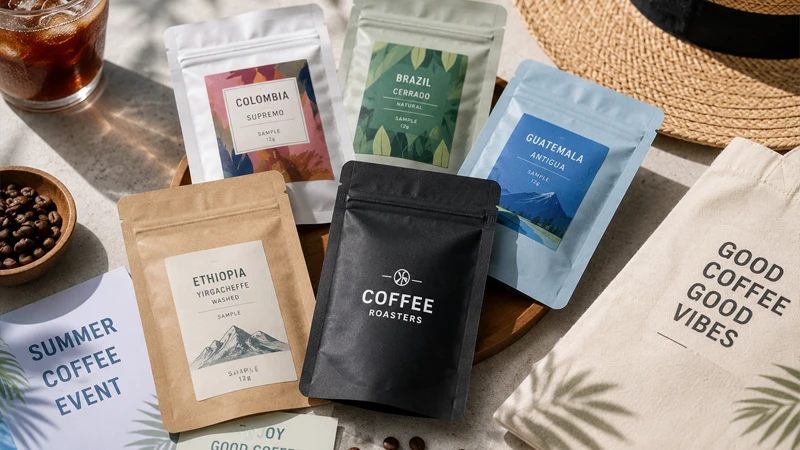
This guide breaks coffee pouch sizes down by fill weight, grind type, and sales channel, so your next order fits the beans instead of the other way around.
In this guide:
- Whole bean vs ground: the volume trap
- Features that change your coffee pouch size
- Sizing sample and single-serve formats
- Matching pouch size to sales channel
- FAQ
Whole Bean vs Ground: The Volume Trap in Coffee Pouch Sizing
Whole beans are irregular spheres with air between them, settling at roughly 0.35–0.40 g/ml. Ground coffee packs tighter at 0.45–0.50 g/ml, a difference created at the roasting and grinding stage. Translate that to real orders:
- A pouch engineered for 12 oz of grounds looks half-empty with 12 oz of whole beans, and the loose beans hammer the bag during shipping.
- A pouch sized for whole beans will overflow if a co-packer fills it with fine espresso grind.
The fix is to spec the pouch against your grind and run a physical fill test at 80% fill plus 20–30% headspace for nitrogen flush. Brands selling both formats usually add half an inch of width for the whole bean SKU rather than carrying two separate die lines. Getting coffee pouch sizes wrong here is the most expensive mistake in the category, because the error repeats on every single production run. Subscription shippers have a third constraint: carrier dimensional-weight brackets, which we analyzed in coffee packaging for subscription shipping.
Features That Change Which Size You Need
Two bags with identical coffee pouch sizes on paper can hold very different amounts of coffee once valves, zippers, and stiff films take their share.
- One-way degassing valve: freshly roasted coffee releases CO2 for days. The valve needs a clear 1″ patch on the face, and placement affects usable width. See the placement science in coffee bag valve placement.
- Zipper vs tin-tie: a press zipper consumes ~0.7″ of height above the fill line; a tin-tie consumes width at the fold. Compare the two in tin ties vs zippers for coffee bags.
- Material stiffness: high-barrier foils stand stiffer and need slightly wider bases, while compostable films slump earlier — a real constraint on the 6 oz and smaller formats. Our overview of coffee bag materials maps materials to sizes.
- Shape: stand-up is the default, but side-gusset bags still dominate 1 lb wholesale in Europe, and flat-bottom formats maximize shelf facade. The trade-offs live in what are stand up coffee bags.
Sizing Sample and Single-Serve Formats
Sample pouches are a growth channel, not an afterthought. The winning spec for cupping events and first-order trials is 50–60 g (2 oz) in a 2.5–3″ wide pouch with a valve but no zipper — cheap enough to attach to every order, big enough for two full pour-over brews. Roasters running market stalls report the best conversion when the sample pouch price lands under $5 and visibly matches the flagship design language.
Treat coffee pouch sizes as a ladder: the sample run feeds the 4 oz trial, which feeds the 12 oz flagship. For events and summer promos, smaller runs of 4 oz pouches in seasonal prints outperform deep discounts on the 12 oz flagship — the economics are laid out in our piece on small coffee pouches for samples and events.
Matching Pouch Size to Sales Channel
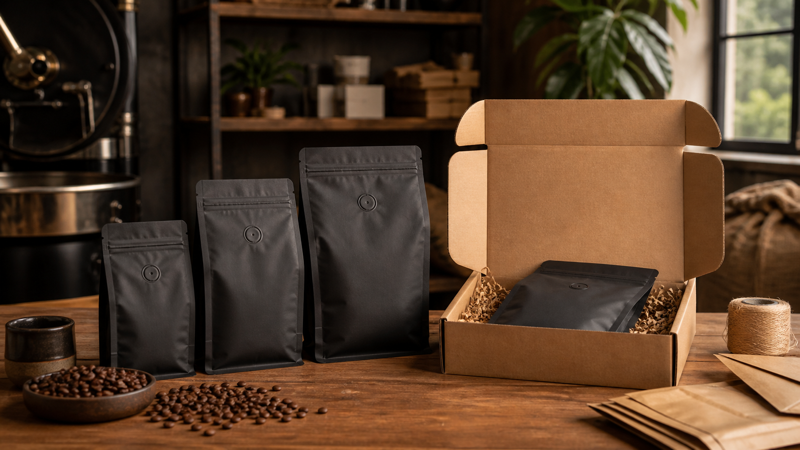
- Retail grocery: planograms favor 10–12 oz pouches with a 4.5–5″ face; anything over 7″ wide risks losing the clip strip slot.
- Specialty cafe wholesale: the 12 oz bag with valve and zipper remains the default; cafes prize consistent case counts, not novelty sizes.
- E-commerce subscriptions: 12 oz and 2 lb pouches dominate; keep total packed height under the carrier’s 12″ bracket to avoid dim-weight surcharges.
- Office and foodservice: 2–5 lb foil pouches with heavy-duty seals, optimized for storage life rather than shelf display.
FAQ
What size pouch do I need for 1 lb of coffee?
This is the question that sends most brands back to their coffee pouch sizes chart — the answer is not one number.
For 16 oz of whole beans, spec a 5.5–6″ wide stand-up pouch with roughly 9–10″ height and a 3″ gusset, filled to 80%. For ground coffee at the same weight, 5–5.5″ wide is enough. Always confirm with a physical fill test including your valve and zipper clearances.
How many cups does a 12 oz bag of coffee make?
Cup counts are the easiest way to sanity-check coffee pouch sizes against what customers actually brew.
About 17 cups from whole beans (15 g per cup) or 24 cups from ground (10 g per cup). That brew-count math is exactly why 12 oz became the retail standard: it promises roughly three weeks of daily coffee for one person.
Can I use the same pouch size for whole bean and ground?
Out of all coffee pouch sizes decisions, this one causes the most reorders. Only if you spec it for the larger-volume format (whole bean) and accept slightly fuller fill on the ground SKU. Do it the other way around and the whole-bean bags will look half empty — the number one complaint in coffee pouch reviews.
What is the smallest coffee pouch worth printing?
At digital print minimums (typically 5,000–10,000 units), 2 oz sample pouches are the practical floor. Below that, pre-made stock pouches with a label usually beat custom printing on cost until your sample program justifies its own run. Print economics, not coffee pouch sizes, set that floor.
Getting Coffee Pouch Sizes Right the First Time
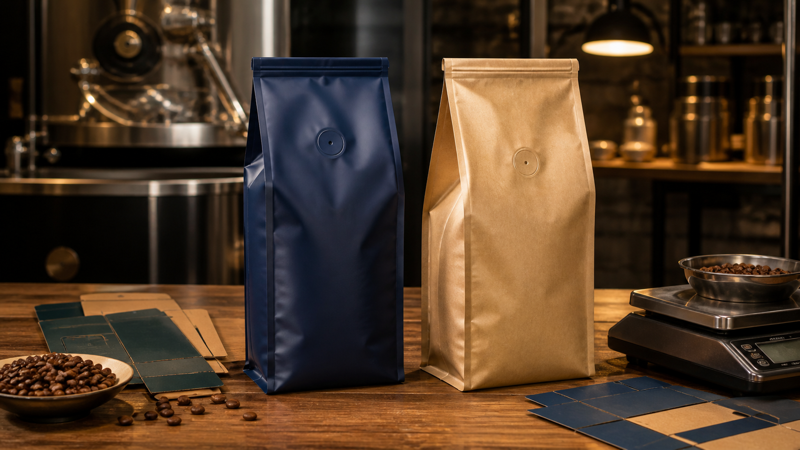
Choosing coffee pouch sizes starts from your roast profile and grind, not from a competitor’s bag. Map fill weight to the chart, add headspace for the valve and nitrogen flush, then fill-test before ordering. Brands that skip the fill test almost always resize within two production runs — an expense that one sample order avoids. Nailing coffee pouch sizes before the first print run is the cheapest packaging decision you will ever make.
If you are launching a new size or refreshing a line, our team supplies custom coffee pouches from 2 oz samples to 5 lb cafe formats with valves, zippers, and low minimums. Tell us your fill weight and channel, and we will send a size-matched sample kit.