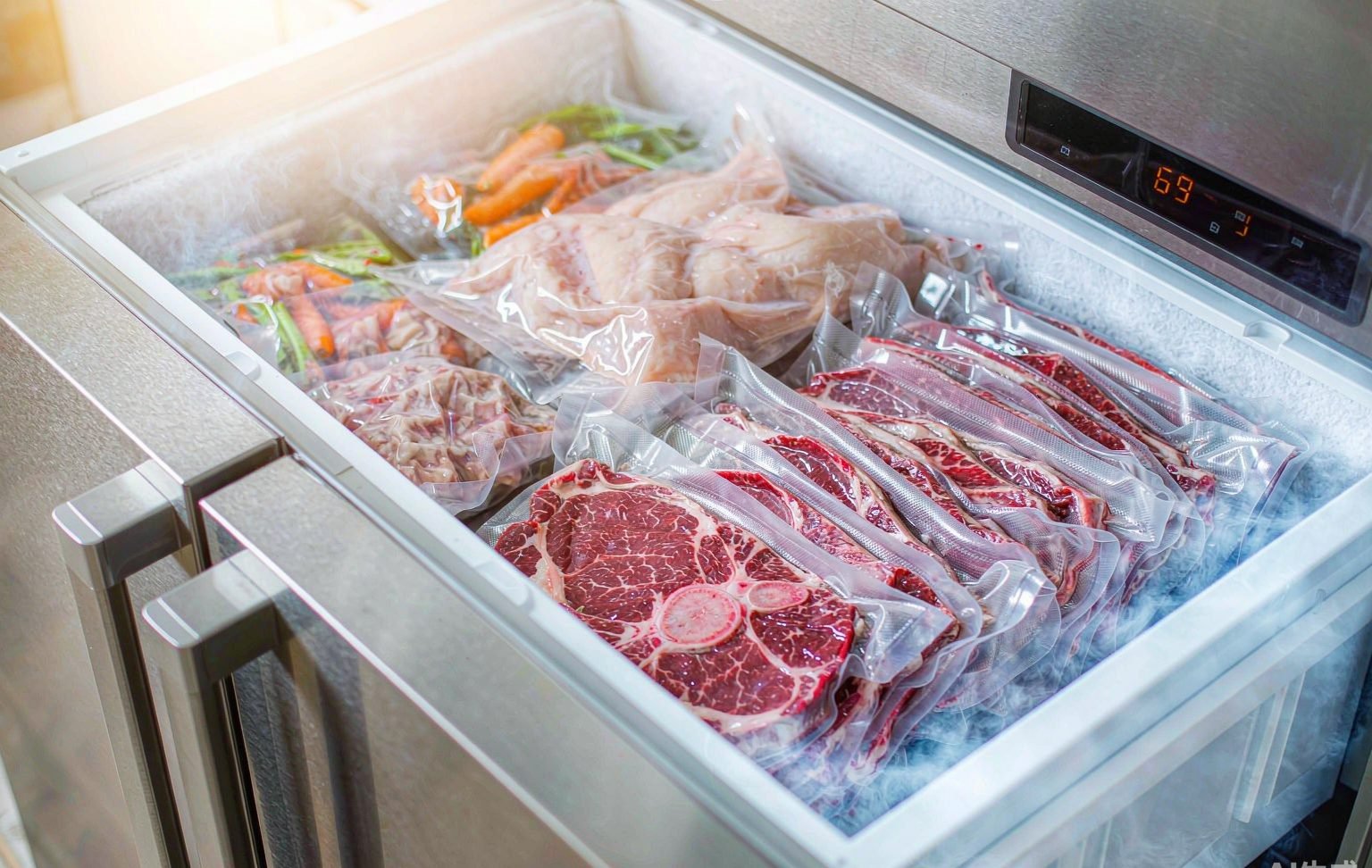
Quick Answer: Can You Freeze Vacuum Seal Bags?
Yes, you can freeze vacuum seal bags, and it is the best method for long-term freezer storage: vacuum sealing removes the air that causes freezer burn, keeping meat at peak quality for 2–3 years instead of 3–6 months in regular freezer bags. Food-grade PA/PE vacuum seal bags are rated to −40°C, far below a home freezer’s −18°C setting. But can you freeze vacuum seal bags of anything? Not quite — hot food must cool first, liquid-heavy foods need freezing before sealing, and sharp foods like pasta need a barrier layer so they do not puncture the film. Follow the seven rules below and your vacuum-sealed food will survive a full year without quality loss.

| Food | Regular freezer bag | Vacuum sealed | Freezer-safe? |
|---|---|---|---|
| Beef steaks / roasts | 6–12 months | 2–3 years | Yes — dry surface essential |
| Ground meat | 3–4 months | 1 year | Yes — flatten before sealing |
| Fish & seafood | 2–3 months | 1–2 years | Yes — pre-freeze 30 min |
| Chicken pieces | 9 months | 1–2 years | Yes — pat skin dry |
| Berries & fruit | 6–8 months | 1–2 years | Yes — freeze whole first |
| Bread & baked goods | 2–3 months | 1 year | Yes — squeeze mode |
| Soups & stews | 2 months | 1 year | Freeze solid first, then seal |
The chart answers can you freeze vacuum seal bags for the seven foods home freezers handle most — and the rules below keep those numbers honest.
In this guide:
- Why vacuum sealing beats freezer burn
- 7 rules for freezing vacuum seal bags
- Food safety and thawing
- Common mistakes to avoid
- FAQ
Why Freezing Vacuum Seal Bags Stops Freezer Burn
Freezer burn is dehydration, not actual burning. Cold freezer air is extremely dry, and any food surface exposed to air loses moisture by sublimation, leaving the gray, leathery patches that ruin texture. A regular zipper bag traps a pocket of humid air against the food, and that air is enough to burn exposed surfaces within weeks. That failure mode is why the question can you freeze vacuum seal bags matters at all: the answer is yes, because the film removes the air a zipper bag leaves behind. When you freeze vacuum seal bags properly, the film contacts the food surface directly with less than 1% residual oxygen, so sublimation has nowhere to draw from.
The film itself matters as much as the air removal, and it is why the question can you freeze vacuum seal bags has a different answer for different bag types: quality PA/PE laminate tolerates −40°C without cracking, while single-layer PE — the thin kind sold for sandwiches — turns brittle at freezer temperatures. If you are comparing the wider family of sealing products, our tests answering can you microwave vacuum seal bags and can you boil vacuum seal bags cover the heat side of the same temperature rating question.

7 Rules for Freezing Vacuum Seal Bags
Knowing that you can freeze vacuum seal bags is only the start; the technique around the machine decides whether the seal survives a year in the freezer. These seven rules cover the failure points.
- Rule 1 — Cool food completely before sealing. Warm food releases steam that dilutes the seal area and the vacuum pump struggles against vapor. Chill cooked food in the refrigerator until it reaches 5°C or below, then seal. This is the same principle that makes hot-fill vs retort processing decisions important in commercial packaging.
- Rule 2 — Freeze liquids solid first. Soups, marinades, and stew bases will be sucked into the pump if sealed as liquid. Pour them into the bag, stand it upright in a container, freeze solid, then vacuum seal the frozen block. This trick is what makes can you freeze vacuum seal bags a yes even for stew portions.
- Rule 3 — Pre-freeze soft and wet foods 30–60 minutes. Berries, fish fillets, and sliced fruit release juice under vacuum pressure, a detail everyone asking can you freeze vacuum seal bags for soft foods learns the hard way. A short uncovered tray-freeze firms the surface so the seal line stays dry and clean.
- Rule 4 — Leave 5–7 cm of bag above the food. Everyone asking can you freeze vacuum seal bags without bursts needs headspace: the machine needs flat film to pull vacuum across, and freezing expands food slightly. A bag filled to the zip line will burst its seal as contents expand.
- Rule 5 — Wrap bones and sharp edges. A beef rib or pasta corner pierces PA film under the 90% vacuum pressure. Wrap sharp items in a layer of parchment or use an 8-mil textured bag before sealing.
- Rule 6 — Flatten ground meat and liquids. A 2 cm thick brick thaws in 30 minutes under cold water, while a lumpy 8 cm bag takes hours and spends dangerous time in the food-safety danger zone between 4°C and 60°C.
- Rule 7 — Label with contents AND date. Vacuum-sealed food looks identical after a year, and beef, pork, and venison blocks are indistinguishable. Write on the bag before sealing because marker will not stick to frost afterward.

Food Safety and Thawing Frozen Vacuum-Sealed Food
One warning matters more than any other: never thaw vacuum-sealed food at room temperature in a sealed bag. Some anaerobic bacteria, including the type that produces botulism toxin, grow in low-oxygen environments at temperatures above 4°C, even while the food still smells and looks fine.
The safe thawing paths are: in the refrigerator overnight (the gold standard, 12–24 hours for a typical portion), submerged in cold water with the bag still sealed (30–60 minutes for flattened portions, changing water every 30 minutes), or in the microwave on defrost for immediate cooking.
Once thawed, treat vacuum-sealed food like fresh food: cook within 1–2 days for meat and fish. Do not re-seal and re-freeze thawed raw meat, because each thaw cycle bursts cell walls and the second freeze produces poor texture plus faster bacterial growth. The low-oxygen environment that protects your steak also protects Clostridium botulinum spores, which is why temperature discipline — not just the seal — completes the answer to can you freeze vacuum seal bags safely.
Common Mistakes When You Freeze Vacuum Seal Bags
Most freezer failures trace back to six repeat offenders. Before blaming the machine, check what actually goes wrong when people ask can you freeze vacuum seal bags but skip the rules above.
| Mistake | What happens | Fix |
|---|---|---|
| Sealing warm food | Steam breaks the seal within days; bag slowly reinflates | Cool to 5°C in the fridge first |
| Overfilling the bag | Seal bursts as food expands at −18°C | Leave 5–7 cm of headspace |
| Using sandwich-grade PE bags | Film cracks and seals fail below −20°C | Use true PA/PE vacuum bags rated to −40°C |
| Sealing wet seal zones | Wrinkled, leaky seal that opens in the freezer | Wipe the inside seal strip dry before the pass |
| Thawing at room temperature | Botulism risk grows in low-oxygen thawed zones above 4°C | Fridge or cold-water thaw, bag still sealed |
| No date label | Mystery blocks after month six | Label before sealing |
For long-term pantry storage alongside your freezer work, note that vacuum sealing dry goods pairs with oxygen absorbers rather than replacing them; our guide to mylar bags with oxygen absorbers for long term storage covers the 5-to-30-year storage system, which answers a different question than freezer storage entirely. Home vacuum machines and commercial chamber sealers differ here too — our jerky-focused comparison of oxygen absorbers vs nitrogen flushing shows how professional operations extend the same freshness logic to retail shelves, a good benchmark once you know you can freeze vacuum seal bags at home.
FAQ: Can You Freeze Vacuum Seal Bags?
Can you freeze vacuum seal bags straight from the supermarket packaging?
Yes, and it is one of the biggest upgrades home freezers can make. Re-pack supermarket trays into vacuum bags within two days of purchase; the original stretch film and foam tray are designed for days of refrigerated display, not months of frozen storage.
Can you freeze vacuum seal bags with liquid inside?
Only after freezing the liquid solid first. Stand the filled bag upright in a container, freeze completely, then vacuum seal the frozen block. Sealing liquid directly will pull it into the pump and ruin the machine.
How long does vacuum-sealed food last in the freezer?
Vacuum sealing typically triples freezer life. The long-term answer to can you freeze vacuum seal bags is: beef roasts and steaks 2–3 years, ground meat 1 year, fish 1–2 years, and bread up to 1 year, versus 3–9 months in regular freezer bags.
Do vacuum seal bags prevent freezer burn completely?
Effectively yes when sealed correctly, because the core of can you freeze vacuum seal bags is air removal: freezer burn requires air contact, and a good vacuum seal leaves less than 1% residual oxygen against the food surface. Burns that still appear usually trace back to a wrinkled seal line or a puncture from sharp food edges.
Can you re-freeze food after thawing it from a vacuum seal bag?
Refreeze only food thawed in the refrigerator and only if it was raw meat that will be cooked immediately after the second thaw. Never refreeze food thawed at room temperature or in the microwave.
The Bottom Line on Freezing Vacuum Seal Bags
So, can you freeze vacuum seal bags? Not only can you — for meat, fish, or bulk-cooked meals it is the highest-impact freezer upgrade available, tripling storage life and eliminating freezer burn when the seven rules above are followed. The formula is simple: cool or pre-freeze before sealing, leave headspace, protect sharp edges, use PA/PE film rated to −40°C, label everything, and thaw only in the refrigerator or cold water. Once you can answer can you freeze vacuum seal bags with a confident yes, treat the temperature side with the same care as the sealing side. For the heat-side equivalents, see our guides on microwaving vacuum seal bags and boiling vacuum seal bags.