
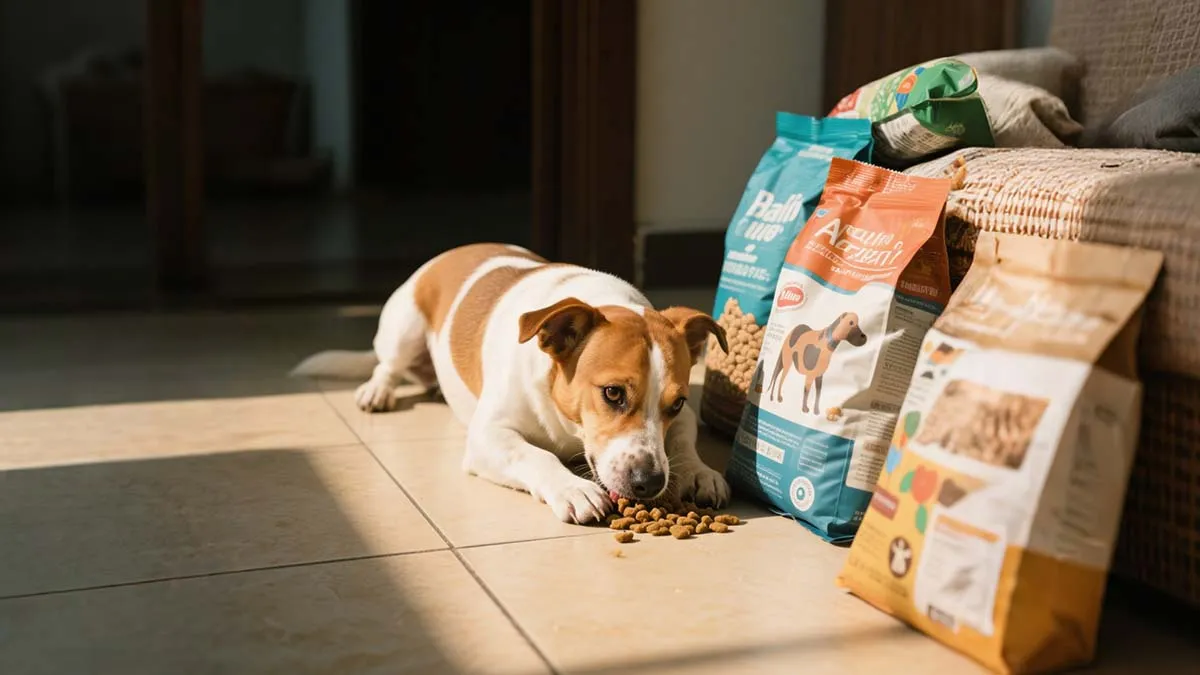
As the pet food market grows, packaging design is gaining more and more attention. Especially for dog food packaging, it not only needs to ensure the freshness of the food and the preservation of nutrients, but also needs to have moisture-proof and waterproof functions. For packaging manufacturers, how to balance waterproof performance with the use of environmentally friendly materials is a key challenge.
Next, we will take a deep dive into the waterproofness of dog food bags, analyze the pros and cons of existing packaging materials, and discuss how to improve packaging quality to meet consumer and environmental requirements.
Common Materials Used for Dog Food Bags
Dog food bags are typically made from a combination of materials, each with its own waterproofing capabilities and environmental characteristics. Understanding these materials helps in choosing the most suitable packaging solution.
Paper Bags and Plastic Bags
- Structure and Characteristics of Paper Bags: Paper bags are typically made with a multi-layer structure to enhance their strength and durability. However, paper itself has a high absorbency, making it susceptible to moisture, which can cause the bag to soften or break. Therefore, pure paper bags have clear limitations in terms of waterproofing.
- Waterproofing of Plastic Bags: Plastic bags (such as polyethylene) offer strong waterproof properties and can effectively prevent moisture from penetrating. They are often used as the inner layer in dog food bags, especially in composite material bags. While the use of plastic improves waterproofing, it presents some challenges in terms of environmental impact.
Composite Material Bags
- Composite Material Bags: Modern dog food bags often use composite materials, which include a combination of paper, plastic, and aluminum foil layers. This structure provides enhanced waterproof and moisture-resistant properties, preventing external moisture and air from affecting the food’s quality. The aluminum foil layer offers excellent airtightness, effectively protecting the dog food from external environmental factors.
- Special Coatings: In some cases, the interior coating of the bag (such as polyethylene coating) helps to enhance the waterproof function. The coating not only prevents moisture penetration but also improves the overall structural strength of the bag.
Waterproof Performance Analysis of Dog Food Bags
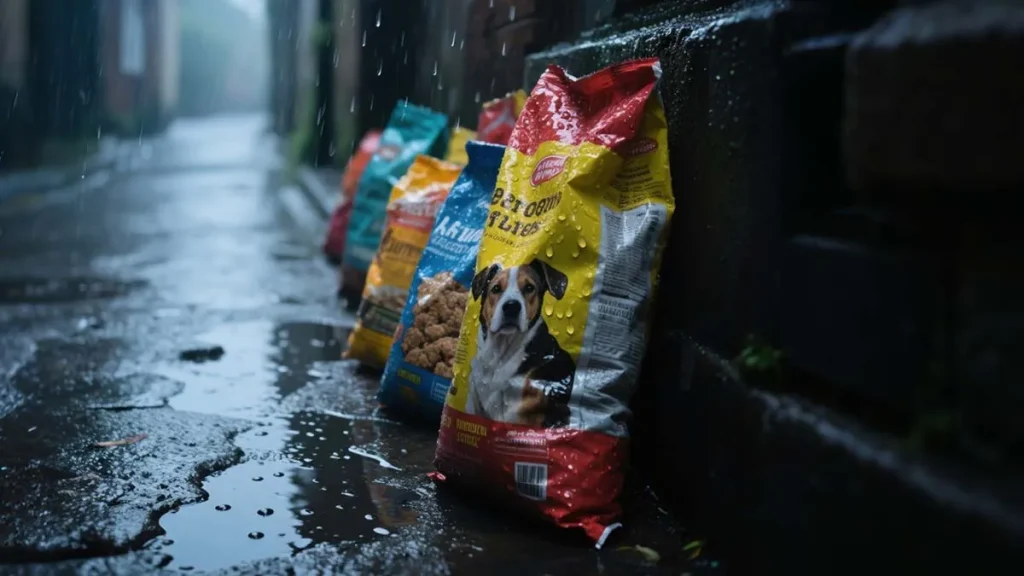
Waterproofing is one of the most important characteristics of dog food bags, as it directly affects the freshness and quality of the food. The waterproof performance varies depending on the materials and design used.
Material Waterproofing Capabilities
- Waterproofing of Paper Bags: Although paper bags offer environmental benefits, natural paper materials are highly absorbent and prone to water penetration. In humid environments, the waterproof effectiveness of paper bags significantly decreases, making them unsuitable for long-term storage of dog food.
- Waterproofing of Plastic Bags: Materials such as polyethylene offer strong moisture resistance and can effectively prevent external moisture from entering the bag. As a result, plastic packaging performs well in keeping dog food dry.
- Waterproofing of Composite Material Bags: Composite material bags combine the advantages of paper and plastic, providing good waterproof performance. The use of aluminum foil further enhances the moisture resistance of the packaging, making it one of the most common and effective dog food packaging materials.
Practical Application
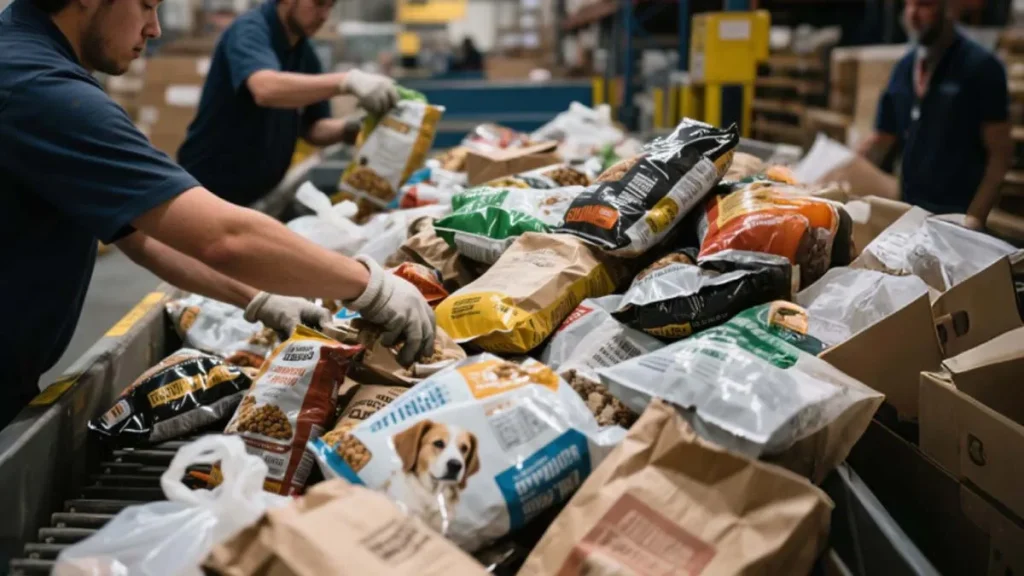
- Performance During Transport and Storage: During transportation and storage, dog food bags must withstand moisture, dust, and other environmental factors. Composite material bags typically maintain the dryness of dog food effectively, whereas paper bags may face issues with water penetration.
- Impact of Humidity: In humid environments, the waterproof performance of the packaging becomes especially important. Humid air can cause dog food to absorb moisture, mold, or oxidize, thereby affecting the food’s quality and safety. Therefore, high-quality waterproof packaging can significantly reduce these risks.
Factors Affecting Dog Food Quality
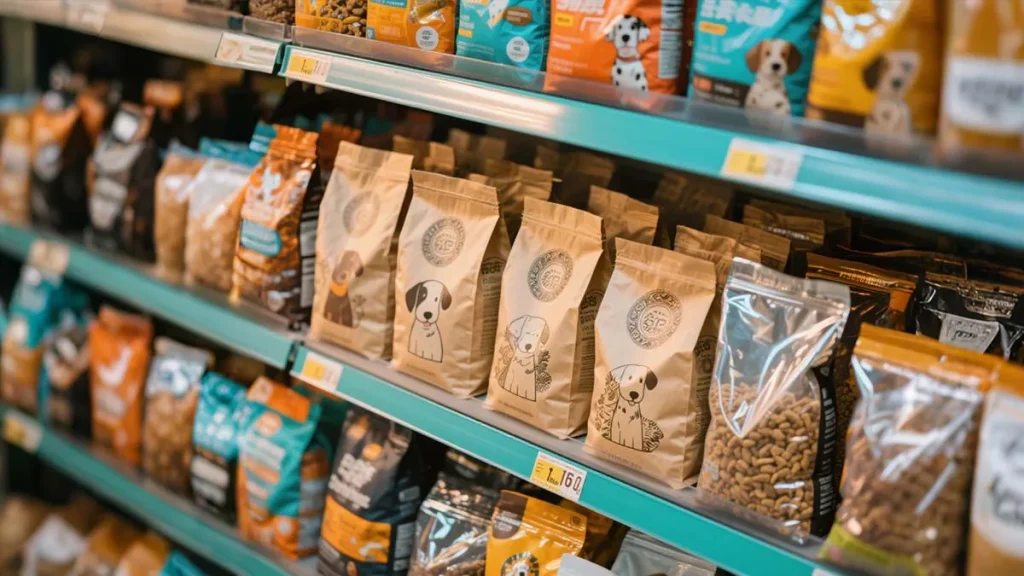
The waterproof performance of dog food bags directly impacts the quality of the food, especially in humid environments.
Protection of Dog Food by Moisture Resistance and Waterproofing
- Moisture and Dog Food Quality: Moisture is one of the primary factors affecting the quality of dog food. Ingredients such as fats and oils in dog food are highly hygroscopic, and moisture can cause oxidation, mold, or spoilage, affecting the food’s taste and nutritional content. Effective waterproof packaging can help minimize these issues.
- Mold and Oxidation: Strong waterproof packaging can effectively prevent moisture and air from entering, thus preventing mold growth and oxidation, and extending the shelf life of dog food.
Importance of Sealability
- Sealability and Waterproofing: Sealability and waterproofing are closely related. Even with strong waterproof properties, poorly sealed packaging can still allow moisture and air to enter, impacting the quality of the food. Therefore, the sealability of the packaging is also a critical factor in ensuring that the food remains dry and fresh.
Waterproofing and Sustainability
With the growing awareness of environmental protection, sustainable packaging has become a significant industry topic. However, achieving a balance between waterproofing and the use of eco-friendly materials remains a challenge.
Challenges with Eco-Friendly and Sustainable Materials
- Waterproofing of Eco-Friendly Bags: Although eco-friendly bags (such as biodegradable bags) have environmental advantages, their waterproofing performance is often not as good as traditional plastic bags. To meet the food preservation needs, eco-friendly bags may need design improvements or coating treatments to enhance their moisture resistance and waterproof capabilities.
- Use of Recyclable Materials: Using recyclable materials in packaging design is an important way to promote sustainability. However, these materials often do not provide the same level of waterproofing and sealing as traditional plastic bags, requiring further innovation and optimization.
Balancing Waterproofing and Sustainability
Packaging manufacturers need to find a balance between waterproofing and environmental requirements. We can achieve this by developing new eco-friendly materials, such as water-based coatings or bioplastic, while ensuring they offer sufficient waterproofing to meet market needs.
Consumer Usage Tips
As packaging manufacturers, we not only need to provide high-quality dog food packaging but also offer consumers guidance on how to properly store and use dog food bags.
Proper Dog Food Storage
- Avoid Moisture and Air Exposure: Even with high-quality waterproof packaging, consumers should store dog food bags in a dry, cool place to avoid the impact of a humid environment on the food.
- Sealed Storage: Once opened, dog food should be stored in a sealed container to reduce exposure to air and maintain its freshness.
Choosing Packaging with Good Waterproofing Performance
- Choose High-Quality Packaging: Consumers should prioritize packaging that offers good waterproof and moisture resistance to ensure that the dog food remains dry and does not deteriorate during storage and transportation.
Conclusion
As packaging manufacturers, understanding the waterproof performance of dog food bags is crucial to ensuring food quality and consumer satisfaction. High-quality packaging should not only provide waterproof and moisture-resistant functions but also consider environmental requirements. When selecting materials, composite material bags generally provide the best waterproof performance, while also ensuring attention to sealability and material sustainability.
FAQ
Why is waterproofing important for dog food bags?
Waterproofing is crucial for dog food bags because it directly impacts the quality and shelf life of the food. Moisture and water can cause oxidation of fats, mold growth, nutrient loss, and even spoilage of the dog food. Therefore, high-quality waterproof packaging can effectively extend the shelf life and preserve the nutritional value of dog food.
Which materials provide the best waterproof performance for dog food bags?
Composite material bags (paper layer + plastic layer + aluminum foil layer) generally offer the best waterproof performance. The aluminum foil layer effectively blocks moisture and air, providing excellent moisture and waterproofing properties. This makes them one of the most commonly used and effective dog food packaging materials on the market.
Can paper bags be used for dog food packaging?
While paper bags have environmental advantages, their waterproof performance is poor and they are highly absorbent. In humid environments, paper bags can soften or break, making them unsuitable for long-term storage of dog food. Therefore, paper bags are best for dry environments or short-term storage but not for long-term preservation of pet food.
Can eco-friendly bags meet the waterproofing requirements for dog food packaging?
Eco-friendly bags (such as biodegradable bags) offer environmental benefits, but their waterproof performance is generally inferior to traditional plastic bags or composite material bags. To meet the waterproofing needs of dog food packaging, eco-friendly bags may need design improvements or additional coatings to enhance moisture resistance and waterproofing capabilities.
How can we ensure dog food bags stay moisture-free during storage and transportation?
In addition to selecting packaging materials with strong waterproofing properties, the sealability of the dog food bags is equally important. Poorly sealed bags can allow moisture and air to enter, affecting the quality of the food. Therefore, during transportation and storage, it is essential to ensure good sealing of the packaging and store the bags in a dry, cool environment to keep the dog food fresh.