
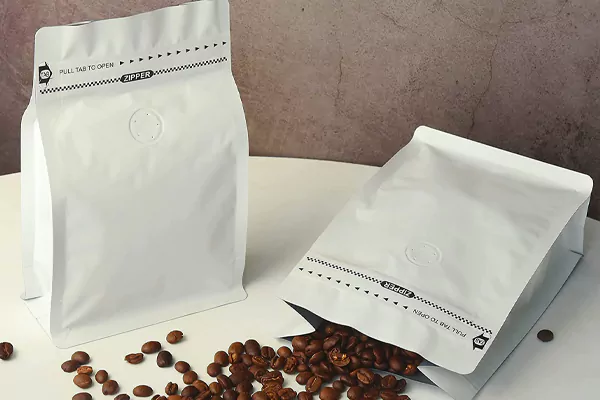
Nearly every specialty coffee brand is familiar with it: the iconic coffee bag with a metallic, shimmering liner. For decades, foil coffee bags have been synonymous with high quality. They promise the customer that the beans inside have been given the best protection possible. But after the last bean has been scooped out, a critical question arises, one that increasingly troubles environmentally conscious consumers and brands alike: are these foil coffee bags actually recyclable?
For a brand dedicated to quality and sustainability, the answer to this question is profoundly important. The truth is, the very design that makes a foil bag so effective at preserving freshness is also what makes it so challenging to recycle. This isn’t a simple packaging issue; it’s a complex intersection of material science, consumer habits, and the current capabilities of our recycling infrastructure.
The “Foil Fortress”: Why Aluminum is King for Coffee Freshness
Before we can discuss recycling, we must first understand why the foil bag is so effective. It is not just a container; it is a high-performance freshness-preserving system. Roasted coffee has four primary enemies:
- Oxygen: The biggest culprit in staling, causing delicate aromatic compounds to oxidize and disappear.
- Moisture: Can ruin the integrity of the beans and lead to stale or moldy flavors.
- UV Light: Degrades the organic compounds in coffee, flattening its flavor profile.
- Puncture/Damage: Physical damage can compromise the entire package.
To combat these forces, the standard coffee bag is engineered as a multi-layer laminate. You can think of it as several sheets of different materials being heat-fused into a single, cohesive structure. A typical construction might include an outer layer for printing and durability (like PET), a middle barrier layer, and an inner, food-safe layer that is easy to heat-seal (like PE).
For decades, the undisputed champion of the middle barrier layer has been aluminum foil. An aluminium lined bags structure provides a near-perfect barrier against oxygen, moisture, and light. This “Foil Fortress” is why foil coffee packaging became the industry standard, but this fortress of freshness comes at a steep environmental cost.
Are Foil Coffee Bags Recyclable? The Honest Answer
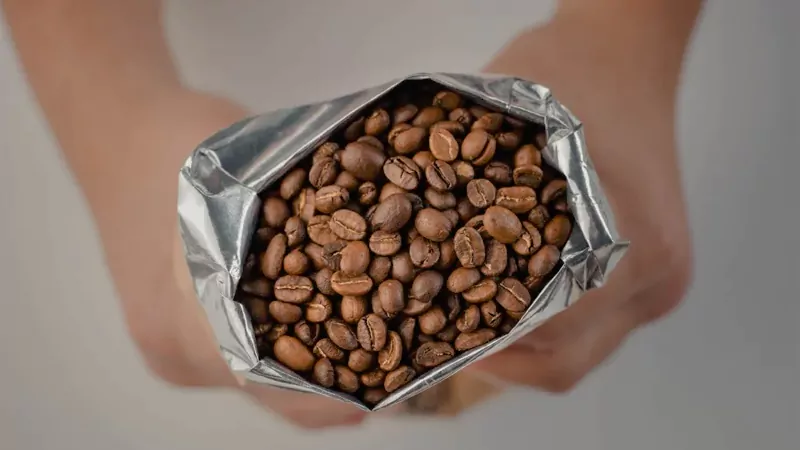
Let’s address the core question directly: Are traditional, multi-layer foil coffee bags recyclable through most curbside recycling programs?
The honest, and often surprising, answer is no, they are not.
The reason lies in their fused, multi-material construction. Recycling facilities, known as Material Recovery Facilities (MRFs), are designed to sort and process single materials (mono-materials). They can easily separate a plastic water bottle (PET), an aluminum can, or a glass jar. But they have no technology to “un-bake” a coffee bag—that is, to separate the fused layers of plastic and aluminum foil.
When a foil-lined coffee bag enters the recycling stream, it’s seen as a contaminant. It cannot be grouped with plastics or metals. In the best-case scenario, it’s sorted out by machinery or by hand and sent to a landfill. In the worst-case scenario, it can jam equipment or contaminate a full bale of otherwise clean recyclables, potentially causing that entire batch to be landfilled.
A Deeper Look: Coffee Bag Materials and Their Challenges
To fully grasp the issue, it’s important to understand the different types of coffee bags and their specific recycling challenges.
- Multi-Material Laminates (The Foil Standard): As discussed, any bag that fuses plastic with aluminum foil (PET/ALU/PE) is effectively non-recyclable in standard systems.
- Bags with Valves and Zippers: The one-way degassing valve and resealable zipper, while crucial for functionality, add another layer of complexity. They are typically made from a different type of plastic (like PP or HDPE) than the bag body, making the package even more of a mixed-material contaminant.
- Paper Bags with Liners: Many consumers assume a Kraft paper exterior means the bag is recyclable as paper. This is rarely true. The vast majority of these bags have a plastic or foil liner fused to the inside to provide a moisture and oxygen barrier. This fused liner makes the entire package non-recyclable in the paper stream.
This is the core of the problem for brands wanting to do the right thing. The traditional tools for preserving freshness are fundamentally at odds with our current recycling infrastructure.
The Path Forward: The Rise of Mono-Material Recyclable Solutions
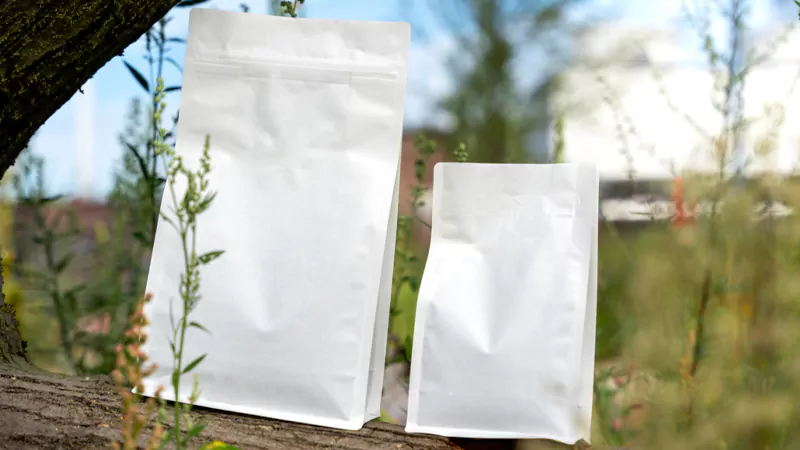
For years, the industry was stuck in this dilemma. But now, significant innovations in material science are providing a clear path forward: mono-material packaging.
A mono-material coffee bag is one made from a single type of polymer, most commonly Polyethylene (PE). Historically, PE did not offer a high enough barrier against oxygen to be suitable for specialty coffee. However, advanced manufacturing techniques have led to the development of high-barrier PE films that can be layered together.
Because the entire structure is 100% PE, it is technically recyclable. While it’s still not suitable for most curbside bins (which are primarily for rigid plastics), it can be recycled anywhere that accepts flexible plastic films. In many regions, this means it is eligible for store drop-off recycling programs—the same bins at grocery stores and retailers where people recycle plastic shopping bags and bread bags.
This represents a monumental leap forward. Brands can now use a package that offers excellent barrier protection while being genuinely recyclable through an established and growing collection stream.
Your Brand’s Role: Navigating the Transition with Honesty and Expertise
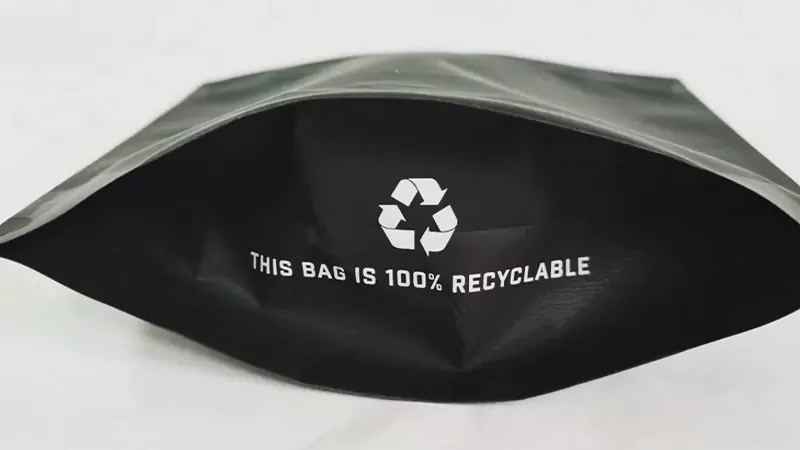
If the answer to “can you recycle coffee bags” is evolving, what is the brand’s responsibility? It is to be a clear, honest, and expert guide for your customers.
- Avoid “Wish-cycling”: The biggest mistake is to put a generic recycling symbol on a non-recyclable foil bag. This misleads consumers, contaminates the recycling stream, and ultimately damages trust in your brand.
- Embrace New Materials: The most impactful step is to transition away from traditional foil-lined bags to proven, high-barrier mono-material solutions.
- Provide Clear Instructions: If you switch to a store drop-off recyclable bag, you must communicate this clearly. Use on-pack labeling, like the How2Recycle® system, and your website to explain exactly how to recycle coffee bags correctly.
Making this transition requires a packaging partner with deep expertise in material science and a commitment to genuine sustainability. For coffee roasters, navigating this landscape is complex.
At BN Pack, we have the expertise to guide you. We have invested in developing high-barrier, mono-material PE solutions that offer the freshness protection you demand and the genuine recyclability your customers expect. We can help you transition from non-recyclable foil-lined bags to a future-proof, store-drop-off recyclable solution, complete with clear communication that builds trust with your audience.
Conclusion
The world of coffee packaging is in the midst of a critical evolution. For decades, we prioritized freshness above all, and the foil lined bag was the undisputed king. Today, we know we can—and must—do better.
While traditional coffee bags are largely not recyclable, the industry is rapidly innovating. The future lies in mono-material solutions that preserve the integrity of your coffee and can be responsibly recovered. By embracing these new technologies and committing to transparent communication, coffee brands can finally offer a package where exceptional quality and true sustainability pour into the same cup.