Sustainability takes center stage in the specialty coffee world, prompting many to ask if a holographic coffee bag can truly be eco-friendly. Recent trends highlight a shift toward greener packaging options:
Brands now prioritize recyclable, compostable, and biodegradable materials.
Innovative solutions like mushroom-based packaging and kraft paper gain popularity.
Consumers, especially younger generations, demand transparency and proof of sustainability.
BN Packaging addresses these needs by offering customizable, visually striking packaging that meets strict environmental standards. Striking a balance between eye-catching design and environmental responsibility matters for both brands and their customers.
What Are They
Holographic Effect
A holographic coffee bag stands out on store shelves because of its unique visual appeal. This effect comes from holographic printing, which uses specialized films or foils with microscopic ridges. These ridges reflect and refract light, creating a shimmering, rainbow-like appearance that changes as the viewing angle shifts. The surface structure interacts with light to produce a three-dimensional look. Companies often use laser technology to engrave these patterns directly onto the packaging. This technique not only draws attention but also helps prevent tampering and counterfeiting. Some brands add QR codes or other security features to further authenticate their products. The holographic coffee bag, therefore, combines both style and security in its design.
Tip: The holographic effect does not change the material composition or basic function of the coffee bag. It mainly enhances appearance and adds a layer of protection against counterfeiting.
Coffee Packaging Types
Coffee packaging comes in many forms, each designed for specific needs. The table below shows common types, their features, and their recommended uses:
Packaging Material Type | Oxygen Barrier | Moisture Barrier | Sustainability Rating | Recommended Use |
|---|---|---|---|---|
Multilayer Aluminum-based | Excellent (OTR <0.5) | Excellent | Poor (hard to recycle) | Long shelf-life retail (6-12 months) |
Mono-material PE/PP with EVOH | Good (OTR 2–3) | Good | High (fully recyclable) | Medium shelf-life retail (3-6 months) |
Paper-based with Barrier Coating | Moderate (degrades after 3 months) | Moderate | Good (paper recycling) | Short-term use/local market (up to 3 months) |
Compostable PLA/PBS | Moderate | Moderate | Good (requires industrial composting) | Eco-focused brands, sustainability priority |
A holographic coffee bag can use any of these material types, depending on the brand’s goals for shelf life and sustainability. The choice of packaging affects freshness, environmental impact, and consumer perception. Specialty coffee brands often select packaging that balances protection with eco-friendly features.
Holographic Coffee Bag Materials

Common Materials
A holographic coffee bag often uses advanced films and coatings to achieve its signature shine. Most manufacturers rely on multi-layer laminates, which combine materials like polyethylene (PE), polypropylene (PP), and sometimes aluminum foil. These layers provide strong barriers against oxygen and moisture, keeping coffee fresh. The holographic effect comes from a thin film, usually made with PET (polyethylene terephthalate), that is embossed with microscopic patterns. Hot-stamping technology can add metallic or rainbow finishes without affecting the bag’s protective qualities.
BN Packaging stands out by using innovative materials and processes:
The ReGen line uses mono-material PP film with mineral-based barriers, making the bag fully recyclable.
The EcoLock series features biodegradable PLA valves in compostable bags.
The HempGuard line uses hemp-based composites that break down naturally and use less water than cotton.
Soy-based inks and solvent-free adhesives enhance eco-friendliness.
Hot-stamping creates the holographic effect without compromising recyclability.
Certifications such as FSC for paper sourcing, FDA compliance for food safety, and TÜV Rheinland OK Compost Industrial for compostability support these claims.
Sustainable Options
Sustainable packaging options have become more popular as brands and consumers seek eco-friendly solutions. Compostable films, post-consumer recycled (PCR) content, and renewable fibers are leading the way. Compostable packaging, made from materials like PLA and kraft paper, breaks down into natural elements in industrial composting facilities. PCR packaging uses recycled plastics, reducing landfill waste and the need for new raw materials.
Recent statistics show strong growth in sustainable packaging:
Statistic | Description |
|---|---|
9% to 24% | Increase in paper-based packaging for food and beverage launches (2015-2018) |
65% | Beauty brands and retailers increasing PCR plastics use since 2018 |
96.5% | Recycling rate of corrugated boxes in 2018 |
13.6% | Recycling rate of plastic containers and packaging in 2018 |
BN Packaging offers certified home-compostable coffee bags made from cornstarch-based polymers, mono-material recyclable pouches, and hemp fiber packaging. These options support a circular economy and help brands meet environmental goals. The holographic coffee bag can now combine visual appeal with true sustainability, thanks to these material innovations.
Sustainability
Recyclability
Recyclability plays a key role in sustainable packaging. Many coffee bags use multi-layer materials that make recycling difficult. However, new technology allows manufacturers to create mono-material pouches. These pouches use a single type of plastic, such as polyethylene (PE) or polypropylene (PP). Recycling centers can process these materials more easily. BN Packaging offers recyclable options that use advanced films and mineral-based barriers. These bags maintain freshness while supporting recycling programs.
Some cities and countries have improved recycling infrastructure. They collect and process more flexible plastics than before. Brands that choose recyclable packaging help reduce landfill waste. They also support a circular economy, where materials get reused instead of discarded. A holographic coffee bag can now use recyclable films without losing its visual appeal or protective qualities.
Compostability
Compostable packaging provides another path to sustainability. Compostable coffee bags break down into natural elements in industrial composting facilities. Organizations like the Biodegradable Products Institute (BPI) certify these products. They ensure compliance with ASTM standards D6400 and D6868. These standards confirm that the packaging will decompose under specific conditions.
The industry has seen rapid growth in compostable packaging. Voluntary commitments and new regulations drive this trend. For example, the U.S. Plastics Pact and California’s extended producer responsibility laws encourage compostable solutions. Coffee pods and tea bags often lead the way in compostable packaging innovation. Surveys show that 44% of consumers recognize home composting as a correct disposal method. Another 52% identify curbside organics collection as suitable for compostable packaging. The number of U.S. households with access to food waste collection has increased by 49% since 2021. More composting facilities now accept compostable packaging. Major brands continue to develop compostable coffee pods and bags. Certification and consumer education remain important for successful adoption.
BN Packaging offers compostable coffee bags made from cornstarch-based polymers and other plant-based materials. These bags meet international compostability standards. They help brands reduce their environmental footprint and appeal to eco-conscious consumers.
Environmental Impact
Packaging choices affect the environment in many ways. Traditional coffee bags often end up in landfills. They take decades or even centuries to break down. This contributes to landfill waste and greenhouse gas emissions. Recyclable and compostable options offer better outcomes. They reduce the amount of waste sent to landfills. They also lower the carbon footprint of packaging production and disposal.
BN Packaging designs solutions that balance barrier protection with eco-friendliness. Their recyclable and compostable bags keep coffee fresh while supporting sustainability goals. Using post-consumer recycled content and renewable materials further reduces environmental impact. Brands that choose sustainable packaging help build a circular economy. They support resource conservation and waste reduction.
🌱 Choosing the right packaging can help brands protect the planet and meet consumer expectations for sustainability.
Alternatives
Compostable Bags
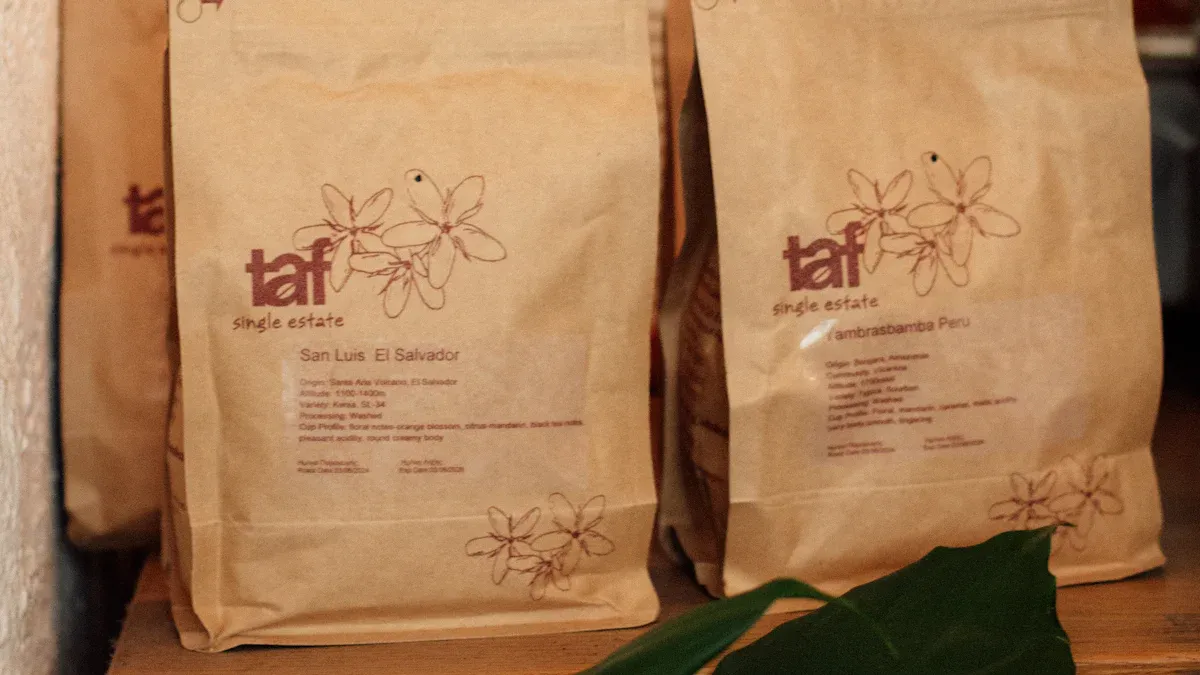
Compostable coffee bags offer a sustainable solution for brands that want to reduce their environmental impact. These bags use materials like PLA (polylactic acid) and starch-based bioplastics. Both materials break down naturally in compost environments, turning into water, carbon dioxide, and organic matter. Kraft paper combined with PLA creates a strong, eco-friendly package that keeps coffee fresh and supports sustainability goals. Starch-based bioplastics also provide durability and do not pollute soil as they decompose.
Many compostable coffee pouches are designed to break down completely in industrial composting facilities. This process helps return nutrients to the earth and reduces landfill waste. Some tin tie bags can even feature biodegradable materials and holographic finishes, showing that visual appeal and compostability can go hand in hand. While direct comparisons between holographic and other compostable bags remain limited, brands now have more options to combine style with eco-friendliness.
🌱 Compostable packaging supports a circular economy by turning waste into valuable resources for the environment.
Recyclable Packaging
Recyclable packaging remains a popular alternative for coffee brands. Mono-material pouches made from polyethylene or polypropylene allow for easier recycling. These materials can be processed by most recycling centers, helping to reduce landfill waste and support resource conservation.
Consumer awareness and willingness to support recyclable and compostable packaging continue to grow. The following table highlights key data on consumer attitudes and recycling rates:
Metric / Data Point | Value / Statistic | Significance / Benefit |
|---|---|---|
Recycling rate of coffee pods | 27% | Indicates low current recycling, need for alternatives |
Willingness to pay premium for alternative packaging | Over 75% willing to pay 3%-5% more | Shows strong consumer support for sustainable packaging |
Material Circularity Indicator of novel tinplate coffee capsule | 0.97 | Significantly higher recyclability compared to polypropylene (0.1) and aluminum (0.80) capsules |
Brands that choose recyclable packaging help close the loop in the packaging lifecycle. They also meet the expectations of consumers who want to support eco-friendly products. Recyclable holographic coffee bags now offer both shelf appeal and environmental responsibility.
Brand Considerations
Visual Appeal
Brands in the specialty coffee sector often seek packaging that stands out on crowded shelves. Holographic coffee bags offer a unique, eye-catching effect that attracts attention and creates a memorable first impression. BN Packaging helps brands achieve this visual impact while maintaining a strong commitment to sustainability.
BN Packaging uses recyclable or compostable Mylar films to create holographic effects, ensuring that visual appeal does not come at the expense of the environment.
The company minimizes material usage, reducing waste and optimizing efficiency.
Printing methods and transportation choices are selected with environmental impact in mind.
Designers carefully choose color palettes, typography, and imagery to reflect each brand’s identity and connect with target audiences.
Functional features such as resealable zippers and child-resistant closures add convenience and product protection.
The design process includes thorough reviews and approvals, balancing aesthetics, sustainability, and functionality.
These practices allow brands to enjoy the benefits of holographic packaging without compromising their environmental values. Case studies show that brands like Couplet Coffee use holographic packaging as part of a sensory marketing strategy, balancing vibrant design with eco-friendly materials.
🌟 A visually appealing package can increase shelf presence and attract new customers, especially when paired with sustainable materials.
Brand Values
Packaging serves as a direct reflection of a brand’s values and priorities. Consumers increasingly expect brands to demonstrate environmental responsibility through their packaging choices. Market research shows that 73% of global consumers are willing to change their consumption habits for environmental reasons. In addition, 90% of consumers are willing to pay premium prices for sustainable packaging.
Brands like Unilever and Adidas have successfully used sustainable packaging to build loyalty and enhance market presence.
Packaging design elements such as color psychology, clear communication of sustainability, and thoughtful typography contribute to consumer appeal.
The GreenLeaf Organic Tea case study demonstrates that eco-friendly packaging can lead to a 35% increase in sales and a 50% rise in social media engagement.
BN Packaging supports brands by offering extensive customization options, low minimum order quantities, and fast turnaround times. This flexibility allows both large and small businesses to align their packaging with their brand values and meet consumer expectations for sustainability.
✅ Aligning packaging with brand values and environmental goals helps build trust, foster loyalty, and drive long-term success in the specialty coffee market.
Holographic coffee bags can combine visual appeal with eco-friendly features when brands choose the right materials. BN Packaging leads the industry by offering recyclable, compostable, and biodegradable options that meet strict standards.
Brands should look for packaging that protects freshness and supports sustainability goals.
Consumers can support companies that use certified eco-friendly packaging.
Choosing partners like BN Packaging helps brands stand out while caring for the planet.
FAQ
Are holographic coffee bags recyclable?
Most holographic coffee bags use recyclable materials like mono-material PE or PP films. BN Packaging offers recyclable options that meet international standards. Always check local recycling guidelines for flexible packaging.
Can compostable holographic bags break down at home?
Most compostable holographic bags require industrial composting facilities. Home composting may not reach the temperatures needed for full breakdown. Look for certifications like OK Compost Home for bags suitable for backyard composting.
Do holographic effects impact food safety?
Holographic films used by BN Packaging comply with food safety standards such as FDA and BRC. These films do not affect the safety or freshness of coffee stored inside the bag.
How do brands customize eco-friendly holographic bags?
Brands can choose from various materials, finishes, and features. BN Packaging offers custom sizes, shapes, resealable zippers, and vibrant holographic effects. The design team helps brands match packaging to their identity and sustainability goals.
Why do consumers prefer sustainable coffee packaging?
Consumers value eco-friendly packaging because it reduces waste and supports environmental protection. Surveys show that most buyers are willing to pay more for products with sustainable packaging. This preference helps brands build trust and loyalty.