
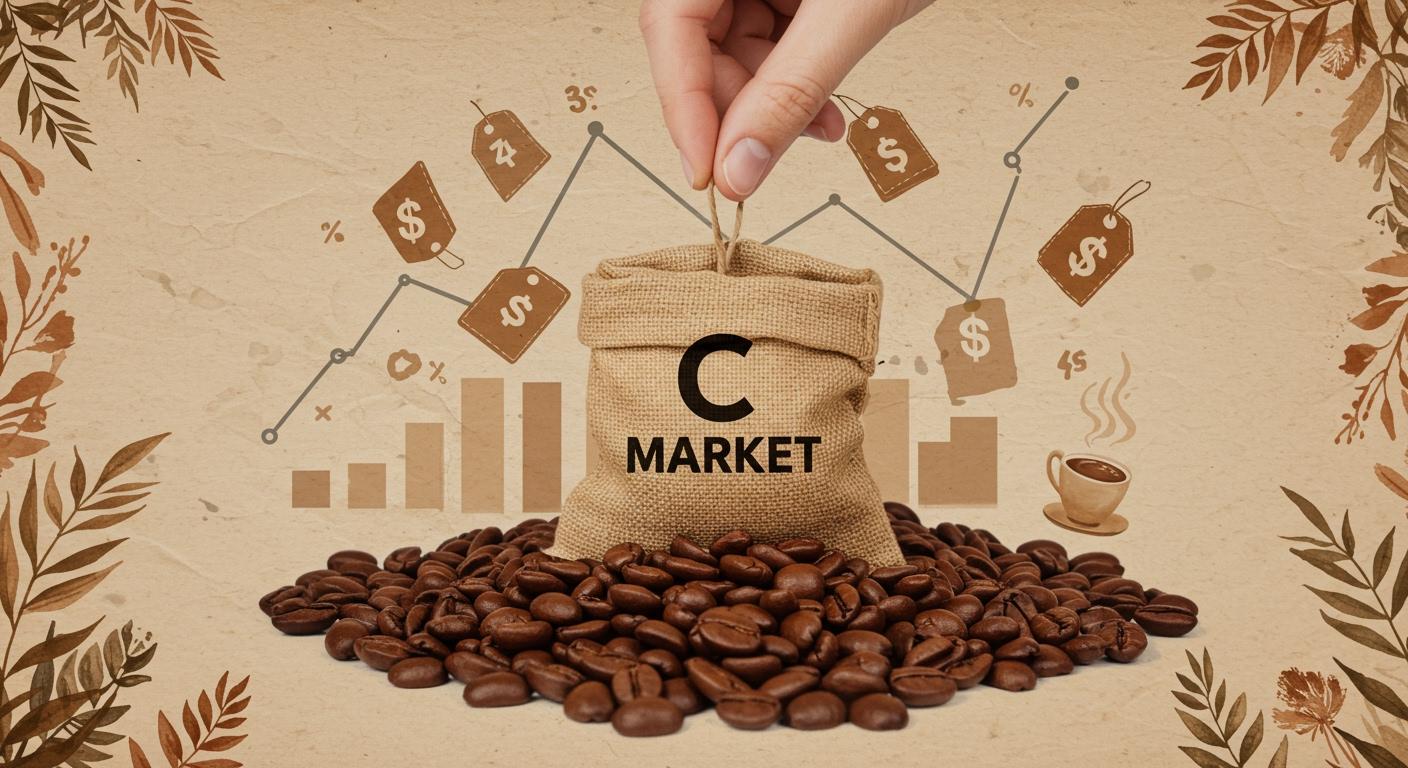
You walk into your favorite café and notice your usual cup of coffee costs more than last month. This price change connects directly to shifts in the coffee c market. Over the past five years, average retail coffee prices have moved up and down based on global trading trends.
Year | Average Price (per pound) |
|---|---|
2022 | $5.89 |
Cities like Los Angeles and San Francisco show the highest median prices, while Seattle saw a 12.4% jump in just one year. These swings happen because world events, weather, and trading decisions influence the cost of coffee beans before they reach your cup.
Coffee C Market and Price Impact
How Prices Affect Consumers
You see coffee prices change at your local store or café. These changes often start with the coffee c market, which sets the base price for green coffee beans worldwide. When the market price rises, you pay more for your favorite blend. When it falls, you might see discounts or special offers.
Time Period | C Market Price Changes | Consumer Price Impact |
|---|---|---|
1970s | Spiked above $1.40 | Significant price increases for consumers |
1976-1978 | Above $1.40 for 26 months | Consumers faced steep price increases during spikes |
1979-1980 | Spiked for 16 months | Frequent price adjustments by major brands |
292 out of 408 months | Below $1.40 | Long periods of low prices jeopardizing producers’ livelihoods |
Coffee brands often adjust prices quickly when green coffee costs rise. In 1976, major brands raised prices several times a month. A spokesperson for Folgers said they could not keep up with the changing market. You feel these changes when your favorite coffee costs more or less each month.
The coffee c market affects everyone in the supply chain. Farmers depend on market prices to cover their costs. Roasters decide whether to absorb higher costs or pass them to cafés. Cafés must balance price increases with keeping customers happy. When prices rise, profit margins shrink for producers and retailers. When prices drop, producers may struggle to make a living.
Factor | Description |
|---|---|
Supply and Demand | The balance between coffee supply and consumer demand directly affects prices. |
Weather Conditions | Climate impacts coffee production, influencing availability and pricing. |
Geopolitical Events | Political stability in coffee-producing regions can affect market prices. |
Market Speculation | Traders’ expectations can drive price fluctuations in the C market. |
Quality and Origin | Higher quality beans or specific origins can command premium prices. |
Transportation Costs | Costs associated with moving coffee from producers to consumers affect final prices. |
The coffee c market sets a base price, but many factors influence what you pay. Supply and demand, weather, and transportation costs all play a role. When demand is high and supply is low, prices rise. You may buy less coffee if prices get too high. When prices fall, coffee becomes more affordable, and you might buy more.
Tip: Watch for price changes at your local café. These often reflect shifts in the global coffee c market.
BN PACK Coffee Bag Solutions
You want your coffee to stay fresh, even when market prices change. BN PACK coffee bags help you keep your beans at their best. These bags use high barrier materials to protect against oxygen, moisture, and light. Degassing valves let carbon dioxide escape but keep oxygen out, which preserves flavor and aroma.
Airtight seals keep coffee safe from contaminants.
Degassing valves balance gas release and prevent oxidation.
Coffee beans stay fresh for six to twelve months in high-quality bags.
You also want your coffee brand to stand out. BN PACK custom coffee bags offer bold designs and vibrant colors. Personalized packaging helps your product catch the eye on crowded shelves. Branded stock bags build recognition and shelf appeal in competitive markets.
Custom designs boost brand visibility.
Eye-catching colors attract attention.
Branded packaging builds trust with customers.
BN PACK coffee bags give you both protection and style. You keep your coffee fresh and your brand strong, no matter how the coffee c market shifts.
What Is the Coffee C Market?
Global Trading Basics
You might wonder how coffee prices get set before beans reach your cup. The coffee c market acts as a global exchange for Arabica coffee. You can think of it like a stock market, but for coffee. This market operates under the Intercontinental Exchange (ICE), which brings together buyers and sellers from all over the world. ICE sets rules for trading and provides a central place for transactions.
The coffee c market standardizes coffee trading. You see clear rules for quality, delivery, and pricing.
It offers a global benchmark price. This price helps farmers, roasters, and retailers make decisions.
The market supports both physical trade and futures contracts. You can trade actual green coffee beans or agree on prices for future delivery.
The C market coffee price serves as a global reference for regular-quality Arabica coffee, reflecting the dynamics of global supply and demand. Factors such as climate, socio-economic conditions, and political events can significantly influence coffee production and pricing.
You see the effects of weather, politics, and economics in the price of coffee. When a drought hits Brazil, prices rise. If a trade agreement changes, the market reacts. The coffee c market helps you understand why prices move up or down.
Coffee C Futures Explained
You hear about coffee c futures when experts talk about price stability. These futures are contracts that let you agree on a price for coffee to be delivered later. You use coffee c futures to protect yourself from sudden price changes. If you are a farmer, you lock in a price for your crop. If you are a roaster, you plan your costs months ahead.
Feature | Description |
|---|---|
Contract Type | Coffee C futures contracts are a benchmark for Arabica coffee. |
Purpose | They facilitate trading and pricing based on future supply and demand. |
Delivery | Prices physical delivery of exchange-grade green beans from licensed warehouses. |
Impact on Price Stability | The C-Price serves as a benchmark for most coffee traded internationally, aiding in business planning and negotiations. |
You use coffee c futures to manage risk. These contracts help you hedge against price swings caused by weather or market speculation. You see producers and traders use coffee c futures to plan investments and secure profits. The C-Price, set by these contracts, guides most international coffee deals.
The C-Price is widely recognized in the coffee industry. You rely on it for decision-making.
Coffee c futures offer a way to predict and control costs.
Producers face challenges when prices swing too much. Futures contracts help them plan for the future.
You see traders use options contracts for flexibility. These let you benefit from price changes without the obligation to buy or sell.
Coffee c futures play a key role in stabilizing the coffee sector. You see them used by farmers, roasters, and cafés to manage costs and keep business running smoothly. When you buy coffee, you benefit from the price stability these contracts provide.
U.S. Coffee C Futures Market
Market Mechanisms
You interact with the U.S. coffee c futures market every time you buy coffee. This market operates through standardized coffee c futures contracts traded on the Intercontinental Exchange (ICE). Each contract represents 37,500 pounds of exchange-grade Arabica coffee beans. You see these contracts set the benchmark for Arabica coffee, which makes up most of the world’s coffee supply.
The U.S. coffee c futures market influences global prices because traders from around the world use it to set deals. You notice that the market does not just reflect physical coffee trading. Many traders buy and sell coffee c futures without ever planning to take delivery. This speculative trading can cause prices to swing quickly.
The market uses standardized contracts for transparency.
Physical delivery is possible, but most trading is speculative.
Currency relationships, interest rates, and stock levels affect prices.
Weather and global consumption trends play a big role.
Note: The U.S. coffee c futures market acts as a global benchmark. You see its price quoted in news reports and used by coffee producers everywhere.
Price Setting Factors
You watch coffee prices change because of many factors in the U.S. coffee c futures market. Weather patterns in major producing countries like Brazil and Colombia can shift supply overnight. A drought or frost can push prices higher. Harvest cycles and production forecasts also matter. When farmers expect a big crop, prices may fall.
Economic trends influence the market too. The strength of the U.S. dollar affects how much coffee producers earn. If the dollar rises, coffee prices may drop for international buyers. Fluctuations in crude oil prices change transportation costs, which impacts coffee prices. Geopolitical events, such as political conflicts or natural disasters, can trigger price rallies in the coffee c market.
Here are some key factors that set prices in the U.S. coffee c futures market:
Factor | Impact on Price |
|---|---|
Weather | Changes supply, causes price swings |
Harvest Cycles | Affects forecasts and market sentiment |
Currency Fluctuations | Alters producer earnings and costs |
Oil Prices | Raises or lowers transportation costs |
Geopolitical Events | Can trigger sudden price rallies |
You see that speculative trading also plays a big part. Hedge funds and other investors trade coffee c futures based on market sentiment. Sometimes, prices move because traders expect changes, not because supply or demand has shifted. This speculation adds volatility to the market.
You rely on the U.S. coffee c futures market to guide coffee prices worldwide. Producers use coffee c contracts to plan sales and manage risks. You benefit from the price stability these contracts can provide, even when the market faces uncertainty.
Key Drivers of Coffee C Prices
Supply and Demand
You see supply and demand shape the coffee c market every day. When coffee production drops, prices rise quickly. If demand grows, you notice green coffee prices climb even higher. Several events can disrupt this balance:
Coffee leaf rust in Central America has reduced supply and pushed prices up.
Geopolitical tensions, such as the Ukraine conflict, change how much coffee people buy, which affects demand and market prices.
Weather events in Brazil often cause sudden shortages, leading buyers to rush for coffee and driving up green coffee prices.
When exchange inventories reach 20-year lows, tight supply meets strong demand, and prices surge.
You watch producers respond to higher prices by seeking better deals, sometimes breaking contracts. This can make long-term relationships in the coffee c market less stable. You see coffee c futures used to manage these risks and help stabilize prices.
Climate and Weather
You notice climate and weather events have a big impact on coffee c prices. Droughts and frosts in major producing countries can reduce yields and cause price spikes. The following table shows how recent climate events have affected prices:
Year | Climate Event | Price Impact |
|---|---|---|
2024/2025 | Drought in Brazil and Vietnam | Global prices spiked due to reduced yields |
2024 | Drought in Brazil | Yield reduced by 12%, impacting prices |
Early 2025 | Frost and drought in Brazil | Prices surged to $3.00-$3.50 per pound |
Feb 2025 | Severe drought and frost | Prices peaked over $4.00 per pound |
You saw Brazil’s worst drought in 70 years lead to major yield reductions and price jumps. Serious droughts in Brazil and Vietnam have pushed the market price of Arabica beans from $1.49 to $2.70 per pound. You rely on coffee c futures to help manage these unpredictable changes.
Economic Trends
You track global economic trends to understand coffee c market movements. Production cycles, currency values, and economic conditions all play a role. The table below explains how these factors influence prices:
Factor | Influence on Coffee Prices |
|---|---|
Production cycles | Large harvests lower prices; poor yields increase prices |
Climate change | Unpredictable weather disrupts supply chains |
Currency values | Coffee traded in US dollars makes profits sensitive to fluctuations |
Economic conditions | Global recessions or inflation impact demand and pricing |
You see currency fluctuations affect profits for producers and buyers. When the US dollar strengthens, green coffee prices may fall for international buyers. Inflation or recession can change how much coffee people buy, which impacts prices. You use coffee c futures to plan for these changes and protect your business.
Market Trends and Consumer Impact
Price Volatility
You have seen coffee prices swing sharply over the past decade. Extreme weather, supply chain disruptions, and changing demand have caused major fluctuations in the coffee c market. In August 2024, the price of Arabica coffee reached a 13-year high. This spike happened because droughts and frosts reduced supply in Brazil and Colombia. Climate change continues to threaten coffee production, making price volatility a constant challenge. You notice that coffee c futures play a key role in helping producers and buyers manage these unpredictable changes.
Price volatility means you may pay more for coffee at certain times. Producers face uncertainty about their income, which can affect the quality and availability of coffee you enjoy.
Effects on Producers
You see how price swings impact coffee producers, especially smallholders. When prices drop, many farmers struggle to cover their costs. Some systems, like Fairtrade, offer a minimum price to help producers stay afloat during market downturns. Fairtrade Premiums also provide extra funds for cooperatives, supporting community projects and infrastructure. These measures help stabilize income and reduce the risks caused by market volatility.
Price volatility creates financial risks for producers.
Minimum price systems offer a safety net.
Premiums fund local improvements and help communities thrive.
Coffee c futures give producers tools to plan ahead and protect their earnings. You benefit from these systems because they help maintain a steady supply of quality coffee.
BN PACK Coffee Bag Benefits
You want your coffee to stay fresh and flavorful, no matter what happens in the market. BN PACK coffee bags use advanced packaging technologies to preserve freshness. Nitrogen-flushed bags and vacuum pouches keep moisture, light, and oxygen away from your beans. This protection helps maintain taste and aroma over time.
Benefit | Description |
|---|---|
Freshness Preservation | Nitrogen-flushed and vacuum-sealed bags prevent flavor loss and extend shelf life. |
Convenience for Consumers | Resealable bags and single-serving pods make coffee easy to use and reduce waste. |
Enhanced Branding and Appeal | Attractive designs help your brand stand out and influence buying decisions. |
You also care about sustainability. BN PACK offers compostable coffee bags, hemp-fiber hybrid pouches, and the RevoCycle product line made from recycled materials. Compostable bags break down safely in 26 weeks. Hemp-fiber pouches use less fossil plastic and still protect your coffee. The RevoCycle line helps keep plastics out of the ocean.
Feature | Description |
|---|---|
Compostable Coffee Bags | Break down to non-toxic biomass in less than half a year. |
RevoCycle Product Line | Uses recycled plastics, preventing ocean pollution. |
Hemp-Fiber Hybrid Pouches | Made from renewable waste, saving resources and maintaining quality. |
You help the planet and keep your coffee fresh when you choose BN PACK coffee bags. Producers and brands use these solutions to adapt to market changes and meet consumer expectations. Coffee c futures and smart packaging work together to support a stable, sustainable coffee supply.
Future of Coffee C Market
Sustainability
You will see sustainability become a major focus in the coffee c market over the next five years. Companies and consumers want coffee that supports the environment and local communities. You notice more brands using third-party certifications to show their commitment to fair wages and eco-friendly farming. Multi-stakeholder initiatives encourage collaboration between producers, exporters, and public organizations. Digital tools help smaller exporters track the origin of beans and prove sustainable practices.
Type of Initiative | Company Size Influence | Implications for Sustainability Engagement |
|---|---|---|
Third-Party Certification | All sizes | Meets customer demand for ethical and sustainable coffee. |
Multi-Stakeholder Initiatives | All sizes | Promotes teamwork for better sustainability. |
Digital Tools for Traceability | Smaller exporters | Improves transparency and supports sustainable sourcing. |
Innovations aligned with sustainability | Conventional Giants | Encourages large companies to adopt eco-friendly solutions. |
Effective Certification Schemes | Mixed Engagers | Motivates fair pricing and responsible practices. |
Collaboration and Investment | Smaller companies | Builds partnerships for long-term sustainability. |
You can help drive positive change by choosing sustainably produced coffee and supporting fair trade. Accepting slightly higher prices supports better farming and fair wages. Investing in environmental conservation ensures a stable supply of high-quality beans from coffee-producing countries.
Packaging Innovations
You will see exciting changes in coffee packaging that address both market and environmental challenges. BN PACK leads with custom coffee bags made from compostable and recyclable materials. You find refillable coffee containers and bulk dispensers in stores, which reduce single-use waste. Reusable coffee bags offer resealable designs for multiple uses, helping you cut down on disposable packaging. Some brands use upcycled packaging made from used coffee grounds, promoting a circular economy.
Innovation Type | Description |
|---|---|
Refillable Coffee Containers | Customers return bags for refilling, reducing waste. |
Bulk Coffee Dispensers | You fill your own container with fresh beans at the store. |
Reusable Coffee Bags | Designed for repeated use, lowering packaging waste. |
Upcycled Packaging | Made from used coffee grounds, supporting sustainability. |
Tip: You can adapt to future changes by choosing eco-friendly packaging, supporting ethical sourcing, and staying informed about new trends in coffee. These steps help you and your business thrive in a changing market.
You see the coffee c market influence coffee pricing every time you buy a cup. Staying informed about coffee c price trends helps you make smart choices. You support sustainability by choosing ethically sourced coffee and packaging that protects freshness.
Track market changes to understand price shifts.
Look for custom packaging that adds value and supports eco-friendly practices.
Choose brands that share stories about quality and fair trade.
Your decisions help shape a fair and sustainable coffee industry