

You wake up and reach for your daily cup of coffee. That simple act can do more than boost your energy. When you make coffee for wellness part of your daily routine, you unlock powerful benefits. Studies show your daily coffee habit can help you live longer, protect your heart, and lower your risk of diseases. Here are some top perks you get from coffee for wellness:
Lower risk of early death and heart failure
Reduced chance of Type 2 diabetes
Safeguard your liver
Slow dementia and control Parkinson’s symptoms
You can feel great every day with coffee for wellness. Small changes in your daily coffee habit can make a big difference.
Coffee for Wellness Benefits

Physical Health Benefits
Many people think coffee is just a tasty drink. But coffee does much more for your body. Drinking coffee gives you science-backed benefits. These benefits help you feel good and stay healthy. Let’s see how coffee helps your physical health.
Cardiovascular Health
Coffee has antioxidants that protect your heart. Chlorogenic acids are one type of antioxidant in coffee. These antioxidants fight inflammation. They lower your risk of heart problems. Every cup of coffee helps your heart.
Here’s what studies say about coffee and your heart:
Study/Source | Findings |
|---|---|
FHS | Older people who drank coffee had 43% fewer deaths from heart disease. |
Kim et al (2019) | A review of 40 studies found people who drank coffee lived longer. The best amount was 3.5 cups a day for living longer and 2.5 cups a day for heart health. |
Various studies | Drinking a moderate amount of coffee lowers your risk of heart disease. Drinking too much can raise your risk. |
FHS, CHS, ARIC studies | People who drank a lot of coffee had less chance of heart failure over time. |
General findings | Drinking a moderate amount of coffee lowers your risk of dying from any cause or heart disease. Drinking too much may be bad for you. |
Drinking 3 to 5 cups of coffee a day is best for your heart. If you drink too much, you may lose some benefits.
Metabolic Health
Coffee helps your body in other ways too. Drinking coffee supports your metabolism. It helps keep your blood sugar steady. Here’s how coffee helps your metabolic health:
Coffee is linked to higher adiponectin levels. Adiponectin helps control glucose and breaks down fatty acids.
Coffee is linked to higher total and LDL cholesterol.
Coffee is linked to lower leptin, hs-CRP, triglycerides, and liver enzymes.
Coffee does not have a strong link to glucose metabolism markers.
Coffee gives you health benefits that help your body process food. It also helps fight inflammation. You can enjoy your coffee and know it helps your body stay balanced.
Antioxidant Power
Coffee is full of antioxidants. It is one of the best sources of antioxidants in your diet. Chlorogenic acids are important antioxidants in coffee. These antioxidants protect your cells from damage. They also lower inflammation. Antioxidants help your body fight oxidative stress. Oxidative stress can cause diseases like cancer and heart problems.
Drinking coffee gives your body antioxidants. These antioxidants help you stay strong. Research shows coffee’s antioxidants work for healthy people and those with diseases caused by oxidative stress.
Longevity and Disease Risk Reduction
You may wonder if coffee helps you live longer. The answer is yes. Studies show people who drink coffee every day have a lower risk of dying early. Here’s what research says:
Study | Findings | Implications |
|---|---|---|
Harvard Study | Drinking 3-5 cups of coffee a day lowers your risk of dying early. | Coffee may help prevent type 2 diabetes, heart disease, and brain diseases. |
A review of many studies shows drinking coffee may help you age well. It may also lower your risk of cancer. Coffee has bioactive compounds like chlorogenic acids and polyphenols. These compounds lower inflammation and oxidative stress. You get the most health benefits when you drink 3 to 5 cups a day.
Chlorogenic acids: Antioxidants that lower inflammation and oxidative stress.
Polyphenols: Help your gut and may lower your risk of dying.
Caffeine: Linked to lower risk of dying in people with prediabetes and type 2 diabetes.
Drinking coffee every day lowers your risk of diseases like diabetes and cancer.
Chronic Disease Protection
Drinking coffee lowers your risk of some chronic diseases. Here’s what studies found:
Many studies show drinking coffee lowers your risk of Parkinson’s disease.
A Finnish study found people who drank coffee in midlife had a lower risk of dementia and Alzheimer’s disease later in life.
Key Findings | Description |
|---|---|
Caffeine and Parkinson’s | Drinking caffeine lowers your risk of Parkinson’s Disease. |
Dose-Response Relationship | The best benefit is at three cups a day. |
Symptom Improvement | People with Parkinson’s Disease who drank caffeine had better symptoms, especially movement. |
A review of 40 studies with almost 3.8 million people found drinking a moderate amount of coffee lowers your risk of dying. The lowest risk was at 3.5 cups a day, which lowered risk by 15%. Another review found drinking 3-5 cups a day lowered risk by 15%.
Cancer Prevention
Coffee’s antioxidants and anti-inflammatory compounds help protect you from cancer. These benefits come from coffee fighting inflammation and lowering oxidative stress. Drinking coffee lowers your risk of some cancers, like liver and colorectal cancer. Coffee’s bioactive compounds, such as polyphenols and chlorogenic acids, help protect you.
Mental Wellness Perks
Coffee helps your body and your mind. Drinking coffee boosts your mental health and brain health. Coffee gives you energy and helps you focus.
Mental Alertness and Cognitive Function
Caffeine in coffee is a stimulant for your brain. It helps you stay awake. It improves your memory. It makes you pay better attention. Here’s what studies show:
Study Title | Findings |
|---|---|
The Neurophysiology of Caffeine as a Central Nervous System Stimulant | Caffeine helps your brain work better. It improves short and long-term memory. It may help attention. |
Cognition and Brain Activation in Response to Various Doses of Caffeine | Caffeine helps you think and move better, especially when you are tired. It makes you more alert. |
Drinking coffee enhances neurocognitive function by reorganizing brain functional connectivity | Coffee makes you more alert and helps you move better. Caffeine helps your brain send signals. Coffee helps with attention and working memory. |
Drinking coffee helps your brain and gives you energy. Coffee helps you stay sharp, especially when you are tired.
Mood and Stress
Coffee can make you feel happier. Research shows caffeine can boost good feelings. It may protect you from feeling sad. Some studies found drinking caffeinated drinks makes people feel better and less negative. But caffeine can also make some people feel anxious or stressed, especially teens.
Drinking caffeinated drinks is linked to feeling better and less negative.
Some studies say caffeine may protect against feeling sad. Other studies do not show a strong link.
You can enjoy coffee’s mental health benefits. But listen to your body and drink less if you feel anxious.
Brain Health and Longevity
Coffee helps your brain stay healthy as you age. Studies show drinking a moderate amount of coffee lowers your risk of brain diseases like Alzheimer’s and Parkinson’s. Coffee’s antioxidants protect your brain cells. They lower inflammation. This means you get long-term benefits for your brain and overall health.
How Much Coffee Is Best?
You may ask, “How much coffee should I drink?” Health experts say 3 to 5 cups a day is best. Here’s a quick look:
Organization | Recommendation |
|---|---|
2015 Dietary Guidelines Advisory Committee | 3 to 5 cups per day |
WHO | Probably safe and maybe healthy |
Drinking up to three cups a day lowers your risk of stroke and heart disease. The biggest drop in risk is at three cups a day. Drinking up to four cups can lower your risk of dying by 29% compared to people who do not drink coffee.
Tip: Drink a moderate amount of coffee to get the best health benefits for your body and mind.
You can enjoy your daily coffee and know you are helping your heart, boosting your energy, and protecting your brain. Coffee for wellness means making smart choices and enjoying the benefits every day.
Maximizing Coffee Health Benefits
Choosing Quality Beans
You want your coffee to taste good and help your health. Picking good beans is important. Here’s what you should look for when picking coffee beans for the most benefits:
Single-Origin Coffee: These beans come from one place. Farmers take care when they process them. You can know where the beans are from. This lowers the chance of bad stuff getting in.
Organic Coffee: Farmers grow these beans without fake chemicals. You get less harmful stuff in your cup. Organic coffee has more polyphenols, especially chlorogenic acid. These help your body fight sickness.
Fair Trade Certified: This label means farmers get paid fairly. You help people and support good practices.
Sustainable Coffee: These beans come from farms that care for nature. You help protect animals and plants.
Organic coffee is great for your health. Studies show organic beans have about 27% more polyphenols than regular beans. These help your body fight swelling and may lower your chance of getting sick. If you want your coffee to help your health, pick organic and sustainable beans.
Brewing Methods for Wellness
How you make your coffee changes its health benefits. Some ways keep more antioxidants and good stuff in your cup. Let’s see which brewing styles work best:
Brewing Method | Ranking | Key Features |
|---|---|---|
Cold Brew | Top | Steeping for a long time at low temperatures keeps antioxidants. |
Turkish Coffee | High | Unfiltered brewing keeps oils and compounds, but long brewing may break down some compounds. |
Moka Pot | High | Fast brewing at high heat, but too much heat can break down good stuff. |
AeroPress | High | Short brew time and pressure keep antioxidants, but more research is needed. |
Pour-Over | High | You control the process, which helps keep healthy compounds. |
French Press | Moderate | Keeps oils, but long brewing and high heat may break down some compounds. |
Japanese Iced Coffee | Moderate | Quick cooling keeps some flavors, but high heat can break down good stuff. |
Siphon (Vacuum) Tower | Moderate | Special brewing may keep compounds, but long brewing can break them down. |
Coffee Bags | Low | Not much contact means fewer good compounds get in your cup. |
Woodneck Drip Pot | Low | Cloth filter lets some compounds through, but not as good as paper filters. |
Percolator | Low | Brewing over and over can break down good stuff. |
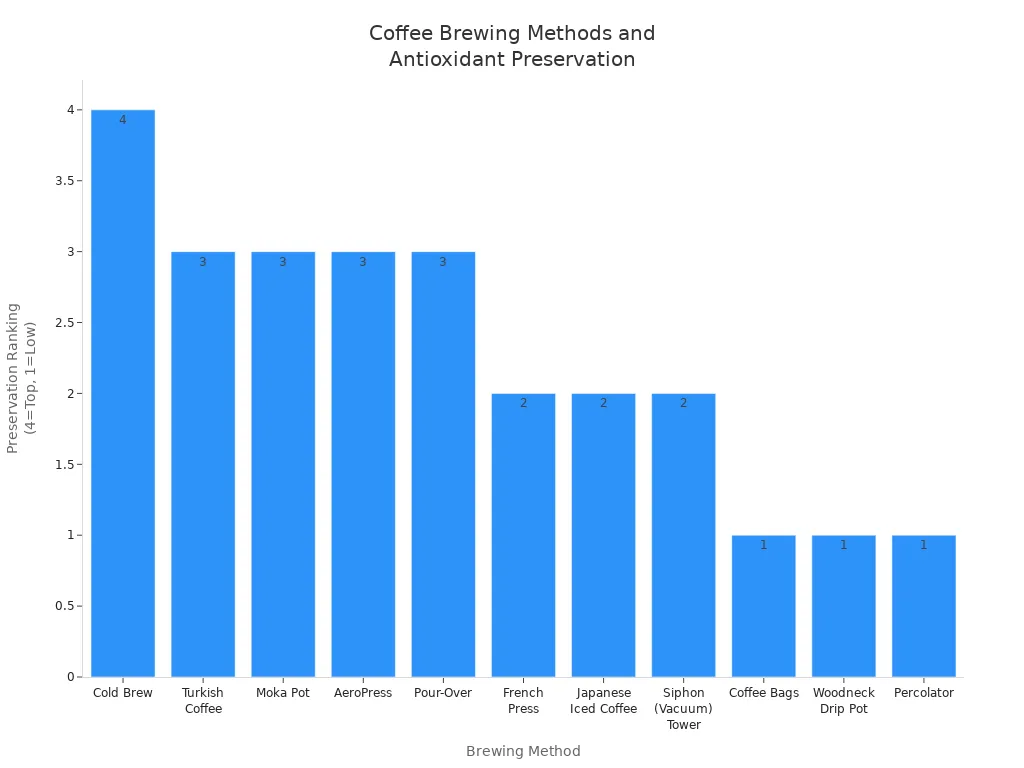
You get the most antioxidants from cold brew, pour-over, and Turkish coffee. These ways keep more healthy stuff in your cup. Water temperature matters too. Hot water pulls out more antioxidants, but too much heat can break them down. Cooler water keeps flavors and antioxidants, giving you a smoother taste.
Tip: Let your coffee cool before you drink it. Hot coffee can hurt your blood vessels and cause swelling. Drinking coffee at a safe temperature helps your heart and keeps you feeling good.
If you want your coffee to stay fresh and tasty, packaging matters. BN PACK coffee bags use nitrogen to keep air out. This stops your coffee from going bad and keeps its smell and taste. The bags have special valves. These let gases out but keep air from getting in. Your coffee stays fresh longer, and you get all the health benefits. Eco-friendly packaging protects your coffee without extra chemicals. You help the planet and enjoy better coffee.
Serving Size and Timing
How much coffee you drink and when you drink it matters for your health. Research shows drinking 4 to 5 cups a day gives you the most benefits. People who drink this amount have a lower chance of dying early. You get more antioxidants and help your heart, brain, and body.
When you drink coffee matters too. Drinking coffee late can make it hard to sleep. Even if you fall asleep, caffeine can lower deep sleep, which is important for memory and health. Try to drink your coffee in the morning. Set a time in the afternoon to stop drinking coffee. This helps your body get rid of caffeine before bed.
Note: For the best hydration, brew your coffee with water between 50-72°F. Your body takes in nutrients better at these temperatures.
Picking good beans, using the best brewing method, and watching how much and when you drink coffee help you get the most out of your daily cup. BN PACK coffee bags keep your beans fresh and full of smell, so every cup helps your wellness.
What to Avoid for Coffee Wellness
Additives and Sweeteners
You may like your coffee sweet, but adding sugar, cream, or artificial sweeteners is not good for your health. These extras can cause allergies, food problems, and stomach pain. Some people get tummy troubles or worse asthma. Sugar and cream can change your gut biome and make swelling in your body worse. They can also make your blood sugar go up fast. This can lead to weight gain and type 2 diabetes. Artificial sweeteners might sound healthy, but studies show they can make your BMI and waist bigger. They can also make you feel hungrier, so you eat more food.
Here’s a simple chart about sweeteners in coffee:
Sweetener Type | Impact on Calories | Impact on Glycemic Index | Diabetes Prevention |
|---|---|---|---|
Sugar | High | High | Negative |
Sucralose (artificial) | Low | Low | Positive |
Cream | High | Neutral | Negative |
If you want the best coffee for your health, drink it black or use plant-based milk. This helps lower your risk for diabetes and cancer.
Tip: Leave out sugar and cream. Your body will be happier, and you get more good things from your coffee.
Overconsumption Risks
Drinking too much coffee can cause problems. You might feel nervous, have trouble sleeping, or get cranky. Some people feel their heart beat fast. If you drink a lot, you can get used to caffeine, and it stops working as well. Too much caffeine can mess with your calcium and make your bones weaker. If you stop drinking coffee quickly, you might feel tired, get headaches, or have trouble thinking. Caffeine can also make acid reflux worse and make you need to pee more.
Here are some signs you drink too much coffee:
Feeling nervous or not sleeping
Feeling cranky or heart beating fast
Feeling tired when you stop
Headaches or trouble thinking
The FDA says most adults should have no more than 400 milligrams of caffeine each day. That is about two or three cups. Staying under this amount helps you get the good things from coffee, like lowering your risk for diabetes and cancer.
Who Should Limit Coffee
Some people need to be careful with coffee. If you have heart problems, caffeine can make your blood pressure go up. People with stomach problems should not drink a lot. Pregnant women should have less than 200 milligrams of caffeine a day, which is about one cup. Too much caffeine can make you feel sick, dizzy, or thirsty. If you have diabetes, talk to your doctor about how much coffee is safe. Kids and teens should not drink much coffee because their bodies react more.
Note: Everyone should drink coffee in moderation. If you have health problems, ask your doctor how much coffee is safe. This helps you get the most from your coffee and lowers your risk for diabetes and cancer.
Enhancing Your Coffee Routine

Healthy Add-Ins
You can make your coffee even better for your body by adding healthy extras. Try plant-based milks if you want to skip dairy. Almond and oat milk are good choices. They have fewer carbs and give you extra vitamins or fiber. Always check the label for added sugars.
Spices bring flavor and health perks. Cinnamon boosts antioxidants and tastes great. Nutmeg adds warmth without sugar. Ginger helps your digestion and may lower blood sugar. Cardamom can help you focus and relax. Some people add collagen peptides for more protein, which supports skin and joints.
Here are some healthy add-ins for your coffee:
Almond or oat milk (low carbs, vitamins, fiber)
Cinnamon (antioxidants, flavor)
Nutmeg (flavor, no sugar)
Ginger (digestion, blood sugar)
Cardamom (focus, relaxation)
Collagen peptides (protein, skin, joints)
You can mix and match these to create your own coffee as health ritual.
Mindful Rituals
Making coffee can be more than just a quick task. You can turn it into a mindful moment. When you brew your coffee slowly and pay attention to each step, you create a comforting routine. This helps you feel calm and happy. Taking a coffee break gives you time to relax and lower stress. Sharing coffee with friends builds a sense of community.
Here are some benefits of mindful coffee rituals:
You feel more positive and focused.
Your memory and attention improve.
You enjoy a relaxing break.
You connect with others.
Tip: Try sitting quietly with your coffee. Notice the smell, taste, and warmth. This simple act can boost your mood and help you feel present.
Pairing with Healthy Habits
You can get even more from your coffee by pairing it with other wellness habits. Drink your coffee after a walk or before meditation. This helps you stay mindful and supports your overall well-being. Journaling while sipping coffee can help you reflect and set goals. Enjoying coffee with friends strengthens social bonds, which is good for your mental health.
For the best results, keep your coffee fresh. BN PACK coffee bags use special closures to lock out moisture and oxygen. This keeps your beans fresh and full of aroma. The bags are easy to recycle and help lower carbon emissions. You support sustainability while optimizing your coffee ritual.
Note: Small changes in your coffee routine can make a big difference for your wellness.
You can boost your wellness with coffee by making smart choices every day. Pick quality beans, brew with care, and use BN PACK coffee bags to keep your coffee fresh and tasty. Try these simple steps:F
Drink coffee plain and black to support better glucose metabolism.
Women and older adults may get even more health benefits.
Enjoy coffee in moderation and skip the extra sugar or cream.
Start your day with a fresh cup and feel great. Your coffee routine can help you live healthier and happier! ☕🌱