
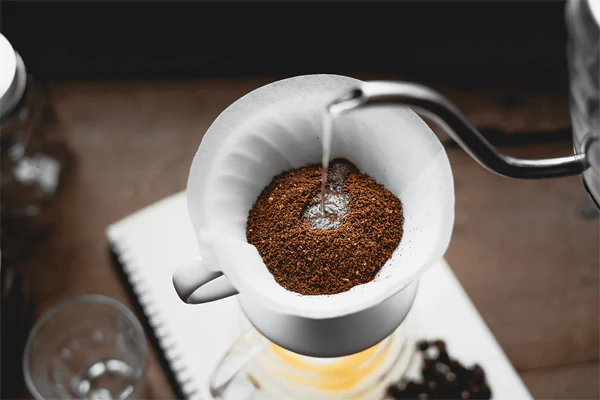
There is a captivating moment at the very beginning of brewing a truly great coffee. As the hot water first makes contact with the bed of fresh grounds, something magical happens. The coffee seems to take a breath, swelling and puffing up as a cascade of tiny bubbles rises to the surface, releasing an intensely fragrant and complex aroma. This beautiful and dynamic event, known in the coffee world as the “bloom,” is the coffee coming to life.
But this visual spectacle of the blooming coffee is far more than just a pretty display for baristas and coffee enthusiasts. It is a critical chemical event, the number one visual indicator of a coffee’s freshness, and the foundational first step towards a perfectly balanced and delicious extraction. Understanding what the bloom is and why it matters is one of the most significant steps any coffee lover can take to elevate their brewing from good to great.
We will explain why this effervescent puff is the single most crucial step for achieving an even extraction, and we will teach you how to master this simple yet profound technique for every cup you brew.
What is the Coffee Bloom?
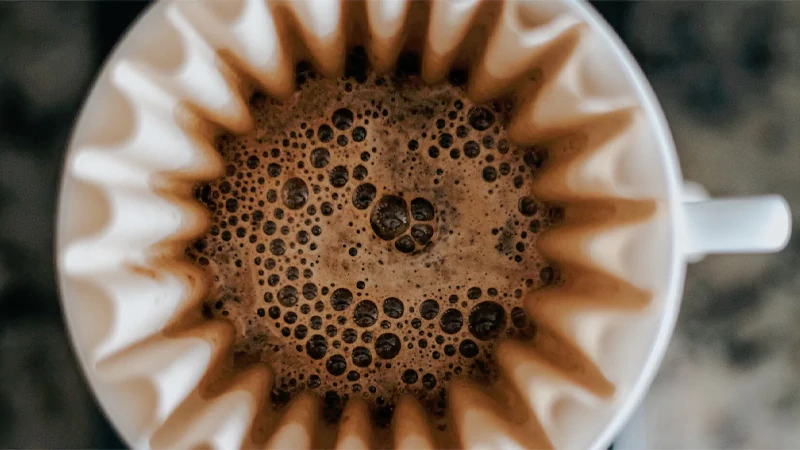
To put it simply, the coffee bloom is the rapid and visible release of trapped gases from roasted coffee grounds when they first come into contact with hot water. While other gases are present, the primary gas responsible for this effervescent event is carbon dioxide (CO2).
Where does the CO2 come from?
This trapped CO2 is a direct and essential byproduct of the roasting process. As green coffee beans are heated in the roaster, a series of complex chemical reactions occurs. Sugars and amino acids within the bean break down and reform in processes like the Maillard reaction and caramelization. These reactions not only create the delicious flavor and aroma compounds we love, but they also produce a significant amount of various gases, including a large volume of CO2.
As the roast finishes and the beans cool, this gas becomes trapped within the bean’s porous, honeycomb-like cellular structure. The bean acts as a tiny, pressurized container, holding onto this CO2.
The Undeniable Sign of Freshness
The size and vigor of a coffee bloom is the number one visual indicator of how fresh your coffee is. From the moment a coffee is roasted, this trapped CO2 begins to slowly escape, or “degas.” This process is fastest in the first few days after roasting and continues for several weeks.
This is why a bag of coffee roasted just a few days ago will produce a large, dramatic, and often foamy bloom. The grounds are still saturated with CO2. Conversely, a bag of coffee that was roasted months ago will have already lost most of its CO2, resulting in a very small, weak bloom, or perhaps no bloom at all. If there’s no bloom, you can be certain your coffee is not fresh.
More Than Just Gas
While CO2 is the primary driver of the physical bloom, it’s not the only thing being released. This initial release of gas also carries with it many of the most delicate and volatile aromatic compounds. This is why the aroma during the blooming coffee phase is so incredibly intense and fragrant—it’s your first and purest preview of the coffee’s aromatic potential.
Why Bloom Coffee? The Science of Even Extraction

Now we arrive at the most important question: beyond being a sign of freshness, why bloom coffee? The answer is the key to unlocking a truly balanced and delicious cup. The entire purpose of the bloom is to improve the quality of your extraction by getting rid of the CO2 before you begin the main brew.
The Problem: CO2 Actively Repels Water
The carbon dioxide trapped within the coffee grounds is hydrophobic, meaning it actively repels water. Imagine trying to pour water onto a mound of fine, dry sand; it takes a moment for the water to penetrate. Now imagine that sand is also actively pushing the water away.
If you skip the blooming phase and immediately pour all of your brew water onto the dry coffee grounds, a violent and chaotic reaction occurs. The massive volume of escaping CO2 gas pushes the water away, creating tiny, dry pockets inside the coffee bed where water cannot penetrate. More aggressively, the escaping gas can force “channels” or “tunnels” through the coffee grounds. Water, always following the path of least resistance, will rush through these channels, over-extracting the coffee it touches while completely bypassing other parts of the coffee bed.
The Unbalanced Result: A Bitter and Sour Cup
This phenomenon, known as “channeling,” is the enemy of a good extraction. It results in a brew that is both over-extracted and under-extracted at the same time.
- The coffee along the channels is over-extracted, as too much water passes over it too quickly. This pulls out the undesirable, bitter-tasting compounds.
- The coffee in the dry pockets or less-saturated areas is under-extracted, as it has insufficient contact with water. This fails to pull out the desirable sweet and complex compounds, leaving only the sour-tasting acids.
The final cup is a disappointing and unbalanced mess—simultaneously bitter and sour, and completely lacking the sweetness and clarity the coffee is capable of.
The Solution: Blooming for an Even Extraction
This is precisely what does blooming coffee do. By first pouring a small amount of hot water (typically about twice the weight of the coffee grounds) and letting the coffee bloom for 30-45 seconds, you allow the majority of the trapped CO2 to escape in a controlled manner. You can see it happening as the coffee bed swells and bubbles.
Once this initial degassing is complete, the coffee grounds are degassed, saturated, and ready to accept water evenly. When you begin your main pour, the water can now flow uniformly through the entire coffee bed, ensuring every single particle of coffee is extracted at the same rate. This leads to a balanced, even extraction that unlocks the coffee’s full potential for sweetness, clarity, and complex flavor.
How to Bloom Coffee: Techniques for Different Brew Methods
Now that you understand the crucial “why,” let’s focus on the practical “how.” While the principle of blooming remains the same across all brewing methods, the specific technique can vary slightly. Mastering this simple step is the key to unlocking a better extraction, no matter how you make your coffee.
General Principles of the Bloom
The golden rule for blooming coffee grounds is to use a water-to-coffee ratio of approximately 2:1. This means for every 1 gram of dry coffee grounds, you will use 2 grams (or 2ml) of hot water.
- The Recipe: Use a scale for accuracy. If you have 20 grams of coffee, you will use 40 grams of water for your bloom.
- The Timing: The ideal bloom time coffee is typically between 30 and 45 seconds. This gives the majority of the CO2 enough time to escape before you begin the main part of your brew.
The Pour-Over Bloom
This is the most classic and visually satisfying example of a coffee bloom. The transparency of the pour-over process allows you to see it happen in real-time.
- Place your dripper with its filter and ground coffee on a mug or server and set it on a scale. Tare the scale to zero.
- Start your timer and begin pouring your bloom water (2x the weight of your coffee) evenly over the grounds, typically in a gentle spiral motion to ensure all grounds are saturated.
- You will see the pour over coffee bloom immediately as the bed of coffee swells and bubbles.
- Wait for your chosen bloom time (30-45 seconds), allowing the bed to stop expanding and settle slightly before beginning your main pour. This is the essence of blooming coffee pour over.
The French Press Bloom
While less commonly discussed, blooming your coffee is just as important in an immersion brew like a French press. Because the grounds are fully submerged, any trapped CO2 can hinder water from fully penetrating the coffee particles.
- Add your coarse coffee grounds to the bottom of the French press carafe.
- Add your 2:1 ratio of hot water.
- Gently stir with a spoon or paddle to ensure all the floating grounds are fully saturated.
- Let it bloom for 30 seconds before adding the rest of your brew water and placing the plunger on top.
The Espresso “Bloom” (Pre-Infusion)
You can’t manually bloom espresso, but high-end espresso machines perform this step automatically in a process called “pre-infusion.”
Before applying the full 9 bars of pressure, the machine will first introduce a small amount of low-pressure water to the compacted puck of coffee for a few seconds. This gentle wetting saturates the puck and allows the trapped CO2 to escape in a controlled manner. This prevents the high-pressure water from immediately blasting channels through the dry puck, leading to a much more even extraction, less channeling, and a more balanced, delicious shot.
Automatic Drip Makers
Standard, inexpensive drip coffee makers do not perform a bloom; they simply spray water continuously, which is a key reason they often produce a sub-par, unbalanced cup.
However, the specialty coffee industry has recognized the bloom’s importance. High-end brewers, especially those certified by the Specialty Coffee Association (SCA), now frequently include a drip coffee maker with bloom feature. This function, often called a “pre-infusion cycle,” mimics the manual pour-over process. The machine will spray just enough water to wet the grounds and then pause for 30-45 seconds, allowing the coffee to bloom before continuing with the rest of the brew cycle.
The Source of the Bloom: Packaging and the Degassing Valve
After learning about the importance of the bloom, a crucial question arises: If freshly roasted coffee is constantly releasing CO2, how does it stay trapped in the beans long enough to reach your home brewer? The answer lies in a brilliant piece of packaging technology that solves a fundamental dilemma for every coffee roaster.
The roaster’s challenge is this: immediately after roasting, coffee begins to release a large volume of CO2 gas for several days. If a roaster were to seal this fresh coffee in a completely airtight, standard bag, the bag would inflate like a balloon and eventually burst. However, if they were to let the coffee sit out in the open air to release its gas before packaging, it would be exposed to oxygen and would be stale before it ever reached a store shelf.
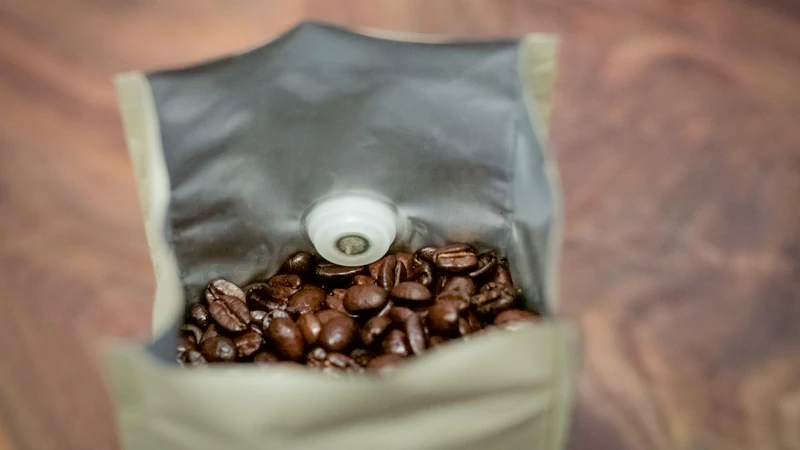
The ingenious solution to this problem is the one-way degassing valve—that small plastic circle you see on the front of every high-quality coffee bag. This valve is a one-way door. It has a special membrane that is designed to let the CO2 molecules from inside the bag push their way out, but it does not allow oxygen molecules from the outside to get in.
The promise of a beautiful coffee bloom starts with this packaging. A great coffee bag from BN Pack is designed specifically for this purpose. The one-way valve is essential technology, allowing roasters to package their coffee immediately after roasting. This preserves the fresh-roasted flavor by locking out oxygen, while simultaneously trapping the perfect amount of CO2 that will later create that satisfying and flavorful bloom for you, the customer. It is the final, critical step in ensuring the coffee arrives with its full potential intact.
Conclusion: The First Step to a Better Cup
The coffee bloom is a perfect example of the art and science of brewing coming together. It is a beautiful visual confirmation that you are working with fresh, high-quality coffee, and it is a scientifically essential step for achieving a balanced and delicious extraction. By understanding that the bloom is the simple act of releasing trapped CO2, you can appreciate why it is so critical.
This initial degassing of the coffee grounds is your best defense against channeling, the phenomenon that leads to a cup being both bitter and sour at the same time. By taking a moment to let your coffee bloom, you ensure that the water can interact with the grounds evenly, unlocking the full potential for sweetness, clarity, and complexity that the roaster worked so hard to create.
Don’t think of the bloom as a fussy, optional step reserved for professional baristas. Think of it as the simple, foundational first step that anyone can—and should—take. Mastering the bloom is the single most impactful thing you can do to dramatically and consistently improve the quality of every cup of coffee you brew at home.