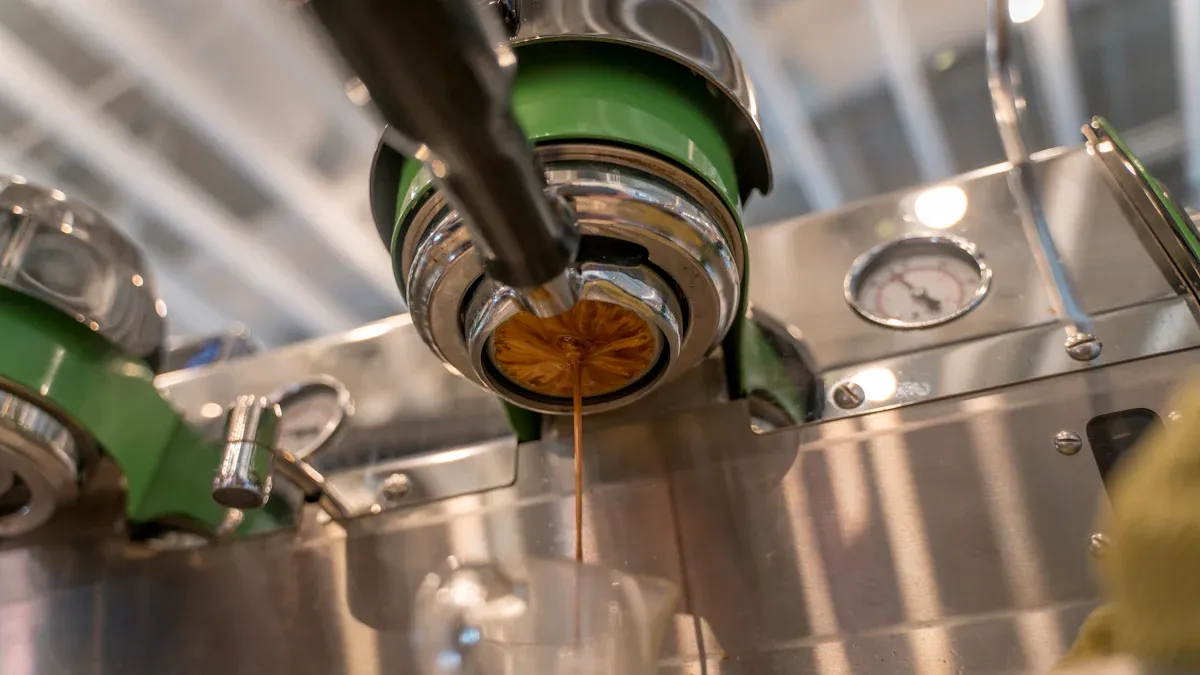
Coffee packaging machines handle weighing, filling, and sealing coffee bags with speed and accuracy. You will notice how these machines reduce the need for manual labor and help your business produce hundreds of bags each hour. Automation ensures every bag has the same weight, which keeps customers happy. Many machines work with different bag types and support eco-friendly materials. You can choose from several machine options to fit your goals for efficiency and sustainability.
Key Takeaways
Coffee packaging machines automate weighing, filling, and sealing, increasing efficiency and accuracy in production.
Choose between semi-automatic and fully automatic machines based on your business size and production needs.
Automation reduces labor costs and waste, leading to higher profits and consistent product quality.
Select eco-friendly packaging materials to meet consumer demand and support sustainability efforts.
Consider both initial costs and long-term savings when investing in coffee packaging machines.
Automation Process
Weighing, Filling, and Sealing Steps
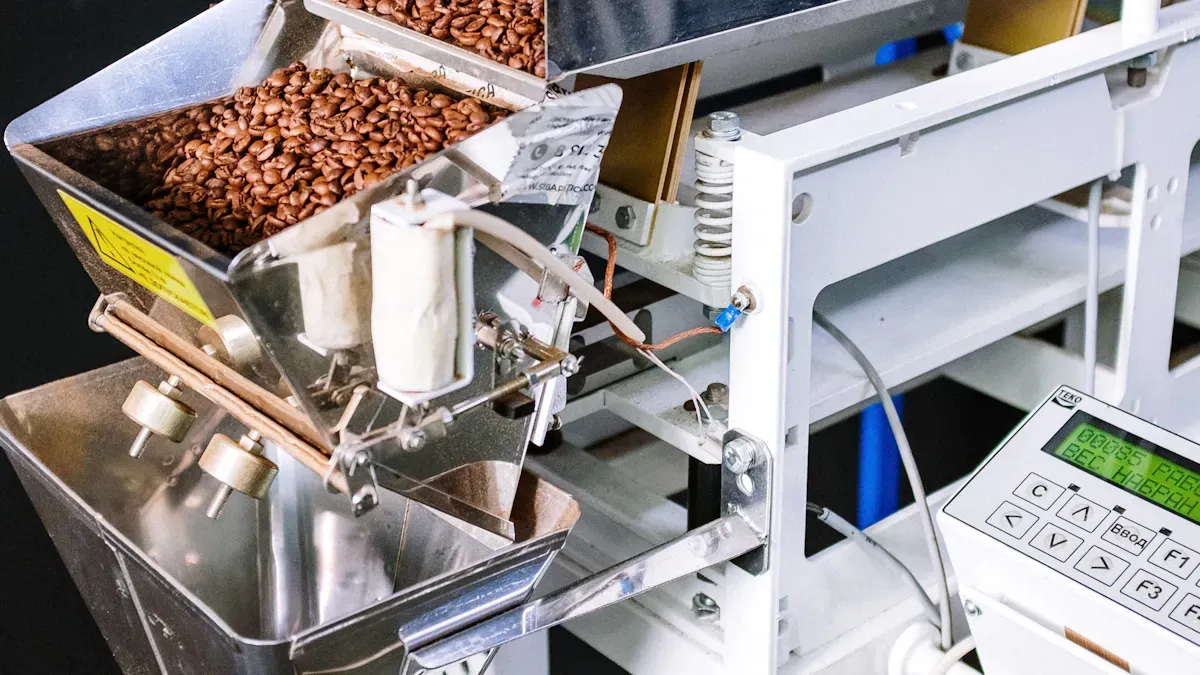
You can see how coffee packaging machines automate every step from start to finish. The process follows a clear sequence to make sure each bag is filled and sealed with accuracy. Here is how the typical process works:
The machine starts with a large roll of packaging material. It unwinds and guides the film through rollers.
The flat film folds, and a heated vertical sealing bar creates a back seal. This forms a continuous tube.
The machine dispenses coffee into the tube. It uses weighing fillers for ground coffee or beans. The filler stops when the target weight is reached.
Heated horizontal sealing jaws clamp down to make the top seal of one bag and the bottom seal of the next.
A cutting blade separates the finished bag. The bag moves onto a conveyor belt for the next step.
This process happens quickly and with little need for human help. You can rely on these machines to handle weighing, bag filling, and even date printing. They work with many types of packaging materials and keep the process efficient.
Tip: Automated weighing systems can reach an accuracy of ±1 gram or better. This level of precision is hard to match with manual weighing.
Key Components and Workflow
You will find several important parts inside coffee packaging machines. Each part has a special job to do. The table below shows the main components and what they do during operation:
Component | Description |
|---|---|
Capsule Loading | Feeds and orients capsules, removing damaged ones with sensors. |
Coffee Dosing | Uses an auger filler to deliver the right amount of coffee by weight. |
Tamping and Compacting | A piston compacts the coffee for even brewing. |
Nitrogen Flushing | Injects nitrogen to remove oxygen and keep coffee fresh. |
Lid Placement | Places lids on capsules for proper sealing. |
Heat Sealing | Seals the lid to the capsule, keeping air out and freshness in. |
You can trust these machines to keep each bag at the right weight. Multihead weighers use sensitive load cells and computer controls. They do not need adjustments between batches. This means you get the same results every time, which helps with customer satisfaction and cost control.
Digital Tools and Complementary Equipment
Modern coffee packaging machines use digital tools to make your job easier. These tools help you monitor and control the process with less effort. Here are some common digital tools you might find:
Digital Tool | Description |
|---|---|
AI | Improves efficiency and reduces the need for manual labor. |
Machine Vision | Checks quality and monitors the packaging process. |
Multi-language HMIs | Lets you use the machine in different languages. |
Smart HMI | Touchscreen panels for easy adjustments and monitoring. |
PLC | Connects all parts of the machine for smooth operation. |
You can also add extra equipment to improve safety and quality. For example:
Metal detectors check for metal pieces in the coffee, keeping your product safe.
Checkweighers make sure each bag has the right weight.
Sensors and AI in combination weighers help reduce waste and improve quality control.
These features help you meet safety standards like HACCP and BRC. They also lower downtime and keep your packaging line running smoothly.
Types of Coffee Packaging Machines
Semi-Automatic Machines
You might choose semi-automatic machines if you run a small coffee business or a startup. These machines help you package coffee efficiently without a big investment. You can operate them with just one or two people. Here are some features you will find:
Cost-effective for small operations
Great for handling smaller batches
Focus on weighing and filling coffee bags
Some models also seal the bags
Easy to use and maintain
You often see these machines in businesses that want professional results but do not need high-speed production. They fit well in places with limited space and budget.
Tip: Semi-automatic machines give you control over each step, so you can adjust settings for different coffee types.
Fully Automatic Machines
If you need to package large amounts of coffee every day, fully automatic machines work best. These machines handle almost everything for you. You can process over 50,000 to 100,000 packages per day with high-speed models. Here are some key advantages:
High-speed packaging for big production needs
Lower labor costs because one operator can run two systems
Automated check weighing removes the need for manual inspection
Real-time data helps the machine adjust itself for better results
You will see these machines in large factories or companies that want to save time and money. They keep your coffee packaging line running smoothly with little human help.
Specialized Packaging Systems
You can also find specialized coffee packaging machines for unique needs. Some popular systems include pouch, vacuum, VFFS (Vertical Form Fill Seal), and HFFS (Horizontal Form Fill Seal) machines. Each system works best for certain products and packaging styles.
Feature | VFFS (Vertical Form Fill Seal) | HFFS (Horizontal Form Fill Seal) |
|---|---|---|
Orientation | Operates vertically, uses gravity for filling | Operates horizontally, needs more space |
Product Handling | Best for powders and granules | Good for solid or delicate products |
Speed and Efficiency | Faster, ideal for large-scale packaging | Slower, but gentle and flexible |
Material Usage | May use more film and create more waste | More efficient, less material waste |
Application Versatility | Works for many products, including liquids | Best for solid items and pre-formed containers |
VFFS machines fill coffee from above and work well for powders or beans. HFFS machines wrap products from the side and handle delicate items with care. You can pick the system that matches your product and business goals.
Comparing Machine Options
Operation and Labor Needs
You need to think about how many people will run your packaging line. Semi-automatic machines often need two or three operators. Fully automatic machines usually need only one operator. The table below shows the difference:
Machine Type | Required Operators |
|---|---|
Semi-Automatic | 2–3 operators |
Fully Automatic | 1 operator |
Automation makes your work easier. You do not need as many skilled workers for manual tasks. You still need skilled operators to set up, monitor, and maintain the machines. Super-automatic models need people who understand technology and can solve problems quickly.
Automation reduces manual tasks.
You need fewer skilled workers for basic jobs.
Skilled operators are important for running and fixing machines.
Production Scale Suitability
You should match your machine choice to your business size. Semi-automatic machines work well for small coffee shops or roasters. They handle small batches and let you control each step. Fully automatic machines fit large factories or companies with high output. These machines package thousands of bags each day with little help.
If you plan to grow your business, you may want a machine that can scale up. Super-automatic machines help you keep up with big orders and busy seasons. Smaller machines give you flexibility for custom blends or limited runs.
Tip: Choose a machine that matches your current needs but can also support your future growth.
Cost and Flexibility
You need to consider both the price of the machine and the costs over time. The table below shows what you should think about:
Aspect | Initial Investment | Long-term Costs |
|---|---|---|
Purchase Price | Significant | N/A |
Maintenance Costs | N/A | Regular upkeep required |
Energy Consumption | N/A | Ongoing operational expense |
Labor Savings | N/A | Reduced manual labor costs |
Waste Reduction | N/A | Less product waste due to automation |
Efficiency Improvement | N/A | Streamlined operations and output |
You will spend more at first for fully automatic coffee packaging machines. Over time, you save money because you need fewer workers and waste less coffee. Many medium-sized roasters see a payback period of 8 to 14 months. This happens because you save on labor, reduce film waste, and fill bags more accurately.
Note: Think about both short-term and long-term costs before you decide.
Benefits of Coffee Packaging Machines
Efficiency and Speed
You can boost your packaging speed by using modern machines. Manual packaging often limits how many bags you can fill each hour. Machines help you reach much higher speeds. Look at the table below to see how different machines compare:
Machine Type | Packaging Speed (bags per minute) |
|---|---|
High-Speed Machines | 60-120+ |
Standard-Speed Machines | 30-60 |
Some machines can fill up to 4,200 bags per hour. Even standard-speed machines can handle 1,800 to 2,000 bags per hour. This means you can meet big orders and keep up with demand.
Machine Type | Output Range (bags per hour) |
|---|---|
High-speed machine | 2100 – 2400 |
Standard-speed machine | 1800 – 2000 |
Superfast machine | 3900 – 4200 |
Tip: Faster packaging helps you deliver fresh coffee to your customers more quickly.
Consistency and Quality
You want every bag to have the same amount of coffee and a strong seal. Machines use special systems to measure coffee with high accuracy, often within ±0.1 grams. This keeps each package the same. The sealing process uses heat and pressure to make airtight seals. This protects the coffee from air and keeps it fresh.
Machines clear away coffee powder before sealing to make sure the seal is complete.
Wider seal jaws and longer sealing times help with fine powders.
Inline inspection systems check seals for leaks or weak spots.
Modern machines also include quality control features. You may find metal detectors and check weighers that stop bags with problems. These features help you avoid waste and keep your product safe.
Labor and Cost Savings
Switching to automated packaging can save you a lot of money. You need fewer workers to run the machines. The table below shows how much you can save each year:
Packaging Type | Annual Labor Cost | Annual Savings |
|---|---|---|
Semi-Automatic | $70,000 | N/A |
Automatic | $17,500 | $52,500 |
Many companies report a 35–42% drop in labor hours after switching to machines. Some brands save up to 60% on labor costs. Machines also reduce waste by filling each bag with the right amount of coffee. This means you use less raw material and make more sellable products.
Note: Reducing weight errors from 2% to 1% can give you over 80 extra packages every hour.
Sustainable Packaging
Eco-Friendly Material Compatibility
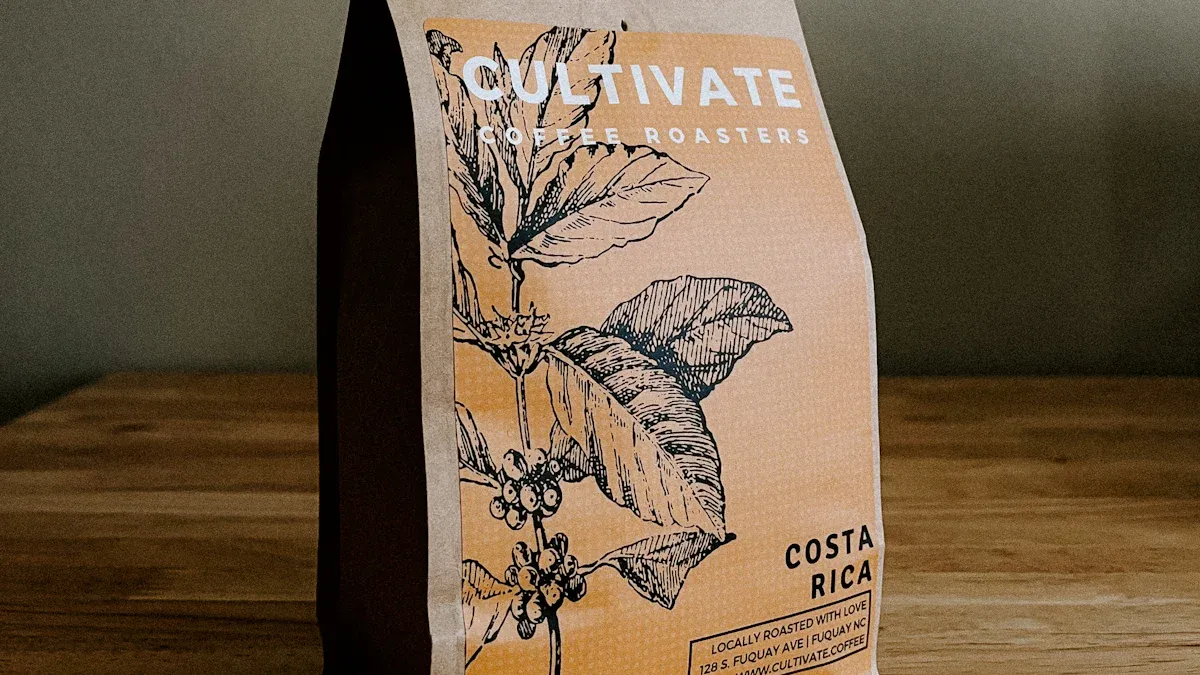
You can choose from several eco-friendly materials when you package coffee. Many coffee packaging machines work well with these materials. Some options include compostable PLA and Kraft bags. These materials help reduce waste and support a greener planet.
Eco-Friendly Material | Description | Compatibility |
|---|---|---|
Compostable PLA | Sustainable, reduces environmental impact | Compatible with coffee packaging machines |
Kraft Bags | 100% natural, biodegradable, and compostable | Compatible with coffee packaging machines |
You may need to adjust your machine settings for some materials. For example, PLA bioplastics and industrial compostable films often require changes in temperature or sealing time. Kraft paper usually works with most machines, but you should check if your equipment can seal and fill it properly. Choosing the right material helps your business show its commitment to the environment.
Regulatory and Consumer Trends
You see new trends in coffee packaging every year. Many countries now encourage or require the use of compostable or recyclable packaging. Some brands use minimalist designs to cut down on waste. Others choose biodegradable films made from plants. These changes help reduce landfill waste and protect the environment.
Compostable coffee bags break down in compost piles.
Recyclable materials, like mono-layer plastics, are easier to recycle.
Minimalist packaging uses fewer resources and appeals to modern buyers.
Biodegradable films decompose over time, leaving less waste.
Consumers also care about sustainability. Many people look for brands that use eco-friendly packaging. They want products that match their values. Some buyers will even pay more for coffee that comes in green packaging.
Tips for Sustainable Choices
You can take simple steps to make your packaging more sustainable:
Use technology like digital printing and AI tools to design better packaging.
Check if your packaging works well with automated systems.
Choose materials that are easy to recycle or compost.
Run lifecycle assessments to see how your packaging affects the environment.
Tip: Small changes in your packaging can make a big difference for the planet and your brand image.
You can rely on coffee packaging machines to automate weighing, filling, and sealing, which boosts efficiency and ensures every bag meets quality standards. Semi-automatic and fully automatic machines suit different business sizes and needs. Automation brings precise measurements, less waste, and higher profits, but sustainable packaging can present challenges like higher costs and new regulations.
Benefits of Automation | Challenges of Sustainable Packaging |
|---|---|
Improved efficiency | High production costs |
Enhanced product quality | Regulatory complexity |
Reduced labor dependence | Need for consumer education |
When choosing a machine, consider these factors:
Type of coffee you package
Production capacity
Material compatibility
Freshness protection features
Ease of operation
Available space
Selecting the right machine helps you meet your production goals and support sustainability.
FAQ
What types of coffee can you package with these machines?
You can package ground coffee, whole beans, and even specialty blends. Some machines also handle single-serve capsules or pods. Always check the machine’s specifications for compatibility.
How do you clean and maintain a coffee packaging machine?
You should follow the manufacturer’s cleaning guide. Most machines have removable parts for easy washing. Regular maintenance helps prevent breakdowns and keeps your coffee safe.
Can you use compostable or recyclable bags in these machines?
Yes, many modern machines support eco-friendly materials. You may need to adjust sealing temperatures or settings for best results.
How do you choose the right machine for your business?
Factor | What to Consider |
|---|---|
Production Size | Small batch or large scale |
Budget | Initial cost and long-term ROI |
Material Type | Bag compatibility |
Labor | Number of operators needed |
Review your needs before you decide.