For coffee lovers, the morning ritual is sacred. And at the heart of that ritual is the age-old question that has sparked countless debates in coffee shops and kitchens around the world: does light roast have more caffeine than dark roast? It’s a question that seems simple on the surface, but the answer is surprisingly complex and nuanced. Many people believe that a darker, bolder-tasting coffee packs a bigger caffeine punch, while others swear by the energizing power of a light roast. So, what coffee roast has more caffeine? Let’s delve into the science and psychology behind coffee roasting to uncover the truth.
Understanding the Roasting Process: How Heat Transforms the Bean
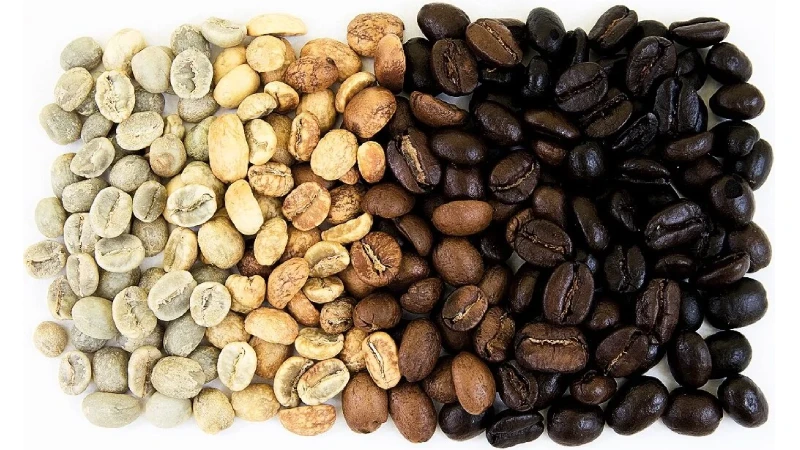
Before we can tackle the question of caffeine, it’s essential to understand what happens during the roasting process. Roasting is what transforms green, raw coffee beans into the aromatic, flavorful beans we know and love. During roasting, the beans are heated to temperatures between 370°F and 540°F (188°C and 282°C). This process causes a series of chemical reactions that create the complex flavors and aromas we associate with coffee.
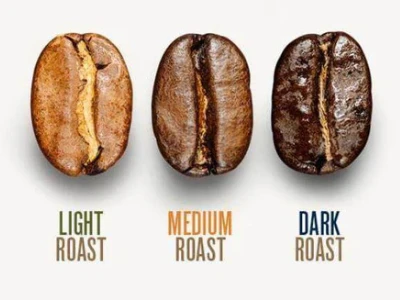
The length of time the beans are roasted determines whether they are a light, medium, or dark roast.
- Light Roast: Light roast beans are roasted for a shorter period, reaching an internal temperature of about 356-401°F (180-205°C). They are light brown in color and have no oil on their surface. Light roasts are known for their bright, acidic, and fruity flavors, as they retain more of the original characteristics of the coffee bean. A common question is, does light roast coffee have the most caffeine?
- Medium Roast: Medium roast beans are roasted a bit longer, to an internal temperature of about 410-428°F (210-220°C). They have a medium brown color and a slightly sweeter, more balanced flavor profile than light roasts.
- Dark Roast: Dark roast beans are roasted for the longest time, reaching an internal temperature of 437-482°F (225-250°C). They are dark brown, almost black, in color and often have an oily surface. Dark roasts are known for their bold, rich, and sometimes smoky or bitter flavors.
The Caffeine Question: A Matter of Measurement
Now for the million-dollar question: does light roast or dark roast have more caffeine? The answer, frustratingly, is… it depends on how you measure your coffee.
Measuring by Weight: The Light Roast Advantage
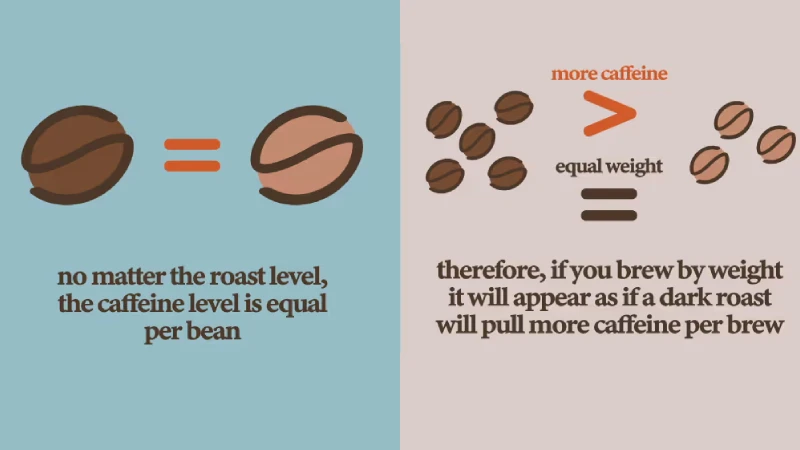
If you measure your coffee by weight (which is the most accurate way to brew coffee), then light roast coffee has more caffeine. Why is this? Caffeine is a very stable compound, and the roasting process doesn’t significantly alter the amount of caffeine in a single coffee bean. However, as the beans are roasted, they lose water and expand in size. This means that dark roast beans are less dense than light roast beans. So, if you take 15 grams of light roast beans and 15 grams of dark roast beans, you will have more individual light roast beans. Since each bean has roughly the same amount of caffeine, the 15 grams of light roast coffee will have slightly more caffeine. This is the reason behind the statement that lighter coffee has more caffeine.
So, why do light roasts have more caffeine when measured by weight? It’s all about density. The longer roasting time for dark roasts causes the beans to lose more mass, primarily water. Therefore, a given weight of light roast will contain more beans than the same weight of dark roast, and thus, more caffeine. This answers the question: do lighter roasts have more caffeine? Yes, when measured by weight.
Measuring by Volume (Scoop): The Dark Roast Surprise
However, most people at home don’t use a scale to measure their coffee; they use a scoop. And this is where things get interesting. Because dark roast beans are larger and less dense than light roast beans, a scoop of dark roast beans will contain less mass than a scoop of light roast beans. But wait, we just said light roast has more caffeine by weight! This is where the expansion of the beans during roasting comes into play. The dark roast beans are bigger. So, a scoop of dark roast beans can, in some cases, have more caffeine than a scoop of light roast beans, because you are getting more coffee mass in the scoop, even though the beans are less dense. This is why some people will argue that dark roast has more caffeine.
This volumetric versus gravimetric debate is central to understanding the caffeine content in coffee roasts. To be clear, the difference in caffeine between light and dark roasts is minimal, regardless of how you measure it. But for those who want to maximize their caffeine intake, these small details matter. So, to answer the question, which has more caffeine, light roast or dark roast?, the most accurate answer is: it depends on your measurement method.
Beyond the Roast: Other Factors That Influence Caffeine Content
While the roast level gets all the attention, it’s far from the only factor that determines the caffeine content of your cup of coffee. In fact, other factors have a much more significant impact.
- Bean Type: The type of coffee bean you use is arguably the most important factor. Robusta beans have almost double the caffeine content of Arabica beans. So, if you’re looking for a serious caffeine jolt, a light roast Robusta will give you a much bigger kick than a dark roast Arabica.
- Brewing Method: How you brew your coffee also plays a huge role. The longer the coffee grounds are in contact with water, the more caffeine will be extracted. This is why a cup of drip coffee can have more caffeine than a shot of espresso. Cold brew, which is steeped for a very long time, can be particularly high in caffeine.
- Grind Size: A finer grind will have more surface area, which allows for more caffeine to be extracted during brewing.
- Water Temperature: Hotter water is more efficient at extracting caffeine than cooler water.
So, when someone asks, “what has more caffeine dark roast or light roast coffee?”, it’s important to remember that the answer is not as simple as pointing to one roast over the other.
The Psychology of “Strong” Coffee: Why We Equate Dark with Potent
If the caffeine difference between roasts is so small, why is there such a widespread belief that dark roast coffee has more caffeine? The answer likely lies in psychology. We tend to associate the strong, bitter, and “roasty” flavors of dark roast coffee with strength and potency. The rich, dark color and the bold flavor profile can trick our brains into thinking we’re getting a more caffeinated beverage. In reality, the “strength” of the coffee is referring to its flavor, not its caffeine content. So, is dark coffee stronger than light? In terms of flavor, yes. In terms of caffeine, not necessarily.
Choosing Your Roast: A Guide to Finding Your Perfect Cup
So, with all this information, how do you choose the right roast for you?
- If you prefer a bright, acidic, and nuanced flavor profile, and you want to taste the origin characteristics of the coffee bean, a light roast is the way to go. And if you measure by weight, you’ll get a slight caffeine bonus.
- If you enjoy a bold, rich, and chocolatey flavor profile, and you’re not a fan of acidity, a dark roast is your best bet.
- If you want the best of both worlds, a medium roast offers a balanced and well-rounded cup.
Ultimately, the best roast is the one you enjoy the most. Don’t let the pursuit of a few extra milligrams of caffeine steer you away from the flavors you love.
The Final Verdict: Debunking the Myths
So, let’s circle back to our original question: does light roast coffee have more caffeine than dark roast? The answer is a qualified “yes” – if you measure by weight. But the difference is negligible for the average coffee drinker. The belief that darker roasts have less caffeine is technically true on a bean-for-bean basis by weight, but the way we brew coffee often evens things out.
Here’s a quick summary of what we’ve learned:
- Light roast has most caffeine when measured by weight because the beans are denser.
- Dark roast more caffeine is a possibility when measured by volume (scoop), but this is not always the case.
- The coffee roast caffeine content is only one piece of the puzzle. The type of bean, brewing method, and grind size have a much bigger impact on the final caffeine content of your cup.
- The idea that dark roast means more caffeine is a common misconception, likely due to the strong flavor of dark roasts.
So, the next time you find yourself in a debate about light vs dark roast coffee caffeine, you’ll be armed with the facts. The truth is, you can enjoy any roast you like without worrying too much about the caffeine. The most important thing is to find a coffee that you love and a brewing method that brings out its best qualities. Whether you’re a fan of a delicate and fruity light roast or a bold and smoky dark roast, there’s a perfect cup of coffee out there for you.