You’ve spent months, maybe even years, perfecting your food product. The recipe is flawless, the taste is unforgettable, and you know you have something special. Now comes the most critical challenge: How do you convince a busy shopper, navigating a crowded grocery aisle, to choose your product over the dozens of others vying for their attention?
In a retail environment, your product packaging design is your single most important marketing tool. It is your silent salesperson, your brand ambassador, and your storyteller, all rolled into one. It has less than three seconds to grab a consumer’s attention, communicate its value, and make a sale.
This guide will break down the five “must-haves” for effective food packaging design. We won’t just talk about pretty pictures or trendy fonts; we’ll explore the strategic pillars that turn a simple container into a powerful brand asset that protects your product and drives sales.
The 5 Must-Haves for High-Impact Food Packaging Design
Creating packaging that captivates and converts is a science as much as it is an art. It requires a strategic approach that balances aesthetics, psychology, and functionality. By focusing on the following five essential pillars, you can develop a food package design that not only looks great but performs brilliantly on the shelf.

a. Must-Have #1: Crystal Clear Clarity
Before anything else, before color, before story, your packaging must achieve absolute clarity. A busy shopper needs to be able to answer two fundamental questions in less than three seconds: “What is this product?” and “What brand makes it?” If they have to spend time deciphering your abstract logo or confusing product name, they will simply move on.
The most common mistake new brands make is prioritizing artistry over communication. In an attempt to be minimalist or overly creative, they make their packaging ambiguous. Is it crackers or cookies? Cereal or granola? This moment of hesitation is a lost sale. Your design should communicate its purpose instantly. This means using clear, legible typography for your product name, a concise description of what it is (e.g., “Organic Dark Chocolate Almonds”), and a prominent brand logo. The primary job of your packaging design for food is to communicate, not to confuse.
b. Must-Have #2: A Compelling Brand Story
Once a customer knows what your product is, you need to give them a reason to connect with your brand. People don’t just buy products; they buy stories, values, and identities. Your packaging is the primary canvas for telling your story and is the heart of effective food packaging branding.
Generic packaging that looks like a stock template fails to create an emotional connection. Your design must be an authentic expression of your brand’s unique personality. Ask yourself: who are you?
- Are you a fun, playful snack brand for kids? Your colors should be bright, your typography bubbly, and your imagery whimsical.
- Are you a rustic, organic, farm-to-table product? Your branding food packaging should use earthy tones, natural-feeling materials, and imagery that evokes craftsmanship.
- Are you a luxurious, gourmet treat? Your design should be elegant, minimalist, and use premium finishes like embossing or foil stamping.
The colors you choose, the fonts you use, and the tone of voice in your copy all work together to build a brand identity that resonates with your target audience.
c. Must-Have #3: Unmissable Shelf Impact
Your product will not exist in a vacuum. It will be sitting on a shelf, surrounded by dozens of competitors all screaming for attention. Your package must be a visual disruptor; it must have the power to catch the shopper’s eye from ten feet away.
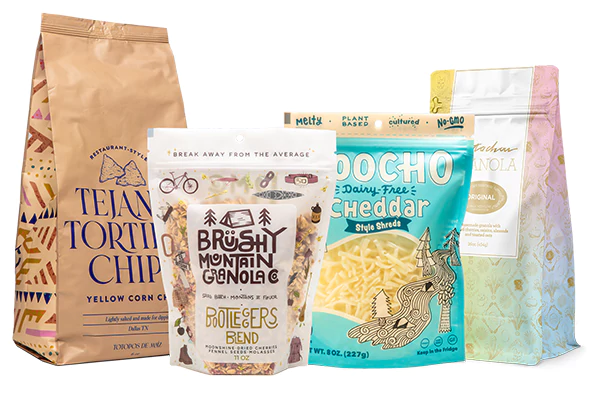
Most products in a given category tend to blend in. They use the same dominant colors, shapes, and design layouts as their competitors. Your opportunity is to be different. The first step is to research your competition. Go to the store and look at the aisle where your product will live. If every other cookie bag is red, consider using a bold blue or a vibrant green. If all your competitors use realistic photography, consider using bold, graphic illustrations. Explore unique food packaging structures or finishes, like a soft-touch matte finish in a sea of glossy bags. The goal of creative food packaging is to break the visual pattern and be the one thing that a customer’s eye is naturally drawn to.
d. Must-Have #4: Practical Functionality
A beautiful package that is frustrating to use will not earn a repeat purchase. The product packaging design must consider the entire user experience, from the moment it’s picked up in the store to the moment the last bit of product is used at home.
We have all experienced bad packaging: the bag of chips that is impossible to open without tearing down the side, the zipper that breaks on the first try, or the cookie package that can’t be resealed, leading to stale food. These negative experiences are directly associated with your brand.
Think through the practical journey of your product.
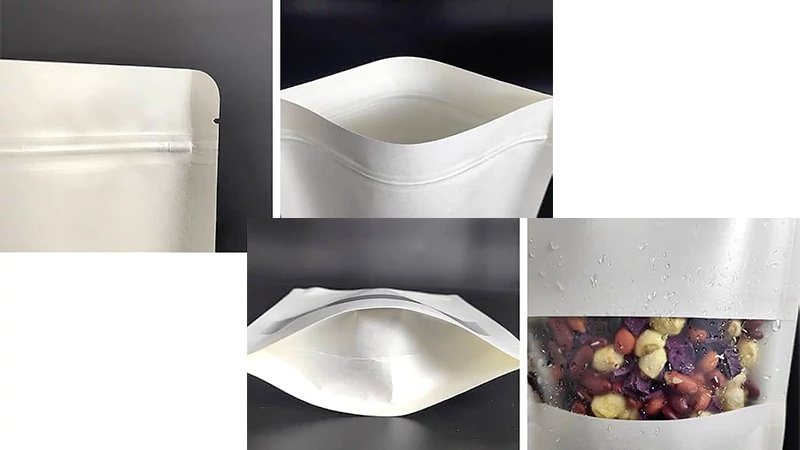
- Is it easy to open? A clean tear notch is essential.
- Can it be securely resealed? For any multi-serving product, a high-quality, reliable zipper is a must-have for maintaining freshness.
- Is it durable? The material must be strong enough to protect the product inside from being crushed or damaged during shipping and handling. A functional package shows that you respect both your customer and the quality of your product.
e. Must-Have #5: Honesty and Transparency
In a world filled with exaggerated marketing claims, honesty is a powerful tool for building brand loyalty. Your packaging should build trust by setting clear and accurate expectations for the customer.
One of the biggest mistakes a brand can make is to use over-produced product photography that looks nothing like the actual food inside. Showing a cookie dripping with molten chocolate when the real product has just a few small chips leads to customer disappointment.
The best way to show honesty is to show the product itself. A strategically placed, crystal-clear product window is an incredible confidence builder. It allows your high-quality ingredients to do the selling for you and proves that you have nothing to hide. This transparency, combined with a clear, easy-to-read ingredient list and nutrition panel, establishes your brand as trustworthy. In the modern food on market, customers reward the brands they trust.
From Vision to Reality: Partnering with a Packaging Expert
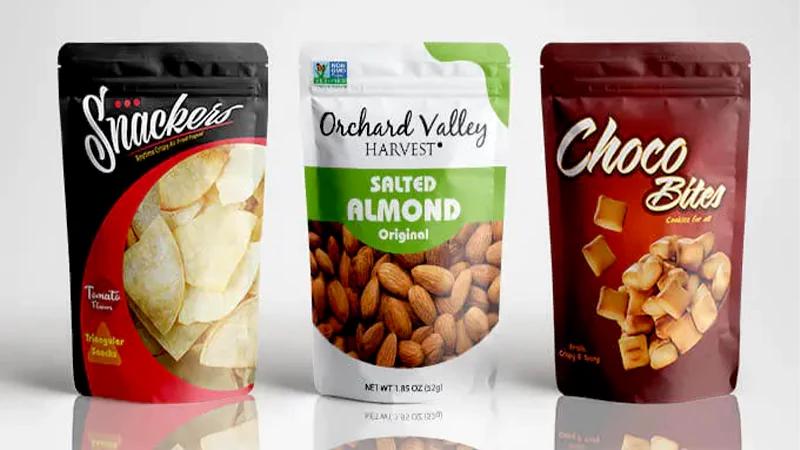
Understanding these five essential principles of effective design is the crucial first step. It gives you a clear vision for your packaging and a strategic brief for your brand. However, the next step is turning that vision into a physical, retail-ready package that is durable, food-safe, and beautifully executed. This is where a great idea meets the complex realities of manufacturing.
Sourcing the right multi-layer film to ensure freshness, ensuring your vibrant brand colors are printed accurately and consistently, and producing a high-quality finished pouch with a reliable seal requires deep technical expertise. For a food entrepreneur, whose passion is creating a delicious product, navigating the world of packaging production can be a daunting task.
This is where a partnership with an expert food packaging design company becomes invaluable. At BN Pack, we bridge the gap between a great design concept and a great final product. We function as your packaging creator, taking your vision and using our manufacturing expertise to bring it to life. Our team of specialists works with you to select the right materials, structures, and features to ensure your food brand packaging is not only visually stunning but also functional and protective. We help you create the perfect home for your product, providing a final food product packaging design that performs flawlessly from our factory to your customer’s hands.
Conclusion
As we’ve seen, effective food packaging is a careful and strategic balancing act. It is a fusion of art and science, psychology and logistics. A successful design is one that achieves clarity, tells a compelling brand story, creates a powerful impact on the shelf, offers practical functionality, and builds trust through honesty. These five “must-haves” are the pillars that support a packaging strategy that doesn’t just look good, but actively works to sell your product.
Ultimately, your food packaging is more than just a box or a bag; it is a promise to the customer. It promises a delicious, high-quality product inside. It promises a brand that is trustworthy. And it promises a great experience from the moment it’s purchased to the moment it’s enjoyed. By investing in a thoughtful and strategic pack design, you ensure that your promise is delivered, every single time.