
OPP packaging raises important questions about its effect on the environment. Businesses and consumers care because packaging choices influence sustainability, waste, and brand reputation. Many people misunderstand the true environmental impact of OPP packaging. BN PACK leads the industry by offering flexible packaging solutions that support sustainability and responsible packaging decisions.
OPP Packaging and Environmental Impact
Environmental Impact of OPP Bags
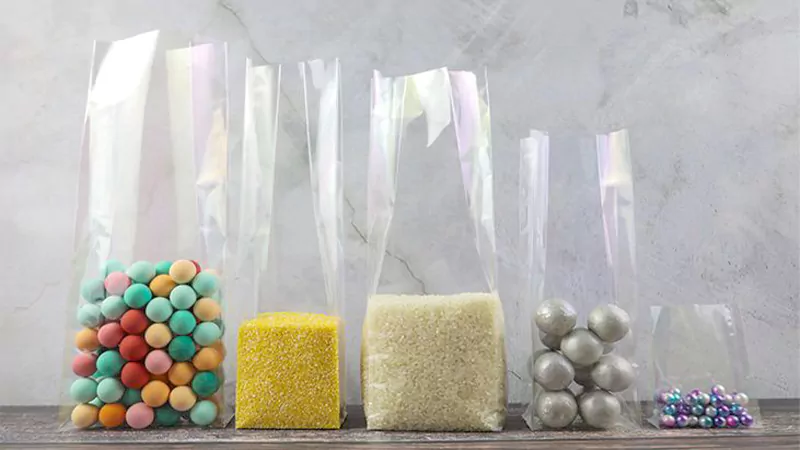
OPP packaging, also known as oriented polypropylene packaging, is widely used in food, retail, and general industries. Manufacturers choose OPP bags for their clarity, strength, and ability to preserve freshness. The durability of OPP bags makes them ideal for packaging cookies, candy, chocolate, nuts, dried fruits, and fresh produce. Retailers use OPP packaging for textiles, clothes, artworks, and gift items because it enhances product appeal and offers customizable shapes.
Industry | Common Uses of OPP Packaging | Key Benefits |
|---|---|---|
Food | Packaging cookies, candy, chocolate, nuts, dried fruits, fruits and vegetables | Crystal clear appearance, sturdy, strong seal to keep contents fresh, FDA compliant, venting holes for produce freshness |
Retail | Packaging textiles, clothes, artworks, gift items | Attractive presentation, enhances product appeal, customizable sizes and shapes |
General | Suitable for food, clothing, cosmetics industries | Versatile, durable, moisture resistant, popular for sales packaging |
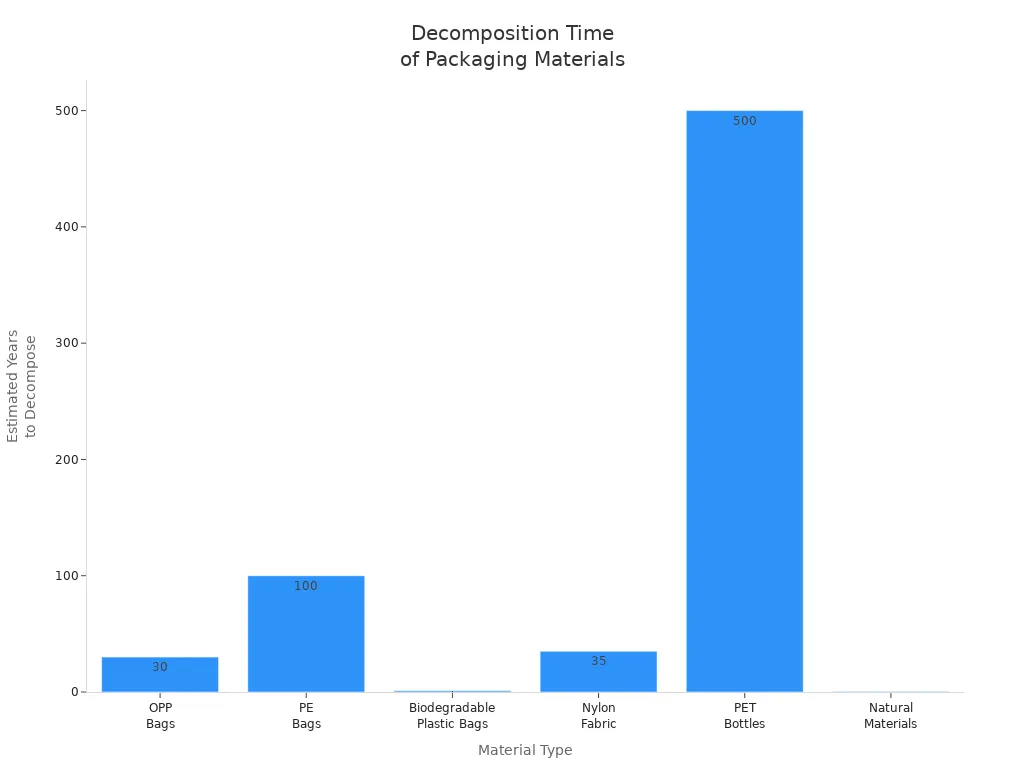
The environmental impact of OPP bags centers on their non-biodegradability and persistence in the environment. Polypropylene packaging, the main material in OPP bags, takes about 30 years to break down in landfill conditions. This moderate decomposition time is shorter than polyethylene bags, which can last up to 1000 years, but longer than biodegradable plastics and natural materials.
Non-biodegradability leads to accumulation in ecosystems, harming wildlife and humans. Single-use plastic bags, including OPP, contribute to pollution of air, land, and water. Municipal solid waste generation increases when OPP bags are discarded after one use. Economic costs rise due to litter management and repairs to clogged waterways. The environmental impact of OPP bags also includes the use of petroleum resources, since polypropylene is a petroleum derivative.
OPP bags are reusable because of their strength, but improper disposal causes significant waste and pollution. Responsible management and recycling help reduce their footprint.
BN PACK addresses these concerns by offering eco-friendly packaging solutions. The company uses plant-based PLA films, biodegradable materials, and compostable options. BN PACK’s products meet global standards such as ISO9001, BRC, FSC, EN 13432, and FDA food-contact approval. Their commitment to sustainability supports clients who want to minimize their environmental footprint.
Greenhouse Gas Emissions
The production of OPP packaging involves energy consumption, waste gas emissions, and solid waste generation. Manufacturers optimize extrusion and stretching processes to reduce energy use. Waste gas treatment devices control harmful emissions, and recycling of production waste helps minimize the environmental impact.
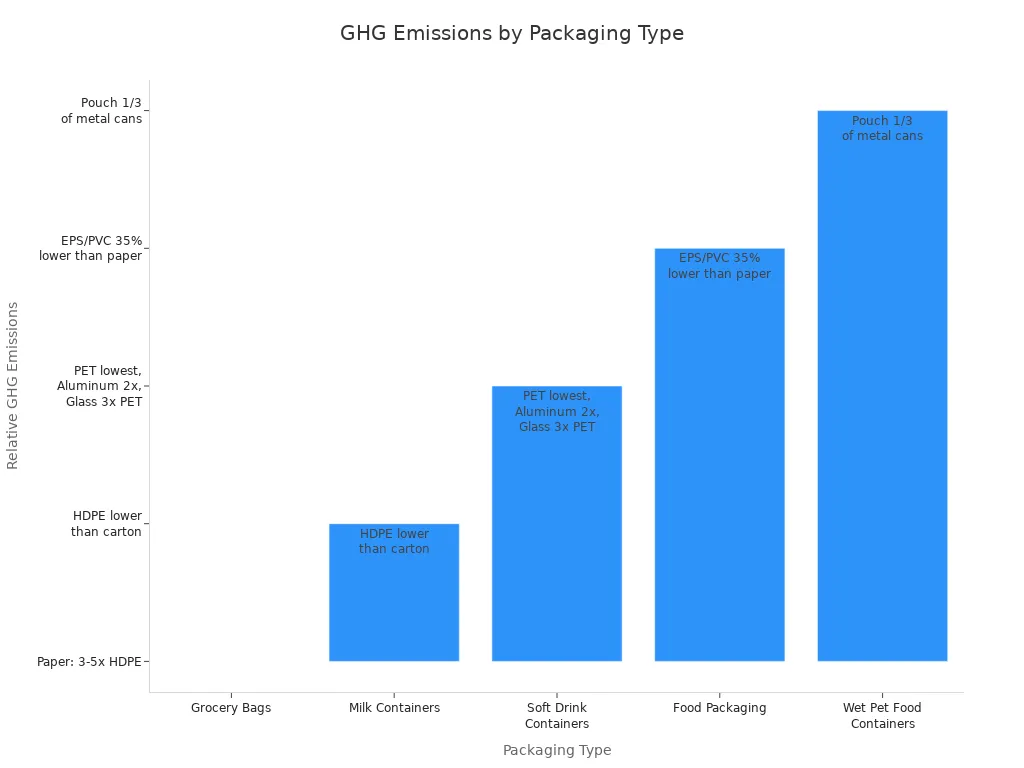
Greenhouse gas emissions from OPP packaging production are generally lower than those from paper and some traditional plastics. Plastic packaging types, including OPP, have a smaller carbon footprint because they are lighter and less energy-intensive to produce. Paper packaging, although biodegradable, tends to be heavier and generates methane in landfills, increasing its overall greenhouse gas impact.
Packaging Type | Material(s) | GHG Emissions Comparison | Key Factors Influencing Emissions |
|---|---|---|---|
Grocery Bags | HDPE vs Paper | Paper bags have 3 to 5 times higher GHG emissions than HDPE bags (production + end-of-life) | Paper bags are ~6x heavier, higher raw material use, and generate methane from landfill decomposition; HDPE inert. |
Food Packaging | EPS foam tray + PVC film vs Butcher paper | EPS/PVC packaging results in ~35% lower overall GHG emissions than butcher paper | Lower spoilage rates with plastic packaging; paper generates methane in landfill. |
BN PACK reduces the carbon footprint of its packaging by using renewable materials and carbon-neutral logistics. Their ReGen line features mono-material recyclable structures that cut CO2 emissions by 40% compared to traditional laminates. The company’s innovations, such as marine-degradable polymers and blockchain transparency for carbon tracking, set new standards in the flexible packaging industry.
Recyclability and Waste Management
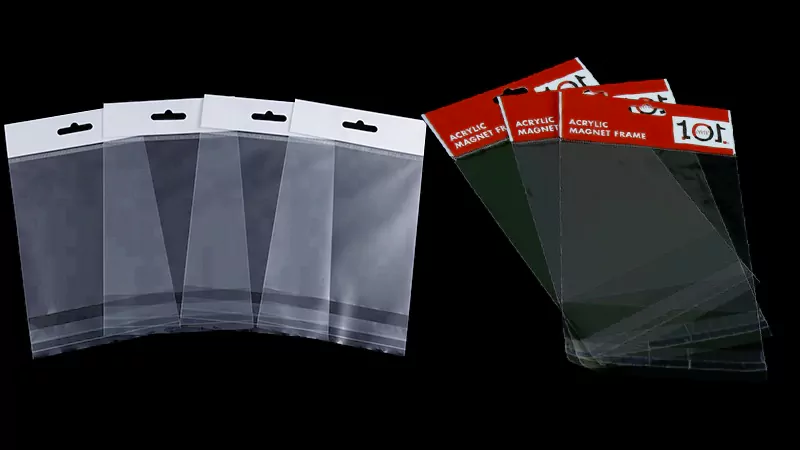
Recyclability remains a challenge for OPP packaging at municipal facilities. Flexible films like OPP differ from rigid plastics, making collection and sorting difficult. The low weight-to-volume ratio complicates the economics of recycling. Material recovery facilities often lack equipment to separate flexible plastics efficiently. Advanced technologies, such as ballistic separators and hydrocyclones, show promise but are not widely available.
Separate collection schemes and investment in sorting facilities can improve recycling rates for OPP packaging. High-performance sorting is needed to achieve total recyclability and purity in polymer streams.
BN PACK supports recycling by offering packaging made from recyclable and compostable materials. Their products comply with certifications such as EN 13432, ASTM D6400, OK COMPOST HOME, and Biodegradable Bags Certificate from OWS. BN PACK’s packaging solutions align with global regulations, including EU EPR and California SB-54, ensuring responsible waste management and sustainability.
Government regulations play a key role in shaping environmental standards for OPP packaging. Extended Producer Responsibility programs shift waste management responsibility to producers, encouraging sustainable design and recycling. Federal agencies enforce packaging and labeling standards to prevent pollution and promote transparency.
BN PACK demonstrates leadership in sustainability by integrating advanced materials, reducing water usage, and investing in innovations that support a circular economy. Their proactive approach and compliance with global standards position them ahead of many industry benchmarks in environmental evaluation.
Comparing OPP Packaging to Other Materials
OPP vs. Paper
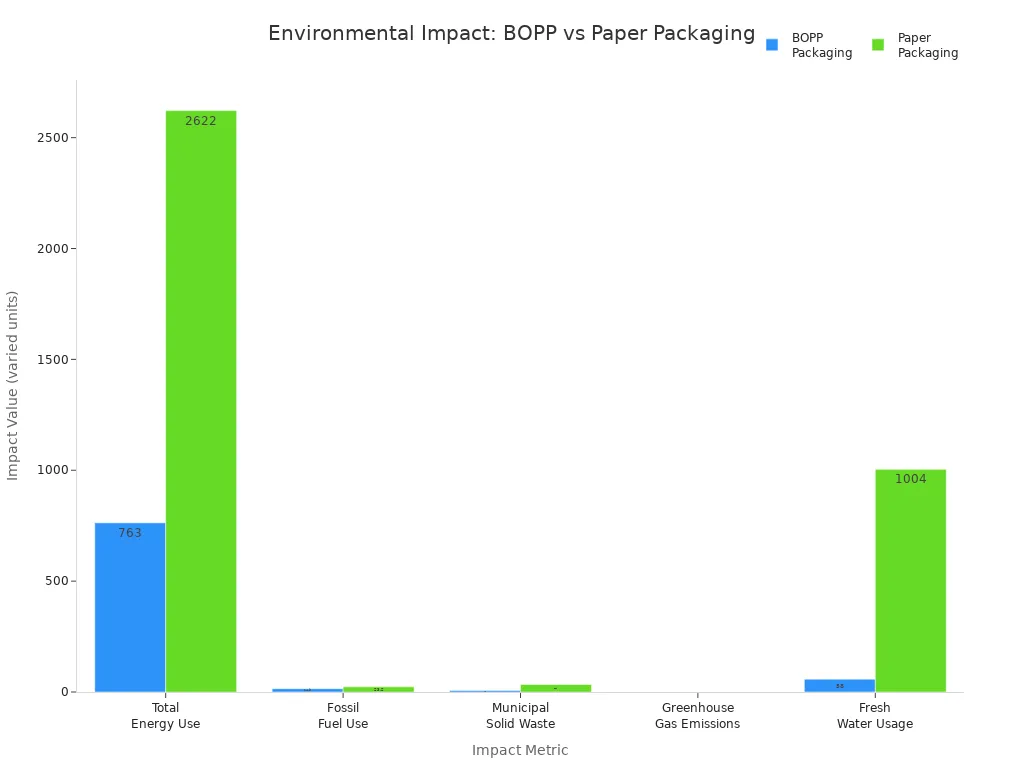
OPP packaging and paper packaging both play important roles in today’s market. Each material has unique environmental impacts. A life cycle assessment shows that OPP packaging uses less energy, water, and fossil fuels than paper packaging. OPP bags also generate less municipal solid waste and greenhouse gas emissions. The table below highlights these differences:
Environmental Impact Metric | Polypropylene (BOPP) Packaging | Paper Packaging |
|---|---|---|
Total Energy Use (MJ) | 763 | 2622 |
Fossil Fuel Use (kg) | 14.9 | 23.2 |
Municipal Solid Waste (kg) | 7.0 | 33.9 |
Greenhouse Gas Emissions (t CO2) | 0.004 | 0.008 |
Fresh Water Usage (gallons) | 58 | 1004 |
Paper packaging comes from renewable resources and biodegrades faster, but OPP packaging offers greater durability and cost-effectiveness of opp bags. Many businesses choose OPP for its strength and reusability, especially in woven polypropylene bags.
OPP vs. Plastics
OPP packaging stands out among plastic packaging options. It is lighter and uses fewer resources than many traditional plastics. Woven polypropylene bags, for example, provide strong, reusable solutions for bulk goods. A life cycle assessment often shows OPP packaging has a lower carbon footprint than other plastics. However, biodegradable alternatives are gaining popularity as consumers seek sustainable choices.
Innovations by BN PACK
BN PACK leads the way in sustainable packaging. The company offers mono-material doypack pouches that simplify recycling. Their kraft paper doypack pouches combine eco-friendly looks with practical use. BN PACK’s eco-friendly OPP products use plant-based materials, making them more biodegradable and recyclable than conventional OPP. These innovations help reduce the environmental impact of packaging and support the cost-effectiveness of opp bags for businesses.
Consumer demand for sustainable packaging continues to grow. Companies that choose eco-friendly options improve their brand image and meet new market expectations.
Environmental Pros of OPP Packaging | Environmental Cons of OPP Packaging |
|---|---|
Lightweight, reducing shipping emissions and costs | Non-biodegradable, leading to pollution if not recycled properly |
Recyclable in certain facilities | Less durable than some plastics |
Good moisture barrier properties help reduce food waste | Difficult to open without tearing |
Potential to use recycled or eco-friendly versions | Impact depends on proper recycling and reuse |
To support waste reduction and protect the environment, businesses can:
Set sustainability goals for packaging.
Partner with suppliers offering eco-friendly packaging.
Engage customers in recycling efforts.
BN PACK provides innovative packaging solutions that help companies meet sustainability targets.