

If you’ve ever tried to source flexible packaging, you’ve hit the wall of confusion: one supplier quotes you in Mil, another in Microns, and a third might even use the term Gauge. This isn’t just a minor inconvenience; it’s a critical point of failure in global supply chains.
In the United States, thickness is almost exclusively measured in Mil (one-thousandth of an inch). In Europe, Asia, and most of the world, the metric Micron (one-millionth of a meter) is the standard.
This guide is built to permanently solve this problem. We’re not just giving you a simple conversion calculator. We’ve created a definitive, one-stop resource.
Comprehensive Conversion Charts: Detailed tables for every major plastic material, converting all three key units (Mil, Micron, Gauge) side-by-side.
Expert “Insider” Advice: We’ll go beyond the data and share our hands-on experience on exactly which thickness to choose for your specific application, from light-duty product bags to heavy-duty industrial liners.
As packaging experts who handle millions of units and thousands of product specifications, we understand that getting the thickness right is the critical foundation for product safety, cost-efficiency, and brand integrity. Specifications, we understand that getting the thickness right is the critical foundation for product safety, cost-efficiency, and brand integrity.
What Is Plastic Film Thickness?

Film thickness is the precise physical measurement of a film’s caliper—essentially, the distance from one surface of the material to the other. This single specification is the most critical technical detail in flexible packaging and the root of common industry confusion. It is expressed using three different units of measurement: Microns (µm), Mils, and Gauge, with the standard varying by region and industry.
This measurement is far from an arbitrary number; it is the primary driver that directly dictates a package’s physical properties, cost, and overall performance. It directly influences:
- Durability and Puncture Resistance: A film’s ability to withstand sharp edges and rough handling.
- Barrier Quality: Its effectiveness at blocking oxygen, moisture, aroma, and UV light, which is critical for product preservation.
- Flexibility and Elongation: How much the film can stretch before breaking, which impacts its suitability for heavy products or shrink applications.
- Optical Properties: The material’s clarity, haze, and gloss, which affect brand presentation.
- Sealability: The film’s ability to form a strong, reliable heat seal to ensure package integrity.
Quick Reference: Core Unit Conversions
| Unit | Equals (Mil) | Equals (Microns / µm) | Equals (Gauge) |
| 1 Mil | 1 | 25.4 | 100 |
| 1 Micron (µm) | 0.03937 | 1 | 3.937 |
| 1 Gauge | 0.01 | 0.254 | 1 |
Conversion Table
| Mil | Micron (µm) | Gauge |
| 1 | 25.4 | 100 |
| 2 | 50.8 | 200 |
| 3 | 76.2 | 300 |
| 4 | 101.6 | 400 |
What Thickness of Plastic Film do I Need
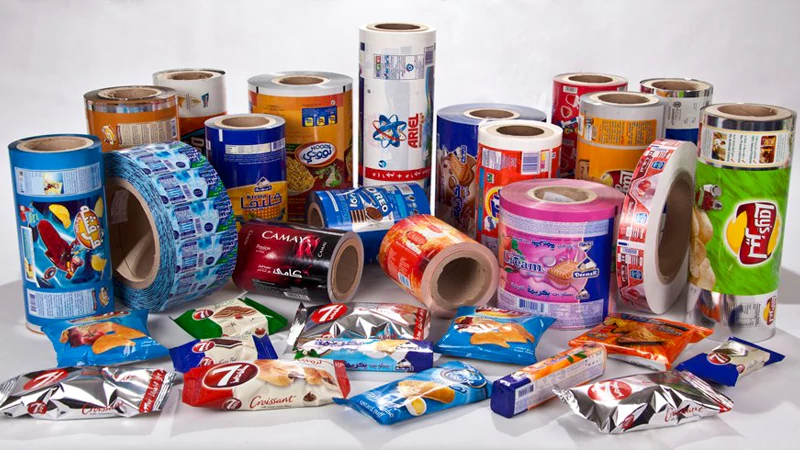
Common Thickness Range in Packaging Films
| Application | Typical Thickness (Microns / µm) | Notes |
| High-Barrier Food Pouches | ||
| Coffee Bags | 100 – 160 µm | Multi-layer laminate (e.g., PET/VMPET/PE) for high oxygen/light barrier. |
| Snack Food Bags (Chips, Nuts) | 60 – 90 µm | Typically metallized BOPP or PE laminates for moisture/aroma barrier. |
| Retort Pouches (Ready-to-Eat) | 80 – 120 µm | Must withstand high-temperature sterilization processes. |
| Vacuum Bags (Meat, Cheese) | 70 – 150 µm | Co-extruded film (e.g., PA/PE) for high puncture resistance and oxygen barrier. |
| General Food Packaging | ||
| Cereal Box Liners | 15 – 30 µm | Thin HDPE, primarily for moisture barrier and cost-effectiveness. |
| Bread Bags | 25 – 50 µm | Typically LDPE or CPP, prioritizing softness and clarity. |
| Anti-fog Films | 20 – 40 µm | Treated film to prevent moisture condensation on the surface. |
| Retail & Industrial Films | ||
| Shrink Wrap | 12 – 30 µm | Low-cost bundling for items like water bottles. |
| Retail Shopping Bags | 12 – 25 µm | HDPE for strength at a low thickness. |
| Heavy-Duty Bags | 120 – 200 µm | Thick LDPE for high puncture and tear resistance. |
| Specialty & Lamination | ||
| Lamination Films (Print Layer) | 8 – 20 µm | Often BOPP or PET, used as the outer printed layer in a laminate. |
| BOPP Tapes | 36 – 50 µm | Includes the base film plus the adhesive layer. |
| Blister Packaging | 100 – 300 µm | Rigid PVC or PETG, needs to be thermoformed. |
| PE Liners | 25 – 150 µm | Wide range, from simple dust covers to heavy-duty chemical liners. |
FAQs
Which is more accurate: Mil or Micron?
Both units are accurate, but Microns are a more precise unit of measurement. Because a micron (1/1,000,000th of a meter) is significantly smaller than a mil (1/1000th of an inch), it is the global standard for specifying very fine differences in high-performance films. For example, a 0.5 Mil film is 12.7 microns. A slight adjustment to 15 microns (0.59 Mil) is a meaningful change for a high-barrier laminate, but it’s an awkward number to express in Mils.
How does film thickness impact print quality and shelf life?
Thickness has a direct impact on both:
Shelf Life: Generally, a thicker film provides a better barrier against oxygen and moisture, which are the primary enemies of shelf life. While the material (like EVOH or a metallized layer) does the heavy lifting, increasing its thickness enhances its protective properties.
Print Quality: Thicker films provide a more rigid and stable substrate for the printing press. This stability leads to better print registration (how the different colors line up), sharper images, and less distortion, especially on high-speed presses.
How can I measure film thickness myself?
The most reliable way to measure film thickness is with a specialized tool called a digital or dial micrometer (sometimes called a caliper).
Ensure the micrometer’s anvils (the measuring faces) are clean.
Gently close the anvils to “zero” the device.
Open the anvils, place a single layer of your film between them, and let the anvils close gently on the material. Do not overtighten, as this will compress the plastic and give you a false, thinner reading.
Read the measurement in your preferred unit (many digital models convert between inches/mil and millimeters/microns).
What’s the real difference between Grammage (GSM) and thickness?
This is a critical distinction.
Thickness (Mil/Micron) measures caliper—the physical distance from one side of the film to the other.
Grammage (GSM – Grams per Square Meter) measures density or weight—how much a 1×1 meter square of the film weighs.
Two films can have the exact same thickness but different GSM if they are made of different materials. For example, PET plastic is denser than LDPE. Therefore, a 50-micron sheet of PET will have a higher GSM (it will be heavier) than a 50-micron sheet of LDPE. Thickness tells you how thick it is; GSM tells you how much material is there.
Conclusion
We hope this definitive guide has empowered you to make an informed decision. Choosing the right film thickness is not just a technical detail—it’s a critical business decision that directly affects your product’s safety, your cost-efficiency, and your customer’s perception of your brand.
If you’re still unsure which material or thickness is best for your specific application, contact our packaging specialists for a complimentary consultation.