In today’s flexible packaging industry, brand owners are paying closer attention to how their packaging is made. From food safety to environmental compliance, printing inks play a much bigger role than just creating attractive designs.
Among the different types of printing inks—solvent-based, oil-based, alcohol-based, soy-based, and water-based—each has its own characteristics.
For packaging manufacturers and brand buyers alike, understanding these differences is essential to choosing the right printing solution. In this article, we’ll take a closer look at how water-based inks compare with other types of inks commonly used in flexible packaging production.
What Are Water-Based Inks?
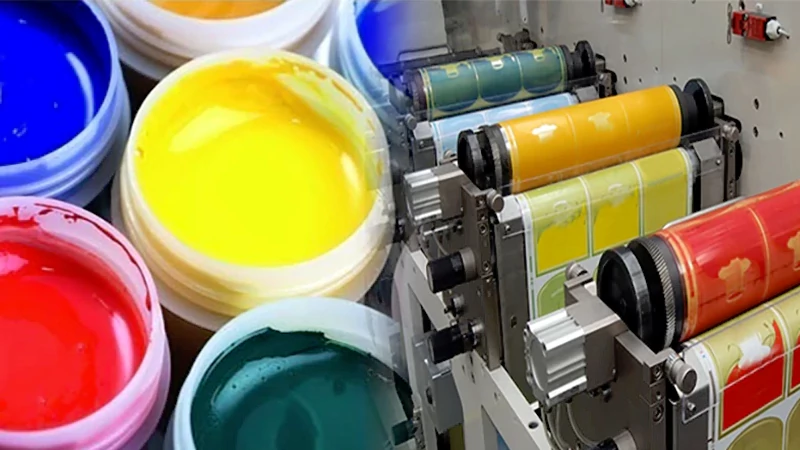
Water-based inks use water as the primary solvent, combined with pigments, resins, and additives to achieve excellent printability and adhesion on flexible substrates such as BOPP, PET, and PE films.
Unlike solvent-based inks, which rely on chemical solvents that emit volatile organic compounds (VOCs), water-based inks significantly reduce harmful emissions and odor.
Key advantages:
- Low VOC emissions and improved environmental performance
- Minimal odor — ideal for food, snack, and pet food packaging
- Safer for workers during production
- Easy to clean from printing equipment, reducing maintenance costs
- Excellent color consistency and print quality on treated films
As more global brands move toward eco-friendly packaging, water-based inks have become a preferred choice for flexible packaging manufacturers looking to meet sustainability goals.
Water-Based Ink vs Solvent-Based Ink
Solvent-based inks have been the industry standard for decades in gravure and flexographic printing. They offer strong adhesion, fast drying, and high color density. However, they also come with environmental and safety challenges.
| Aspect | Water-Based Ink | Solvent-Based Ink |
|---|---|---|
| Main solvent | Water | Chemical solvents (toluene, MEK, etc.) |
| VOC emissions | Very low | High |
| Odor | Minimal | Strong |
| Food packaging safety | Excellent | Requires strict solvent control |
| Equipment maintenance | Easier | More complex due to solvent residues |
Water-based inks eliminate the need for solvent recovery systems, which reduces operational costs and improves workplace air quality. While solvent-based inks still offer slightly faster drying speeds, modern drying systems now make water-based inks efficient even in high-speed flexographic printing.
For environmentally conscious brands, water-based printing has become a competitive advantage, especially in meeting global sustainability and regulatory standards (such as EU VOC directives).
Water-Based Ink vs Oil-Based Ink
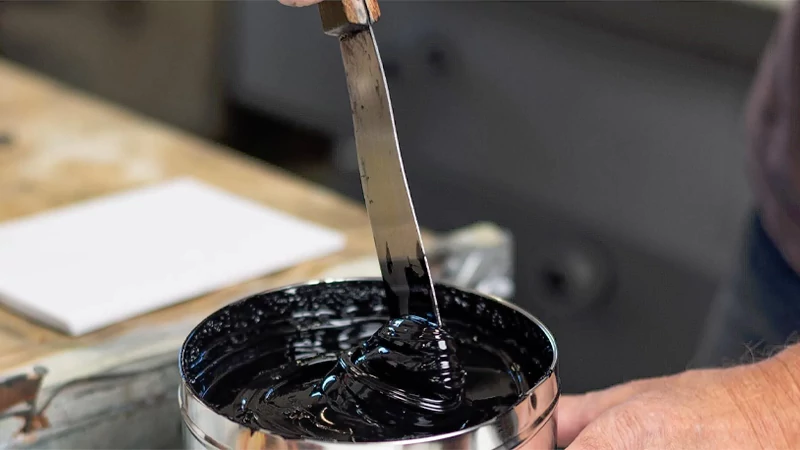
Oil-based inks are commonly used in traditional printing processes such as offset or letterpress. In flexible packaging, they are less common but are sometimes compared due to their durability and color strength.
| Aspect | Water-Based Ink | Oil-Based Ink |
|---|---|---|
| Base material | Water | Mineral or vegetable oil |
| Drying process | Evaporation | Oxidation or absorption |
| Odor and residue | Very low | Noticeable oil smell and residue |
| Environmental impact | Low | Moderate to high |
| Packaging application | Films (PET, BOPP, PE) | Mostly paper-based materials |
Oil-based inks produce vibrant colors but can leave a greasy texture and are not suitable for most flexible plastic films. Water-based inks, on the other hand, dry quickly without leaving residue, ensuring smooth surface finishing.
For packaging manufacturers targeting food-grade or personal care applications, water-based inks are a safer and cleaner alternative.
Water-Based Ink vs Alcohol-Based Ink
Alcohol-based inks are a variant of solvent inks, often using ethanol or isopropanol as the solvent. They are widely used in markets where drying speed and adhesion are priorities.
| Aspect | Water-Based Ink | Alcohol-Based Ink |
|---|---|---|
| Solvent type | Water | Alcohols (ethanol, IPA) |
| VOC emissions | Very low | Moderate |
| Print quality | Excellent on treated films | Good but can vary |
| Cost | Slightly higher drying energy | Lower solvent cost but higher VOC control cost |
| Health & safety | Non-flammable | Flammable, higher risk |
While alcohol-based inks can perform well on various substrates, they still release VOCs and require explosion-proof environments for safe use. Water-based inks remove those risks entirely.
Thanks to advances in polymer dispersion technology, modern water-based inks now match or exceed the adhesion and print sharpness of alcohol-based systems—making them ideal for flexible packaging that demands both performance and sustainability.
Water-Based Ink vs Soy-Based Ink
Soy-based inks are derived from soybean oil and are widely used in eco-friendly paper packaging, such as shopping bags, food wraps, and cardboard boxes. They are praised for their renewable source and vivid color reproduction.
However, their main limitation is substrate compatibility—soy-based inks adhere well to paper fibers but not to plastic films or metallized surfaces.
| Aspect | Water-Based Ink | Soy-Based Ink |
|---|---|---|
| Main solvent/base | Water | Soybean oil |
| Substrate compatibility | Films (BOPP, PET, PE) | Paper and cardboard |
| Environmental benefits | Non-toxic, low VOC | Renewable resource |
| Recyclability | High | High for paper applications |
| Application in flexible packaging | Excellent | Limited |
For plastic flexible packaging, soy-based inks are not suitable due to poor adhesion and drying challenges. However, for paper-based eco-packaging, soy inks remain a great choice.
In short, soy-based inks are perfect for eco paper bags, while water-based inks are the go-to solution for eco plastic packaging—both supporting sustainability in their respective fields.
Conclusion
As global demand for sustainable packaging continues to grow, water-based ink printing stands out as the most balanced solution for flexible packaging. It offers:
- Excellent color quality and print consistency
- Minimal odor and VOC emissions
- Compliance with food safety standards
- Compatibility with modern high-speed flexographic and gravure presses
- A cleaner, safer working environment
For packaging manufacturers and brands that care about both performance and sustainability, water-based inks represent the next step forward in printing technology.
At BN PACK, we use advanced water-based ink systems designed specifically for flexible packaging applications—ensuring your products look great, meet regulations, and support your brand’s eco-friendly values.